To prevent cross-contamination, choose the right cutting boards—plastic, bamboo, or wood—and assign specific ones for raw meats, vegetables, and cooked foods. Always sanitize surfaces thoroughly after each use and keep knives clean, sharp, and stored separately in blocks or magnetic strips. Use color-coded boards to easily distinguish between food types, and avoid rinsing raw meat to prevent spreading germs. Mastering these habits helps you keep your kitchen safe; learn more to protect your family.
Key Takeaways
- Use separate, color-coded cutting boards for raw meats, vegetables, and cooked foods to prevent cross-contact.
- Sanitize knives thoroughly with hot, soapy water and disinfectants after each use to eliminate bacteria.
- Store knives and cutting boards separately in designated holders to avoid accidental contact and contamination.
- Wash hands thoroughly before and after handling different food types to prevent bacteria transfer.
- Regularly clean and disinfect all kitchen surfaces, including cutting boards and tools, to maintain hygiene and reduce cross-contamination risks.
Top picks for "cros contamination board"
Open Amazon search results for this keyword.
As an affiliate, we earn on qualifying purchases.
Choosing the Right Cutting Boards for Safety
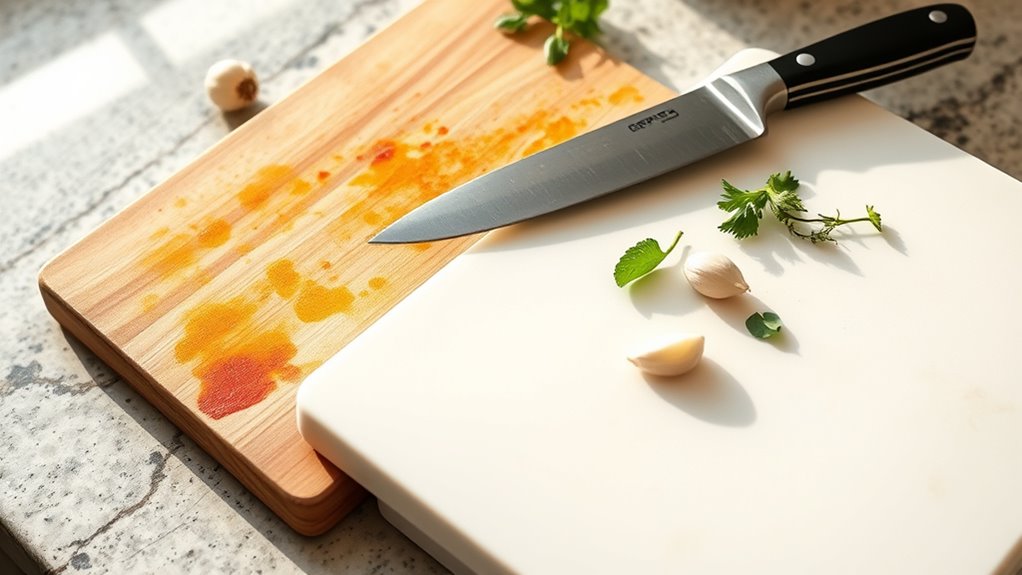
Choosing the right cutting boards is essential for maintaining kitchen safety and preventing cross-contamination. When selecting a board, consider material considerations like plastic, wood, or bamboo, each with its pros and cons regarding durability and ease of cleaning. Plastic boards are lightweight and dishwasher-safe, making them easy to sanitize after handling raw meat or vegetables. Wood and bamboo, while attractive, may harbor bacteria if not properly maintained. Ergonomic design also matters—you want a board with a comfortable grip or non-slip features to prevent accidents during use. A stable, well-designed cutting surface reduces the risk of slips and injuries. By choosing a board that suits your needs and is easy to clean, you remarkably minimize cross-contamination risks in your kitchen.
Designating Separate Boards for Different Foods

Using separate cutting boards for different types of foods is one of the most effective ways to prevent cross-contamination. This practice improves food storage by reducing bacteria transfer and enhances kitchen ergonomics by streamlining prep work. To maximize safety, consider these tips:
- Assign specific boards for raw meats, vegetables, and cooked foods.
- Keep colored or labeled boards to easily identify their purpose.
- Rotate boards regularly to prevent wear that could harbor bacteria.
- Proper color coding and calibration of cutting boards can further reduce contamination risks. Regular inspection and hygienic maintenance are essential for maintaining a safe kitchen environment.
- Incorporating natural materials in your cutting boards may also help minimize bacterial buildup and promote a healthier cooking space.
- Additionally, understanding bacterial transfer mechanisms can help you make better decisions about kitchen safety and hygiene, including how heat distribution plays a role in sanitizing surfaces.
Properly Sanitizing Cutting Surfaces
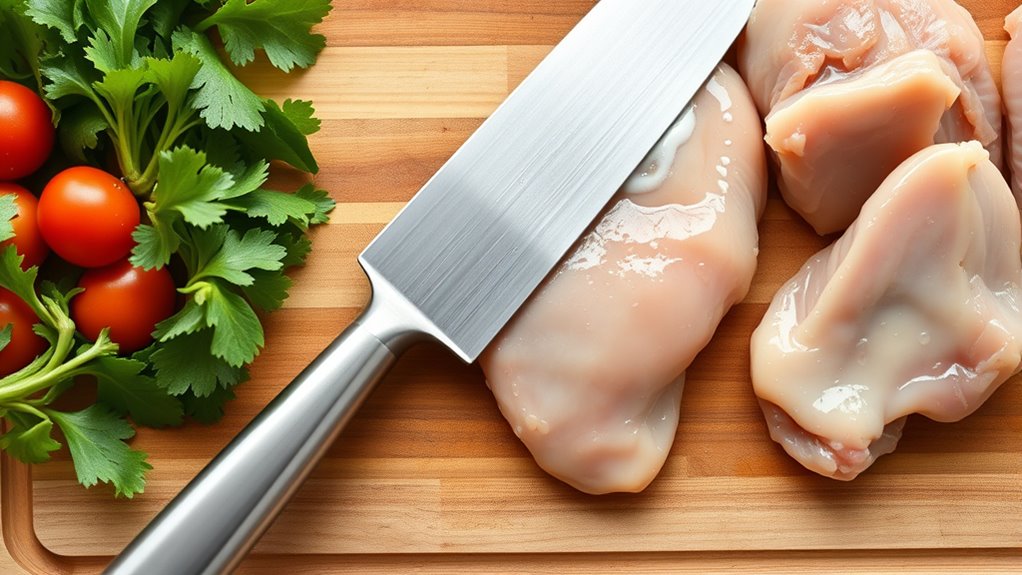
To effectively prevent cross-contamination, you must properly sanitize your cutting surfaces after each use. This is essential for maintaining food safety and kitchen hygiene. Start by washing the surface with hot, soapy water to remove visible debris and residues. For thorough sanitization, use a solution of one tablespoon of unscented liquid chlorine bleach per gallon of water, or follow the manufacturer’s instructions for commercial sanitizers. Apply the solution generously, ensuring all areas are covered, then let it sit for at least one minute before rinsing with clean water. Dry the surface with a clean towel or air dry. Regular sanitization stops bacteria from spreading, keeping your kitchen safe and hygienic. Always sanitize before switching between different food types. Incorporating nanotechnology in cleaning tools can enhance the effectiveness of sanitization processes by providing more durable and bacteria-resistant surfaces.
The Importance of Using Color-Coded Boards

After sanitizing your cutting surfaces thoroughly, it’s important to prevent cross-contamination from happening in the first place. Implementing a color-coded system for your boards is a simple yet effective strategy. This system assigns specific colors to different food categories, reducing the risk of transferring bacteria. Here are three key benefits:
Using color-coded cutting boards helps prevent cross-contamination and keeps your kitchen safer.
- Clear differentiation: You immediately know which board to use for raw meats, vegetables, or cooked foods.
- Consistent habits: Reinforces proper food handling practices among staff or household members.
- Cross contamination prevention: Minimizes accidental contact between incompatible foods, safeguarding everyone’s health. Incorporating food safety principles like proper sanitation and storage can further enhance your kitchen’s hygiene. Using color-coding not only streamlines your workflow but also helps establish a routine that minimizes errors.
- Utilizing a diverse range of foods like meats and vegetables, especially when handling ingredients from different cultural backgrounds, can further reduce cross-contamination risks.
Using color-coded boards streamlines your kitchen workflow and creates a visual reminder to follow safe practices. It’s a practical step toward maintaining a hygienic environment and preventing cross-contamination.
Knife Handling: Different Knives for Different Tasks
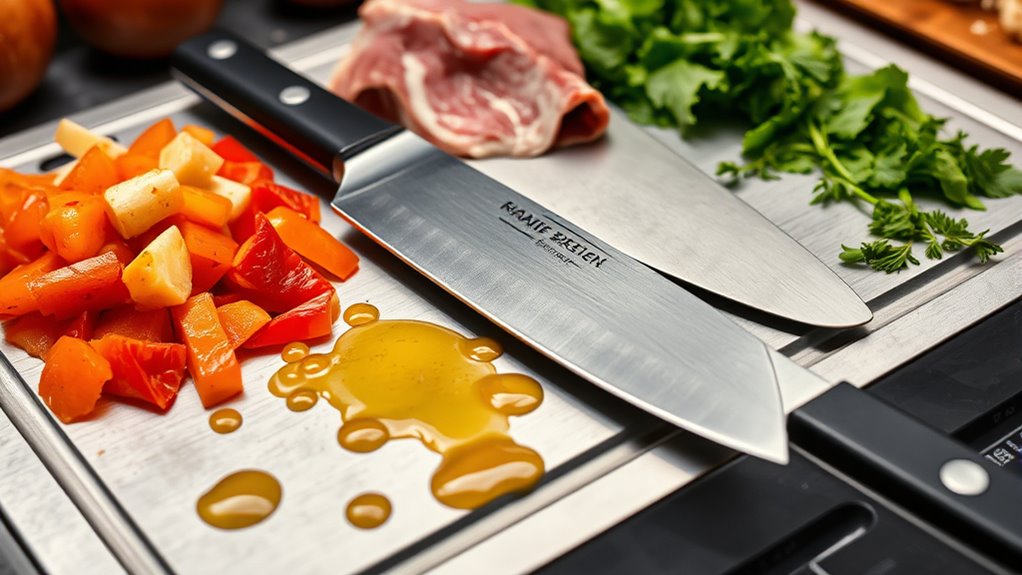
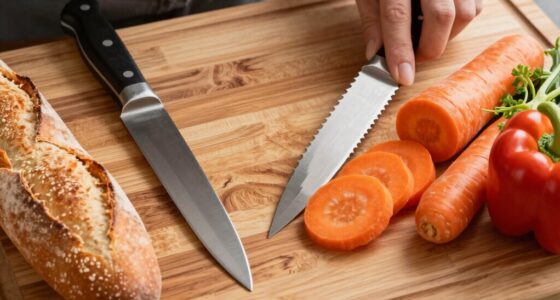
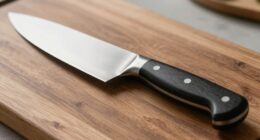
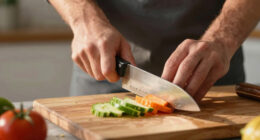
Choosing the right knife for each task is essential to guarantee safety and efficiency in your kitchen. Using the appropriate knife reduces the risk of accidents and improves cutting techniques, making prep work smoother. For example, a paring knife is perfect for peeling and detailed work, while a chef’s knife handles chopping and slicing common ingredients. Proper knife safety means selecting the right blade for the job and avoiding unnecessary force, which can lead to slips or injuries. Different knives have specific designs suited to their tasks, helping you maintain control and precision. By matching knives to tasks, you prevent cross-contamination and ensure cleaner cuts. Additionally, understanding the proper handling techniques can further enhance safety and effectiveness in your kitchen. Using the correct knife storage practices can also prolong the life of your blades and prevent accidents. Remember, using the right knife isn’t just about efficiency; it’s about maintaining safety and hygiene throughout your cooking process. Trusted businesses and resources can provide additional guidance on proper kitchen tools and safety practices.
Cleaning and Sanitizing Knives Correctly
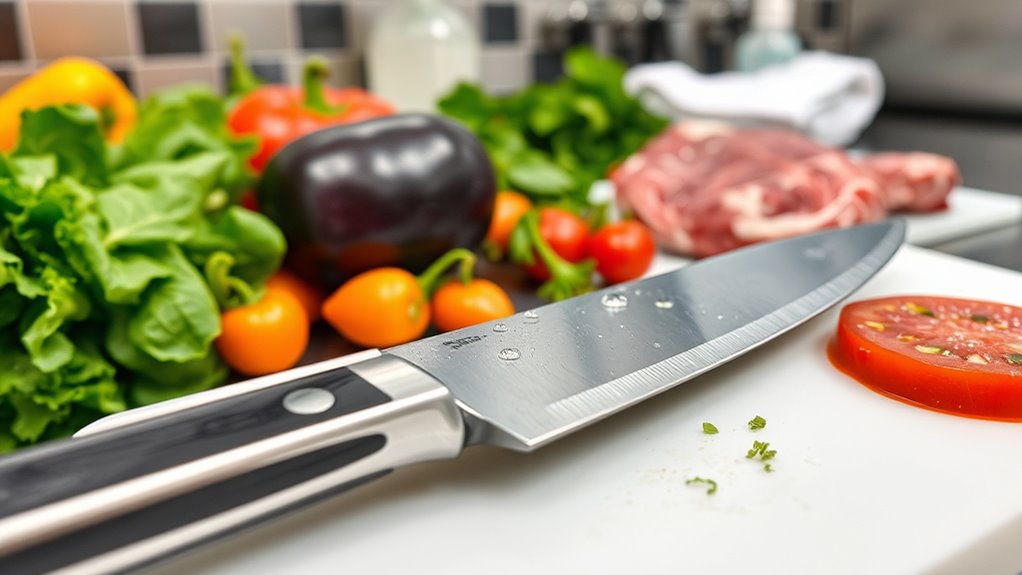
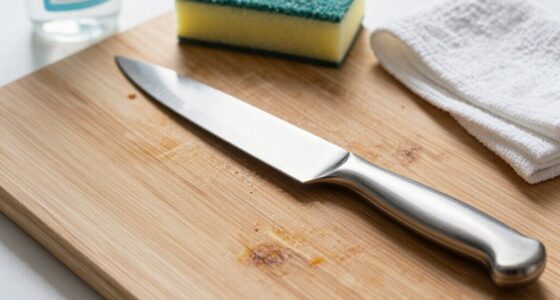
You need to wash your knives thoroughly using hot water and soap to remove visible debris. After washing, sanitize them with an effective solution, making sure to cover all surfaces. Remember, proper technique and the right sanitizer guarantee knives are truly safe to use again. Additionally, using cleaning and sanitizing methods helps prevent cross-contamination effectively. Incorporating proper hygiene practices ensures a safer food preparation environment.
Proper Washing Techniques
Proper washing techniques are essential to prevent cross-contamination when handling knives. First, thoroughly wash the knife with dish soap, ensuring you scrub all surfaces, including the handle. Next, focus on rinsing techniques: rinse the knife under hot water to remove soap and food residues completely. Finally, dry the knife with a clean towel or air dry to prevent moisture buildup, which can harbor bacteria. Remember these steps:
- Use dish soap to clean all knife surfaces thoroughly.
- Rinse with hot water, ensuring no soap or debris remain.
- Dry completely to prevent bacterial growth.
Additionally, understanding food safety standards can help reinforce proper cleaning practices. Incorporating sanitation practices such as proper drying and storage can further reduce the risk of cross-contamination.
Sanitizing Effectiveness Tips
To guarantee knives are effectively sanitized, it’s essential to follow proper cleaning and sanitizing procedures. Start by thoroughly washing knives with hot, soapy water to remove debris and food residues. After cleaning, use chemical disinfectants approved for kitchen use to kill bacteria and viruses. For added protection, consider UV sterilization, which uses ultraviolet light to eliminate pathogens without chemicals. UV sterilizers are quick and effective, especially for frequent use between washes. Always ensure knives are completely dry before storing them to prevent bacteria growth. Incorporating proper sanitation techniques helps ensure the highest level of cleanliness. Combining proper cleaning with chemical disinfectants and UV sterilization maximizes sanitation. This layered approach reduces cross-contamination risks and keeps your knives safe for every meal preparation.
Storing Knives and Cutting Boards Safely

Storing knives and cutting boards safely is essential to prevent cross-contamination and guarantee a tidy kitchen. Proper knife storage keeps blades sharp and minimizes accidental injuries. For example, consider these options:
- Use a dedicated knife block or magnetic strip to keep knives organized and separated.
- Store cutting boards upright or in closed cabinets to prevent contact with other utensils.
- Choose cutting board materials like bamboo or plastic, which are easy to sanitize and resist bacteria buildup.
- Regularly disinfect kitchen surfaces and tools to reduce the risk of bacterial transfer between items. Additionally, understanding safe storage practices and the benefits of connected kitchen technology can help maintain a bacteria-free environment and promote overall kitchen hygiene. Incorporating proper storage techniques and practicing food safety habits can further enhance food safety and limit cross-contamination risks.
Avoiding Cross-Contamination During Food Prep
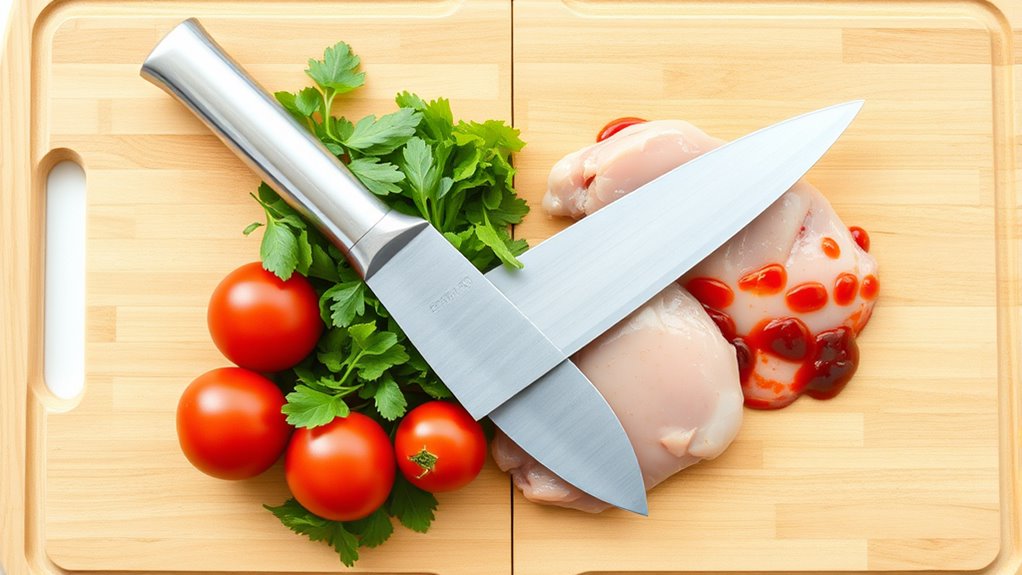
Keeping your kitchen organized when storing knives and cutting boards helps prevent cross-contamination from spreading during food prep. To avoid falling for cross contamination myths, stick to proper separation of raw meats, vegetables, and cooked foods. Many kitchen safety myths suggest that rinsing meat kills bacteria, but it can spread harmful germs instead. Always wash your hands thoroughly after handling raw ingredients, and use separate cutting boards for different food types. Don’t reuse marinade used on raw meats without washing it first. Keep your workspace clean, and sanitize surfaces regularly. Being mindful of these habits helps you prevent cross-contamination and reduces foodborne illness risks. Additionally, understanding the proper food safety practices such as correct storage temperatures and handling techniques is essential for maintaining a safe kitchen environment. Proper kitchen sanitation and consistent cleaning routines are vital for ensuring a hygienic workspace. Staying informed and following proper food safety practices, including monitoring kitchen contamination risks, ensures your kitchen remains a safe environment for preparing meals. Regular training on quality assurance can also help reinforce safe handling habits among all kitchen staff.
Tips for Maintaining a Clean and Safe Kitchen Environment
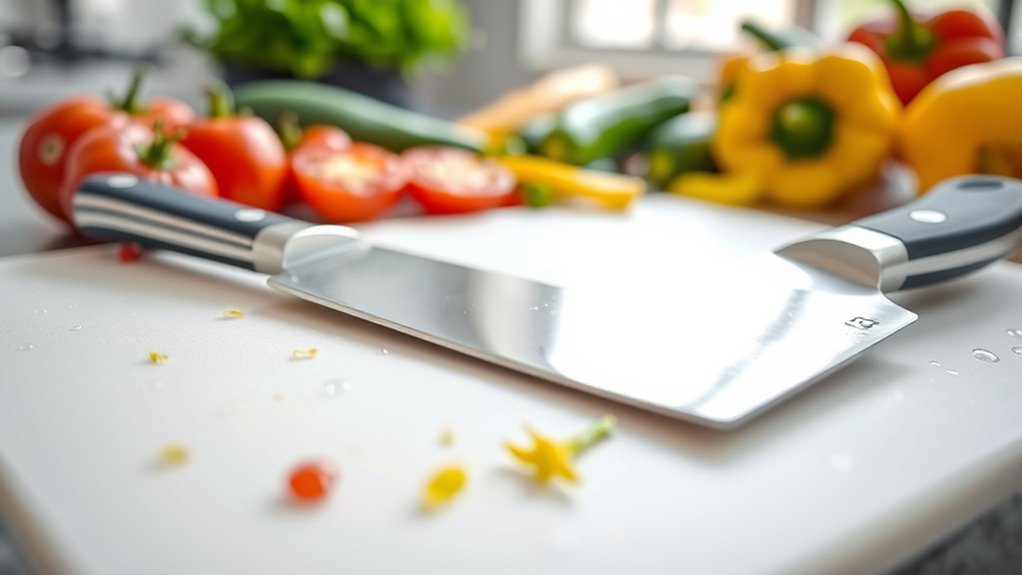
Keeping your kitchen clean starts with regularly sanitizing all surfaces to prevent germs from spreading. Always use separate cutting boards for raw meats and vegetables to avoid cross-contamination, and take care to properly clean your knives after each use. By following these simple steps, you create a safer environment for everyone.
Regularly Sanitize Surfaces
To effectively prevent cross-contamination, it’s essential to regularly sanitize your kitchen surfaces. Clean countertops and cutting areas with a disinfectant to eliminate bacteria and germs. Focus on these key practices:
- Wash your hands thoroughly before and after food prep to maintain hand hygiene.
- Use a food-safe sanitizer on all surfaces, especially after chopping raw meat or handling produce.
- Keep pests out by cleaning spills promptly and storing food properly, reducing the risk of contamination spreading.
Use Separate Cutting Boards
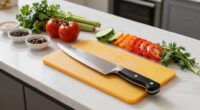
Using separate cutting boards for different types of food is one of the most effective ways to prevent cross-contamination in your kitchen. Designate specific boards for raw meats, vegetables, and cooked foods to keep bacteria from spreading. When preparing dinner plating, guarantee each item is handled on its designated board to maintain safety. Proper storage organization also plays a role—store raw meats separately from ready-to-eat foods to avoid accidental contact. After use, wash your cutting boards thoroughly with hot, soapy water or sanitize them to eliminate lingering bacteria. By following these practices, you reduce the risk of contamination, keep your kitchen safer, and ensure your meals are both delicious and hygienic. Properly managing your cutting boards is a simple but essential step to a cleaner, healthier cooking environment.
Proper Knife Care
Proper knife care is essential for maintaining a safe and hygienic kitchen. To keep your knives in top condition, focus on these key practices:
- Regularly sharpen your knives to ensure clean cuts and prevent accidents. Proper knife sharpening maintains a sharp edge, making cutting safer and more efficient.
- Use the correct cutting technique to reduce blade wear and prevent dulling. Proper technique also minimizes the risk of slips that could lead to cross-contamination.
- Clean knives immediately after use with hot, soapy water, then dry thoroughly to prevent rust and bacterial growth. Avoid dishwasher cleaning, which can dull blades over time.
Frequently Asked Questions
How Often Should Cutting Boards Be Replaced for Safety?
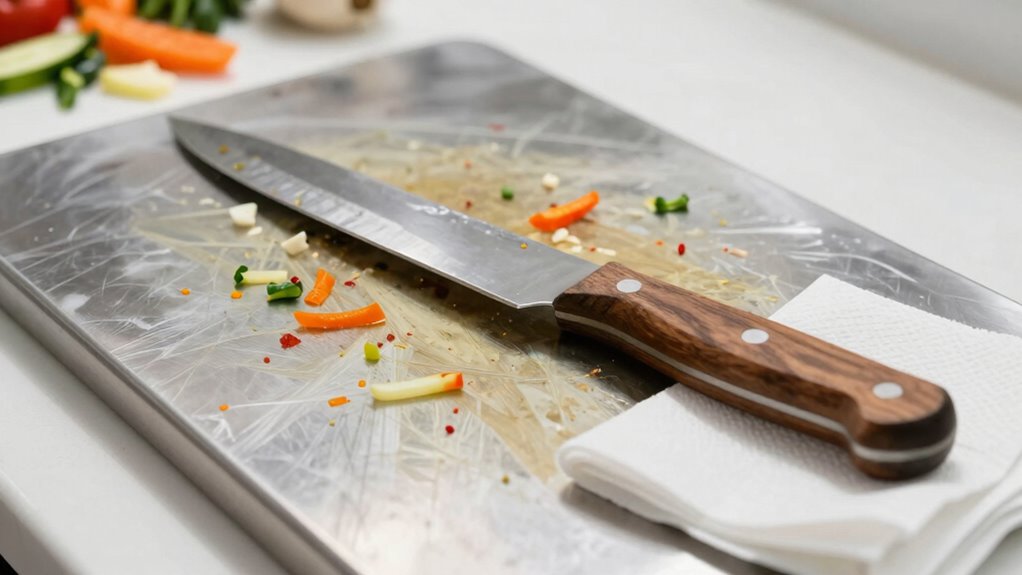
You should replace your cutting boards when they show deep cuts, cracks, or excessive wear, as these compromise durability and safety. Regularly inspect for damage, and follow knife maintenance tips to avoid unnecessary scoring. Even durable boards can harbor bacteria if heavily damaged. For maximum safety, switch them out when they become too worn, ensuring a clean surface that supports good hygiene and prolongs your tools’ lifespan.
Can Wooden Cutting Boards Be Sanitized Effectively?
Yes, wooden cutting boards can be sanitized effectively when you use proper wooden sanitation techniques. Regularly scrub the board with hot, soapy water, then disinfect it with a solution of vinegar or diluted bleach. To reduce cutting board bacteria, avoid soaking it too long and let it air dry thoroughly. Proper cleaning and maintenance make certain your wooden board stays safe and bacteria-free, making it a safe choice for food prep.
What Are the Signs of a Contaminated Knife?
You’ll notice a contaminated knife if it shows discoloration, like stained or darkened blades, or if it has lingering odors after cleaning. These signs indicate bacteria or residue buildup. Always wash your knife thoroughly with hot, soapy water, and use a sanitizing solution if needed. If discoloration or odors persist, it’s best to replace or properly sanitize the knife to prevent cross-contamination.
Are There Specific Cleaning Agents Recommended for Different Boards?
You should choose specific cleaning agents for different boards to guarantee proper sanitizing. For wooden boards, use mild dish soap and hot water, avoiding harsh chemicals that can damage the wood. Plastic boards benefit from commercial disinfectants or diluted bleach solutions for thorough sanitizing. Always follow manufacturer instructions for board sanitizing, and avoid cross-use of cleaning agents, so you effectively prevent bacteria transfer and keep your surfaces safe.
How Do I Prevent Cross-Contamination When Using Multiple Knives?
To prevent cross contact when using multiple knives, practice good knife sanitation by washing each knife thoroughly with hot, soapy water after cutting raw meat, poultry, or seafood. Use separate knives for different food groups, and consider color-coded handles for easy identification. Always dry knives completely before switching tasks. These habits effectively reduce cross contact prevention and keep your kitchen safe from cross-contamination.
Conclusion
So, next time you’re slicing away like a culinary ninja, remember: your cutting boards and knives are not just tools—they’re potential villains in disguise. Keep them separate, sanitized, and color-coded, or risk turning your kitchen into a cross-contamination catastrophe. After all, who needs a food poisoning party? Play it safe, stay sane, and let your kitchen habits be the real star of the show—because nobody wants a side of sickness with their dinner.