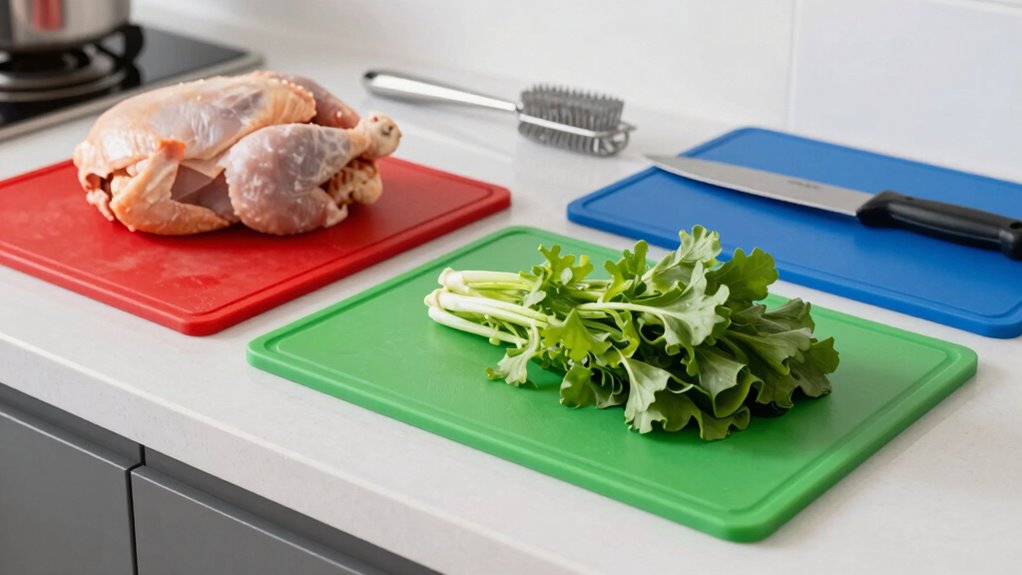
To avoid cross-contamination without slowing down your cooking, stay organized by designating specific zones for raw meats, seafood, and cooked foods. Use sealed containers and keep raw ingredients on the bottom shelves of your fridge to prevent drips. Regularly check expiry dates and rotate stock to keep everything fresh and safe. Maintain cleanliness with quick wipe-down routines, and label items clearly for easy identification. If you want to learn the best strategies, continue exploring how proper storage and hygiene make it effortless.
Get ready for Prime Big Deal Days — try Prime free
Exclusive member deals on October 6–7, plus fast free delivery. Cancel anytime.
As an affiliate, we earn on qualifying purchases.
Key Takeaways
- Organize ingredients and utensils by designated zones to streamline workflow and prevent cross-contact during cooking.
- Use sealed containers for raw ingredients and keep them below cooked foods in the fridge to avoid drips.
- Prepare raw ingredients separately and wash hands thoroughly before handling cooked foods.
- Maintain a clean workspace by regularly sanitizing surfaces and utensils between tasks.
- Label all ingredients clearly to quickly identify and prevent accidental cross-contamination.

Ever wondered how cross-contamination happens in your kitchen? It’s often due to simple mistakes that can be easily avoided with some mindful habits. One of the most effective ways to prevent it is by practicing proper storage. You want raw meats, seafood, and poultry stored separately from ready-to-eat foods like vegetables, fruits, and cooked dishes. Use sealed containers or plastic bags to prevent juices from dripping onto other items. Keep raw products on the bottom shelf of your fridge to avoid accidental drips onto cooked or prepared foods. Label everything clearly so you don’t mistake raw ingredients for cooked ones, especially when you’re busy multitasking. Proper storage isn’t just about protecting your ingredients; it’s about creating a barrier that minimizes the risk of bacteria transfer. Ensuring proper storage practices is also crucial for maintaining food safety standards. Regularly checking expiration dates and rotating stock can further reduce the risk of contamination from spoiled ingredients. Additionally, designing your storage system with designated zones for different food types can help streamline your workflow and prevent cross-contact. Implementing a cleaning routine for storage areas can further enhance safety and reduce bacterial growth. Remember, consistent organization and hygiene are key to preventing cross-contamination effectively.
food storage containers with lids
As an affiliate, we earn on qualifying purchases.
As an affiliate, we earn on qualifying purchases.
Frequently Asked Questions
Can Cross-Contamination Occur With Cooked Foods?
Yes, cross-contamination can happen with cooked foods. Food allergen transfer might occur if cooked dishes come into contact with raw ingredients, risking allergic reactions. Bacterial growth prevention is also essential, as bacteria from raw foods can contaminate cooked ones if surfaces or utensils aren’t properly cleaned. Always use separate cutting boards and utensils, and wash hands thoroughly to keep cooked foods safe and prevent cross-contamination.
Is It Safe to Reuse Cutting Boards Immediately?
Reusing cutting boards immediately is like playing with fire if you’re not careful. To guarantee reuse safety, always practice proper cutting board maintenance by thoroughly cleaning and sanitizing after each use, especially when switching between raw meats and other foods. This quick step prevents bacteria from hitching a ride to your next meal. Trust your instincts—when in doubt, give it a rinse and a scrub before reuse.
How Often Should Kitchen Towels Be Sanitized?
You should sanitize your kitchen towels after every few uses, especially if they’ve been used to handle raw meat or produce. For effective kitchen towel laundering, wash them in hot water with detergent, and consider adding bleach for added disinfection. Towel material considerations matter—cotton towels are more durable and easier to sanitize, while microfiber towels dry faster and can harbor bacteria if not washed properly. Regular sanitization keeps your kitchen safe and clean.
Are Microwave-Safe Containers Less Prone to Bacterial Transfer?
Microwave-safe containers are generally less prone to bacterial transfer because they’re designed with materials that withstand heat and microwave radiation, killing bacteria effectively. Using microwave safety guarantees your containers won’t melt or release harmful chemicals, reducing contamination risks. Stick to glass or microwave-safe plastics, and always check labels. Properly cleaning these containers after each use further minimizes bacterial transfer, helping you cook safely without slowing down your progress.
What’s the Best Way to Store Raw and Cooked Foods Together?
You should always store raw and cooked foods separately to prevent cross-contamination. Use different containers or clearly labeled sections within your food storage area. Place raw foods on the bottom shelf of your fridge to avoid drips onto cooked items. Proper food storage and container separation are key. This simple practice keeps bacteria at bay and guarantees your meals stay safe, fresh, and delicious.
As an affiliate, we earn on qualifying purchases.
Conclusion
By following these simple tips, you’re like a culinary knight, defending your kitchen kingdom from the dragons of cross-contamination. Keep your workspace clean, separate your ingredients, and clean as you go — and you’ll be able to whip up delicious meals without fear. Remember, even the greatest chefs like Julia Child knew that careful prep is the secret ingredient. Stay vigilant, and your kitchen will remain a safe haven where your dishes shine.
As an affiliate, we earn on qualifying purchases.
As an affiliate, we earn on qualifying purchases.
NFL season / tailgating Picks
team gear
As an affiliate, we earn on qualifying purchases.