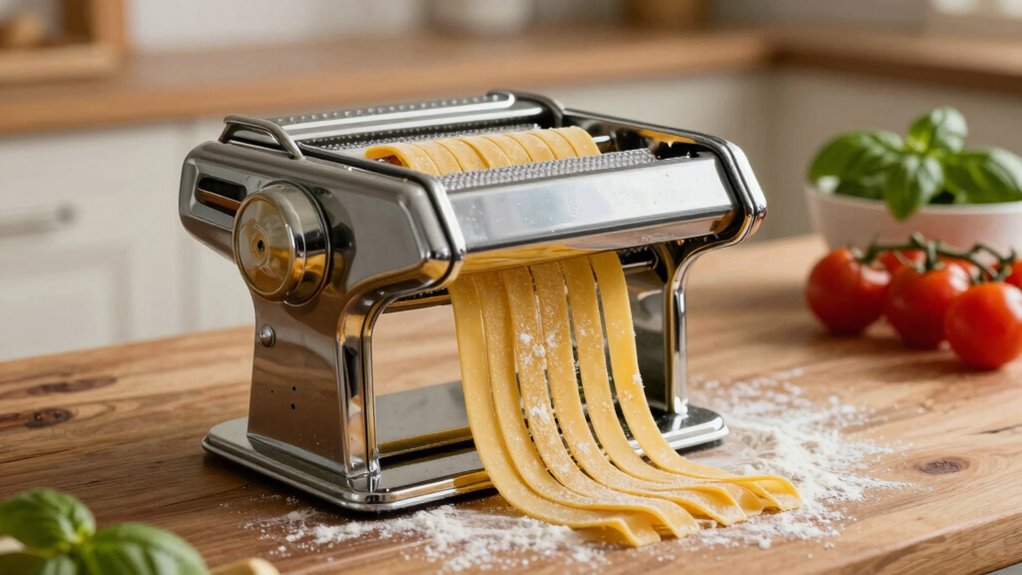

A pasta maker is worth the counter space if you often make fresh pasta and enjoy customizing textures. Manual models offer control and durability, fitting easily into small kitchens without clutter. They’re perfect for occasional use or experimenting with different styles. Electric models are better if you need speed and higher capacity. If you’re curious about choosing the right one and maximizing your kitchen space, keep exploring to find the best fit for your cooking style.

Get kitchen gear delivered free — and shop member deals
- Fast, free delivery on millions of items
- Access to Prime Big Deal Days deals on October 6–7
- Prime Video, Amazon Music and more included
Key Takeaways
- When you value hands-on control and customizable pasta thickness for better texture and flavor.
- If you prefer a compact, space-efficient appliance suitable for occasional use or limited kitchen space.
- For those seeking a cost-effective, durable option with straightforward maintenance and easy storage.
- When you enjoy the process of making pasta from scratch and want a satisfying, manual cooking experience.
- If you only make pasta infrequently and prioritize simplicity over high-volume, electric-powered machines.
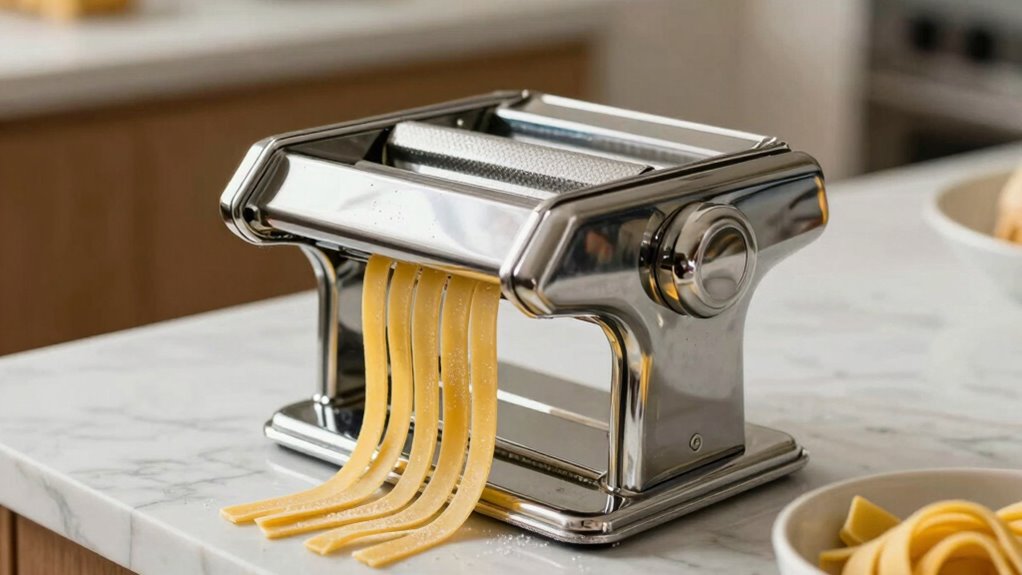
Have you ever considered how a pasta maker could transform your homemade meals? If you love crafting fresh pasta from scratch, a good-quality machine can make the process much more enjoyable and efficient. One of the key features to look at is whether you prefer a manual operation or an electric model. Manual pasta makers are straightforward, relying on your hand-cranking to roll and cut the dough. They give you more control over the thickness and texture of your pasta, which is perfect if you like to customize every batch. Plus, they tend to be more compact and easier to store when not in use, making storage considerations less of a hassle. If space is limited in your kitchen, a manual model could be a smart choice because it doesn’t take up as much room as larger, electric machines. Its simple design means you can tuck it away in a cabinet without much trouble, and it’s typically lightweight enough to move around easily.
However, keep in mind that manual operation requires some effort and patience, especially if you plan to make pasta frequently or in larger quantities. You’ll be turning the handle for each batch, which can become tiring over time. But for occasional use or smaller servings, this isn’t usually a problem. Plus, many manual pasta makers are durable and straightforward to clean, adding to their appeal. When it comes to storage considerations, manual models are generally more space-efficient because they lack bulky motors or electronic components. They often come with a compact design that fits neatly on a shelf or inside a cabinet, freeing up counter space for other kitchen tasks. This can be particularly advantageous if your kitchen is small or if you prefer to keep your countertops clutter-free. Some models even have foldable parts, making storage even easier. Additionally, choosing a pasta maker made from durable biodiversity-conscious materials can further enhance its sustainability profile.
With the right choice, a manual pasta maker can be a cost-effective addition to your kitchen that encourages hands-on cooking and creativity. In the end, whether a manual pasta maker is worth your counter space depends on how often you plan to use it and your kitchen setup. For frequent users, investing in a robust model might be worthwhile, especially if you want the best results. If you enjoy hands-on cooking, want more control over your pasta, and need a space-saving option, a manual model could be just right. It offers a balance of convenience and functionality, making it a valuable addition to your kitchen arsenal. Plus, the satisfaction of rolling and shaping pasta by hand can elevate your cooking experience, giving you fresh, homemade pasta with every batch. Additionally, choosing a model with adjustable thickness settings can help you achieve the perfect pasta texture for any dish. Moreover, selecting a machine with easy-to-clean features can save time and effort after each use.
As an affiliate, we earn on qualifying purchases.
Frequently Asked Questions
Can a Pasta Maker Be Used for Gluten-Free Dough?
Yes, you can use a pasta maker for gluten-free dough. Its gluten-free versatility allows you to create fresh pasta with different flours, but you need to guarantee the dough has the right consistency—slightly wetter than traditional dough. Adjust the moisture content as needed, and knead thoroughly for the best results. A pasta maker helps you achieve even thickness and professional-looking pasta, making it a worthwhile kitchen tool.
How Long Does It Take to Make Fresh Pasta With a Machine?
Ever wonder how long it takes to make fresh pasta with a machine? Usually, it takes about 15-20 minutes, including preparing the pasta dough consistency and machine operation tips. Once you’ve kneaded and rolled out the dough, feeding it through the machine is quick—just a few minutes. With practice, you’ll streamline the process, turning out delicious pasta faster each time. Aren’t homemade noodles worth the effort?
Is a Pasta Maker Easy to Clean and Maintain?
A pasta maker is generally easy to clean and maintain if you follow simple maintenance tips. After each use, brush off excess flour and wipe down with a damp cloth. Store it in your kitchen storage area, preferably in a dry place. Regularly oil the moving parts to keep it functioning smoothly. With proper care, your pasta maker stays in good shape, ready for delicious homemade pasta whenever you want.
What Types of Pasta Can I Make With a Pasta Maker?
With a pasta maker, you can make various types of pasta, from classic spaghetti and fettuccine to more intricate shapes like lasagna sheets and ravioli. It streamlines dough preparation and helps you achieve consistent thickness, making pasta shaping easier. You can experiment with different dough recipes and create fresh pasta tailored to your favorite dishes. Overall, a pasta maker offers versatility and fun in your kitchen.
Does Using a Pasta Maker Save Money Compared to Buying Store-Bought Pasta?
Investigation shows that using a pasta maker can lead to cost savings, especially if you regularly enjoy fresh pasta. You control ingredients, avoiding additives and preservatives found in store-bought options. While upfront costs exist, making pasta at home often costs less over time, particularly if you buy ingredients in bulk. So, yes, a pasta maker can be a smart investment for both your wallet and your health.
As an affiliate, we earn on qualifying purchases.
Conclusion
If you love fresh pasta, a pasta maker is definitely worth the counter space. Did you know that making your own pasta can save you up to 50% compared to store-bought varieties? Plus, it offers a fun, hands-on experience and endless customization options. So, if you’re ready to elevate your cooking game, investing in a pasta maker could be a game-changer for your kitchen. Trust me, your taste buds will thank you!
As an affiliate, we earn on qualifying purchases.
As an affiliate, we earn on qualifying purchases.
Fall Picks
fall essentials
As an affiliate, we earn on qualifying purchases.