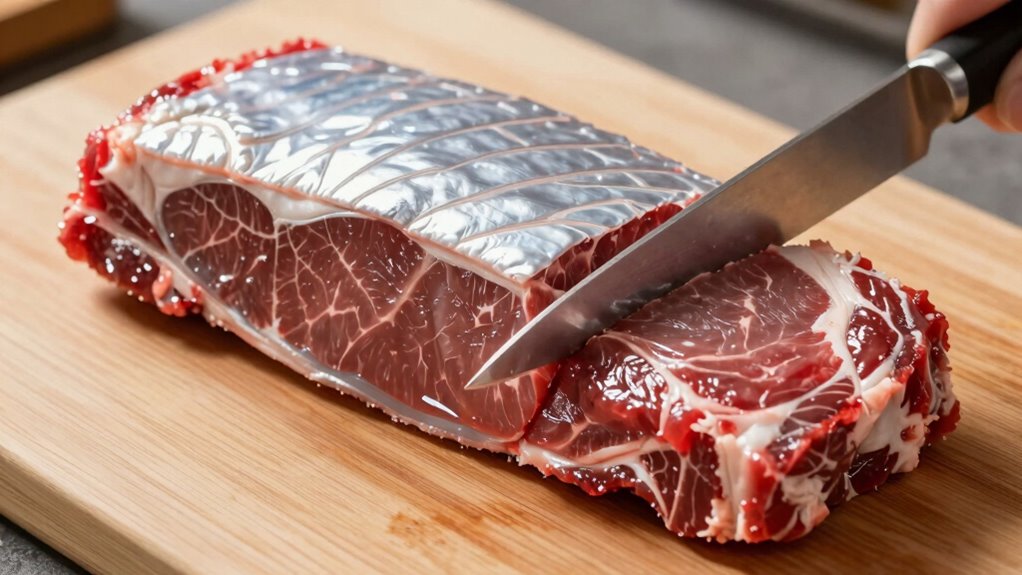

To trim fat and silver skin without wasting good meat, start with a sharp, flexible knife like a boning or paring knife. Hold the meat steady and angle the blade just beneath the fat or membrane, working slowly along natural contours. Gently peel silver skin by pulling tight and slicing underneath, removing only the tough membranes. Keep workspace clean and practice steady, precise cuts—this way, you’re preserving as much quality meat as possible. For more tips, keep going!

Get kitchen gear delivered free — and shop member deals
- Fast, free delivery on millions of items
- Access to Prime Big Deal Days deals on October 6–7
- Prime Video, Amazon Music and more included
Key Takeaways
- Use a sharp, flexible knife to carefully follow meat contours and minimize meat loss during trimming.
- Gently peel silver skin by pulling loose ends and slicing underneath without pressing too hard.
- Focus on removing only excess fat, leaving some for flavor, while avoiding cutting into the good meat.
- Keep the blade close to the surface and work slowly for precise removal of fat and silver skin.
- Maintain a clean workspace and proper hygiene to prevent contamination and preserve meat quality.
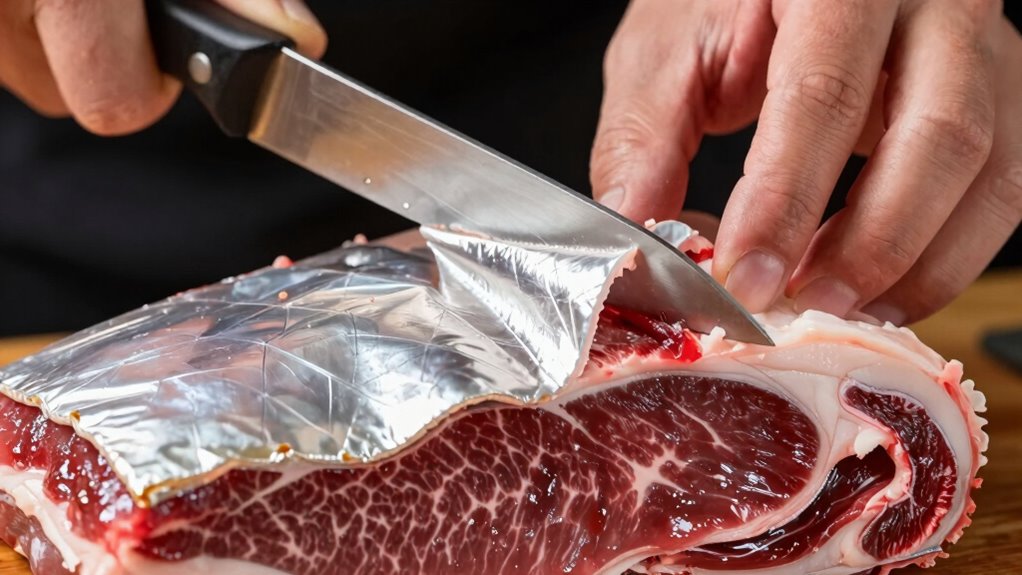
Trimming fat and silver skin from meat can seem tricky at first, but with the right technique, it becomes quick and straightforward. Mastering this skill is essential because it helps you prepare meat that’s leaner and more enjoyable to eat. It also prevents excess fat from burning during cooking, which can affect flavor and texture. The key is to use proper cutting tools and a steady hand, making sure you remove only the unwanted parts without sacrificing the good meat underneath. When you’re trimming, remember that understanding cooking techniques is indispensable—knowing how heat interacts with fat helps you decide what to remove and what to leave.
Start by placing the meat on a clean cutting surface. Use a sharp, flexible knife, such as a boning or paring knife, which offers better control and precision. Grip the meat firmly, and hold the knife at a slight angle, sliding it just beneath the silver skin or fat layer. Don’t press too hard; instead, let the sharp blade do the work. Work slowly, following the natural contours of the meat, and keep the blade close to the surface to remove only the unwanted fat and silver skin. When you encounter tough silver skin—those shiny, silvery membranes—you want to peel it away carefully, pulling gently on the loose end while slicing underneath with the knife. Developing a good technique can also reduce meat waste and help you make the most of each cut. Additionally, practicing proper knife skills can significantly improve the efficiency and safety of your trimming process. Being mindful of meat anatomy can also guide you in knowing which parts are best to remove and which to keep for optimal flavor and texture.
Use a sharp knife and work slowly to carefully remove silver skin and excess fat for better meat quality.
As you trim, consider meat storage. Proper storage is essential to preserve the quality of your meat after trimming. Wrap the trimmed meat tightly in plastic wrap or vacuum-seal it, and store it in the coldest part of your refrigerator if you plan to cook it within a few days. For longer storage, freeze it; just be sure to label it with the date. Removing excess fat before storage can help it stay fresh longer and prevent freezer burn. Plus, leaner cuts tend to store better because they’re less prone to spoilage. Understanding meat preservation techniques can extend the shelf life and maintain optimal quality. Keeping your workspace clean and organized is also crucial; a sanitized environment reduces the risk of contamination and ensures food safety.
Throughout this process, keep your workspace clean and organized. Use a separate cutting board for meat to avoid cross-contamination and wash your hands thoroughly afterward. Remember, the goal isn’t to remove every bit of fat—some fat adds flavor during cooking—but to trim away the excess so your meat is healthier, leaner, and easier to cook evenly. With practice, you’ll develop a steady hand and a sharp eye for trimming, making your culinary preparations more efficient and enjoyable.
As an affiliate, we earn on qualifying purchases.
Frequently Asked Questions
What Tools Are Best for Trimming Fat and Silver Skin?
You’ll want a sharp boning or fillet knife for trimming fat and silver skin, as it gives you precision and control. Use a pair of fine-tipped scissors for stubborn bits, especially around joints. When you’re done, store your meat properly to prevent spoilage. Good cooking techniques involve trimming carefully to maximize flavor, and proper meat storage keeps your meat fresh, making your trimming efforts worthwhile.
How Do I Identify Silver Skin Accurately?
You can identify silver skin by its shiny, silvery appearance and firm, tough texture that doesn’t bend easily. To remove it, use a sharp knife and gently slide it between the silver skin and the meat, following the contour of the cut. This is a key step in fat trimming techniques, helping you eliminate tough, sinewy tissue without wasting valuable meat. Focus on making smooth, controlled cuts for the best results.
Can Trimming Affect the Meat’s Tenderness?
Trimming can impact meat’s tenderness if you remove too much, as it might expose muscle fibers that can dry out or toughen during cooking. However, careful trimming helps retain flavor and prevents overcooking, ensuring juiciness. Using gentle techniques like slicing against the grain and adjusting your cooking methods, such as slow roasting or low heat, helps preserve tenderness and flavor, making your meat more enjoyable.
Should I Trim Fat Before or After Cooking?
You should trim fat before cooking to master your cooking techniques and preserve flavor better. Leaving some fat during cooking can enhance taste, but too much can cause flare-ups or greasy results. Trimming after cooking risks losing juiciness and flavor, so it’s best to remove excess fat beforehand. This way, you control the flavor and texture, ensuring your meat stays tender and delicious without waste.
How Do I Prevent Removing Too Much Meat?
To prevent removing too much meat, use precise cutting techniques and take your time. Keep the blade sharp and trim slowly, following the natural contours of the meat. This way, you maintain flavor and moisture, enhancing your dish’s taste. Remember, minimal trimming preserves juiciness and flavor, so focus on removing only the silver skin and excess fat. This careful approach guarantees your meat stays flavorful and tender during cooking.
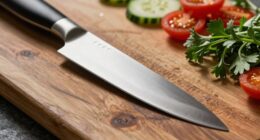
paring knife for silver skin removal
As an affiliate, we earn on qualifying purchases.
As an affiliate, we earn on qualifying purchases.
Conclusion
Now that you’ve mastered trimming fat and silver skin, think of your meat as a precious gemstone waiting to shine. Each careful slice reveals the pure, vibrant core beneath, turning rough edges into a polished masterpiece. With your steady hand, you’re sculpting flavor and tenderness from raw potential, transforming a simple cut into a culinary work of art. Remember, your knife is an artist’s brush—use it to craft perfection, one precise cut at a time.
As an affiliate, we earn on qualifying purchases.
As an affiliate, we earn on qualifying purchases.
Fall Picks
fall essentials
As an affiliate, we earn on qualifying purchases.