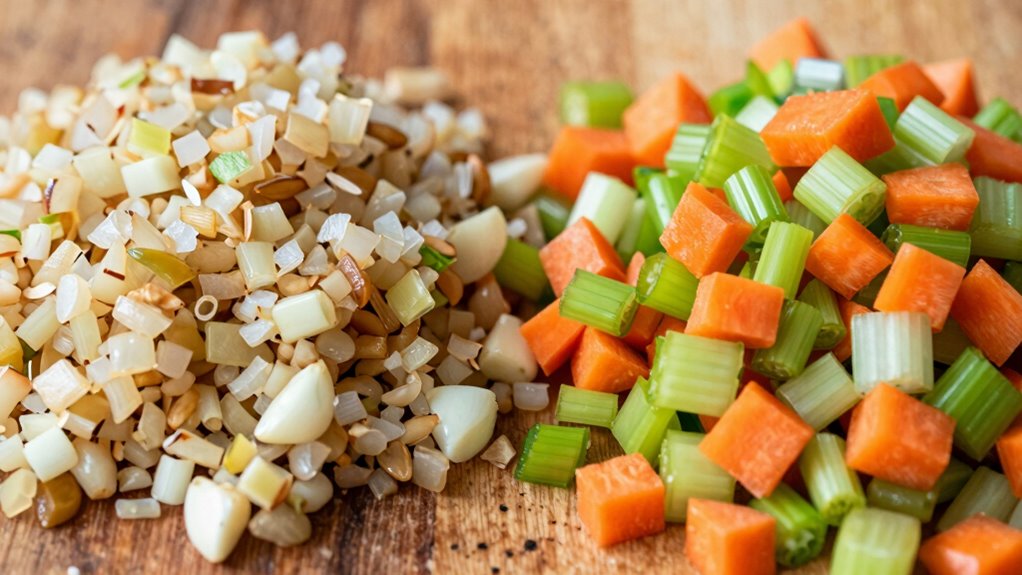

The cut size in soffritto versus mirepoix dramatically impacts flavor development. With soffritto, you chop vegetables very finely to maximize surface area, ensuring quicker caramelization and a smooth, integrated base. Mirepoix uses larger, uniform cuts that release flavor more slowly, adding texture and depth to dishes. Choosing the right size shapes the dish’s texture and flavor profile, and understanding these differences helps you control the final taste. What’s more, exploring these techniques reveals how cut size influences your cooking results.
Key Takeaways
- Soffritto uses very finely chopped vegetables to maximize surface area for quick flavor extraction.
- Mirepoix features larger, uniform cuts that provide texture and slow flavor release during cooking.
- Smaller soffritto cuts create a smooth, integrated base ideal for purees and delicate sauces.
- Larger mirepoix pieces maintain vegetable texture and add depth through pronounced chunks.
- The cut size directly influences dish texture and flavor layering, with finer cuts offering more subtle, cohesive flavors.
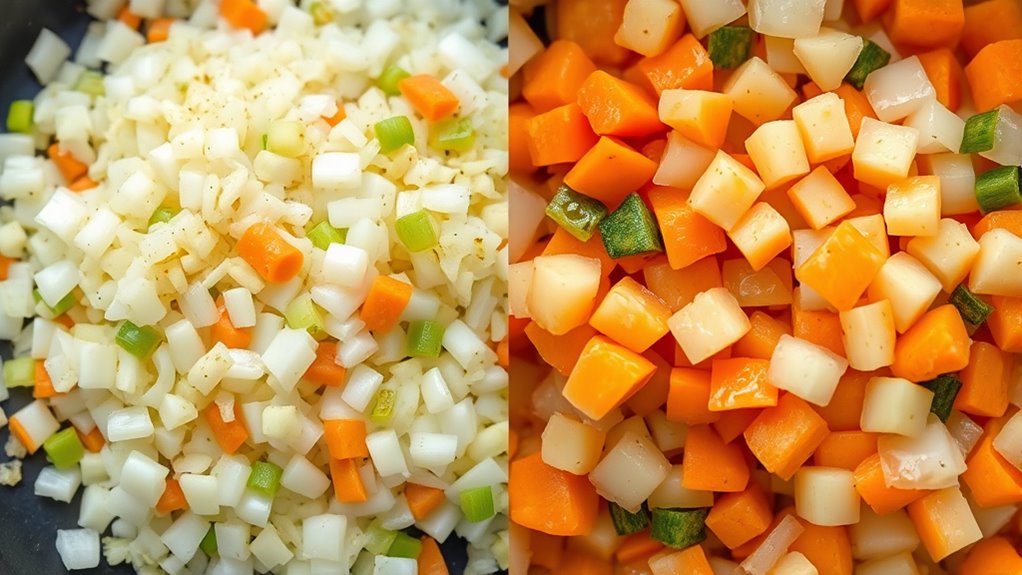
When it comes to building flavorful bases for soups, stews, and sauces, soffritto and mirepoix are two classic techniques that often come up. Both are foundational cooking techniques designed to develop depth and complexity in your dishes, but they differ in cut size, ingredients, and the way they influence flavor development. Understanding these differences helps you choose the right method for each recipe and control the flavor profile more precisely.
Soffritto and mirepoix are essential bases shaping flavor, texture, and complexity in your cooking.
Soffritto is a traditional Italian technique that involves finely chopping a combination of aromatic vegetables—typically onion, celery, and carrot—and gently sautéing them in oil or butter. The key to soffritto’s effectiveness lies in how finely you cut the vegetables. The smaller the pieces, the more surface area is exposed, allowing for better caramelization and quicker flavor extraction. This fine chopping results in a fragrant, smoothly integrated base that enhances the dish without leaving noticeable chunks. The cooking process is slow and gentle, emphasizing flavor development through slow sweating, which draws out natural sugars and softens the vegetables, creating a rich foundation. Because of the small cut size, soffritto melds seamlessly into your dish, providing a depth of flavor that’s both nuanced and well-rounded.
Mirepoix, a French culinary staple, employs a different approach. The vegetables—usually onion, celery, and carrot—are cut into larger, more uniform pieces, often in dice or batons. This larger cut size means the vegetables take longer to cook through, but they also retain more of their individual texture and shape. The goal of mirepoix isn’t just flavor development through melting or caramelization but also to create a visible, textured base. As it cooks, the larger pieces release their flavors more slowly, adding a layered complexity to your dish. The bigger cuts allow for a more pronounced vegetable presence, which can be especially desirable in stews or braises where you want the vegetable chunks to stand out. The technique emphasizes slow simmering, giving the flavors time to meld while maintaining some structural integrity.
Both techniques serve the purpose of enriching the dish’s flavor profile, but they do so through different approaches to cut size and cooking method. Soffritto’s fine, almost paste-like consistency enhances smoothness and depth, making it ideal for pureed sauces or delicate soups. Mirepoix’s chunkier pieces, on the other hand, contribute a hearty texture and a more pronounced vegetable flavor, suitable for rustic stews or slow-cooked dishes. Your choice depends on the desired texture and how much you want the vegetables to contribute to the overall flavor. By mastering these techniques, you gain control over the flavor development process, ensuring your dishes are layered, balanced, and deeply satisfying.
Frequently Asked Questions
Can Soffritto and Mirepoix Be Used Interchangeably in Recipes?
Yes, soffritto and mirepoix can be used interchangeably, but keep in mind their different flavor profiles and cultural origins. Soffritto, common in Italian cuisine, offers a rich, aromatic base with garlic and herbs, while mirepoix, typical in French and American dishes, provides a milder, sweeter flavor with carrots and celery. Adjust your seasonings accordingly to match the desired taste and authenticity of your dish.
Which Type of Cut Releases More Aroma During Cooking?
Imagine you’re opening a treasure chest—your goal is to release the richest aroma. Using a finer cut, like in soffritto, enhances aromatics intensity and maximizes flavor extraction during cooking. The smaller pieces allow heat to penetrate more evenly, releasing more aroma faster. So, if you want a more fragrant dish, opt for finely chopped soffritto, as it amplifies aromatic release and heightens flavor extraction in your recipe.
Are There Specific Dishes That Require Soffritto Over Mirepoix?
You should use soffritto over mirepoix when preparing Italian dishes like ragù, risotto, or braised meats, as regional flavor preferences emphasize a finer, aromatic base. Cultural culinary differences influence these choices, with soffritto offering a more fragrant, subtly sweet foundation. If you want a richer, more integrated flavor, go for soffritto; for heartier, chunkier textures, mirepoix is ideal. Your dish’s regional roots guide this decision.
How Does the Cooking Time Differ Between the Two?
You’ll notice that soffritto typically has a shorter cooking duration, around 10-15 minutes, to develop its flavors fully, while mirepoix can simmer for 30-45 minutes to deepen flavor. notably, the smaller cut size of soffritto means faster flavor development, making it ideal for quick sautés. In contrast, the larger mirepoix pieces require longer cooking times to release their sweetness, impacting the overall flavor profile of your dish.
Does the Choice of Cut Affect Nutritional Content Significantly?
Your choice of cut impacts the nutritional content slightly, mainly due to the surface area exposed during cooking, which can influence nutrient retention. Smaller cuts, like in mirepoix, may lead to slightly more nutrient loss but also preserve flavor better because of more uniform cooking. Ultimately, the nutritional impact isn’t huge, but if you want maximum flavor preservation, opt for a cut size that balances nutrient retention with flavor extraction.
Conclusion
Now that you know the difference, picture yourself in a warm kitchen, the aroma of soffritto sizzling softly in the pan, its tiny pieces releasing rich, fragrant oils. Or imagine a hearty stew simmering with perfectly diced mirepoix, each piece contributing to a deeper, more mellow flavor. Your choice of cut size transforms your dish’s soul, turning simple ingredients into a symphony of taste. So next time, pick your cut, and let your culinary creativity flourish.