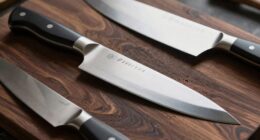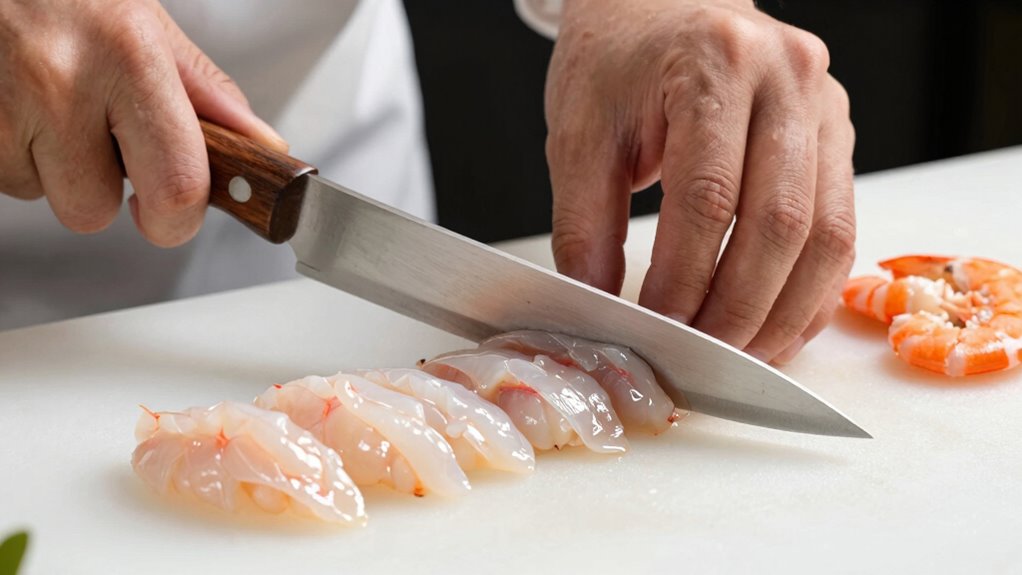
Choosing the right knife geometry is essential for slicing fish and seafood cleanly. A blade’s length, flexibility, sharpness angle, and thickness all impact your control and the quality of your cuts. Shorter, flexible blades suit delicate spots, while longer, stiffer blades cover larger surfaces efficiently. Proper angles reduce resistance and prevent tearing, and thinner blades glide smoothly along contours. Mastering these details helps you produce cleaner fillets, and with more insights, you’ll refine your technique further.
Key Takeaways
- Proper knife geometry, including blade length and thickness, ensures precise, smooth cuts that minimize flesh damage and waste.
- A sharp, angled edge (around 15°) reduces cutting force, facilitating cleaner slices through delicate fish tissues.
- Flexible blades help follow fish contours seamlessly, preventing tearing and ensuring even fillet separation.
- Thin blades (1-3 mm) glide easily along bones and curves, improving control and reducing resistance during slicing.
- Matching knife shape to fish size and anatomy enhances cut quality, consistency, and overall seafood presentation.

HOSHANHO Fillet Knife 7 Inch, Super Sharp Boning Knife in High Carbon Stainless Steel, Professional Japanese Fish Knives for Meat Poultry Cutting
【Premium High Carbon Steel】This professional fish fillet knife is made from high-quality Japanese stainless steel 10Cr15CoMoV, which makes…
As an affiliate, we earn on qualifying purchases.
As an affiliate, we earn on qualifying purchases.
The Impact of Blade Length on Fish Filleting Efficiency

The length of your filleting knife directly affects how efficiently and accurately you can work on different fish. A shorter blade, around six inches, provides better control when filleting small fish like trout or panfish. It allows you to maneuver easily in tight spots and follow the contours of delicate fish without tearing flesh. Additionally, shorter blades offer increased precision, which is crucial for clean cuts. Conversely, longer blades, nine to eleven inches, excel with larger species such as salmon or halibut. They cover more surface area, making long, smooth cuts easier and faster. Longer blades also help maintain consistent fillet thickness, especially on big fish. However, they require more skill to control, especially in tight spaces. Choosing the right length ensures you can work comfortably, follow fish contours precisely, and produce clean, professional cuts. Blade length plays a significant role in achieving filleting performance, and understanding knife geometry can further enhance your results.

Cutluxe Fillet Knife for Fish & Meat – 7" Razor Sharp Boning Knife – Flexible High Carbon German Steel, Full Tang Ergonomic Handle Design, Grilling Gifts for Men – Artisan Series
PREMIUM PERFORMANCE – Perfectly engineered fish fillet knife tapered to a razor-sharp edge for effortless filleting, de-boning, trimming,…
As an affiliate, we earn on qualifying purchases.
As an affiliate, we earn on qualifying purchases.
Flexibility and Its Role in Precise Fish Cutting
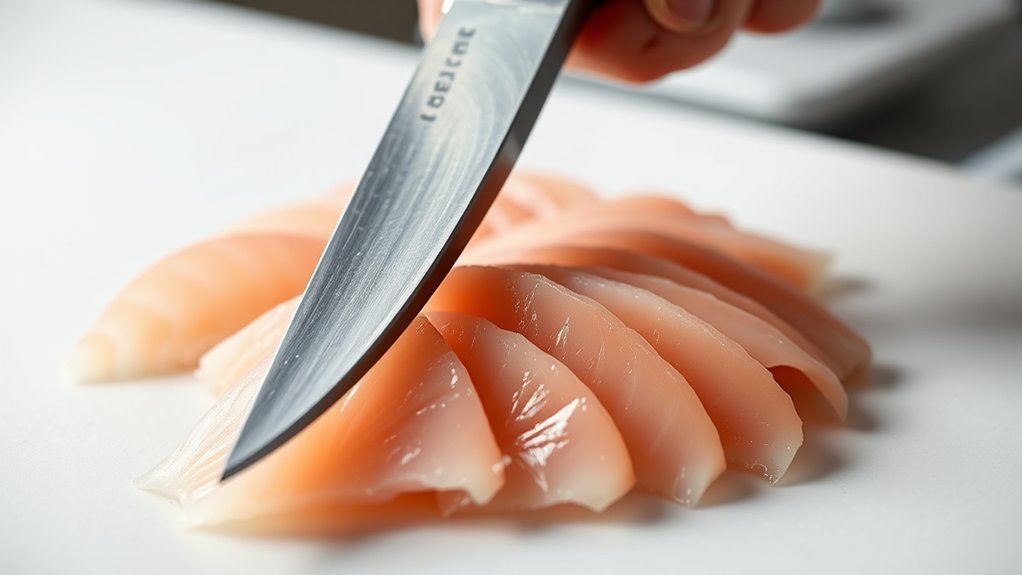
Flexibility in your filleting knife allows it to smoothly follow the curves and contours of the fish. This adaptability helps you make precise cuts without damaging the flesh or tearing the meat. When your blade moves effortlessly, you get cleaner fillets and less waste. Additionally, modern kitchen technology such as precision-engineered knives can enhance your ability to achieve these results more consistently. A flexible blade also enables better control over cutting angles, which is essential for delicate filleting tasks. Understanding piercing materials can also inspire you to select the most suitable tools for your skill level and needs. Recognizing passive voice in your writing can help improve clarity and directness in your instructions.
Adapting to Fish Contours
Because fish have varied and complex contours, choosing a filleting knife with the right flexibility allows you to follow their natural shapes precisely. A flexible blade bends easily, helping you glide smoothly along curves, ribs, and bones without damaging the flesh. This adaptability is essential for maintaining clean cuts, especially around tricky areas like the collar or ribs. With a flexible knife, you can make delicate maneuvers, reducing the risk of tearing or crushing the meat. It also helps you trace the fish’s contours more naturally, resulting in minimal waste. Whether filleting a small trout or a large salmon, the right flexibility ensures your cuts stay smooth and accurate, matching each fish’s unique shape effortlessly.
Preventing Flesh Damage
A flexible filleting knife allows you to follow the fish’s natural curves without applying excessive pressure that can tear or crush the flesh. This flexibility helps you glide smoothly along bones, ribs, and contours, reducing the risk of damaging delicate meat. When your blade bends with the fish’s shape, you maintain better control and avoid jagged cuts or tearing tissue. Flexibility also makes it easier to navigate tight spaces, such as around pin bones or near the spine, without exerting force that could cause fractures. Additionally, proper knife maintenance ensures the blade remains flexible and responsive during use. By choosing a knife with the right level of bend, you preserve maximum flesh quality and yield. Trusted reputation in the market underscores the importance of selecting high-quality knives for precise cutting. This precision prevents waste and results in cleaner, more professional-looking fillets, making your overall fish preparation more efficient and satisfying.
HOSHANHO Fillet Knife 7 Inch, Super Sharp Boning Knife in High Carbon Stainless Steel, Professional Japanese Fish Knives for Meat Poultry Cutting
【Premium High Carbon Steel】This professional fish fillet knife is made from high-quality Japanese stainless steel 10Cr15CoMoV, which makes…
As an affiliate, we earn on qualifying purchases.
As an affiliate, we earn on qualifying purchases.
How Sharpening Angles Affect Cutting Force and Precision
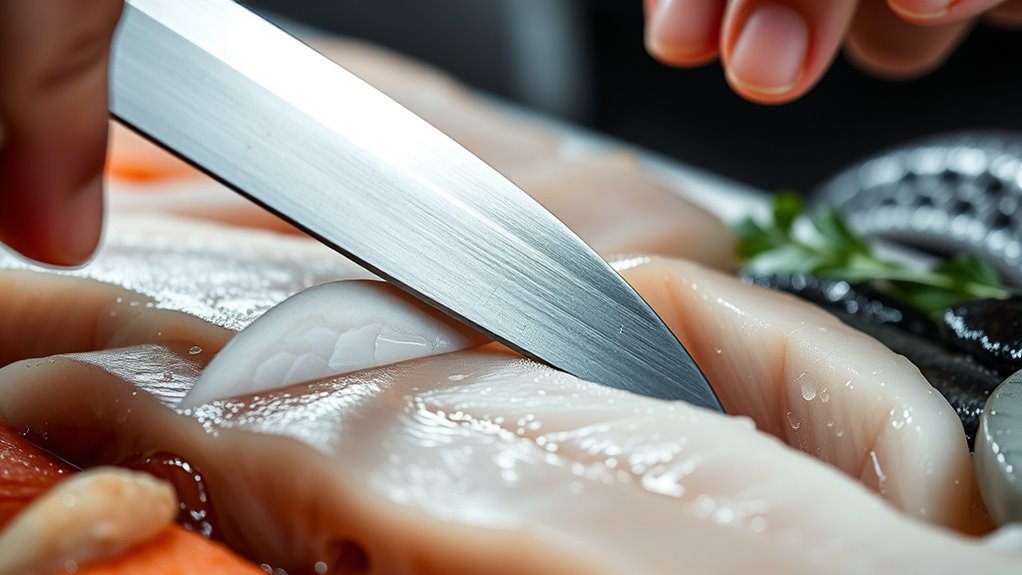
Sharpening angles play a crucial role in determining both the cutting force required and the precision of your filleting cuts. A sharper angle, around 5-15°, reduces the amount of force needed to slice through fish flesh, making cuts smoother and easier. This means less muscle strain and cleaner, more controlled movements. Conversely, wider angles, such as 20° or more, increase resistance, requiring more effort and risking jagged cuts. The angle also influences your control; a sharper edge allows for finer, more precise cuts along contours and bones. Additionally, knife geometry can also impact the overall cutting efficiency, especially when handling different types of seafood with varying textures. However, extremely acute angles may dull faster, so finding a balance between sharpness and durability is key. Properly sharpening your knife to the correct angle enhances both efficiency and the quality of your filleting. Understanding blade maintenance can also help when handling heavy knives or equipment during your prep process. Additionally, edge retention can help you maintain your knife’s sharpness longer and improve your overall cutting experience.

Rondauno Brisket Knife, Carving Knife for Meat with 12 Inch Ultra Sharp Slicing Knives for Cutting BBQ, Turkey and Roast, Premium High Carbon Stainless Steel
Ultra Sharp Blade: Our carving knife for meat features a 12-inch blade to deliver highly precise cuts with…
As an affiliate, we earn on qualifying purchases.
As an affiliate, we earn on qualifying purchases.
The Significance of Blade Thickness in Reducing Resistance
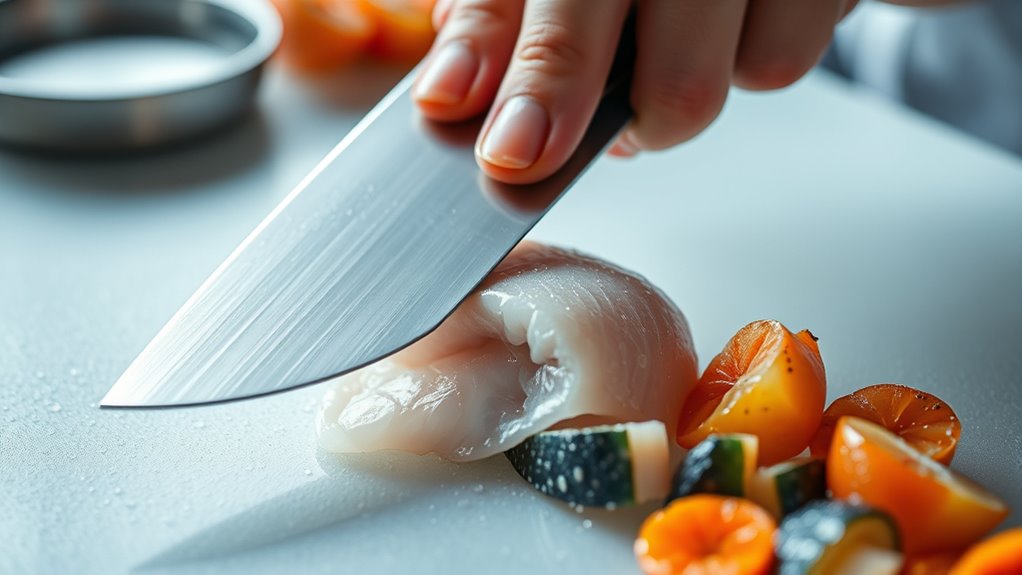
Using a thinner blade makes cutting through fish easier by reducing the resistance you feel. Less material resistance means you can make more precise, cleaner cuts with less effort. When your blade is thin, it gives you better control, helping you avoid damaging the delicate flesh. Proper filtration and maintenance of your knife ensures smooth operation and preserves blade sharpness for optimal cutting performance. Additionally, maintaining the correct blade geometry is essential for consistent results and easy slicing. Selecting the right knife material can also influence how well your blade maintains its sharpness over time. Being aware of blade sharpness and regular honing can further improve your slicing accuracy and safety. A well-designed blade thickness minimizes fatigue and enhances overall cutting precision.
Thinner Blades Cut Easier
Thinner blades substantially reduce the resistance you encounter while cutting through fish and seafood. When the blade is slender, it slices more smoothly, requiring less force. Imagine:
- A razor-sharp needle gliding effortlessly through delicate flesh.
- A thin sheet of paper tearing cleanly instead of crushing.
- A needle threading easily through fabric without resistance.
- A whisper of movement as the blade slices without scraping or dragging.
- Vetted materials ensuring the blade maintains its sharpness longer, enhancing precision and durability. Using high-quality blade materials helps keep the edge sharper for extended periods. Additionally, a thinner blade benefits from proper sharpening techniques, which help maintain optimal performance over time. Being aware of blade geometry allows for better understanding of how design impacts cutting efficiency and longevity. Proper blade alignment also ensures consistent cuts and prevents uneven wear, further extending the blade’s lifespan.
With a thinner blade, you experience less friction and fewer jagged edges. This means more precise cuts, minimal damage to the meat, and less fatigue. The blade’s slim profile allows it to follow the contours of the fish seamlessly, making your job easier and the fillets cleaner. Thin blades streamline your slicing, giving you control and efficiency every time.
Less Material Resistance Needed
The thickness of your filleting blade directly influences the amount of resistance you encounter during cutting. Thinner blades, around 1-3 mm, require less force to slice through fish flesh because they minimize material drag and friction. When your blade is slim, it cuts more smoothly, reducing fatigue and allowing for cleaner, more precise cuts. Blade thickness is a critical factor in achieving optimal cutting performance and minimizing damage to the delicate flesh. Additionally, choosing a blade with the right material composition can further enhance cutting efficiency and durability. Thicker blades, on the other hand, create more resistance, making the process harder and increasing the risk of tearing or jagged edges. By choosing a blade with minimal material thickness, you streamline the cutting action, making it easier to follow the contours of the fish and achieve a smooth, professional fillet. This not only improves efficiency but also helps preserve the quality of your catch, especially when paired with sharpness for cleaner cuts.
Enhanced Precision and Control
Reducing blade thickness enhances your control and precision during filleting by minimizing the force needed to cut through the fish. A thinner blade slices smoothly, giving you better maneuverability and reducing fatigue. Imagine:
- Gliding effortlessly along the fish’s contours, following every curve precisely.
- Traveling around bones without tearing or jagged cuts.
- Maintaining steady pressure with less effort, ensuring cleaner, more even slices.
- Minimizing friction and resistance, which helps preserve delicate flesh and maximize yield.
A blade with ideal thinness allows you to respond quickly to the fish’s anatomy, making delicate cuts easier. This control reduces slip-ups and uneven cuts, resulting in a cleaner, more professional fillet every time.
Optimal Cutting Techniques for Different Fish Anatomy

Understanding the specific anatomy of each fish is essential for effective filleting. You need to identify key features like the dorsal fin, lateral line, backbone, and ribs to plan your cuts accurately. For smaller fish like trout, use shorter, flexible blades to follow contours smoothly, especially around delicate bones. Larger species such as salmon require longer blades to cover more ground efficiently and maintain control. When filleting, cut behind the pectoral fin, angling your knife to follow the backbone, and use long, steady strokes to separate flesh cleanly. For fish with prominent pin bones, employ V-shaped scoring before slicing. Adjust your technique based on the fish’s shape and bone structure, ensuring you minimize meat loss and produce clean, precise fillets.
Selecting the Right Knife Geometry for Various Fish Species

Choosing the right knife geometry depends on the species of fish you’re working with, as different shapes and bone structures require specific blade characteristics. For small fish like trout, opt for a short, flexible blade that allows tight turns around bones. Larger species such as salmon need longer, slightly stiffer blades to handle extensive cuts efficiently. Consider these factors:
Select knife geometry based on fish size and bone structure for cleaner cuts and efficiency.
- Blade Length – shorter for small fish, longer for big ones.
- Flexibility – flexible for delicate flesh, stiffer for firm textures.
- Sharpening Angle – sharper angles (around 10°) for precision, more robust angles for tougher skin.
- Blade Thickness – thinner blades for finesse, thicker for durability on larger fish.
Matching these features guarantees cleaner cuts, reduces waste, and adapts to each fish’s unique anatomy.
Techniques for Navigating Bones and Contours Seamlessly
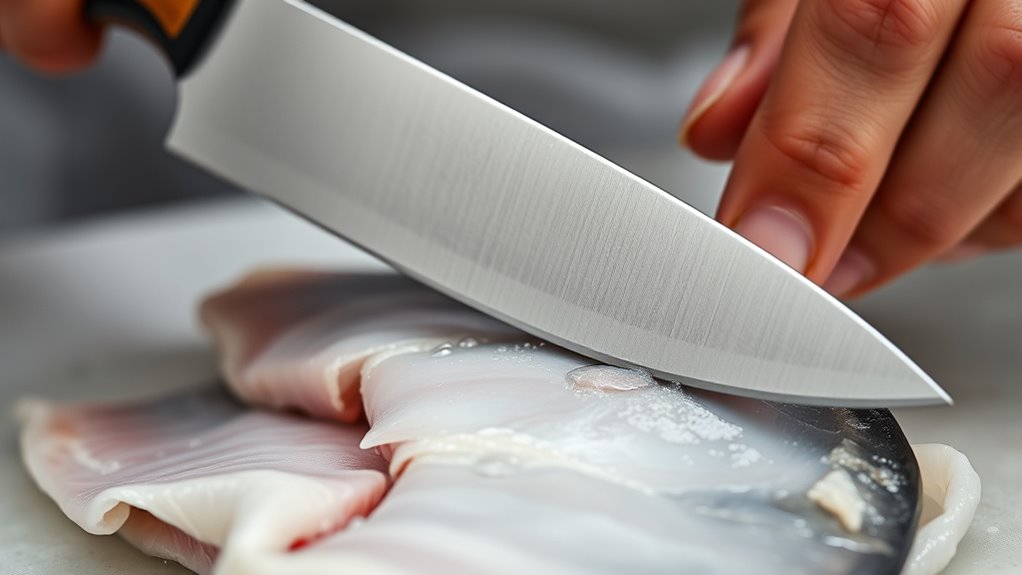
Mastering the art of steering bones and contours begins with precise technique and a keen eye for fish anatomy. First, position your knife at a shallow angle, following the natural curves of the fish. Use steady, long sawing motions to glide along the bones, avoiding excessive pressure that could tear flesh. Keep your blade aligned with the contours—closer to bones when necessary, and slightly away when cutting through softer areas. When approaching pin bones or irregular contours, gently tilt and adjust your angle to stay flush against the bone structure. Pay attention to anatomical landmarks like the backbone and lateral line to guide your cuts smoothly. With practice, you’ll develop a feel for where to guide the knife, ensuring clean, efficient fillets without damaging delicate flesh.
Practical Tips for Maintaining Knife Geometry During Filleting
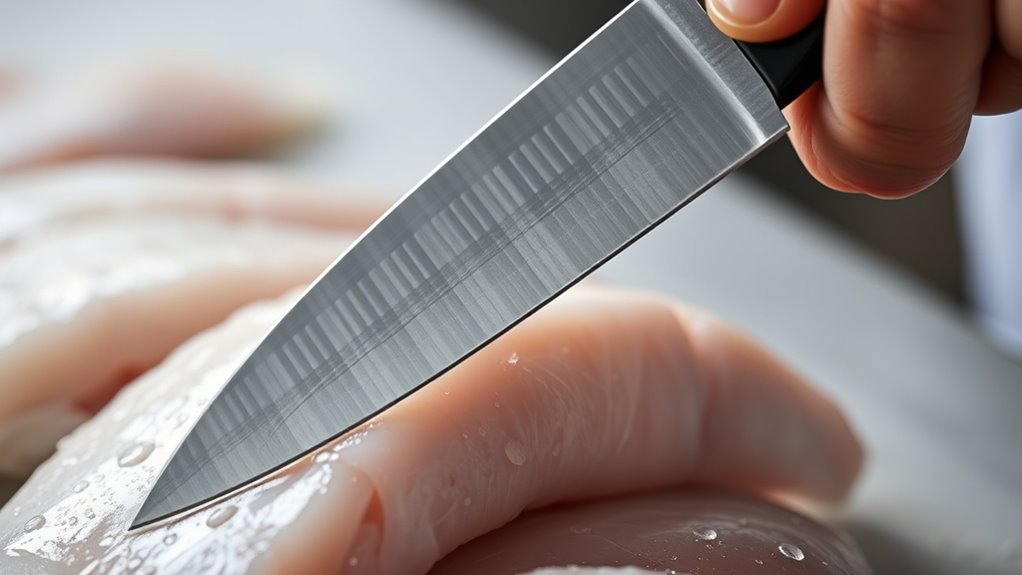
Maintaining the proper geometry of your filleting knife is key to achieving clean, precise cuts. To do this, regularly check and adjust your knife’s features.
- Keep it sharp: Use proper sharpening angles (around 15°) to preserve edge geometry.
- Maintain flexibility: Avoid stiffness by honing the blade gently and avoiding excessive force.
- Check blade thickness: Ensure it stays thin (1-3 mm) for smooth cuts; file or hone as needed.
- Mind your blade length: Use a blade suited to your fish size, preventing unnecessary strain or loss of control.
Consistently inspect your knife’s edge, angle, and flexibility during filleting. Proper maintenance ensures your cuts stay clean, reducing flesh damage and maximizing yield.
Frequently Asked Questions
How Does Blade Material Influence Fish Filleting Performance?
Your choice of blade material directly impacts your filleting performance. A high-quality, corrosion-resistant steel stays sharper longer, making precise cuts easier and reducing fatigue. It also resists chipping and dulling, ensuring smooth slicing through delicate fish flesh. Softer metals may require more frequent sharpening, hindering efficiency. So, selecting durable, well-maintained material helps you achieve cleaner cuts, preserve fish quality, and work more comfortably during extended filleting sessions.
What Are the Best Practices for Storing Filleting Knives?
Did you know properly storing your filleting knife can extend its life by up to 50%? Always clean and dry it thoroughly after use, then store it in a knife block, magnetic strip, or protective sheath. Avoid storing it loose in drawers to prevent damage to the blade or injury. Regularly check for rust or dullness, and sharpen or hone as needed to keep it in top condition.
How Does Hand Grip Design Affect Cutting Accuracy?
Your hand grip design directly impacts your cutting accuracy by providing better control and stability. A comfortable, ergonomic grip reduces fatigue and slips, allowing you to follow fish contours precisely. When your grip feels secure and natural, you can apply even pressure and maintain consistent angles. This enhances your ability to make clean, accurate cuts, minimizing waste and ensuring professional-looking fillets every time.
Can Electric Filleting Knives Replace Traditional Manual Blades?
Yes, electric filleting knives can replace traditional manual blades, especially for larger or tougher fish. They offer consistent speed and reduce fatigue, making filleting easier and faster. However, manual knives give you more control for delicate cuts and detailed work. You might prefer manual blades for smaller fish or precise filleting, but electric knives are ideal when efficiency and power are your priorities.
What Environmental Factors Impact Blade Longevity and Performance?
Did you know harsh environments can cut a blade’s life by up to 50%? You might not realize that saltwater, humidity, and temperature fluctuations considerably impact your knife’s performance and longevity. Salt causes corrosion, humidity accelerates rust, and extreme temperatures weaken steel. To keep your blade sharp and effective, clean and dry it after use, store it properly, and choose stainless steel options designed for tough conditions.
Conclusion
So, after all this talk about knife geometry, you’d think choosing the perfect fillet knife is straightforward. But ironically, even the sharpest, most perfectly shaped blade won’t help if you’re not paying attention or lack patience. Remember, it’s not just about the tool — it’s about your skill and care. So go ahead, slice away, and maybe one day you’ll master the art… or just enjoy the fish.