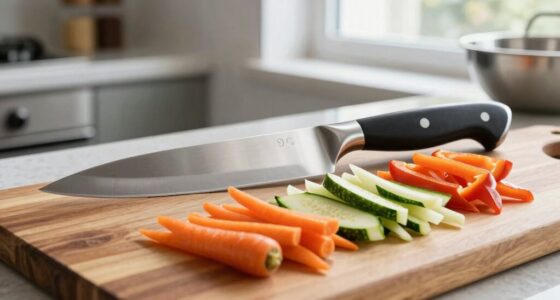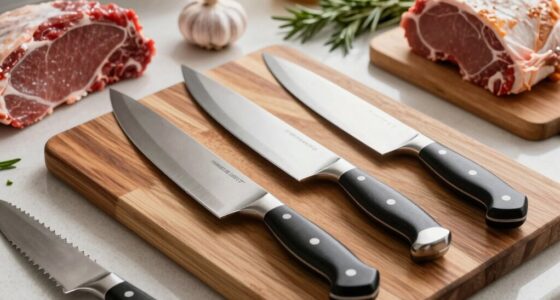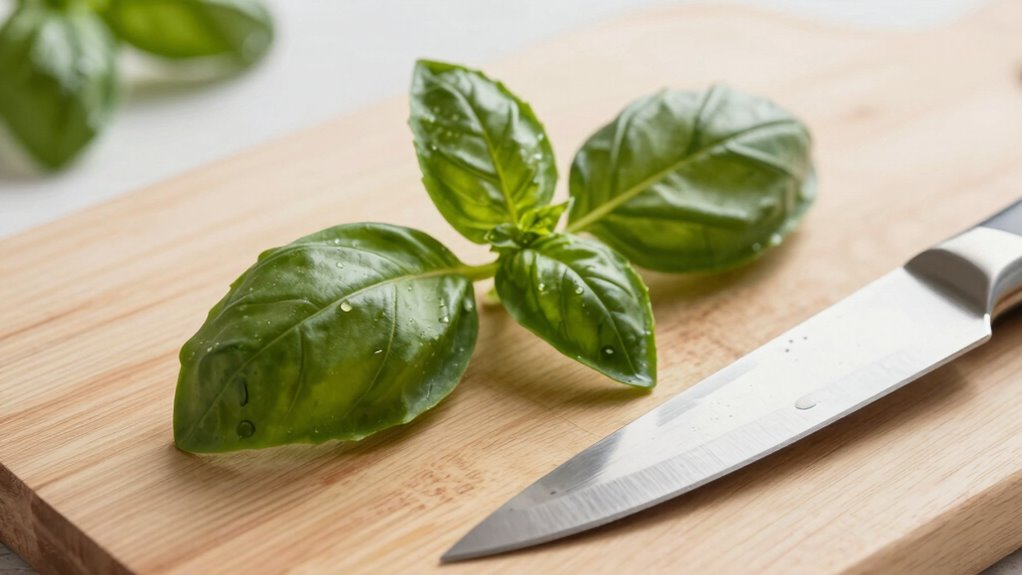
To prep basil without black edges, use a sharp knife like a chef’s or paring knife for clean cuts. Make quick, gentle rocking motions and hold the stems steady with curled fingers. Avoid crushing the leaves or dull blades, as this damages cell walls and causes browning. Always slice just above the leaves and handle basil gently. Keep practicing these knife techniques, so you can create beautiful, vibrant basil dishes and discover more tips below.
Key Takeaways
- Use a sharp, high-quality knife to make clean, quick cuts without crushing the leaves.
- Cut basil just above the leaves, avoiding tearing or damaging the plant tissue.
- Hold basil steady with curled fingers to prevent slipping and accidental bruising during slicing.
- Trim basil in a gentle rocking motion to minimize cell wall damage that causes black edges.
- Handle and store basil carefully after cutting, keeping it cool and dry to preserve freshness and color.
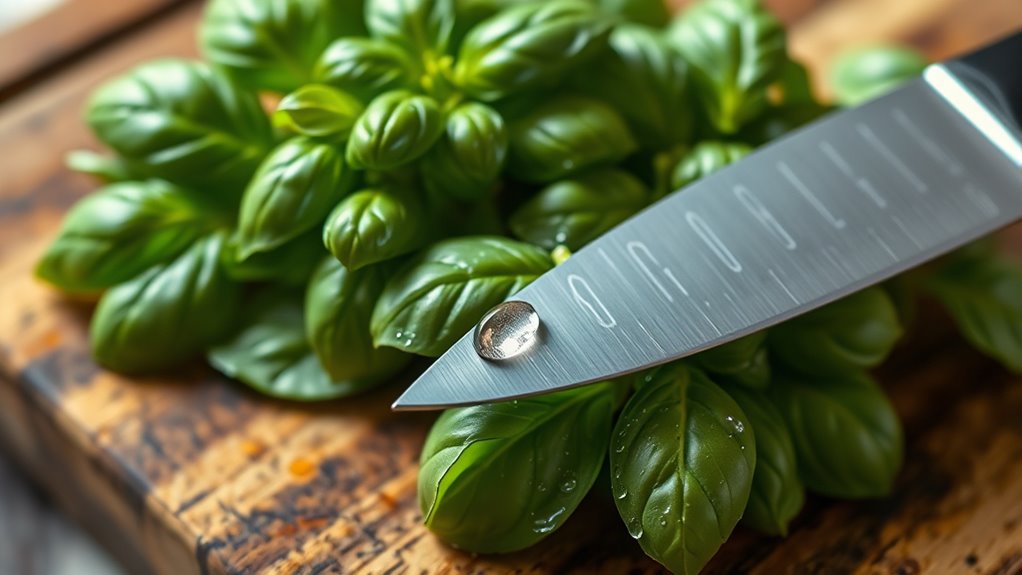
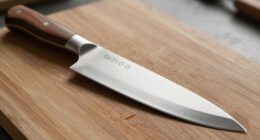
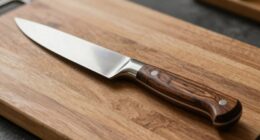
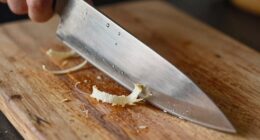
Basil leaves often develop black edges when exposed to excessive sunlight, inconsistent watering, or temperature stress. To keep your basil fresh and vibrant, you need to focus on how you handle it from the moment you harvest or buy it. Proper knife techniques are essential for freshness preservation because they minimize damage to the leaves and prevent browning. When prepping basil, always start with a sharp knife. A dull blade crushes the delicate leaves instead of slicing through them smoothly, which damages cell walls and accelerates browning. Use a sharp chef’s knife or a well-maintained paring knife, and make clean, swift cuts.
Always use a sharp knife to gently cut basil, preventing damage and browning.
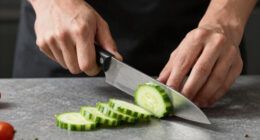
Before chopping, gently wash your basil to remove dirt and insects, but don’t soak it. Excess moisture can cause the leaves to spoil faster, so pat them dry carefully with a soft towel or use a salad spinner. When you’re ready to prep, hold the basil sprig steady with your nondominant hand, keeping your fingers curled inward to avoid accidental cuts. Use your dominant hand to make quick, controlled cuts just above the leaves, cutting in a gentle, rocking motion. This technique ensures a clean cut, reducing bruising and preserving the leaf’s freshness longer.
If you’re planning to use the basil immediately, slicing it just before adding it to your dish is best. This way, you maximize flavor and freshness, and you avoid the deterioration that comes with pre-cut leaves sitting out. When you’re chopping for recipes, consider tearing larger basil leaves into smaller pieces with your fingers or using scissors instead of a knife. This method minimizes bruising and preserves the aroma and color of the basil, preventing black edges from forming.
Storing your basil correctly after prepping is equally important. Keep it in a breathable container or wrap it loosely in a damp paper towel and place it in the fridge. Proper storage slows down deterioration and keeps the leaves fresh longer. Remember, the key to avoiding black edges isn’t just in how you cut but also in how you handle and store the basil afterward. Good knife maintenance and practicing gentle slicing techniques are crucial for keeping basil fresh and vibrant. By sharpening your knife regularly, practicing gentle slicing techniques, and maintaining good storage habits, you’ll ensure your basil stays bright, aromatic, and free of those unsightly black edges. This careful approach makes all the difference in keeping your herbs fresh and beautiful for your culinary creations.
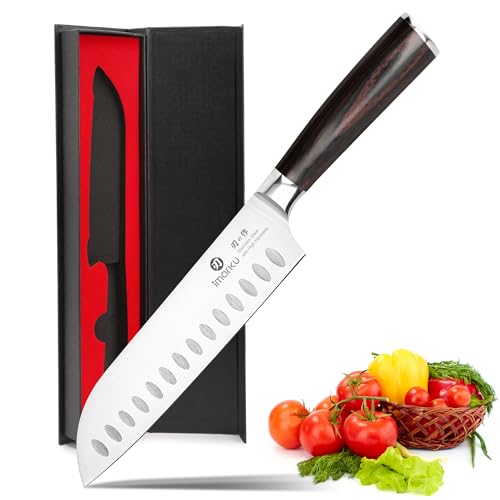
imarku Chef Knife 7 Inch Kitchen Knife Ultra Sharp Santoku Knife - High Carbon Japanese Chefs Knife, Kitchen Gadgets 2025, Apartment Essentials, Birthday Gifts for Him Her, Best Gifts for Women Men
Professional Santoku Knife: This imarku super sharp santoku knife is made of high carbon stainless steel that resists...
As an affiliate, we earn on qualifying purchases.
Frequently Asked Questions
Can I Use Other Herbs to Prevent Basil Browning?
Yes, you can use other herbs like parsley, cilantro, or mint to prevent basil browning. Mixing these herbs creates flavorful herb mixtures that help preserve basil’s vibrant color and aroma. By combining herbs, you enhance flavor preservation and reduce the chance of browning. Just chop them gently and store them properly, and you’ll keep your herbs fresh, colorful, and tasty for longer, avoiding black edges on basil.
Does the Type of Knife Affect Basil’s Edges?
Like a skilled artist, your knife’s sharpness and cutting angle directly impact basil’s edges. A sharper knife with a proper angle slices cleanly, preventing tearing and browning. Dull or poorly angled knives crush the leaves, causing black edges. Choose a knife with a fine, precise edge, and maintain its sharpness. This way, you’ll preserve basil’s vibrant color and delicate texture, keeping it fresh and beautiful for your dish.
How Long Can I Store Basil Before It Browns?
You can store basil for about 1 to 2 weeks if you want to maintain its freshness. To prevent browning, use proper storage techniques like trimming the stems and placing the basil upright in a jar of water, covering it loosely with a plastic bag. Keep it in the fridge or at room temperature in a cool, dark spot. Regularly change the water to preserve its vibrant color and flavor.
Is There a Difference Between Hand-Cut and Machine-Cut Basil?
You’ll find hand-cut basil produces a more meticulous, tender touch, while machine-cut basil often results in rougher, ragged edges. With knife precision, you can control the cut’s consistency on a clean cutting surface, preserving flavor and appearance. Machine cuts, however, might cause bruising or browning, impacting freshness. So, if you want perfect, pristine basil, hand-cutting offers more finesse, while machines may speed up the process but sacrifice some quality.
Can Water Temperature Impact Basil’s Leaf Edges?
Yes, water temperature can impact basil’s leaf edges. If you use water that’s too hot or too cold, it may cause the leaves to wilt or develop black edges, affecting leaf preservation. For best results, use cool or room temperature water when rinsing or storing basil. This gentle approach helps maintain the freshness and vibrant color of your basil leaves, ensuring they stay crisp and beautiful longer.

HOSHANHO Kitchen Knife in Japanese High Carbon Steel, Professional High-Class Chef's Knife 8 inch, Non-slip Ultra Sharp Cooking Knives with Ergonomic Handle
【High-End Japanese Steel Chef's Knife】 HOSHANHO chef's knife is made of Japanese high carbon steel 10Cr15CoMoV, 2x of...
As an affiliate, we earn on qualifying purchases.
Conclusion
Now that you know how to prep basil without those pesky black edges, you’ll enjoy fresher, more vibrant leaves in every dish. It’s all about handling your herbs gently and using the right techniques. Isn’t it worth taking a little extra care to preserve that beautiful green color and fresh flavor? With these simple tips, you’ll elevate your cooking and truly appreciate the freshness of your basil. After all, isn’t good food worth the effort?
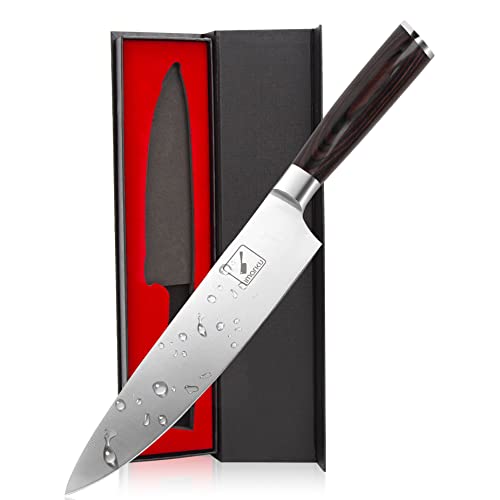
imarku Japanese Chef Knife - Sharp Kitchen Knife 8 Inch Chef's Knives HC Steel Paring Knife, Unique Gifts for Men and Women, Gifts for Mom or Dad, Kitchen Gadgets with Gift Box, Gyutou Knives
High-Carbon Stainless Steel Blade: It is manufactured from high-quality stainless steel that maintains its functionality for a long...
As an affiliate, we earn on qualifying purchases.

Japanese Chef Knife, 8 Inch Damascus Kitchen Knife with VG10 Steel, Handcrafted Sharp Knife with Ergonomic Handle, Cooking Knives for Home Chefs, Cooking Gifts for Men and Women
【Premium Damascus Chef Knife with VG-10 Steel Core】Our Japanese knives feature a VG-10 steel core (60 HRC) for...
As an affiliate, we earn on qualifying purchases.