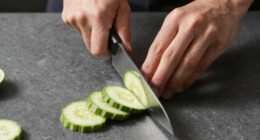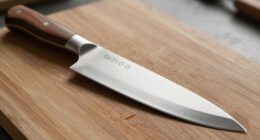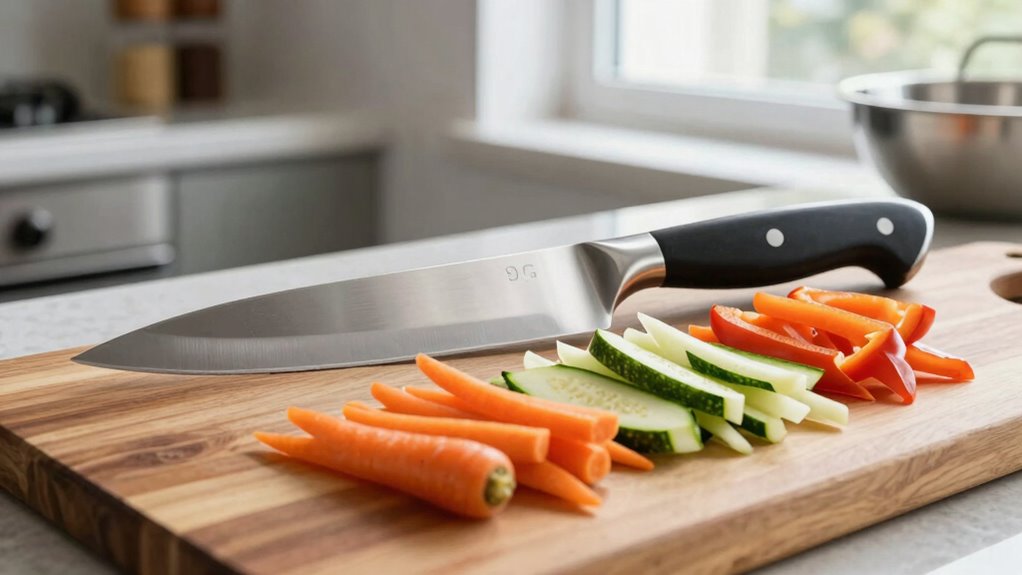
To cook like a pro, match your knives to the cuisine you’re preparing. Use versatile chef and paring knives for fast European-American prep, while Japanese knives like santoku and nakiri offer precision for Asian dishes and veggie tasks. For bread and delicate slicing, choose serrated and utility knives. Specialized tools like fillet and boning knives excel with seafood and meats. Pairing the right knives speeds up your process—keep exploring for expert tips on perfecting your knife selection.
Key Takeaways
- Use a chef’s knife for versatile European/American dishes requiring chopping, slicing, and dicing.
- Choose a Santoku for precise, push-cutting tasks in Asian cuisine prep.
- Pair a Nakiri with high-volume vegetable slicing to increase efficiency in vegetable-heavy dishes.
- Employ specialized knives like boning or fillet knives for seafood and meat to enhance speed and accuracy.
- Combine multiple knife types to streamline prep across diverse cuisines, saving time and improving results.

Dfito Chef Knife Sets with Roll Bag, 9 Pieces Professional Knife Set, High Carbon Stainless Steel Kitchen Chef Knife Set, Red Pakkawood Handle, Dishwasher Safe
Super Sharp Blade: The super sharp blade is made of high-quality German stainless steel, with a chromium content…
As an affiliate, we earn on qualifying purchases.
As an affiliate, we earn on qualifying purchases.
Matching Chef and Paring Knives to European and American Cuisines
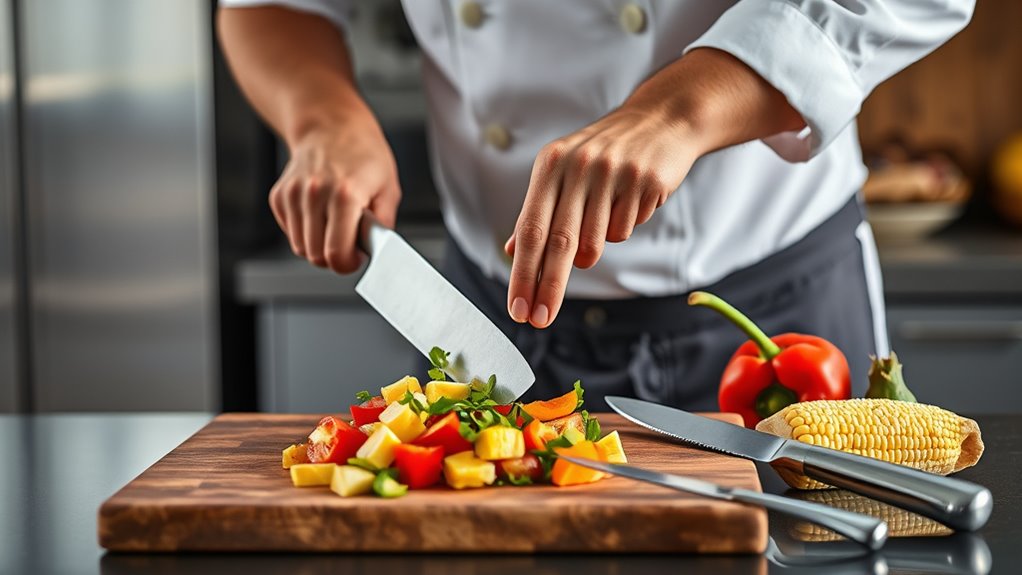
In European and American cuisines, the chef knife and paring knife form the backbone of your prep work. Your 8-inch chef knife handles most tasks, from chopping herbs to slicing fruits and breaking down meats. Its versatile design allows you to use a rocking motion for fine mincing and serve as a workhorse for larger tasks like cutting butternut squash or carving roasts. Pair it with a paring knife—around 3.5 inches—for detailed work such as peeling garlic, trimming herbs, or creating decorative garnishes. The paring knife’s precision helps with delicate tasks that require control. The ergonomic knife design enhances comfort and reduces fatigue during extended prep sessions. Proper knife maintenance ensures your blades stay sharp and effective for a longer period. Together, these knives cover a broad range of prep needs, making your workflow efficient. Their complementary sizes and functions ensure you can handle everything from tender vegetables to small fruits with ease. Additionally, selecting a high-quality cutting surface can help maintain knife sharpness and improve overall safety during use.
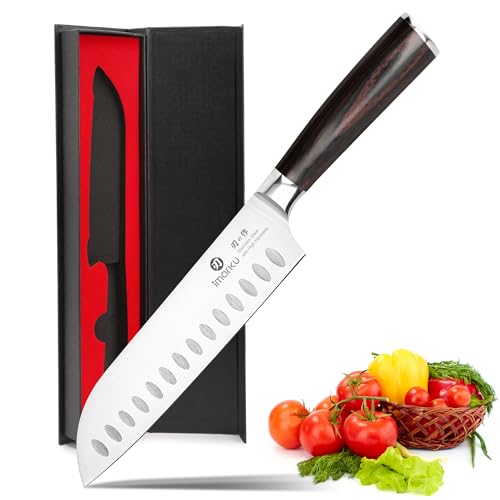
imarku Chef Knife 7 Inch Kitchen Knife Ultra Sharp Santoku Knife – High Carbon Japanese Chefs Knife, Kitchen Gadgets 2025, Apartment Essentials, Birthday Gifts for Him Her, Best Gifts for Women Men
Professional Santoku Knife: This imarku super sharp santoku knife is made of high carbon stainless steel that resists…
As an affiliate, we earn on qualifying purchases.
As an affiliate, we earn on qualifying purchases.
Leveraging Japanese Knives: Santoku and Nakiri for Precision and Efficiency
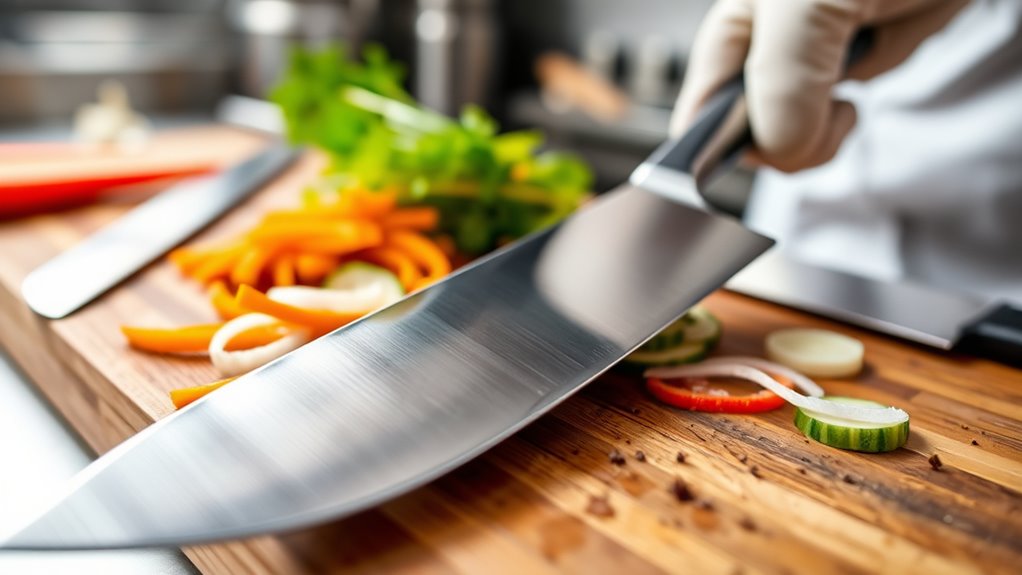
Building on the versatility of European and American knives, Japanese knives like the Santoku and Nakiri bring specialized advantages that boost precision and efficiency in your kitchen. The Santoku excels at slicing, dicing, and mincing, especially with tender proteins and vegetables, thanks to its flat edge and shorter blade. It’s perfect for push-cutting and controlled chopping without rocking. The Nakiri, with its straight, blunt blade, is ideal for straight-down push cuts, making it superior for slicing large quantities of vegetables evenly. Use it for high-volume prep tasks, especially with root vegetables. Incorporating connected cooking techniques can further enhance your efficiency when using these knives. 1. Use the Santoku for detailed work and quick slicing of proteins and vegetables. 2. Rely on the Nakiri for precise, repetitive vegetable slicing. 3. Combine both to streamline your prep process efficiently. Additionally, understanding the different knife types can help you choose the best tool for each task, improving your overall cooking speed and quality. A good grasp of specialized knife features can also improve your precision and safety while cooking.

MOSFiATA 7” Nakiri Chef's Knife with Finger Guard, German High Carbon Stainless Steel EN1.4116 Vegetable Knife, Multipurpose Kitchen Knife with Micarta Handle in Gift Box
【Multi-functional Chef's Knife】: This MOSFiATA Super Sharp Nakiri Knife is made of high-quality German stainless steel that resists…
As an affiliate, we earn on qualifying purchases.
As an affiliate, we earn on qualifying purchases.
Selecting the Right Bread and Utility Knives for Baking and Everyday Tasks
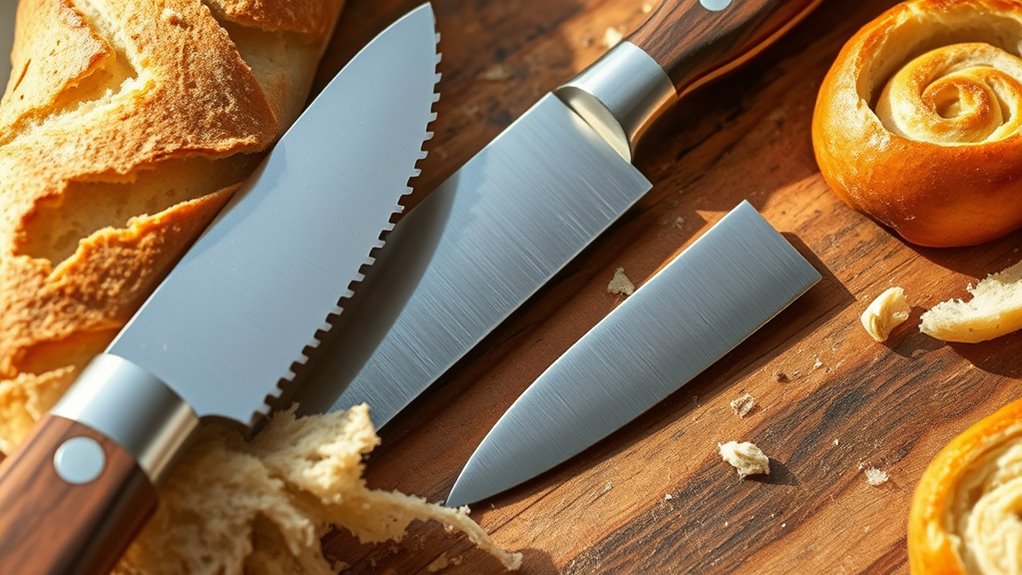
Choosing the right bread and utility knives can markedly improve your everyday kitchen tasks. A bread knife with an 8-inch serrated edge effortlessly slices through crusty loaves and pastries without crushing soft interiors. Its serrations grip fibrous surfaces, making it ideal for baked goods, tomatoes, and bread-based dishes. For versatile daily tasks, a utility knife with a 4.5-inch blade excels at handling small fruits, sandwiches, and delicate trimming. It offers precision for peeling, trimming herbs, or slicing small vegetables. These knives complement larger chef or paring knives, filling essential roles in your kitchen. Selecting quality materials guarantees durability and sharpness retention, making your prep faster and more efficient. Properly maintained, these knives become dependable tools that streamline your baking and everyday culinary tasks. Additionally, understanding how different brewing methods affect the final flavor can help you choose the right tools to enhance your cooking experience. Being aware of knifing techniques can further improve your efficiency and safety in the kitchen. Incorporating connected kitchen technology can also provide helpful guidance and recipe suggestions, making your cooking process more innovative and enjoyable. Furthermore, choosing knives with reliable safety features ensures safer handling during busy cooking sessions. Recognizing the importance of material quality can also influence the longevity and performance of your kitchen knives.

Orblue Serrated Bread Knife with Upgraded Stainless Steel Razor Sharp Wavy Edge – Bread Cutter Ideal for Slicing Homemade Bagels, Cake (8-Inch Blade with 5-Inch Handle)
ULTRA-SHARP, CUTS EFFORTLESSLY: The Orblue Serrated Bread Knife blade has an ultra-sharp serrated edge that grips and effortlessly…
As an affiliate, we earn on qualifying purchases.
As an affiliate, we earn on qualifying purchases.
Specialty Knives: Enhancing Seafood and Meat Preparation Techniques
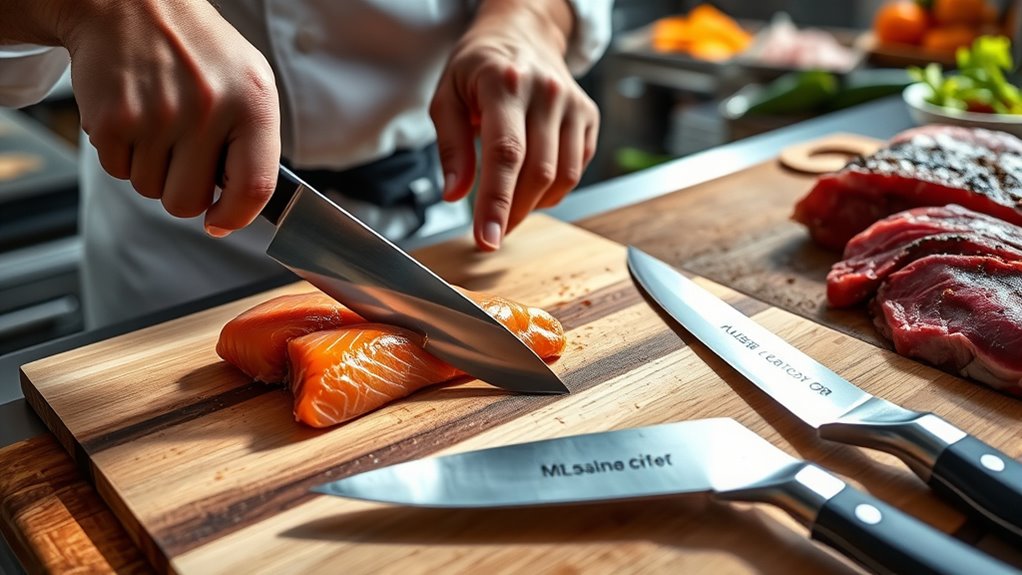
Specialty knives are essential tools that elevate your seafood and meat prep by providing precision and control. They help you handle delicate tasks efficiently, ensuring clean cuts and less waste. To optimize your prep:
- Use a boning knife (5-7 inches flexible blade) for separating meat from bones and trimming poultry, offering flexibility in tight spots. Proper technique with this knife reduces meat waste and improves presentation.
- Rely on a fillet knife for fish, enabling you to skin and debone with minimal damage to the flesh.
- Keep a slicer (8-inch narrow blade) for carving roasts, briskets, or other large cuts into thin, even slices.
- Mastering the use of specialty knives can significantly improve your meat and seafood preparation techniques, leading to faster and more precise results. Additionally, understanding how to select the right knife for each task can further enhance your efficiency in the kitchen.
- Properly maintaining and sharpening your knives regularly ensures they perform at their best and last longer, which is vital for consistent culinary results.
Combining Knife Types for Seamless Multi-Cuisine Cooking
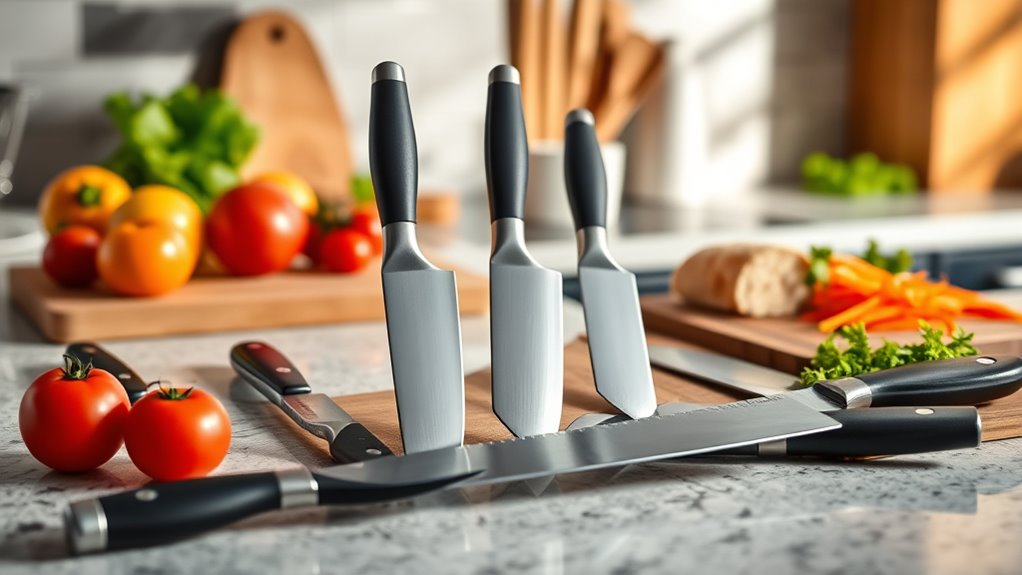
To cook seamlessly across multiple cuisines, you need to combine different knife types strategically, matching each tool to its ideal task. Use your chef’s knife for versatile chopping, dicing, and slicing fruits, meats, and herbs, making it your go-to for European or American dishes. For Asian-inspired prep, rely on your santoku for precise push-cutting and delicate slicing of fish and vegetables without rocking. When working with high-volume vegetables, the nakiri excels with straight-down pushes, ensuring even slices. Use a paring knife for intricate tasks like peeling garlic or trimming herbs. For bread-heavy recipes, a serrated bread knife handles crusts and soft insides effortlessly. By pairing these knives thoughtfully, you streamline your prep process across cuisines, saving time and maintaining precision. Additionally, choosing the right knife material can enhance durability and ease of maintenance during frequent use. Using the proper knife sharpening techniques also ensures your knives stay effective and safe to handle. Regular maintenance and awareness of proper disposal practices can extend your knives’ lifespan and keep your kitchen safe.
Frequently Asked Questions
How Do I Choose the Best Knife for Beginner Cooks?
You should start with a versatile chef knife, around 8 inches, because it handles most tasks like chopping, slicing, and dicing. It’s easy to control and comfortable for beginners. Add a paring knife for detailed work like peeling and trimming. Avoid complex knives at first. Focus on these two, and as you get comfortable, you can explore specialized knives to expand your skills.
What Maintenance Techniques Prolong My Knives’ Sharpness?
Think of your knives as dancers—keeping them sharp means regular tune-ups. You should hone them after every few uses with a whetstone or honing rod to realign the edge. Always hand wash and dry to prevent rust, and store them safely in a knife block or on a magnetic strip. Avoid dishwasher magic; it dulls blades faster. With proper care, your knives will slice through tasks as smoothly as a ballet performer.
Can I Use a Chef Knife for Detailed Vegetable Work?
Yes, you can use a chef’s knife for detailed vegetable work, but it might not be the most efficient choice. Its broad blade is great for general tasks, but for delicate or precise cutting, a paring or nakiri knife offers better control and accuracy. If you often do fine prep work, consider switching to a smaller, more maneuverable knife to save time and guarantee cleaner cuts.
Which Knives Are Safest for Children Learning to Cook?
If you want your kids to wield knives like tiny ninjas, start with a paring knife. Its small size and blunt edge make it the safest choice, reducing the risk of accidental cuts. You’ll imagine them slicing apples with the precision of a master chef, but in reality, they’re just having fun and learning control. Keep a close eye—because even a tiny blade can cause big trouble if misused.
How Do I Safely Store Multiple Different Types of Knives?
You should store your knives safely by using a knife block, magnetic strip, or individual sheath for each blade. Keep them out of reach of children and make certain they’re stored securely to prevent accidents. Regularly clean and dry knives before storage to avoid corrosion. Avoid tossing them loosely in drawers, as this risks damage and injury. Proper storage keeps your knives sharp, safe, and ready for use whenever you need them.
Conclusion
Think of your knife collection as a well-tuned orchestra—each blade plays its part for a perfect performance. When you match the right knife to your cuisine, prep becomes more like a dance than a chore. I once watched a chef seamlessly switch from a Japanese Santoku to a European chef’s knife, turning a hectic dinner service into a smooth symphony. Mastering these pairings transforms your kitchen into a place of confidence and culinary artistry.