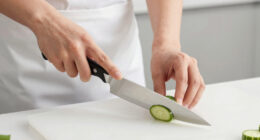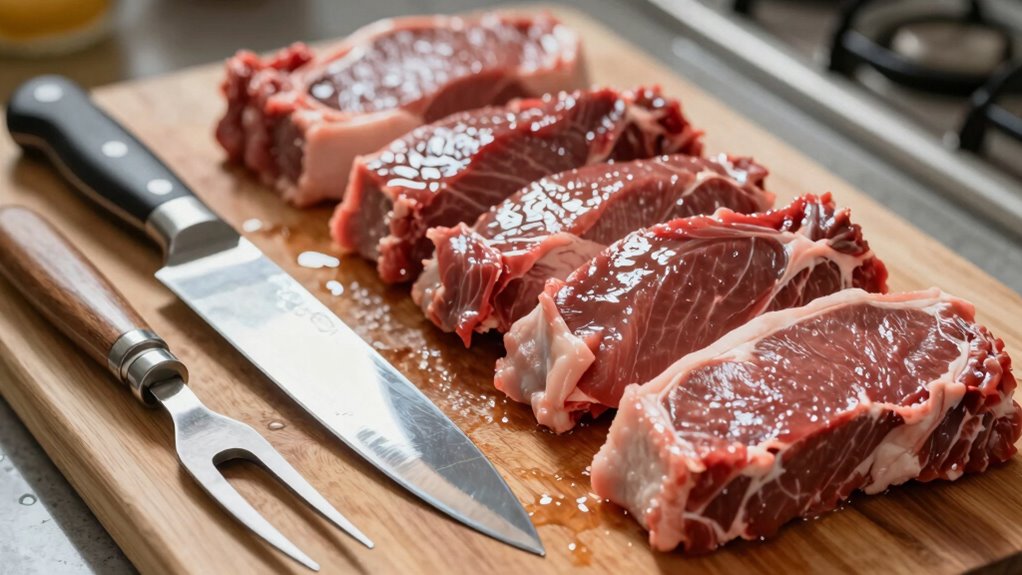
To prep meat at home, you should know the essential knives and their roles. Your chef’s knife handles chopping, slicing, and heavy-duty tasks like cutting bones. Use a carving knife for thin, clean slices of cooked meat, and a boning knife to navigate around bones and cartilage. For small trims and peeling, a paring knife works best. Proper technique, care, and safety tips make certain of efficient prep and professional results—continue to explore for more expert guidance.
Key Takeaways
- Different knives serve specific roles, such as chef’s knives for heavy-duty tasks and boning knives for deboning and trimming.
- Proper techniques like slicing against the grain and letting the knife do the work ensure cleaner, more tender meat cuts.
- Regular knife maintenance, including honing and proper storage, is essential for safety and optimal performance.
- Selecting the right knife improves efficiency, reduces waste, and enhances the presentation of various meat cuts.
- Safety practices, such as stable surfaces and controlled handling, minimize accidents during meat preparation at home.
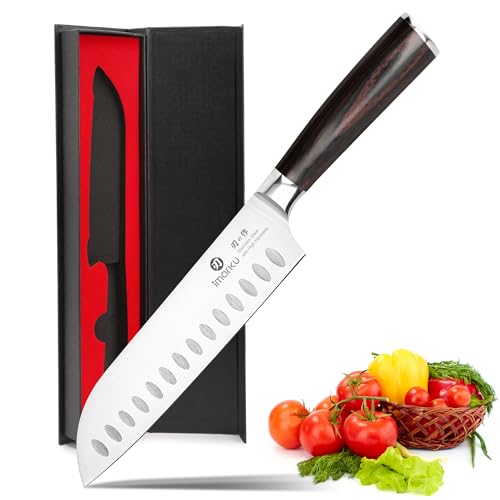
imarku Chef Knife 7 Inch Kitchen Knife Ultra Sharp Santoku Knife - High Carbon Japanese Chefs Knife, Kitchen Gadgets 2025, Apartment Essentials, Birthday Gifts for Him Her, Best Gifts for Women Men
Professional Santoku Knife: This imarku super sharp santoku knife is made of high carbon stainless steel that resists...
As an affiliate, we earn on qualifying purchases.
The ChefKnife: Your Versatile Meat-Prep Companion

The ChefKnife is your go-to tool for a wide range of meat-prep tasks, thanks to its versatility and durability. Whether you’re chopping vegetables, slicing meats, or handling poultry, this knife is up to the challenge. The German-style version features a thick, resilient blade perfect for heavy-duty jobs like cutting through bones, while the Japanese style offers a razor-sharp edge ideal for thin, precise slices. An 8-inch blade strikes the perfect balance for most home cooks, providing enough length for efficient work without being unwieldy. Made from high-carbon stainless steel, it stays sharp longer and resists rust. With proper care, your chef’s knife will serve you well for years, making it an indispensable part of your meat-prep arsenal. Additionally, choosing a high-quality steel ensures better edge retention and overall performance. Proper sharpening and maintenance extend the lifespan of your knife, keeping it in optimal condition. Understanding heat distribution and how it affects your knife’s performance can help you make informed choices about your kitchen tools. Moreover, recognizing the impact of heat on steel can help prevent damage and maintain your knife’s longevity. Incorporating proper temperature control during food preparation can further help preserve the integrity of your blades and ensure safety in your cooking process.

HOSHANHO Kitchen Knife in Japanese High Carbon Steel, Professional High-Class Chef's Knife 8 inch, Non-slip Ultra Sharp Cooking Knives with Ergonomic Handle
【High-End Japanese Steel Chef's Knife】 HOSHANHO chef's knife is made of Japanese high carbon steel 10Cr15CoMoV, 2x of...
As an affiliate, we earn on qualifying purchases.
CarvingKnife: Achieving Perfect Slices Every Time

To get perfect slices every time, focus on proper carving techniques that keep your cuts clean and even. Choosing the right carving knife with a curved, thin blade makes a big difference in precision and ease. Keep your blade sharp and handle it safely to maintain ideal performance and prevent accidents. Additionally, understanding material quality can help you select knives that will last and perform beautifully over time. Using a high-quality steel blade ensures better edge retention and durability for consistent results. Investing in knives with excellent craftsmanship can also improve your overall carving experience and longevity. Moreover, paying attention to blade design can enhance control and reduce fatigue during extended use. Furthermore, selecting knives with ergonomic handles can reduce fatigue and improve control during extended use.
Proper Carving Technique
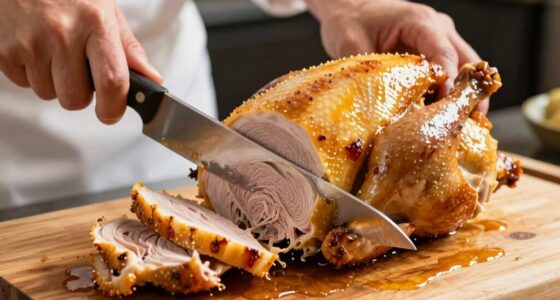
Achieving perfect slices with a carving knife requires proper technique and attention to detail. Start by letting the meat rest after cooking; this prevents juices from spilling out. Position the meat securely on a stable cutting board, using your non-dominant hand to steady it. Hold the carving knife with a firm grip, keeping your fingers away from the blade’s path. Use smooth, even strokes, slicing against the grain to ensure tenderness. Angle the knife slightly and use a gentle sawing motion rather than pressing down hard. Apply consistent pressure for uniform thickness. Keep the blade clean and sharp, honing as needed. Maintaining a sharp, energy-efficient blade not only makes slicing easier but also aligns with sustainable practices in modern kitchen tools. With patience and precision, your slices will be clean, thin, and beautifully presented every time.
Choosing the Right Blade
Choosing the right carving knife blade is essential for getting perfect slices every time. You want a blade that’s curved and thin, allowing you to glide through meats smoothly. A high-quality carving knife is designed specifically for slicing roasts, prime rib, or pork with precision, producing clean, even slices. The curved shape helps you maintain control and follow the contours of the meat, reducing tearing or shredding. Opt for a blade that’s approximately 8 inches long—long enough for large cuts but manageable for home use. A comfortable wooden handle ensures a firm grip, giving you stability during each cut. Avoid using a general-purpose or dull knife; instead, invest in a dedicated carving knife to achieve restaurant-quality slices every time. Proper knife maintenance also ensures your blade stays sharp and effective over time.
Maintaining Sharpness and Safety
A sharp carving knife makes all the difference when slicing meats, and maintaining that edge is key to safety and perfect results. Dull blades require more force, increasing the risk of slips and injuries. To keep your knife in top shape, regularly hone it with a sharpening steel and schedule professional sharpening when needed. Always clean and dry your knife immediately after use to prevent corrosion. Store your carving knife in a knife block or on a magnetic strip to protect the edge. Use a stable cutting surface and proper technique to reduce strain and mishaps.
- Hone your blade regularly with a honing steel
- Sharpen with a professional when edges dull
- Clean and dry after each use
- Store safely to prevent damage
- Use proper technique for safety

MOSFiATA 8" Super Sharp Professional Chef's Knife with Finger Guard and Knife Sharpener, German High Carbon Stainless Steel EN1.4116 with Micarta Handle and Gift Box
【High Carbon German Stainless Steel Laser-engraved Pattern(Not Damascus Pattern )】 MOSFiATA 8 inch pro chef's knife is made...
As an affiliate, we earn on qualifying purchases.
SlicingKnife: Precision in Meat and Bread Cutting
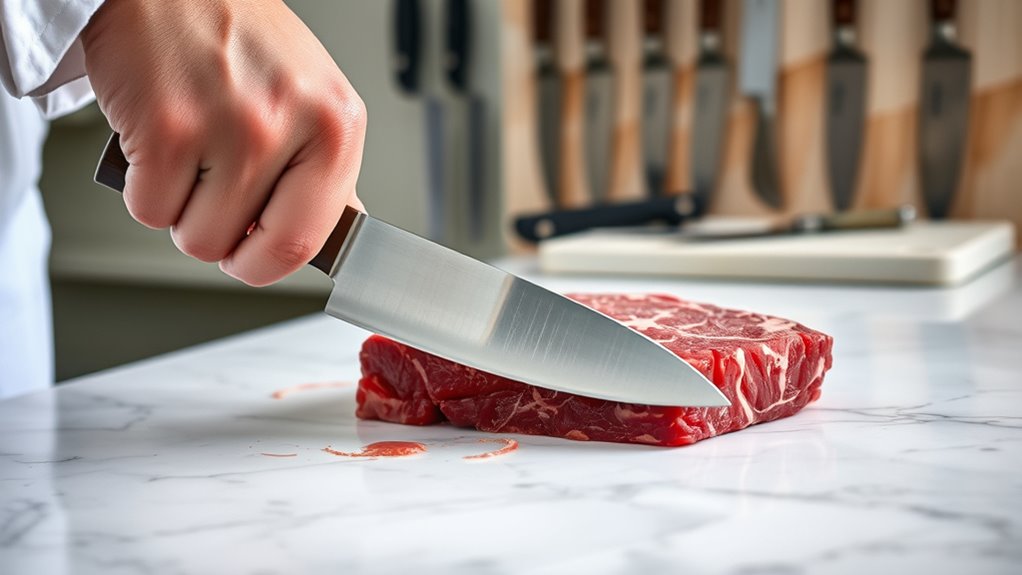
The slicing knife stands out as an essential tool for achieving clean, precise cuts through both cooked meats and bread. Its long, narrow blade minimizes drag, allowing you to carve thin, even slices effortlessly. This makes it perfect for serving roast, ham, or turkey with neat, uniform portions. The slim profile helps prevent tearing or crushing delicate textures, ensuring each slice looks professional. Whether you’re slicing a freshly baked loaf or carving a perfectly cooked brisket, the slicing knife delivers precision with minimal effort. Its lightweight design offers better control, so you can focus on accuracy rather than force. Keep your slicing knife sharp and use smooth, steady strokes for the best results. Understanding blade design can also help in selecting the right knife for different tasks, ensuring optimal performance. Being aware of meat prep techniques can further improve your overall results and presentation. Exploring curiosity about tools can enhance your skills and confidence in the kitchen, making meat prep more enjoyable. It’s a must-have for any home cook aiming for restaurant-quality presentation.
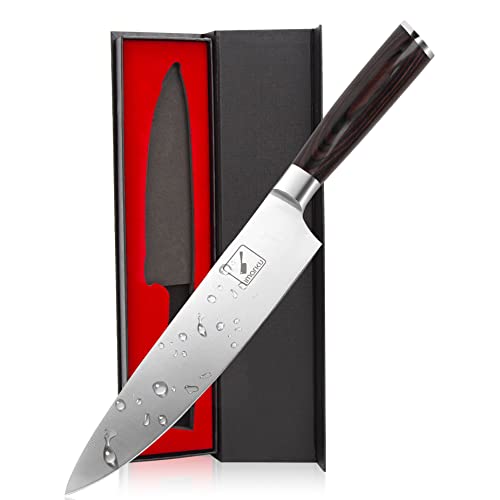
imarku Japanese Chef Knife - Sharp Kitchen Knife 8 Inch Chef's Knives HC Steel Paring Knife, Unique Gifts for Men and Women, Gifts for Mom or Dad, Kitchen Gadgets with Gift Box, Gyutou Knives
High-Carbon Stainless Steel Blade: It is manufactured from high-quality stainless steel that maintains its functionality for a long...
As an affiliate, we earn on qualifying purchases.
BoningKnife: Mastering Deboning Techniques

A well-honed boning knife enhances your ability to remove bones and trim meat with precision. Its narrow, flexible blade lets you navigate tight spaces and work carefully around bones or cartilage. To master deboning, focus on smooth, controlled motions, keeping the blade close to the bone for minimal waste. Practice different techniques, like slicing along joints or filleting meat off bones, to improve your skill. Properly sharpening your boning knife ensures clean cuts and reduces frustration. Remember to work slowly and steadily, especially with tricky cuts. Using the right grip gives you better control and safety. Maintaining a sharp, well-honed blade is essential for clean cuts and efficient work. Developing your technique and control will help you achieve more professional results and reduce fatigue during extended prep sessions. Additionally, choosing the correct knife oil can help keep your blades in optimal condition, ensuring smooth slicing and longevity. Consulting security zone info can provide valuable tips on safe handling and storage practices. Furthermore, understanding the net worth of famous personalities like Kate from Breaking Amish can inspire confidence in managing your own kitchen investments and tools.
ParingKnife: Handling Small-Scale Meat Tasks
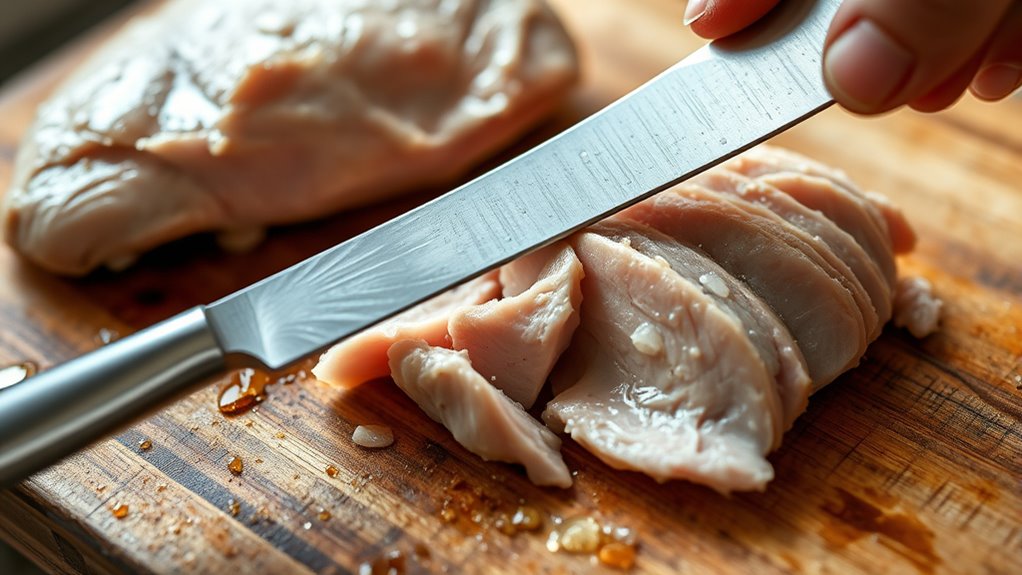
Ever wondered how to handle delicate or intricate meat tasks with precision? A paring knife is your go-to tool for small, detailed work. Its short, pointed blade allows you to peel, trim, and shape meat with accuracy. Use it to remove excess fat or silver skin from cuts like tenderloin or chicken breasts. It’s perfect for scoring meat or creating decorative garnishes. The paring knife excels at detailed tasks that larger knives can’t handle comfortably. Its compact size gives you control, so you can make precise cuts without tearing the meat. While it’s not suited for heavy-duty tasks, it’s an essential tool for finishing touches, small trims, and intricate work. Keep it sharp and close at hand for all your small-scale meat preparations. Proper technique is key to achieving clean, professional results with this versatile tool. Developing a good knife skills mindset will improve your overall meat prep efficiency and quality. Additionally, understanding cutting techniques specific to different types of meat can further enhance your precision and safety during preparation. Practicing safe handling ensures you minimize accidents and maintain the integrity of your tools and ingredients.
UtilityKnife: The Multi-Tasker for Meat Preparation
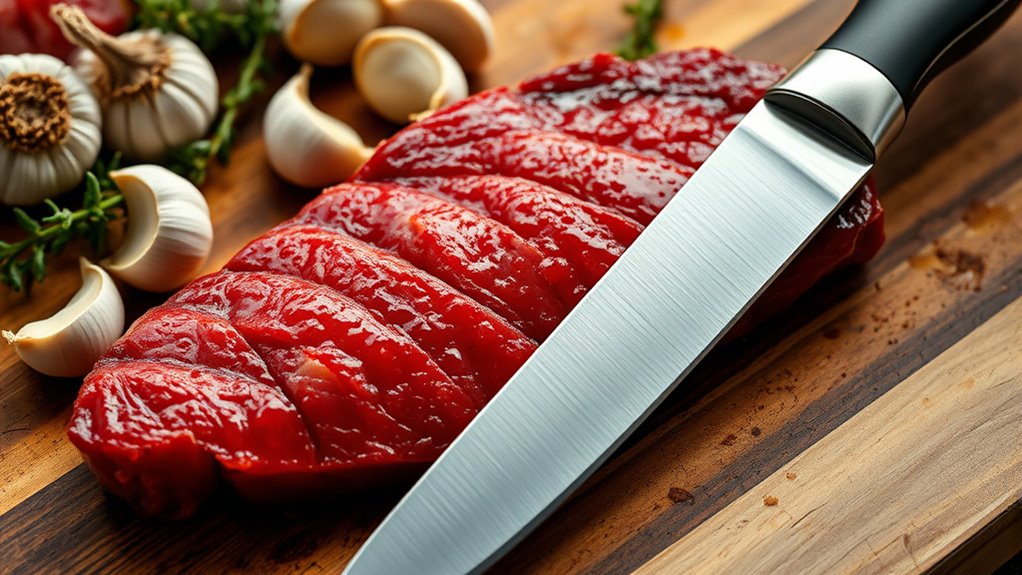
Looking for a versatile tool that handles a variety of meat prep tasks with ease? The utility knife is your go-to for slicing, trimming, and dicing. Its medium or short blade offers a perfect balance between control and flexibility. You can use it for cutting poultry, beef, or fish, making quick work of different meats. Its ergonomic design keeps it steady on the counter during busy prep sessions. Plus, it handles tasks that don’t require a larger chef’s knife but need more precision than a paring knife. Here’s what makes it essential:
- Slicing cooked or raw meats with ease
- Trimming fat and connective tissue
- Cutting small meat portions
- Preparing fish or seafood
- Dicing meats for stews or salads
This multi-tasker simplifies your meat prep, saving space and effort in your kitchen. The utility knife’s versatility allows it to adapt to various prep needs, making it an indispensable part of your culinary toolkit. Incorporating proper maintenance can extend the sharpness and lifespan of your utility knife, ensuring consistent performance over time. Additionally, understanding encryption solutions can help protect your digital recipes and kitchen data from cyber threats, keeping your culinary secrets safe.
Furthermore, mastering meat preparation techniques can improve the quality and safety of your cooked dishes, making your culinary efforts more rewarding.
Choosing the Right Knife for Different Meat Cuts
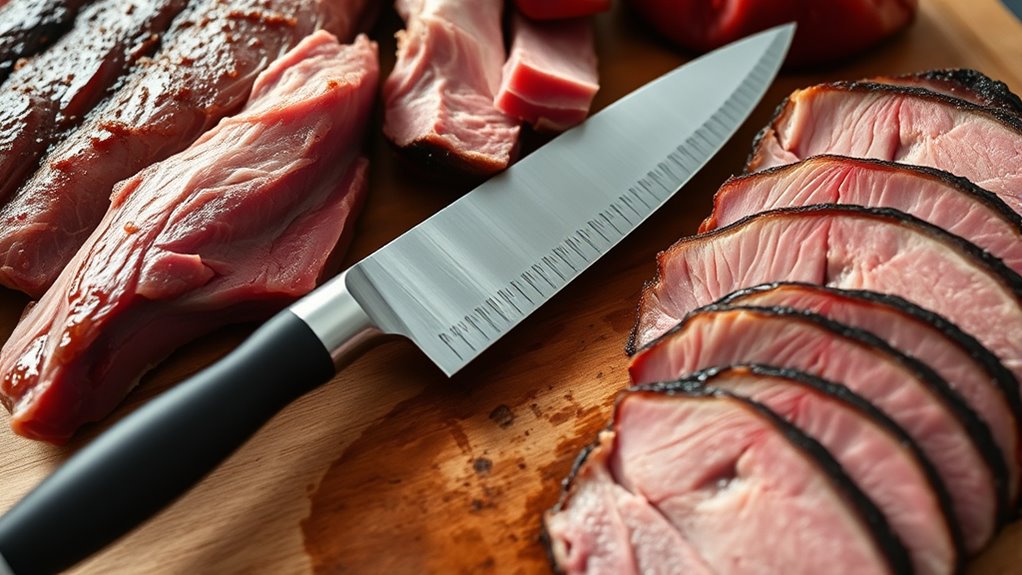
Choosing the right knife for different meat cuts guarantees efficient and clean results. For tender, cooked meats like roasts or steaks, a slicing or carving knife is ideal. Their long, narrow blades allow you to make precise, even cuts with minimal tearing. When working with raw, bone-in cuts such as ribs or chops, a chef’s knife with a sturdy, resilient blade handles heavy-duty tasks and can cut through cartilage or small bones. For deboning or removing fat from poultry or beef, a flexible boning knife offers control and precision. Small tasks like trimming fat or peeling require a paring knife, providing accuracy in tight spaces. Matching each knife to the specific meat cut guarantees cleaner slices, less waste, and a more professional presentation.
Maintenance and Safety Tips for Your Meat-Prep Knives
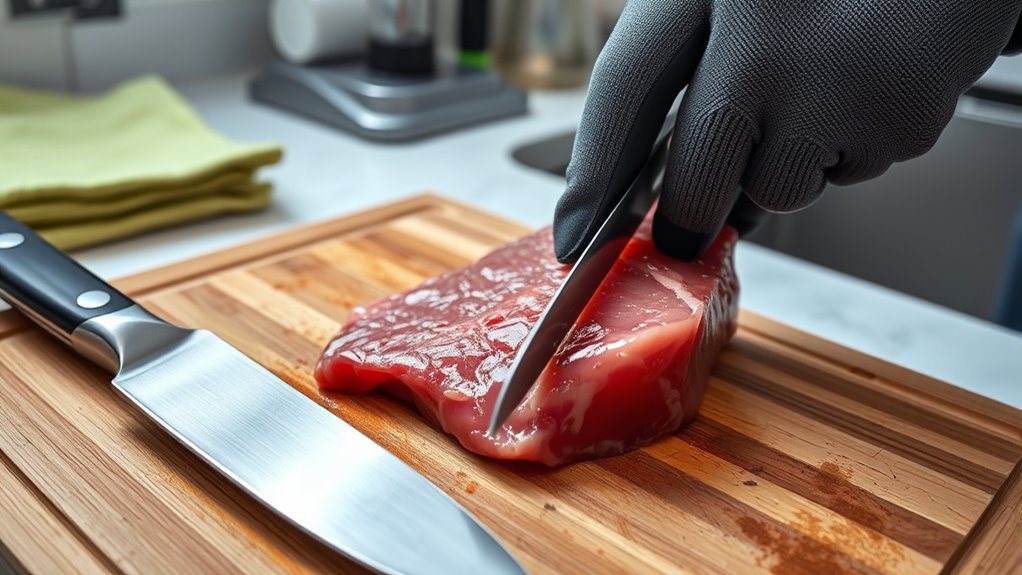
To keep your meat-prep knives in top shape, you need to follow proper cleaning procedures after each use. Handling your knives safely prevents accidents and damage to the blades. By practicing safe handling and regular maintenance, you’ll guarantee your knives stay sharp and safe to use.
Proper Cleaning Procedures
Proper cleaning is essential to keep your meat-prep knives sharp, safe, and in top condition. After each use, wash your knives by hand with warm, soapy water immediately. Avoid putting them in the dishwasher, as heat and detergents can damage the blade and handle. Dry your knives thoroughly with a clean towel to prevent rust and corrosion. Store them safely in a knife block or on a magnetic strip to protect the edge and prevent accidents. Regularly inspect your knives for any damage or dullness, and sharpen them as needed. Proper maintenance not only extends the lifespan of your knives but also ensures safe, efficient cutting.
- Use a gentle sponge or cloth for cleaning
- Avoid abrasive scrubbers that can scratch the blade
- Never soak knives for long periods
- Keep knives separate from other utensils during storage
- Regularly hone your knives to maintain sharpness
Safe Handling Practices
Handling your meat-prep knives safely is essential for preventing accidents and maintaining their performance. Always cut on a stable surface, and keep your fingers away from the blade’s path. Use a proper grip to control the knife securely, avoiding slips. When not in use, store knives in a knife block or on magnetic strips—never loose in drawers. Clean your knives immediately after use with hot, soapy water, and dry them thoroughly to prevent rust. Avoid putting knives in the dishwasher, as high heat and harsh detergents can damage blades. Regularly check for dullness or damage, and sharpen or replace blades as needed. Practicing these safety and maintenance habits keeps you safe and preserves your knives’ sharpness for precise cuts.
Frequently Asked Questions
How Do I Choose Between German and Japanese Chefknives?
When choosing between German and Japanese chef knives, consider your cutting style. German knives have thicker blades, ideal for heavy-duty tasks like bone cutting, offering durability. Japanese knives feature razor-sharp, thinner blades for precise, delicate slicing. If you prefer versatility and ruggedness, go for a German style. For precision and finesse, a Japanese knife suits you better. Think about your typical tasks and comfort to select the best fit.
What Is the Best Way to Sharpen My Slicing and Carving Knives?
Think of your knives as the brushstrokes of your culinary masterpiece. To sharpen your slicing and carving knives, use a whetstone or honing steel for precision. Wet the stone, then gently slide the blade at a consistent angle, about 20 degrees, back and forth. Rinse, wipe, and test the edge on a piece of paper. Regular honing keeps your blades sharp, ensuring every cut is a work of art.
When Should I Use a Boning Knife Instead of a Fillet Knife?
You should use a boning knife instead of a fillet knife when you’re removing bones from meat like chicken, beef, or pork, because its narrow, flexible blade gives you better control over bone removal. A fillet knife is best for delicate fish filleting, where a softer, more flexible blade helps you create thin, precise cuts without tearing the flesh. Choose based on the texture and type of meat you’re working with.
Can I Use a Utility Knife for Precise Meat Slicing?
Yes, you can use a utility knife for precise meat slicing. Its versatile, manageable size makes it a handy helper for slicing thin, tender pieces of meat with control and finesse. While it’s not as specialized as a slicing or carving knife, a utility knife’s sharp edge and steady grip allow you to carve with confidence. Just remember, for ultra-thin, uniform slices, dedicated tools often deliver the best, most beautiful results.
How Often Should I Replace or Sharpen My Meat-Prep Knives?
You should sharpen your meat-prep knives every 8 to 12 uses or when they start to drag or tear. Replace them when they become chipped, bent, or lose their edge beyond sharpening. Regular honing helps maintain sharpness, but for a truly clean cut, professional sharpening is recommended at least once a year. Keep your knives in good condition to guarantee safety and peak performance during meat prep.
Conclusion
Mastering these essential knives can elevate your meat prep skills, making every cut safer and more precise. Did you know that using the right knife can reduce prep time by up to 30%? By understanding each tool’s role, you’ll not only improve your results but also extend the life of your knives. Invest a little time in learning proper techniques, and you’ll enjoy more confident, enjoyable cooking sessions every time.