Choosing a flexible fillet knife helps you easily follow fish contours and gently lift the skin, making delicate cuts with precision. A stiff knife provides more control and power for larger, tougher fish or removing thicker skin. The flexibility you choose impacts control, waste, and overall prep ease. Proper maintenance is essential for both. Keep going to discover how each type can enhance your filleting skills and improve your results.
Key Takeaways
- Flexible knives excel at following fish contours and gently separating skin, reducing waste during delicate filleting.
- Stiff knives provide more control and power for larger, tougher fish and removing thick skin or bones.
- Flexibility allows for precise, smooth cuts near delicate flesh, while rigidity offers straight, forceful cuts.
- Flexible blades require careful maintenance to preserve their delicate edge, whereas stiff blades typically hold their edge longer.
- Choosing between the two depends on fish size, flesh toughness, and the specific filleting task for efficiency and quality.

Choosing the right fillet knife depends on the type of fish you’re preparing and your cutting style. If you’re working with delicate, flaky fish, a flexible fillet knife is usually the best choice. Its bendable blade allows you to glide smoothly along the fish’s contours, making it easier to separate meat from skin without tearing the flesh. When you’re working with fish that has a thinner skin or more delicate flesh, flexibility becomes even more valuable. It helps you maintain control and reduces the risk of damaging the meat during the filleting process. On the other hand, if you’re dealing with larger, tougher fish or need to make precise cuts, a stiff fillet knife might be more suitable. Its rigidity provides the leverage and control necessary for clean, straight cuts, especially when removing thicker skin or bones.
Choosing between flexible and stiff fillet knives depends on fish type and your cutting style.
The decision also impacts how you handle the fish skin. With a flexible knife, you can follow the curves of the fish’s body more easily, minimizing waste and guaranteeing a cleaner cut along the skin. Flexibility allows you to gently lift and separate the skin from the flesh, which is vital for maintaining quality and presentation. Proper technique and understanding of blade control are essential for achieving the best results, especially with delicate filleting tasks. Additionally, understanding the proper maintenance of each knife type is essential to ensure longevity and performance. Proper blade care not only extends the life of your knives but also helps maintain their cutting precision, which is especially important for delicate filleting work. Maintaining the right technique during use can also prevent damage to the knife, preserving its shape and sharpness over time.
Your choice influences knife maintenance as well. Flexible knives tend to be more delicate, often made with softer steel that requires more careful cleaning and storage to prevent damage or rust. They need regular honing and sometimes even more frequent sharpening to keep their flexibility and edge sharpness intact. Stiff knives, made from harder steel, usually hold their edge longer but still need proper maintenance to prevent corrosion and guarantee top performance. The key is to keep whichever knife you choose clean, dry, and stored properly, especially after working with fish skin, which can leave residue or moisture that promotes rust.
In the end, understanding how each type of knife affects your prep work will help you make better choices in the kitchen. Flexibility grants finesse and ease when working with delicate fish and skin, but it demands careful knife maintenance. Stiffness offers control and power for larger cuts and tougher flesh, making it ideal for certain tasks. Knowing when and how to use each will improve your efficiency and the quality of your fillets, no matter what kind of fish you’re preparing.

HOSHANHO Fillet Knife 7 Inch, Super Sharp Japanese Fish Boning Knife
- High Carbon Stainless Steel: Durable, sharp, and corrosion-resistant blade
- 7-Inch Thin Blade: Precise slicing, boning, and filleting
- Professional Japanese Design: Achieves ultimate sharpness with 15° edge
As an affiliate, we earn on qualifying purchases.
As an affiliate, we earn on qualifying purchases.
Frequently Asked Questions
Can Flexible Fillet Knives Handle Thicker Fish Fillets Effectively?
Yes, flexible fillet knives can handle thicker fish fillets effectively, especially with softer textures like salmon or trout. Their flexibility allows you to follow the contour of the fish, resulting in cleaner cuts. However, for denser fish with firmer flesh, you might find a stiffer knife more efficient. Adjust your cooking techniques accordingly, using a flexible knife for delicate work and a stiff one for tougher textures.
How Does Blade Material Affect Flexibility and Durability?
You’ll find that blade material greatly influences flexibility and durability. For instance, stainless steel offers excellent material resilience, resisting rust and chipping, which extends its lifespan. Blade composition determines how flexible or stiff your knife feels—softer steels increase flexibility, while harder steels boost stiffness. A well-chosen material balances these qualities, ensuring your fillet knife remains sharp and reliable through countless prep sessions.
Are Flexible Knives More Prone to Bending or Breaking?
Flexible knives are generally less prone to breaking because they bend instead of snapping under stress. However, if the blade isn’t sharp enough or if handle ergonomics aren’t comfortable, you might exert more force, increasing the risk of bending or damaging the knife. To prevent this, keep the blade sharp and choose a handle that fits well, reducing undue pressure and ensuring safe, efficient filleting.
What Are the Best Cleaning Practices for Stiff Fillet Knives?
To keep your stiff fillet knife in top shape, focus on proper blade maintenance and corrosion prevention. Wash the knife with warm, soapy water after each use, then dry it thoroughly to prevent rust. Occasionally, apply a light coat of food-grade mineral oil to the blade to protect against corrosion. Store it in a dry place, ideally in a sheath or knife block, to avoid moisture exposure and maintain its stiffness.
How Does Blade Length Influence Performance in Different Fish Sizes?
Blade length considerably impacts your performance with different fish sizes. Longer fillet knives, around 9 to 11 inches, excel for larger fish, allowing you to make smoother, continuous cuts with less effort. Shorter blades, about 6 inches, give you more control for smaller fish and delicate fillet work. Your choice depends on your fishing techniques and the fillet knife types you prefer, ensuring efficient, precise cuts whether you’re tackling big or small catches.

Dexter Outdoors Dextreme Dual Edge 8" Stiff Fillet Knife with Sheath
- Blade Length: 8-inch stiff dual edge blade
- Blade Material: Made with tough Dexsteel
- Handle Type: Ambidextrous DexGrip handle
As an affiliate, we earn on qualifying purchases.
As an affiliate, we earn on qualifying purchases.
Conclusion
Choosing between a flexible or stiff fillet knife really depends on your prep style and the type of fish you work with. Flexible knives excel at delicate, intricate cuts, while stiff blades are better for thicker, tougher fillets. So, what kind of chef are you? Do you prefer precision or power? Ultimately, having the right knife can transform your prep experience—are you ready to make that perfect cut every time?
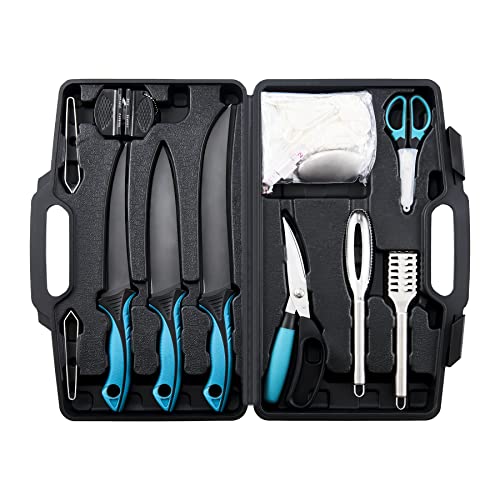
KNINE OUTDOORS Fish Fillet Knife Set Curved Flex 7 inch 9 inch Filet Knife for Filleting and Boning, Non-Slip Handles, Includes Fishing Braid Line Scissors, Fish Dressing Scissors, Filleting Pad
- Complete Fillet Knife Set: Includes multiple knives and accessories
- High-Quality Materials: Full-tang high-carbon stainless steel blades
- Flexible and Rigid Blades: Flexible fillet knives and stiff boning knife
As an affiliate, we earn on qualifying purchases.
As an affiliate, we earn on qualifying purchases.

Mundial Y5514-8E Yellow Fish Fillet Knife – 8"", Narrow and Stiff, Micro-Serrated Blade for Precision Filleting, Stainless Steel, Ergonomic Handle for Comfortable Grip
- Blade Material: High carbon stainless steel
- Blade Length: 8 inches
- Blade Type: Micro-serrated for precision
As an affiliate, we earn on qualifying purchases.
As an affiliate, we earn on qualifying purchases.