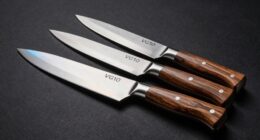
When choosing a slicing knife for brisket, roast, and ham, focus on a long, flexible blade made of high-carbon stainless steel for precision and durability. Make certain the handle feels comfortable and provides a non-slip grip to reduce fatigue and increase safety during extended use. Good weight distribution and an ergonomic design will improve control. To find out more about selecting the perfect knife for your needs, keep exploring your options carefully.

Get kitchen gear delivered free — and shop member deals
- Fast, free delivery on millions of items
- Access to Prime Big Deal Days deals on October 6–7
- Prime Video, Amazon Music and more included
Key Takeaways
- Select a long, flexible blade for precise, even slices of thick meats like brisket and roast.
- Prioritize blades made of high-carbon stainless steel for durability and sharpness retention.
- Ensure the handle offers ergonomic comfort and a non-slip grip for safe, extended use.
- Consider a lightweight knife balanced for optimal control during slicing tasks.
- Choose a blade with a slightly curved or granton edge to prevent sticking and facilitate smooth cuts.
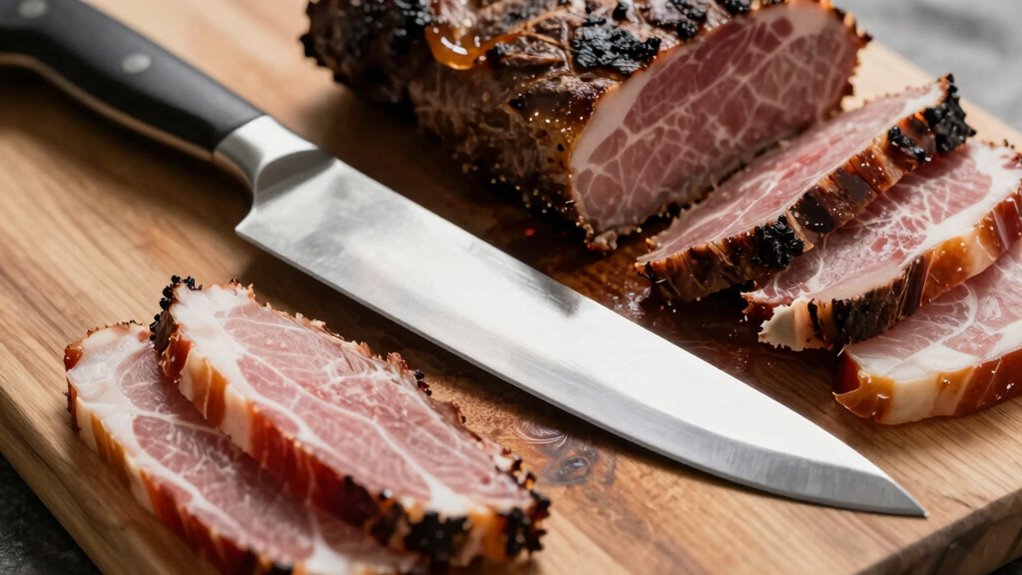
When it comes to preparing meats, roasts, or even delicate baked goods, choosing the right slicing knife can make all the difference. The perfect knife not only ensures clean, even slices but also reduces fatigue during extended use. To find the ideal fit, you need to think about two key factors: knife handle comfort and blade material durability. These elements directly impact your slicing experience and the longevity of your tool.
Start with knife handle comfort. Since you’ll be using your slicing knife for various tasks, from slicing brisket to carving ham, it’s essential that the handle feels natural in your hand. Look for ergonomic designs that fit your grip comfortably, reducing strain on your wrist and hand. A handle with a non-slip grip adds safety, especially when working with greasy or wet meats. The handle material should be durable enough to withstand frequent use and cleaning without cracking or peeling—consider options like high-quality plastic, rubberized coatings, or stabilized wood. Comfort and durability in the handle ensure you maintain control and precision without discomfort or the risk of the handle failing over time. Additionally, choosing a handle with appropriate weight distribution can improve balance and reduce fatigue during prolonged slicing sessions. Proper weight distribution can also help in achieving more consistent slices, making your work easier and more precise. Incorporating a handle with an ergonomic design can further enhance comfort and reduce strain during extended use. Moreover, a well-designed handle can enhance the overall ergonomic experience, making prolonged use more comfortable.
Choose an ergonomic, non-slip handle for comfort, safety, and durability during extended slicing sessions.
Next, consider blade material durability. The blade is the core of your slicing knife, and its quality determines how well it cuts and how long it stays sharp. High-carbon stainless steel is a popular choice because it combines corrosion resistance with excellent edge retention. A durable blade made from this material will allow you to make precise cuts through thick roasts or tender hams with minimal effort. Look for blades that are hardened properly, as this enhances their ability to hold a sharp edge after repeated use. Additionally, some blades are coated to resist sticking or rust, but ensure that such coatings don’t compromise the blade’s sharpness or ease of sharpening. Durability in blade material means your knife will perform consistently over time, saving you money and effort on replacements or frequent sharpening. Recognizing the importance of blade material can help you choose a long-lasting and efficient slicing tool.
high-carbon stainless steel slicing knife
As an affiliate, we earn on qualifying purchases.
As an affiliate, we earn on qualifying purchases.
Frequently Asked Questions
What Length Should a Slicing Knife Ideally Be?
A slicing knife should ideally be between 8 to 12 inches long. This length gives you the control needed to make smooth, even cuts, especially with large roasts, briskets, or hams. When knife sharpening, maintain a sharp edge to improve cutting techniques and reduce tearing. A longer blade helps you glide through meat effortlessly, ensuring cleaner slices and less effort during slicing.
How Important Is the Blade Material for Slicing Efficiency?
The blade material plays a subtle yet essential role in your slicing experience. A quality material guarantees better blade durability, meaning your knife stays sharp longer, and enhances cutting precision, allowing you to glide through meats effortlessly. High-quality steels like stainless or carbon steel provide a fine balance of sharpness retention and ease of maintenance. Choosing a blade made from the right material helps you achieve clean, even slices every time, elevating your culinary results.
Should I Consider the Weight of the Knife?
Yes, you should consider the weight of the knife. A well-balanced knife enhances your cutting precision, making slicing easier and safer. If the knife is too heavy, it can cause fatigue, while a lightweight one might lack stability. Look for a knife with good balance between the blade and handle, ensuring comfortable use during extended slicing sessions. Proper weight and balance help you achieve cleaner, more controlled cuts.
What Handle Material Offers the Best Grip?
You should look for a handle material with excellent handle ergonomics and non-slip grip materials. These features guarantee you can control your knife comfortably and safely, especially when slicing through dense meats. Materials like textured rubber or silicone provide a secure grip even when your hands are wet or greasy. Opt for handles that fit well in your hand, reducing fatigue and increasing precision during extended use.
Are There Specific Brands Known for High-Quality Slicing Knives?
Think of top brands like Wüsthof, Global, and Shun as the trusted guides in your culinary journey. They’re renowned for high-quality slicing knives that slice through meat like a hot knife through butter. Professional recommendations highlight their craftsmanship and durability, but remember, proper knife maintenance keeps them sharp and ready. Investing in these brands guarantees your slicing skills stay sharp, turning every cut into a work of art.
ergonomic carving knife for meats
As an affiliate, we earn on qualifying purchases.
As an affiliate, we earn on qualifying purchases.
Conclusion
So, next time you’re slicing a brisket, roast, or ham, remember that the right knife makes all the difference. It’s funny how the perfect tool often shows up just when you need it, turning a tough cut into tender, even slices. Whether it’s that well-balanced blade or the comfortable handle, choosing wisely guarantees every meal feels like a special occasion. Sometimes, the right knife isn’t just a tool—it’s the secret ingredient in your kitchen.
flexible long slicing knife for brisket
As an affiliate, we earn on qualifying purchases.
As an affiliate, we earn on qualifying purchases.
non-slip handle meat carving knife
As an affiliate, we earn on qualifying purchases.
As an affiliate, we earn on qualifying purchases.
Fall Picks
fall essentials
As an affiliate, we earn on qualifying purchases.