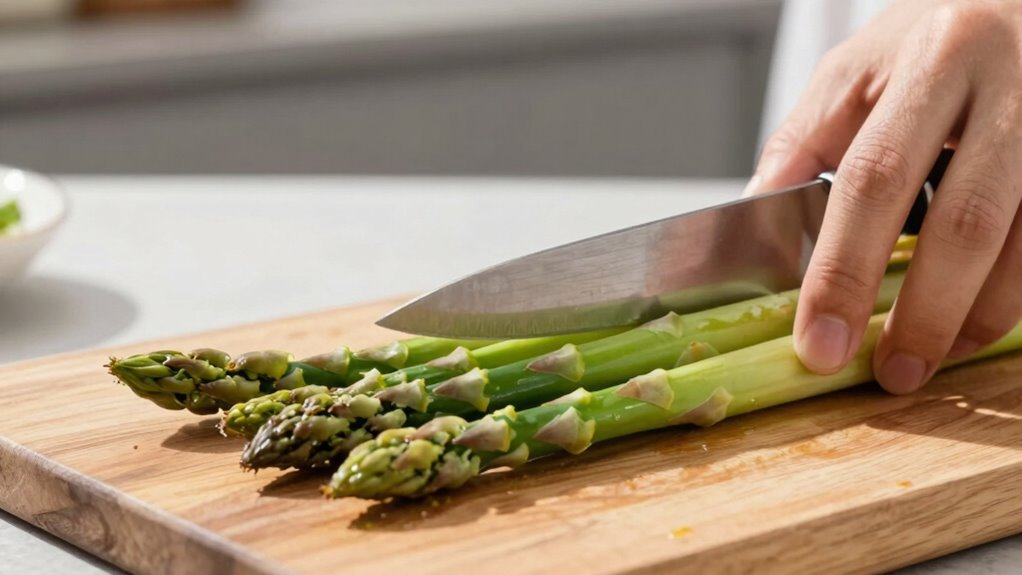

To prep asparagus for roasting with uniform thickness, start by trimming the tough ends, snapping them naturally or cutting about 1-2 inches from the bottom. Identify thicker stalks and set them aside temporarily; trim or halve the thinner spears more to match the size of the thicker ones. For very thick stalks, slicing them in half lengthwise helps guarantee even cooking. Keep your spears similar in size to achieve perfectly roasted, tender results—learn more tips to perfect your technique.
Key Takeaways
- Identify and set aside thicker asparagus stalks to manage uneven cooking.
- Trim thinner spears more than thicker ones to create uniform size.
- Slice or halve thicker stalks lengthwise to match the thinner parts’ thickness.
- Line up all asparagus and cut ends evenly for consistent cooking and presentation.
- Use trimming and slicing techniques to ensure all spears roast evenly and look professional.
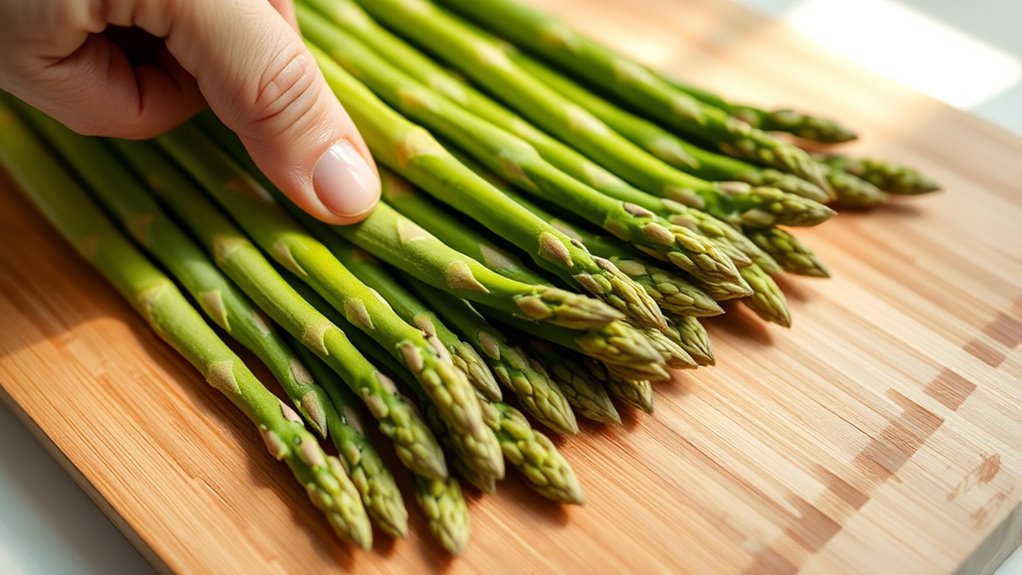
Are you wondering how to prepare asparagus for your next meal? The key to perfectly roasted asparagus starts with proper prep, and that includes mastering trimming techniques and knowing how to store your bunch. When it comes to trimming, you want to remove the tough, woody ends that can be fibrous and unpleasant to eat. Grab a bunch of asparagus and hold it upright, then gently bend the stalks near the bottom until they naturally snap. This method ensures you’re trimming at the right spot, leaving behind only the tender, flavorful parts. If you prefer a more uniform approach, you can line up all the stalks and cut off the ends with a sharp knife, about 1 to 2 inches from the bottom. This way, each spear cooks evenly, which is essential when roasting to prevent some from becoming overdone while others remain undercooked.
Once trimmed, it’s important to consider storage tips to keep your asparagus fresh until you’re ready to cook. Fresh asparagus is best kept in the refrigerator, preferably standing upright in a jar or glass with about an inch of water at the bottom. Cover the tips loosely with a plastic bag, and change the water every couple of days. Alternatively, you can wrap the ends in a damp paper towel and place the bunch inside a perforated plastic bag. Proper storage helps maintain the crispness and flavor of the asparagus, ensuring it’s at its best when you’re ready to roast. Avoid storing asparagus in a sealed plastic bag without air circulation, as this can cause it to spoil faster.
When preparing to roast, a common challenge is ensuring all the spears cook uniformly. A simple trick is to identify the thicker stalks and set them aside temporarily. For the thinner ones, you can cut or trim a bit more to match the thickness of the thicker stems. This way, during roasting, all the asparagus will cook at the same rate, resulting in tender, evenly roasted spears. If some stalks are considerably thicker, consider slicing them in half lengthwise or into smaller pieces to guarantee consistent cooking. This uniformity not only improves the texture but also makes your presentation look professional.

Lothee 2 Pcs Asparagus Knife Weeding Tools 26.7" Multi-Purpose Gardening Hand Tool for Harvesting, Weeding
- Set of 2 asparagus knives: Includes two knives for daily use and replacements
- Product dimensions: Measures approximately 26.7 x 1.9 inches
- Durable high-quality materials: Sturdy, long-lasting, reliable gardening tools
As an affiliate, we earn on qualifying purchases.
As an affiliate, we earn on qualifying purchases.
Frequently Asked Questions
Can I Roast Asparagus With the Ends Cut at Different Lengths?
You can roast asparagus with ends cut at different lengths, but for best results, aim for cutting consistency. Evenly trimmed asparagus guarantees uniform cooking and a more professional presentation. If you prefer uneven lengths, simply adjust cooking time, but keep in mind that uneven trimming may cause some pieces to cook faster or slower. For a perfect roast, focus on asparagus trimming that creates similar-sized pieces.
Should I Peel Thick Asparagus Before Roasting?
Think of thick asparagus as a rugged mountain landscape needing a gentle brush. Peeling benefits your roasted asparagus by removing the tougher, fibrous skin, revealing tender, sweet flesh beneath. If you have thick asparagus, peeling can turn a chew into a melt-in-your-mouth experience. It’s a simple step that guarantees each spear roasts evenly, offering a more delicate, flavorful bite that feels like a luxurious treat straight from nature’s pantry.
How Do I Store Prepped Asparagus for Later Use?
You can store prepped asparagus for later use by wrapping it in a damp paper towel and placing it in an airtight container or plastic bag. Keep it in the refrigerator to maintain freshness. For meal prep, this method helps you save time and guarantees your asparagus stays crisp. Use it within 1-2 days for the best flavor and texture, making your food storage efficient and ready whenever you need it.
Is It Better to Blanch or Roast Asparagus First?
Roasting asparagus is your best bet for flavor and texture, but blanching offers benefits like preserving color and crunch. If you want a quick, vibrant side, blanch first; then roasting boosts caramelization and enhances taste. Roasting allows you to develop a richer flavor and tender texture, while blanching keeps the asparagus crisp and bright. Choose based on your preferred texture and flavor profile for the perfect dish.
Can I Use Frozen Asparagus for Roasting?
Using frozen asparagus for roasting is totally doable, and it’s not as intimidating as climbing Everest! Just remember, frozen vegetables like asparagus need proper thawing tips—drain excess moisture and pat dry to prevent sogginess. Thaw your asparagus in the fridge or under cold water, then toss with oil and seasonings. Roasting straight from frozen works, but thawing improves texture and flavor, ensuring your dish turns out perfectly every time.

Tifanso Heavy Duty Stainless Steel Roasting Pan with Rack & Handle for Oven
- Healthy, Non-Toxic Material: Made of high-quality stainless steel, no harmful chemicals
- Durable and Heat Resistant: Withstands up to 450℉, corrosion-resistant, long-lasting
- Even Heating and Fast Heat Up: Distributes heat evenly for perfect cooking
As an affiliate, we earn on qualifying purchases.
As an affiliate, we earn on qualifying purchases.
Conclusion
Now that you know the secret to perfectly uniform asparagus, imagine the stunning presentation and flawless texture you’ll achieve. But here’s the twist—there’s one more trick that takes your roasting game to the next level. Ready to discover it? Stay tuned, because once you master this final step, your roasted asparagus will become the envy of everyone at the table. Don’t miss out—your next crowd-pleasing dish is just one simple move away.

Freshmage Fruit Storage Containers for Fridge with Removable Colander 4 PCS
- Variety of Sizes and Uses: Includes 4 containers and colanders from 0.32L to 2.7L
- Keeps Produce Fresher: Sealed environment with locking buckles and sealing ring
- Removable Colanders: Colanders can be used inside or separately
As an affiliate, we earn on qualifying purchases.
As an affiliate, we earn on qualifying purchases.
Lothee 2 Pcs Asparagus Knife Weeding Tools 26.7" Multi-Purpose Gardening Hand Tool for Harvesting, Weeding
- Set of 2 asparagus knives: Includes two knives for daily use and replacements
- Product dimensions: Measures approximately 26.7 x 1.9 inches
- Durable high-quality materials: Sturdy, long-lasting, reliable gardening tools
As an affiliate, we earn on qualifying purchases.
As an affiliate, we earn on qualifying purchases.