
🔍 Read the full analysis: The Cheese Course, Italian Style: Building A Formaggi Board That Makes Sense on Mad Tasting

Get kitchen gear delivered free — and shop member deals
- Fast, free delivery on millions of items
- Access to Prime Big Deal Days deals on October 6–7
- Prime Video, Amazon Music and more included
TL;DR
Mad Tasting’s guide recommends building an Italian formaggi board as a focused tasting of three to five cheeses, ordered from mild and fresh to stronger and more aged. It suggests 60–90 grams per person after a meal, allowing most cheeses to sit out for 30–60 minutes, and keeping accompaniments simple.
Mad Tasting has published a guide to assembling an Italian formaggi board, recommending three to five cheeses arranged from mild to strong so diners can compare differences in milk, texture and flavor. The advice offers home hosts a practical way to plan a cheese course, including suggested portions and serving temperatures.
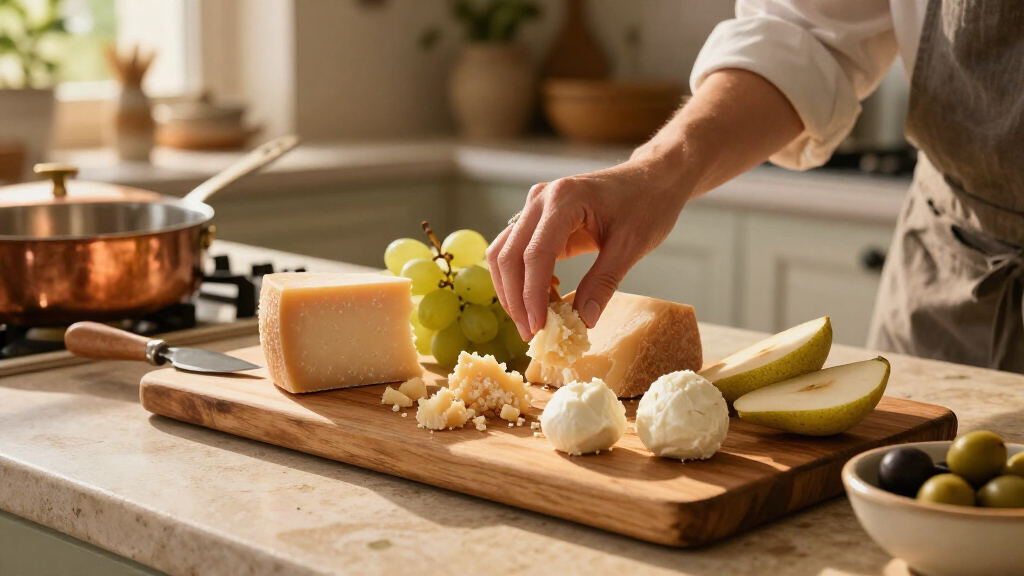
The guide proposes a tasting sequence that might begin with fresh ricotta, move to soft-ripened Taleggio and savory Pecorino Toscano, and finish with aged Parmigiano Reggiano DOP. The cheeses are examples, not a required lineup. Mad Tasting says a board should offer contrasts rather than several cheeses that play a similar role.
For a course served after dinner, the guide recommends 60–90 grams per person. It says to increase the amount if cheese will stand in for dinner, with bread and fruit alongside. Most cheeses should be removed from the refrigerator 30–60 minutes before serving, according to the source, though the advice does not specify a separate timing for every cheese or room condition.
Mad Tasting recommends placing cheeses in tasting order, leaving space between them and providing separate knives where possible. Small labels naming the cheese, milk type and region may help guests follow the selection. The guide favors restrained accompaniments so fruit, bread or condiments do not obscure the cheeses’ individual flavors.
The Cheese Course, Italian Style
Build a formaggi board that makes sense: choose a small range of distinct cheeses, serve them in a thoughtful order, and let each flavor have room to speak.
A tasting with a clear beginning and finish
The guide treats an Italian cheese board as a short tasting, not a crowded platter. Contrasts in texture, milk and intensity help guests notice what makes each cheese different. These examples suggest a route; they are not a required lineup.
Fresh ricotta
Mild, soft and fresh—a gentle opening note.
Taleggio
Soft-ripened character adds a deeper, savory turn.
Pecorino Toscano
A savory sheep’s milk choice adds contrast.
Parmigiano Reggiano DOP
Finish with an aged, firm and nutty bite.
Give every cheese a different role
Choose a regional thread or compare cheeses from different areas. Milk type can offer a useful starting point, while aging and production shape the final flavor.
Buttery & nutty
Often brings a rounded, buttery or nutty profile to the board.
Rich & savory
May offer a fuller, savory character, as in Pecorino Toscano.
Bright & tangy
Can add a lively tang that contrasts with richer cheeses.
Simple choices make hosting easier
A useful host’s checklist
- PortionAllow 60–90 grams per person after a meal. Serve more if cheese is standing in for dinner.
- TimingTake most cheeses out of the refrigerator 30–60 minutes before serving.
- LayoutPlace cheeses in tasting order and leave space between them.
- ToolsSet out separate knives where possible; small labels can name cheese, milk and region.
- PairingsKeep bread, fruit and condiments restrained so they do not obscure the cheese.
From shopping list to first bite
Three to five
Pick distinct cheeses with differences in texture, milk type or intensity.
Mild to strong
Order the board so delicate flavors arrive before saltier or more intense ones.
Keep it focused
Add simple accompaniments, labels and knives if available, then let the cheeses lead.
Quick answers for the cheese course
How many cheeses should I include?
Mad Tasting recommends three to five, selected for differences in texture, milk and intensity.
How much should I buy after dinner?
Plan on 60–90 grams per person. Increase the amount if cheese will be the main food.
In what order should I serve them?
Move from mild and fresh to stronger and saltier. Blue cheese generally belongs toward the end.
How long should cheese sit out?
Most cheeses can come out 30–60 minutes before serving. The guide does not give a separate time for each variety or room condition.
What should I serve alongside?
Keep it simple with bread, fruit or modest condiments. Labels and separate knives can help guests follow the tasting.
Is this a fixed rulebook?
No. The portion and timing suggestions are starting points; guest preferences, the meal and cheese type can change what works.
A Clearer Route Through the Cheese Course
The main practical point is that order changes the tasting experience. A strongly flavored or salty cheese can linger on the palate and make a mild cheese seem less expressive. Beginning with fresher, subtler cheeses gives guests a chance to notice those flavors before moving toward more intense choices.
A limited selection can also make planning easier. Choosing a few cheeses with different textures and milk types gives a board a recognizable progression without requiring a large assortment. For hosts, the suggested portion range and serving window provide a starting point for shopping and preparation; they are guidance, not guarantees of what every guest will eat or prefer.
As an affiliate, we earn on qualifying purchases.
Choosing Regional and Textural Contrast
The guide treats an Italian cheese board as a short tasting rather than a display of as many varieties as possible. A host can organize it around a region, such as a Tuscany-focused selection featuring Pecorino Toscano, or choose cheeses from different areas for a broader comparison. Mad Tasting notes that cow’s milk cheeses may lean buttery or nutty, sheep’s milk cheeses may taste rich and savory, and goat’s milk cheeses may bring tang. These are described as tendencies: aging and production also affect flavor.
The source also explains that DOP/PDO labels identify defined origin and production rules. They can help shoppers understand a cheese’s designation, but they do not determine whether it will suit a guest’s taste. If a listed cheese is unavailable, the guide advises replacing it with one that serves a similar role—fresh, soft or aged—so the sequence remains balanced.
For a stronger option, the guide suggests that Gorgonzola can replace one of the planned cheeses, but says to place blue cheese late and serve a modest amount because its salt and pungency may dominate milder choices. The sequence can also finish with shards of aged Parmigiano Reggiano for a firm, nutty bite.
“An Italian cheese board works best with three to five cheeses that differ in texture, milk, and intensity.”
— Mad Tasting
As an affiliate, we earn on qualifying purchases.
Taste and Serving Conditions Vary
The guidance is a serving framework, not a fixed rulebook. The source does not provide a publication date, identify a particular event prompting the guide, or cite testing behind its portion and temperature recommendations. Individual preferences, the rest of the meal and the type of cheese can all affect how much to serve and how long to temper it.
Mad Tasting also does not provide detailed handling instructions for every cheese or establish that one sequence is best for all boards. Its flavor descriptions are broad tendencies, and the guide acknowledges that production and aging matter. The choice of cheeses and accompaniments remains a matter of taste.
As an affiliate, we earn on qualifying purchases.
Readers can use the guide when shopping: select three to five distinct cheeses, decide whether the board will follow a meal or serve as one, then arrange the cheeses from mild to strong. Allow most of them 30–60 minutes outside the refrigerator before serving, and set out labels and knives if available. The source does not announce a follow-up report or a scheduled next development.
cheese serving platter for cheese board
As an affiliate, we earn on qualifying purchases.
As an affiliate, we earn on qualifying purchases.
Key Questions
How many cheeses should an Italian formaggi board include?
Mad Tasting recommends three to five cheeses, chosen for differences in texture, milk and intensity.
How much cheese should I serve after dinner?
The guide suggests 60–90 grams per person for an after-dinner course. It recommends increasing the amount if cheese is the main food.
In what order should the cheeses be served?
Arrange them from mild and fresh to stronger and saltier. A blue cheese or sharper cheese generally belongs toward the end of the tasting.
How long should cheese sit out before serving?
The guide says to take most cheeses out 30–60 minutes before serving. The source does not give a separate timing for each variety or room temperature.
What should I serve with the cheese?
Mad Tasting recommends keeping accompaniments simple, using bread, fruit or modest condiments so the cheeses remain the focus. Labels and separate knives can help guests follow the tasting.
Source: Mad Tasting
Halloween Picks
halloween
As an affiliate, we earn on qualifying purchases.