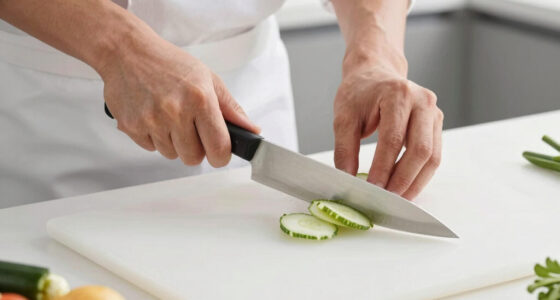
End grain cutting boards are the kindest surface you can offer your knives, with vertical wood fibers that part around the blade instead of resisting it — but choosing one means weighing wood type, thickness, weight, and upkeep against how you actually cook. The Sonder Los Angeles Alfred takes my best overall spot for its generous 1.5-inch thickness, hard walnut build, and finishes on both sides, while the Chef Studio Teak wins on low-maintenance teak and a reversible design, and the Realgulf 3-Piece Set is the smartest buy if you want multiple sizes without paying three times over. The main tradeoffs in this category are between premium walnut durability and teak’s forgiving moisture tolerance, and between single showpiece boards and sets that cover everyday tasks. Keep reading for the full breakdown of all six boards.

Get kitchen gear delivered free — and shop member deals
- Fast, free delivery on millions of items
- Access to Prime Big Deal Days deals on October 6–7
- Prime Video, Amazon Music and more included
Complete the kit



Key Takeaways
- Thickness was the biggest quality separator: the 1.5-inch Sonder Alfred and 1.37-inch Chef Studio resist warping and feel far more stable than the 0.8-inch Thetchry boards, which are lighter but flex toward board-for-life territory.
- Teak (Chef Studio, Realgulf) demands less oiling than walnut (all three Thetchry boards, Sonder) because its natural oils resist moisture — a real factor if you know you won’t stick to a maintenance routine.
- Sets won two of six slots: the Realgulf 3-piece with stand and the Thetchry 2-board set beat single boards on versatility per dollar, though every set board is thinner than the standalone premium picks.
- Sonder’s feet-and-finish details justify its premium role — flat sides plus finished top and bottom mean it can double as a serving piece, something none of the Thetchry boards match.
- Juice grooves appear on four of six boards, but the reversible Chef Studio puts grooves on both sides, making it the most practical choice for carving meats.
| Thetchry Walnut End Grain Cutting Board with Juice Groove |  | Best Overall | Material: American Walnut | Dimensions: 16.5″ x 11.6″ x 0.8″ | Thickness: 0.8 inches | VIEW ON AMAZON | See Our Full Breakdown |
| Chef Studio Teak Wood End Grain Cutting Board, Reversible |  | Best Teak Pick | Material: Teak wood | Construction: End grain | Dimensions: 15.8 x 11 x 1.37 inches | VIEW ON AMAZON | See Our Full Breakdown |
| Sonder Los Angeles Alfred End-Grain Walnut Cutting Board |  | Best for Entertaining and Mise en Place | Material: American black walnut | Construction: End grain | Dimensions: 17 x 13 x 1.5 inches | VIEW ON AMAZON | See Our Full Breakdown |
| THETCHRY Walnut End-Grain Cutting Board Set |  | Best Gift Set | Material: South American walnut | Set Size: 3 cutting boards | Construction: End grain | VIEW ON AMAZON | See Our Full Breakdown |
| Realgulf 3-Piece End Grain Teak Cutting Board Set with Stand |  | Best Starter Set | Material: FSC-certified end grain solid teak | Set Contents: 3 cutting boards (S, M, L) | Density: 0.65 g/cm³ | VIEW ON AMAZON | See Our Full Breakdown |
| THETCHRY Walnut End-Grain Cutting Board, 17 × 13 × 1 in |  | Best Accessory Bundle | Material: Walnut wood | Construction: End grain | Dimensions: 17 × 13 × 1 in | VIEW ON AMAZON | See Our Full Breakdown |
| end grain cutting board | Material | Dimensions | Construction | Juice Groove Capacity |
|---|---|---|---|---|
| Thetchry Walnut End Grain Cutt | American Walnut | 16.5" x 11.6" x 0.8" | — | Up to 3 ounces |
| Chef Studio Teak Wood End Grai | Teak wood | 15.8 x 11 x 1.37 inches | End grain | — |
| Sonder Los Angeles Alfred End- | American black walnut | 17 x 13 x 1.5 inches | End grain | 3.5 fl oz |
| THETCHRY Walnut End-Grain Cutt | South American walnut | — | End grain | — |
| Realgulf 3-Piece End Grain Tea | FSC-certified end grain solid teak | — | — | — |
| THETCHRY Walnut End-Grain Cutt | Walnut wood | 17 × 13 × 1 in | End grain | 3 oz |
More Details on Our Top Picks
Thetchry Walnut End Grain Cutting Board with Juice Groove
This option earns the top spot because it balances the three things that matter most in an end grain board: self-healing walnut construction, a genuinely useful 3-ounce juice groove, and a practical footprint that fits most counters. Compared with the larger Sonder Los Angeles Alfred, the slightly smaller 16.5 x 11.6-inch surface means a bit less prep room, but it also makes the board easier to store and handle — a fair trade for everyday cooks rather than entertaining hosts. The beeswax oil finish keeps maintenance simple, and the anti-slip feet are a thoughtful touch the THETCHRY three-board set leaves off. At 0.8 inches thick, it is thinner than the Chef Studio teak, so heavy butchers should expect a little less heft under aggressive cleaver work.
Pros:- Self-healing end grain walnut surface protects knife edges over time
- Deep juice groove holds up to 3 ounces of liquid, keeping counters clean
- Anti-slip feet add stability and elevate the board for airflow
- Chemical-free beeswax finish is food-safe and easy to refresh
Cons:- At 0.8 inches thick, it is thinner than competing boards built for heavy chopping
- The footprint may crowd very small kitchens or narrow sinks
Best for: Home cooks who want one dependable daily-prep board that also doubles as a cheese or charcuterie platter
Not ideal for: Cooks doing serious butchering or bread-breaking — the 0.8-inch thickness is thinner than dedicated butcher blocks
- Material:American Walnut
- Dimensions:16.5″ x 11.6″ x 0.8″
- Thickness:0.8 inches
- Juice Groove Capacity:Up to 3 ounces
- Stability:Non-slip feet included
- Finish:Beeswax oil coating
Our verdict“The most well-rounded pick for cooks who want genuine end grain performance without oversized-commitment dimensions.”
Chef Studio Teak Wood End Grain Cutting Board, Reversible
Teak occupies a sweet spot in cutting board wood: its natural oils make it more moisture-resistant than walnut, which means slightly more forgiveness if you occasionally forget to oil it. This board stands out for its 1.37-inch thickness — noticeably beefier than the Thetchry walnut single board — giving it a substantial feel under heavy chopping. The reversible design effectively doubles your workspace: use the grooved side for juicy proteins, flip it for dry prep or serving. Built-in side handles make carrying it to the table easier than the handle-free Realgulf set. The tradeoff is that flipping means one side lacks a juice groove, and teak’s silica content, while mild here, is marginally less knife-soft than pure walnut end grain like the Sonder Los Angeles Alfred.
Pros:- Moisture-resistant teak requires less frequent oiling than walnut alternatives
- Reversible design doubles usable prep surface
- Extra-thick 1.37-inch build feels stable under heavy chopping
- Built-in side handles make transport and serving convenient
Cons:- Reversibility means only one side has a juice groove
- Still demands hand washing and careful drying to avoid warping
Best for: Cooks who want a thick, dual-purpose board they can carry from counter to table and who prefer lower-fuss wood care
Not ideal for: Anyone wanting juice containment on both sides — the reversible layout means the flat side has no groove
- Material:Teak wood
- Construction:End grain
- Dimensions:15.8 x 11 x 1.37 inches
- Thickness:1.37 inches
- Design:Reversible with deep juice groove
- Handles:Built-in side handles
- Included:Beeswax, gift box
Our verdict“The smartest single-board choice for buyers prioritizing moisture resistance and a thick, flip-and-use design.”
Sonder Los Angeles Alfred End-Grain Walnut Cutting Board
Where most boards in this lineup do one job, the Alfred is built around organization. Its three sorting wells let you separate garlic from herbs from chopped onion as you work — a feature no other board here offers — while the 3.5 fl oz juice groove is the largest capacity in this roundup. At 17 x 13 inches and 1.5 inches thick, it is also the biggest and heaviest-feeling option, outclassing the Thetchry walnut board for hosting scenarios where everything lands on one surface. That size comes with real costs: it demands oiling every 2-3 weeks, hand washing, and serious counter and cabinet space. Compared with the Chef Studio teak, you give up moisture resistance and a reversible surface in exchange for walnut’s softer knife feel and the prep-station layout.
Pros:- Three sorting wells keep prepped ingredients separated as you work
- Largest juice groove capacity here at 3.5 fl oz
- Generous 17 x 13 x 1.5-inch build handles big roasts and full mise en place
- Removable non-slip feet allow full-surface use when serving
Cons:- Oiling every 2-3 weeks is the most frequent maintenance schedule in this lineup
- Large footprint strains compact counters and sink washing
Best for: Entertainers and organized cooks who prep multiple ingredients at once and want everything on one big board
Not ideal for: Small-kitchen dwellers or minimal-maintenance cooks — the size and 2-3 week oiling schedule are demanding
- Material:American black walnut
- Construction:End grain
- Dimensions:17 x 13 x 1.5 inches
- Juice Groove Capacity:3.5 fl oz
- Sorting Wells:3
- Feet:Removable, non-slip
- Care:Hand wash only; oil every 2-3 weeks
- Country of Origin:USA
Our verdict“The board for hosts and methodical cooks who treat prep as a system and have the counter space to match.”
THETCHRY Walnut End-Grain Cutting Board Set
This three-board set differentiates itself through completeness: boards, a storage stand, an oil brush, and beeswax paste arrive together, so a first-time wood board owner has everything needed for care from day one. Compared with the Realgulf teak trio, the walnut surface here is softer on knife edges, but Realgulf counters with FSC certification and rubber feet on every board — this set lacks the feet and the sustainability credential. The dual-purpose prep-and-serve design with built-in handles makes it easy to designate one board for onions, one for produce, one for presentation, which helps prevent flavor cross-contamination. Each board is smaller than a full-size single like the Chef Studio, so this is a complement to, not a replacement for, a serious butcher-block setup.
Pros:- Three separate boards let you dedicate boards to raw meat, produce, and serving
- Includes a full care kit: stand, oil brush, and beeswax paste
- End grain construction helps minimize visible knife marks
- Built-in handles and juice grooves on every board
Cons:- No non-slip feet, unlike the Realgulf set
- Three boards each need their own oiling and drying routine
- Smaller individual surfaces limit big-prep tasks
Best for: Gift-givers and new wood-board owners who want multiple dedicated boards plus all the care supplies bundled in
Not ideal for: Cooks who need one large workhorse surface — each board is smaller than a full-size single board
- Material:South American walnut
- Set Size:3 cutting boards
- Construction:End grain
- Features:Juice grooves, built-in handles
- Included:Stand, oil brush, beeswax paste
- Care:Wipe with damp cloth, air-dry, oil regularly
- Model:CB001-3
Our verdict“The most giftable option — a complete walnut starter ecosystem rather than a single showpiece board.”
Realgulf 3-Piece End Grain Teak Cutting Board Set with Stand
This set makes the most sense for buyers building a kitchen from scratch, because it solves the size question the THETCHRY walnut set leaves open: with small, medium, and large boards, you always have the right tool whether you’re halving a lime or breaking down a chicken. The FSC-certified teak is a genuine differentiator — no other product in this roundup carries a sustainability certification — and teak’s natural moisture resistance means slightly more forgiving care than walnut options. Every board gets non-slip rubber feet, which the THETCHRY set omits, and the matching stand promotes airflow during drying. Against a single premium board like the Sonder Alfred, you sacrifice size and the sorting-well workflow, and the added 12 replacement feet hint that the adhesive ones may eventually need swapping.
Pros:- Small, medium, and large sizes cover everything from citrus to full meal prep
- FSC-certified sustainable teak with a food-safe plant wax and oil finish
- Non-slip rubber feet on every board, with replacements included
- Matching stand stores boards upright for ventilation and drying
Cons:- Three wood boards mean three oiling and hand-washing routines
- Heavier and higher-maintenance overall than a single plastic board or one large wood board
Best for: New homeowners or renters outfitting a kitchen who want a graduated set of boards plus smart storage
Not ideal for: Buyers who cook large-format meals — even the largest board here is smaller than full-size single options
- Material:FSC-certified end grain solid teak
- Set Contents:3 cutting boards (S, M, L)
- Density:0.65 g/cm³
- Stability:12 non-slip rubber feet included
- Features:Juice groove, knife-friendly self-healing surface
- Finish:Plant wax and food-safe natural oil
- Storage:Matching stand for upright ventilation
- Packaging:Gift box
Our verdict“The best-equipped starter kit for anyone who wants sustainable teak in every size they’ll realistically need.”
THETCHRY Walnut End-Grain Cutting Board, 17 × 13 × 1 in
Most end-grain boards land on your doorstep naked, leaving you to source maintenance supplies separately. THETCHRY breaks that pattern by including beeswax paste and an oil brush alongside the board, which matters more than it sounds — end-grain walnut needs regular conditioning to prevent checking, and having the kit in the box removes the most common reason these boards fail early. Compared with the Sonder Los Angeles Alfred, this board is thinner at 1 inch versus 1.5, so it feels lighter and easier to move to the sink, but it sacrifices some of the heft and warp resistance that a thicker butcher block provides. The sorting compartments and 3 oz juice groove give it a prep-and-serve flexibility the Chef Studio Teak doesn’t offer, though carving a heavy brisket is better left to thicker options.
Pros:- Ships with beeswax paste and oil brush so conditioning routine starts immediately
- Sorting compartments plus juice groove make it a genuine prep-to-charcuterie board
- Double-sided design effectively doubles usable surface life
- Non-slip feet keep the board planted during vigorous chopping
Cons:- At 1 inch thick, it’s more prone to warping and cracking than thicker competing boards
- Natural walnut color varies between batches, so it may not match staged photos
Best for: First-time end-grain buyers who want the board and its full maintenance kit in one purchase
Not ideal for: Heavy-duty carvers and BBQ enthusiasts — the 1-inch thickness is less stable and less crack-resistant than 1.5-inch blocks like the Sonder Alfred
- Material:Walnut wood
- Construction:End grain
- Dimensions:17 × 13 × 1 in
- Juice Groove Capacity:3 oz
- Design:Double-sided, reversible
- Features:Sorting compartments, handle, non-slip feet
- Finish:Beeswax oil coating
- Included Components:Beeswax paste, oil brush, cutting board
Our verdict“Buy this if you’re starting your end-grain journey and want the maintenance supplies bundled in; skip it if you need a heavyweight carving block.”

How We Picked
I judged each board through the lens of what actually separates a good end grain board from a disappointing one: wood species and hardness (walnut and teak behave very differently over years of use), thickness and stability (anything under an inch is more prone to cupping), surface area and reversibility, and practical extras like juice grooves, feet, or included accessories. Maintenance burden mattered too — an end grain board is a commitment, and a board that punishes neglect is a worse buy for most people than a slightly softer one that shrugs it off.
That logic drives the ranking. The Sonder Alfred leads because it combines the thickest slab in the lineup with dual finished surfaces. The Chef Studio follows as the low-maintenance pick, then value leans on sets — Realgulf for its stand and size range, Thetchry’s two-board set for starter kitchens. The standalone Thetchry boards close out the list: capable, but thinner and less differentiated than the options above them.
| end grain cutting board | Material | Finish | Features |
|---|---|---|---|
| Thetchry Walnut End Grain Cutt | American Walnut | Beeswax oil coating | — |
| Chef Studio Teak Wood End Grai | Teak wood | — | — |
| Sonder Los Angeles Alfred End- | American black walnut | — | — |
| THETCHRY Walnut End-Grain Cutt | South American walnut | — | Juice grooves, built-in handles |
| Realgulf 3-Piece End Grain Tea | FSC-certified end grain solid teak | Plant wax and food-safe natural oil | Juice groove, knife-friendly self-healing surface |
| THETCHRY Walnut End-Grain Cutt | Walnut wood | Beeswax oil coating | Sorting compartments, handle, non-slip feet |
Factors to Consider When Choosing End Grain Cutting Boards
Before settling on one of the six boards above, it helps to understand what actually drives performance and longevity in end grain construction. These are the factors that explain most of the price and quality gaps you’ll see across the category.Wood Species Changes Everything
Walnut and teak dominate end grain boards for good reason, but they suit different owners. Walnut is a harder, tighter-grained wood that closes cleanly around knife marks and develops a rich patina, though it dries out faster and needs oiling more often. Teak carries natural oils and silica that make it unusually moisture-resistant — the more forgiving choice if your board might sit wet in the sink. Maple is harder still but harder on edges; avoid softwoods entirely. A common mistake is buying purely on looks: a stunning checkerboard pattern in mixed woods can crack along glue lines if the woods expand at different rates. Stick with single-species boards or well-known brands unless you know the maker.
Thickness Predicts Longevity
Thickness is the single best proxy for how a board will age. Boards at 1.5 inches or more — like the Sonder Alfred — resist cupping, hold oil longer, and can be sanded flat years down the road without losing structural integrity. A sub-inch board like the 0.8-inch Thetchry saves money and weight, but it warps more easily, dries out faster, and effectively can’t be resurfaced. If you cook daily, treat anything under an inch as a starter board you’ll eventually replace. The weight tradeoff is real, though: a thick end grain slab can exceed ten pounds, which matters if you plan to move it between counter and sink for washing.
Size and Reversibility
Bigger is not automatically better. A 17-inch board gives you room to break down a chicken or carve a roast without crowding, but it needs cabinet or counter space to live on permanently, and it’s a chore to wash by hand. Smaller boards in the 12-to-15-inch range handle daily vegetable prep and store upright in a cabinet. Reversibility adds real value when both faces are finished and usable — you get two working surfaces and can dedicate one side to raw meat. Boards with feet, like the Sonder, sacrifice a face but gain airflow underneath, which cuts drying time and reduces the moisture trapping that causes warping on the underside.
Juice Grooves: Helpful or Annoying
A juice groove looks like an obvious plus until you use it. Grooves excel for carving roasts and resting meats, catching liquids that would otherwise flood your counter — but during vegetable prep they eat into flat workspace and collect crumbs that need scrubbing out. Buyers who mostly chop produce often end up wishing for a plain flat surface. The best compromise is a reversible board with a groove on one face only, like the Chef Studio, giving you both options. If you buy a single-sided grooved board, make sure the groove is deep and smoothly routed; shallow channels overflow and accomplish nothing.
The Maintenance Commitment
Every end grain board requires hand washing, thorough drying, and periodic oiling with food-safe mineral oil or a board cream — there are no exceptions, and pretending otherwise is how boards crack. What varies is frequency: teak might need oiling every couple of months, while walnut in a dry climate can want it monthly. Never soak an end grain board or run it through the dishwasher; end grain construction soaks up water through the exposed fibers faster than edge grain, which is exactly why it’s more vulnerable. Budget for a bottle of mineral oil and make it part of the purchase decision. If you know you won’t maintain wood at all, that’s a signal to buy teak — or to honestly reconsider whether a wood board fits your routine.
Single Board vs. Set
Sets like the Realgulf 3-piece and Thetchry pair solve a real problem: cross-contamination and size-matching. A small board for garlic and lime, a mid-size for onions, a large for proteins — that workflow beats hauling out one big slab every time. The catch is that set boards are almost always thinner and lighter-built than flagship singles, so you’re trading longevity for versatility. My suggestion for most kitchens: one thick, well-made main board plus one cheap smaller board for pungent tasks beats a set of three mediocre ones. Sets make the most sense as a first purchase, when you’re outfitting a kitchen and don’t yet own a primary board.
Frequently Asked Questions
Is an end grain board really worth the extra cost over an edge grain board?
For most home cooks, yes — but only if you maintain it. End grain construction lets knife edges slip between vertical wood fibers rather than severing them across the grain, which keeps both your blades sharper longer and the board surface smoother over time. Edge grain boards are cheaper, lighter, and equally hygienic when cared for, so the difference is durability and knife kindness rather than food safety. If you own quality knives, the math favors end grain because you’re protecting a larger investment. If you use stamped knives and want something you can be careless with, edge grain is the smarter buy.
How often do I need to oil an end grain cutting board?
Plan on oiling a new board immediately, then roughly once a month for walnut and every two to three months for teak, adjusting for your climate. Dry winter air and frequent washing pull oil out faster, so a board that looks pale, feels dry, or shows lighter streaks is telling you it’s due. The process takes ten minutes: wipe on food-safe mineral oil or board cream, let it absorb for a few hours or overnight, then wipe off the excess. End grain boards actually absorb oil more readily than edge grain because the fibers drink it in from the cut surface. Skipping oiling entirely is the number one reason end grain boards crack, so set a reminder if you’ll forget.
Should I get one large board or a multi-board set like the Realgulf?
It depends on how you cook. If you regularly break down whole chickens, carve roasts, or do big batch prep, one large, thick board like the Sonder Alfred will serve you better than three thinner ones — the mass and stability matter for heavy tasks. Sets shine for weeknight cooks who want to grab a small board for a lime and a bigger one for onions without washing anything mid-recipe, and they help with raw-meat separation. The honest tradeoff: set boards are thinner, so they’ll wear out sooner, and you’re maintaining three surfaces instead of one. Many kitchens end up happiest with one premium main board plus a single cheap auxiliary, which is a middle path worth considering.
Are end grain boards sanitary, or do they harbor bacteria?
Wood boards, including end grain, have been shown in food safety research to be surprisingly hygienic — wood’s natural compounds actually trap and kill bacteria rather than letting them multiply the way knife-scarred plastic can. The catch is that this only holds with basic care: wash with hot soapy water after use, dry upright so air circulates, and never soak the board or put it in the dishwasher. End grain’s exposed fibers take on water faster than edge grain, which is why soaking is a hard no. If a board smells, rub it with coarse salt and half a lemon, then re-oil once dry. Deep cracks or glue-line gaps that trap debris mean it’s time to resurface or retire the board.
Why does teak cost less to maintain than walnut, and does that make it the better choice?
Teak’s natural oils and silica content make it inherently water-resistant, so it tolerates occasional neglect — longer drying times, a missed oiling — far better than walnut, which will show drying and checking much sooner. That said, teak’s silica content is slightly harder on knife edges than walnut’s cleaner grain, which is why serious knife enthusiasts often still prefer walnut despite the upkeep. Teak is the better choice if you’re realistic about skipping maintenance or you live in a humid climate. Walnut rewards owners who stick to a routine with a harder-wearing, knife-friendlier surface that develops a deeper patina over the years. Neither is wrong; it’s a question of which failure mode you’d rather avoid.
Conclusion
Match the board to the cook, not the other way around. For the best overall pick, the Sonder Los Angeles Alfred stands alone: the thickest slab in the lineup, dual finished surfaces, and a size that handles everything from daily prep to carving duty. The Chef Studio Teak is my pick for the low-maintenance buyer and the best premium-feeling single board if walnut’s oiling schedule doesn’t fit your life. For best value, the Realgulf 3-piece set delivers the most working surface per dollar, while the Thetchry two-board set is the smarter buy for beginners and first apartments — enough capability to learn on, without the upfront cost of a flagship board. The standalone Thetchry 17-inch walnut fills the role of a budget large-format board for occasional big jobs, and the thinner grooved 16.5-inch Thetchry suits light-duty cooks who want the end grain look without the weight. Whatever you choose, commit to the oil and the hand washing — that routine, more than the price tag, determines whether your board lasts three years or thirty.
Halloween Picks
halloween
As an affiliate, we earn on qualifying purchases.