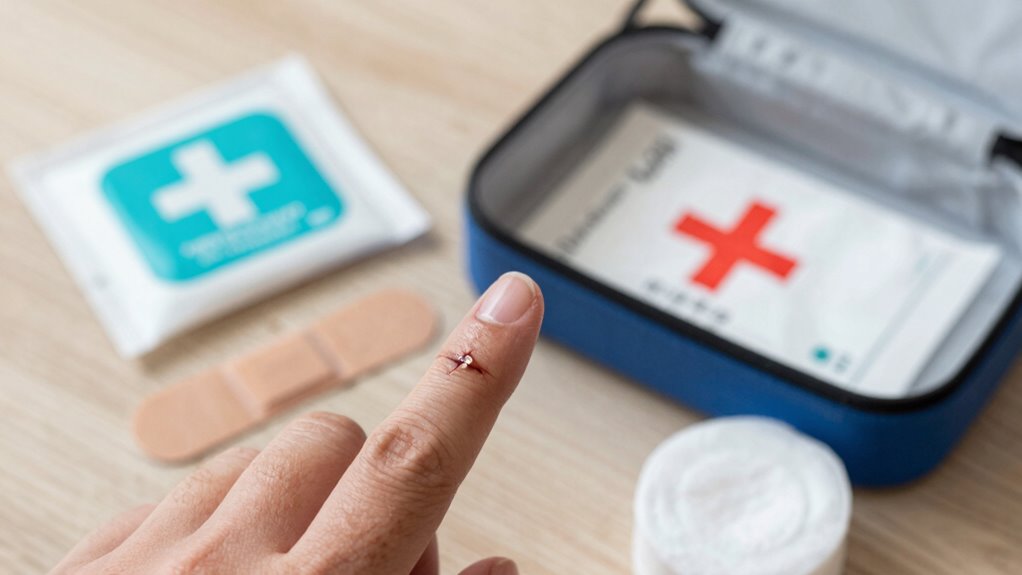

If you get a minor knife cut, first stay calm and apply gentle pressure with a clean cloth to stop bleeding. Rinse the wound with water, avoid harsh chemicals, and pat it dry. Cover it with antibiotic ointment and a sterile bandage. Watch for signs of infection and change the dressing daily. Seek medical attention if the cut is deep, bleeding persists, or signs of infection appear. Keep these steps in mind to ensuring proper care and healing.
Key Takeaways
- Clean the cut thoroughly with clean water and gently pat dry to prevent infection.
- Apply gentle pressure with a sterile cloth or gauze to control bleeding.
- Use antibiotic ointment and cover with a sterile bandage; change daily or if dirty.
- Watch for signs of infection, such as redness, swelling, or pus, and seek medical help if they occur.
- Seek medical attention if the cut is deep, won’t stop bleeding, or was caused by a contaminated or rusty knife.
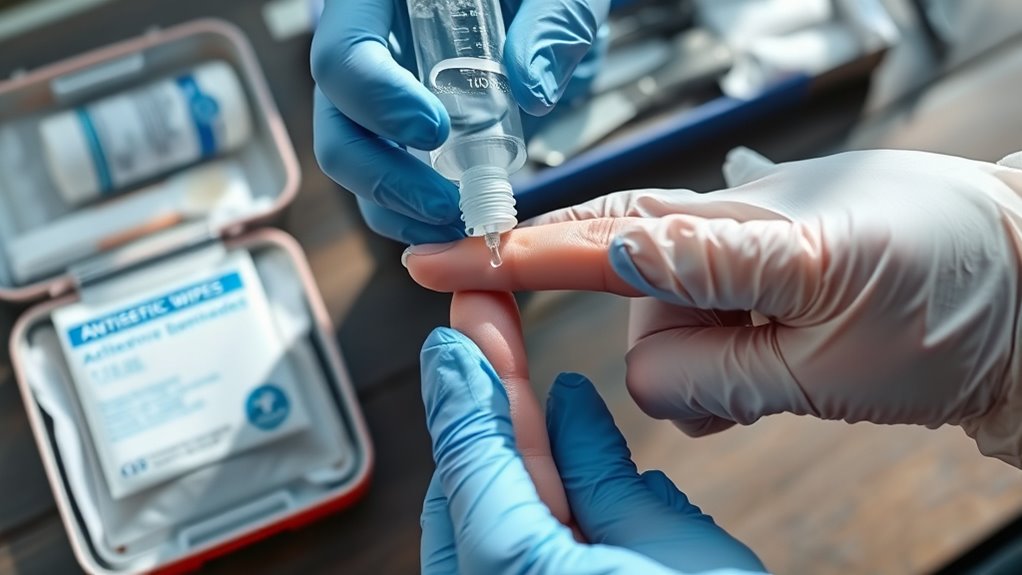
When faced with a knife injury, knowing how to provide immediate first aid can make a critical difference. The first step is to stay calm and assess the severity of the cut. For minor cuts, your focus should be on blade safety and proper wound cleaning. Always remember to handle the knife carefully when treating yourself or others; avoid touching the blade directly to prevent further injury or contamination. If you’re the one administering aid, wear disposable gloves if available to reduce the risk of infection.
Start by stopping the bleeding. Apply gentle but firm pressure with a clean cloth or sterile gauze directly onto the wound. Keep your hand steady and maintain pressure for several minutes. Elevating the injured area above heart level can also help slow blood flow. Once bleeding slows or stops, move on to wound cleaning. Use clean, running water to rinse the cut thoroughly, removing dirt, debris, or any foreign objects. Avoid using harsh chemicals like hydrogen peroxide or iodine directly on the wound, as they can irritate tissue and delay healing. Instead, gently wash around the cut if needed. Pat the area dry with a clean towel or gauze, taking care not to reopen the wound. Proper wound care can promote healing and reduce infection risk.
After cleaning, consider applying an antibiotic ointment to decrease infection risk, then cover the wound with a sterile bandage. Change the dressing daily or whenever it becomes wet or dirty. Keep a close eye on the wound for signs of infection, such as increased redness, swelling, warmth, or pus. Minor cuts usually heal well with proper wound care, but you should seek medical help if the cut is deep, won’t stop bleeding after several minutes of pressure, or if it was caused by a rusty or contaminated knife. Additionally, understanding the importance of contrast ratio can help in assessing the severity of an injury when considering visual or environmental details in a broader context.

Band-Aid Brand Flexible Fabric Sterile Adhesive Bandages, Comfortable Cushioned Wound Care & Protection for Minor Cuts, Scrapes & Burns, First Aid, Hurt-Free Comfort Pad, One Size 1×3 In, 100 Count
Adhesive bandages for first aid: 100-count sterile flexible fabric adhesive bandages provide comfortable wound care protection for minor…
As an affiliate, we earn on qualifying purchases.
As an affiliate, we earn on qualifying purchases.
Frequently Asked Questions
How Can I Prevent Infection in Minor Knife Cuts?
To prevent infection in minor knife cuts, you should keep the wound clean and dry. First, wash your hands thoroughly with soap and water to avoid introducing bacteria. Apply an antiseptic ointment to the cut to kill germs and create a barrier. Cover it with a sterile bandage, and change the dressing daily. Maintaining good hand hygiene and using antiseptic ointments help reduce the risk of infection and promote healing.
When Should I Remove a Knife From a Wound?
You should only remove a knife from a wound if the blade is embedded and you can do so safely. Carefully stabilize the object to avoid re-injury, then gently lift it out, keeping the blade aligned with the wound to prevent further damage. If the blade is deeply embedded or difficult to remove, it’s best to seek medical help immediately. Never force removal if you’re unsure, as it could cause more harm.
What Are Signs of a Deep or Serious Cut?
You’ll know a deep or serious cut by signs of infection like redness, swelling, or pus, and deep cut indicators such as gaping wounds, heavy bleeding, or exposed tissues. Watch for persistent pain, numbness, or inability to move the area, which suggest damage to nerves or tendons. If you see any of these, it’s time to seek professional medical help immediately to prevent complications and guarantee proper healing.
Can I Use Home Remedies to Treat a Cut?
You can try home remedies or natural treatments for minor cuts, but be cautious. Clean the wound gently with soap and water first. Some people use honey, aloe vera, or tea tree oil for their antibacterial properties, but these aren’t substitutes for proper first aid. If the cut is deep, bleeding won’t stop, or signs of infection appear, get professional medical help immediately. Always prioritize safety and proper care.
How Often Should I Change Bandages on a Minor Cut?
Did you know that changing a bandage daily can substantially reduce infection risk? You should replace your bandage at least once a day, or whenever it becomes wet, dirty, or loose. Regular bandage replacement helps with wound monitoring, ensuring you catch any signs of infection early. Keep an eye on the cut, and don’t hesitate to change the bandage more often if needed to promote faster healing.
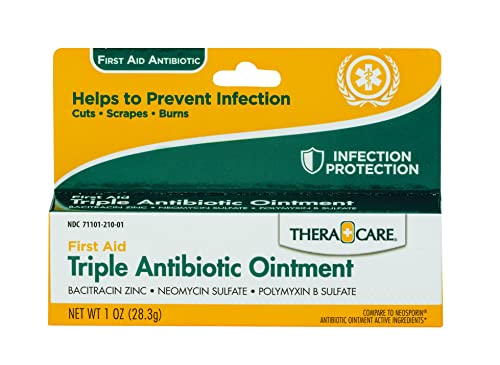
Thera|Care Triple Antibiotic Ointment | First Aid | Infection Prevention and Protection | 1.0 oz | Topical Wound Care for Minor Scrapes and Cuts
LONG-LASTING PROTECTION —Antibiotic ointment aids in treating minor cuts, scrapes and burns
As an affiliate, we earn on qualifying purchases.
As an affiliate, we earn on qualifying purchases.
Conclusion
Remember, handling minor cuts with proper first aid can prevent infection and promote healing. While it might be tempting to ignore small injuries or delay seeking help, don’t underestimate their potential complications. If bleeding doesn’t stop or the cut looks deep, see a healthcare professional promptly. Taking swift, confident action guarantees your safety and peace of mind—because even minor injuries deserve careful attention to prevent bigger problems later on.

Supmedic Nitrile Exam Gloves, 3.5 Mil Powder-Free Food Safe Cooking Cleaning Lab Disposable Medical Glove, Violet Blue 100 Pcs (Medium)
Medical-Grade 3.5 Mil – Supmedic nitrile gloves deliver exam grade barrier & tactile feel – provides 40% extra…
As an affiliate, we earn on qualifying purchases.
As an affiliate, we earn on qualifying purchases.

DMI 175-Piece First Aid Kit for Minor Injuries, Cuts and Scrapes, All-Purpose, Portable and Convenient, Includes Bandages, Injury Treatment, Dressings, and Instruments, HSA & FSA Eligible
The 175-piece first aid kit is incredibly portable and is perfect for your car, bookbag, carry-on luggage, desk…
As an affiliate, we earn on qualifying purchases.
As an affiliate, we earn on qualifying purchases.