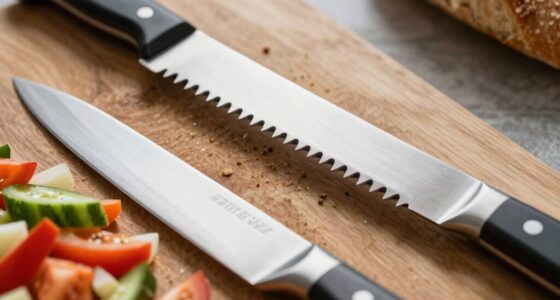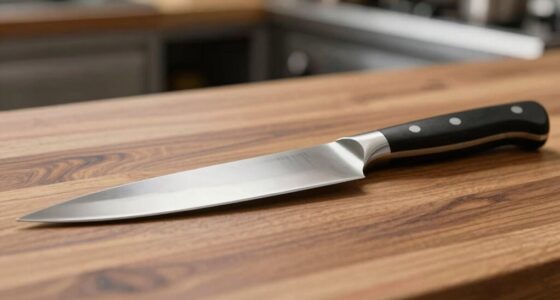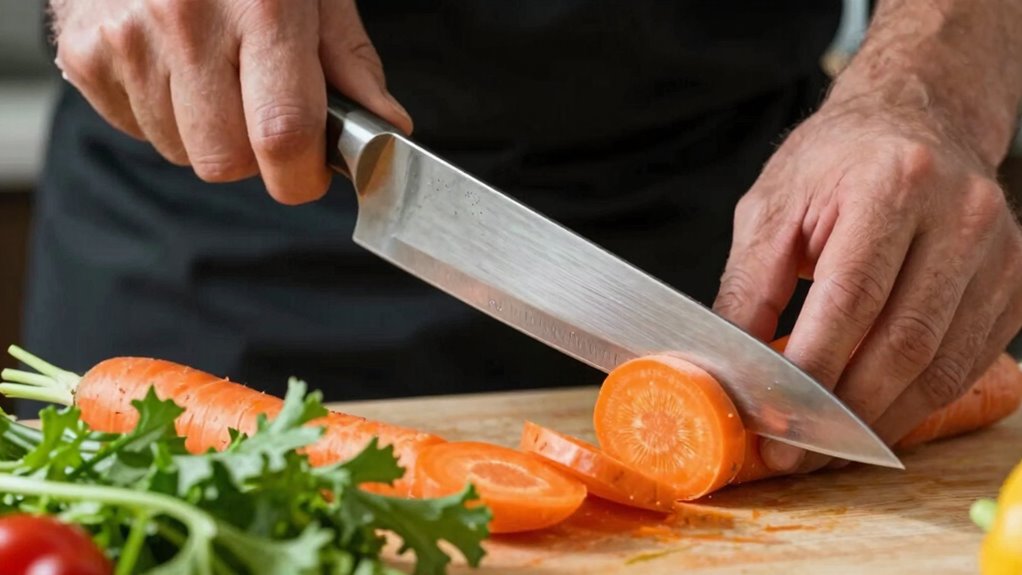
Edge retention in daily cooking means how long your knife stays sharp through regular use, impacting your cutting ease and safety. A knife with good edge retention requires fewer sharpenings, helping you avoid damaging the blade. Proper care, quality materials, and correct sharpening techniques all influence how well your knife keeps its edge. When you understand these factors, you’ll find it easier to choose and maintain knives that stay sharp longer. Keep exploring to discover more ways to improve your kitchen skills.

Get kitchen gear delivered free — and shop member deals
- Fast, free delivery on millions of items
- Access to Prime Big Deal Days deals on October 6–7
- Prime Video, Amazon Music and more included
Key Takeaways
- Edge retention measures how long a knife stays sharp during regular use in daily cooking.
- Better edge retention means less frequent sharpening, saving time and maintaining cutting efficiency.
- Harder, high-quality steel materials improve edge retention but must be balanced with toughness.
- Proper handling, cleaning, and storage help preserve a knife’s edge and extend its sharpness.
- Regular honing and correct sharpening techniques maintain the edge, ensuring effective performance over time.
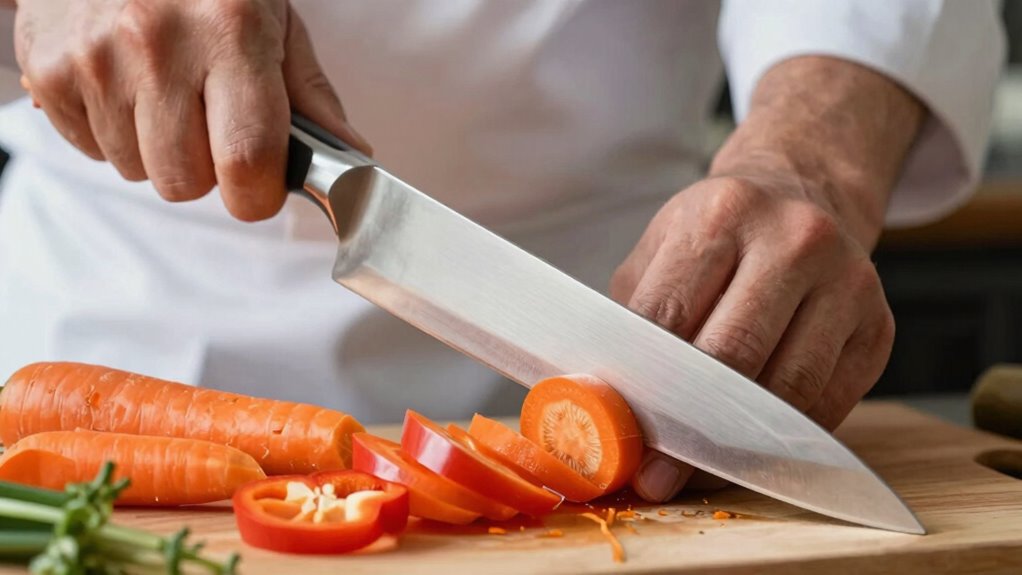
Have you ever wondered why some knives stay sharp longer than others? It all comes down to edge retention—the ability of a blade to keep its sharpness through regular use. When you’re cooking daily, a knife’s edge retention impacts how efficiently you work, how much effort you put into cutting, and ultimately, how much you enjoy the process. A knife with good edge retention means fewer trips to sharpen, saving you time and preserving the integrity of the blade. But understanding what influences edge retention helps you choose the right tools and care for them properly.
Knife durability plays a major role here. Durable knives are made from high-quality materials like high-carbon stainless steel or Damascus steel, which resist dulling and chipping. These materials tend to maintain their edge longer because they’re harder and more resistant to wear. However, harder steels can sometimes be more brittle, so it’s essential to balance durability with toughness. When you handle your knives carefully and avoid cutting on hard surfaces like glass or stone, you protect the edge and extend its lifespan. Proper storage, like using a magnetic strip or a knife block, also prevents accidental damage that can compromise edge retention. Additionally, understanding the properties of different steel types helps you select knives with better edge retention capabilities.
Durable knives made from high-quality steels resist dulling and chipping, extending their sharpness and lifespan with proper handling and storage.
Sharpening techniques are equally important. No matter how good your knife is, it’ll eventually dull with use, but the right sharpening method can bring it back to life and maintain its edge. Regular honing with a honing steel realigns the microscopic teeth along the edge, keeping it sharp during daily use. For more thorough sharpening, using a whetstone or a professional sharpening service ensures a clean, precise edge. Learning how to sharpen correctly is crucial because improper techniques can ruin the blade or reduce its edge retention. For example, maintaining the correct angle while sharpening—typically around 15-20 degrees for most kitchen knives—ensures that you restore the edge effectively without removing unnecessary metal. Additionally, proper sharpening extends the overall lifespan of your knives, making maintenance easier over time. Regular cleaning and proper blade maintenance also play a significant role in preserving your knives’ sharpness and overall condition. Recognizing signs of dullness early can help you address issues before they become serious problems that compromise edge retention.
Ultimately, understanding what edge retention really means in daily cooking helps you make smarter choices about your knives. It’s not just about choosing a sharp-looking blade but about selecting one that stays sharp longer and is easier to maintain. By paying attention to knife durability and sharpening techniques, you extend the lifespan of your blades, making your cooking experience smoother and more enjoyable. After all, a well-maintained knife that holds its edge reduces frustration and makes every chop, slice, and dice feel effortless.
high carbon stainless steel chef knife
As an affiliate, we earn on qualifying purchases.
As an affiliate, we earn on qualifying purchases.
Frequently Asked Questions
How Does Edge Retention Affect a Knife’s Overall Longevity?
Edge retention directly impacts your knife’s overall longevity by maintaining blade durability and cutting performance over time. When the edge stays sharp longer, you won’t need to sharpen or replace it as often, extending its lifespan. Good edge retention means less wear and tear, helping your knife stay effective for years. Proper care, like regular honing and correct cutting techniques, also supports its durability and keeps your knife performing at its best.
Can Improper Sharpening Reduce Edge Retention Over Time?
Improper sharpening is like misaligning a puzzle piece—over time, it can weaken your knife’s edge retention. If you only hone, you maintain the sharpness without damaging the blade, but aggressive or incorrect sharpening can grind away the blade’s material, especially if it’s less durable. Choosing the right technique and understanding your blade material’s durability helps preserve your knife’s edge, ensuring it stays sharp longer and lasts through countless meals.
Does Edge Retention Vary Between Different Types of Steel?
Yes, edge retention varies between different types of steel. Stainless steel blades typically hold an edge longer than carbon steel, which sharpens more easily but dulls faster. Carbon steel blades are easier to sharpen and maintain a keen edge, ideal for precise cuts. Stainless steel offers better corrosion resistance, making it suitable for everyday cooking. Your choice depends on whether you prioritize longevity or ease of maintenance.
How Often Should I Sharpen My Knife to Maintain Edge Retention?
Did you know a dull knife causes 10 times more accidents than a sharp one? To maintain edge retention, sharpen your knife every 1-2 weeks depending on use. Regular honing between sharpenings keeps the edge aligned. Good cutting techniques and proper kitchen safety are essential; avoid forceful cuts that can damage the blade. Consistent sharpening guarantees your knife stays sharp longer, making prep safer and more efficient.
Is Edge Retention More Important Than Sharpness for Daily Tasks?
Edge retention is more important than sharpness for daily tasks because it keeps your knife performing well longer, reducing the need for frequent sharpening. While knife aesthetics add visual appeal, and cutting techniques improve efficiency, a blade that preserves its edge ensures consistent, safe cuts. You’ll find that choosing a knife with good edge retention allows you to handle everyday chores smoothly, maintaining sharpness where it counts most without constant upkeep.
As an affiliate, we earn on qualifying purchases.
Conclusion
So, next time you’re slicing your veggies, remember: edge retention isn’t just about keeping that sharp point—it’s about making your life easier, even if it feels like you’re chasing perfection. Ironically, the more you care about your knives’ edges, the less you’ll actually need to sharpen them every week. Turns out, the real secret to effortless cooking isn’t just the knife itself, but how well you care for its edge—who knew?
magnetic knife strip for storage
As an affiliate, we earn on qualifying purchases.
As an affiliate, we earn on qualifying purchases.
professional knife sharpening service
As an affiliate, we earn on qualifying purchases.
As an affiliate, we earn on qualifying purchases.
Fall Picks
fall essentials
As an affiliate, we earn on qualifying purchases.