If you prioritize precision and tenderness, sous vide is your best choice, as it cooks steak evenly at a set temperature and preserves moisture. If you want a flavorful crust and eye-catching presentation, reverse sear offers great control over doneness with a crispy exterior. Both methods suit different styles—sous vide for consistency, reverse sear for a bold finish. Keep exploring to discover how each technique can elevate your steak game.

Get kitchen gear delivered free with Prime
- Fast, free delivery on millions of items
- Prime Video, Amazon Music and more included
- Member-only deals all year
Key Takeaways
- Choose sous vide for precise temperature control and consistent, tender results; ideal for those seeking uniform doneness.
- Opt for reverse sear if you prioritize a crispy crust and flavorful exterior with a tender interior.
- Sous vide is best for infusing flavors during long, gentle cooking; reverse sear emphasizes flavor through high-heat searing.
- Use sous vide for moisture retention and uniform texture; reverse sear for visually appealing, caramelized crust.
- Select sous vide for ease and precision; reverse sear for those who enjoy a classic, crusty presentation.
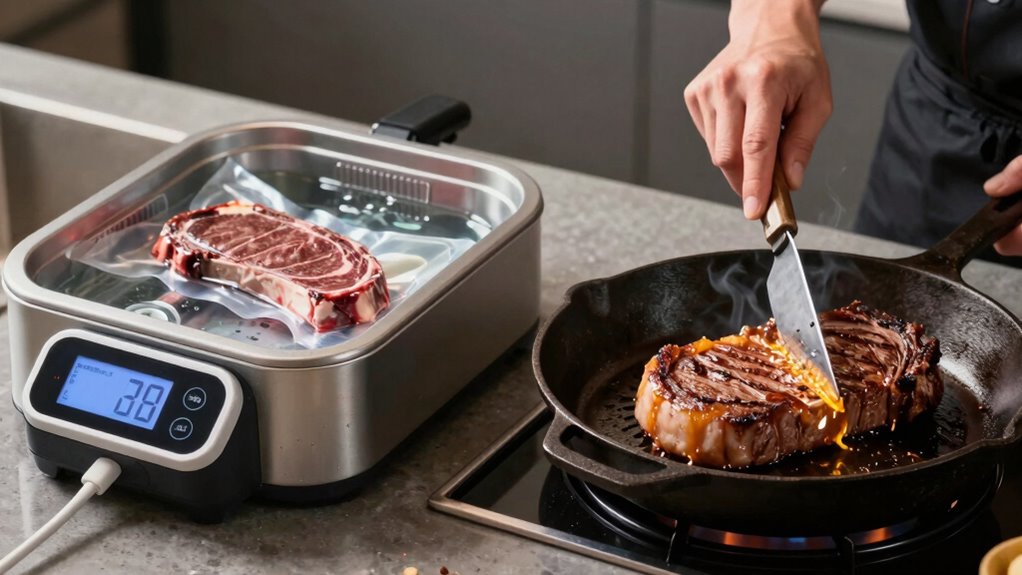
When it comes to cooking the perfect steak, two popular methods—sous vide and reverse sear—offer different approaches to achieving a tender, flavorful result. Both techniques excel in providing you with control over cooking precision and flavor enhancement, but they do so in distinct ways. Understanding how each method works can help you decide which setup best fits your cooking style and desired outcome.
With sous vide, you immerse your steak in a temperature-controlled water bath, cooking it slowly and evenly at a precise temperature. This method guarantees consistent results because you set the exact internal temperature you want, and the water bath maintains it throughout the process. As a result, your steak becomes incredibly tender, with a uniform doneness from edge to edge. The key benefit here is cooking precision; you don’t have to worry about overcooking or undercooking because the temperature remains constant. This technique also lends itself well to flavor enhancement, especially if you add herbs, garlic, or spices into the bag. The heat infuses the meat with those flavors during the long, gentle cook, creating a more complex taste profile. Additionally, sous vide is appreciated for its ability to maintain moisture and avoid the common pitfalls of traditional cooking methods. Incorporating proper temperature control is essential for achieving optimal results in sous vide cooking. Proper equipment setup and understanding the science behind heat transfer can further improve your results.
Sous vide cooks steak evenly at a precise temperature for tender, uniform doneness and enhanced flavor infusion.
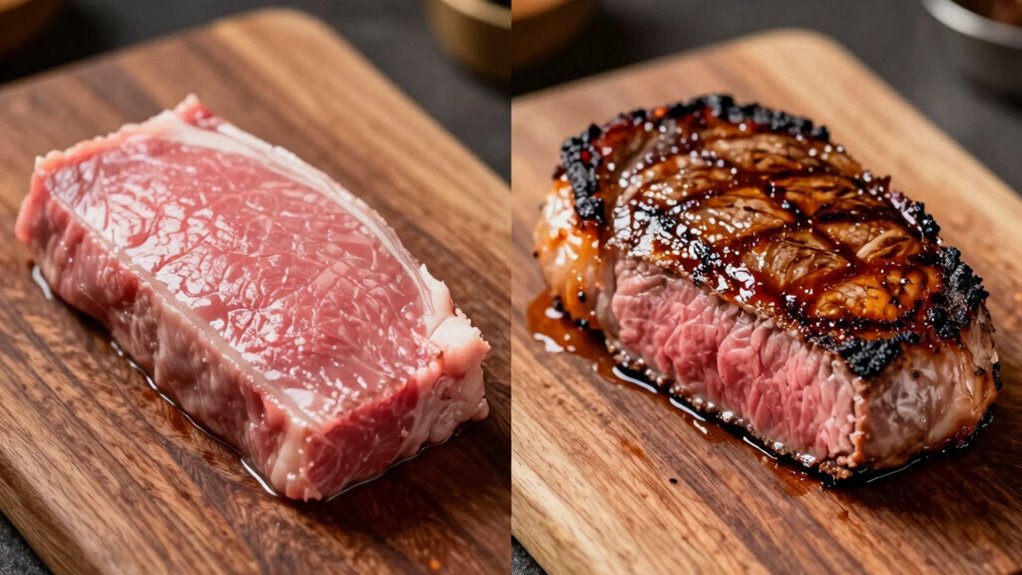
The reverse sear, on the other hand, involves slowly roasting the steak at a low temperature in the oven until it’s close to your target doneness. You then finish it with a high-heat sear in a skillet or on a grill, creating a beautifully browned exterior. This method offers excellent control over the internal temperature, giving you a high level of cooking precision. Because you start with a gentle heat, the inside stays tender while the exterior develops a flavorful crust during the searing. The reverse sear also enhances flavor through Maillard reactions, giving you a more robust, caramelized crust that’s hard to beat for flavor enhancement. It’s a popular choice if you like a crispy outside and a perfectly cooked interior, especially for thicker cuts of steak. Moreover, the visual appeal of the even crust makes this method particularly attractive for presentation. Many cooks prefer this approach for its crust development and the ability to monitor doneness visually.
As an affiliate, we earn on qualifying purchases.
Frequently Asked Questions
Can I Combine Sous Vide and Reverse Sear Techniques?
Yes, you can combine sous vide and reverse sear techniques for perfect cooking consistency and flavor enhancement. First, you cook the meat sous vide to guarantee even doneness, then finish with a reverse sear to develop a flavorful crust. This method guarantees precise temperature control and tender results, while boosting flavor through searing. It’s an ideal approach if you want your meat to be juicy inside with a delicious, crispy exterior.
Which Method Is Faster for Cooking a Steak?
Like lightning striking the sky, the reverse sear method is faster for cooking a steak. You control the temperature precisely, allowing you to cook quickly to your desired doneness, then sear for that perfect crust. Sous vide, on the other hand, offers more precise temperature control but takes longer, often requiring hours. If speed’s your priority, the reverse sear wins, making your cooking process swift yet flavorful.
How Does Equipment Cost Compare Between the Two?
You’ll find that equipment affordability varies between the two methods. Sous vide setups often cost more upfront because you need a quality immersion circulator and a vacuum sealer, leading to higher setup expenses. Reverse searing requires minimal equipment—mainly a good oven and a cast-iron skillet—making it more budget-friendly initially. If you’re looking for a cheaper option, reverse searing offers lower setup expenses, but investing in sous vide might give you more precise control over cooking.
Is One Method Better for Large Cuts of Meat?
For large cuts of meat, the sous vide method often works better because it allows you to set a precise cooking temperature that guarantees even doneness throughout, preserving meat marbling and tenderness. The reverse sear can also work, but it requires careful temperature control and more attention to avoid overcooking the outer layers. Overall, sous vide offers more consistent results for large, thick cuts.
Do These Techniques Affect Meat Tenderness Differently?
Imagine cooking a thick steak for a dinner party—you want it tender and perfectly cooked. These techniques do affect meat tenderness differently; sous vide excels at ensuring consistent tenderness and flavor infusion because it cooks at precise temperatures. Reverse searing, on the other hand, creates a beautiful crust while maintaining tenderness. For best texture consistency, sous vide offers more control, but reverse searing enhances flavor with that irresistible crust.
As an affiliate, we earn on qualifying purchases.
Conclusion
Choosing between sous vide and reverse sear is like picking a travel destination—you’ll enjoy the journey differently depending on your style. I once tried both for a dinner party; sous vide was like a smooth cruise, ensuring perfect doneness, while reverse sear was more like an adventurous hike, giving me that crispy crust and juicy interior. Ultimately, it’s about what suits your rhythm. Whichever path you choose, your steak will turn out memorable—just like a good trip!
As an affiliate, we earn on qualifying purchases.
As an affiliate, we earn on qualifying purchases.
Halloween Picks
halloween
As an affiliate, we earn on qualifying purchases.