As you work through long prep sessions, fatigue can weaken your focus and control, making you more prone to slips and cuts. When tired, you might loosen your grip or adopt awkward hand positions, increasing the risk of accidents. Muscle tiredness and poor posture also reduce precision. Recognizing signs of fatigue early and adjusting your technique can help keep you safe. Keep going, and you’ll discover more strategies to stay sharp and prevent injuries.

Get kitchen gear delivered free — and shop member deals
- Fast, free delivery on millions of items
- Access to Prime Big Deal Days deals on October 6–7
- Prime Video, Amazon Music and more included
Key Takeaways
- Fatigue reduces focus, increasing the likelihood of slips and cuts with sharp knives.
- Tired muscles lead to decreased control and precision during cutting tasks.
- Fatigue can cause awkward hand positioning, raising the risk of accidental injuries.
- Prolonged prep sessions may cause poor posture, contributing to decreased safety and control.
- Recognizing fatigue signals and taking breaks helps maintain safe knife handling practices.
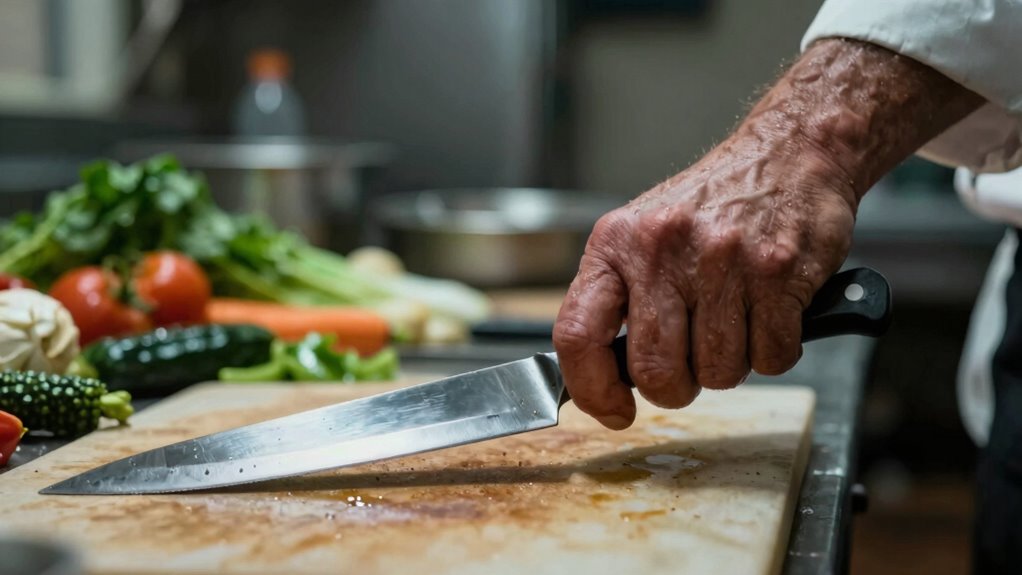
Have you ever wondered how to stay safe when spending long hours chopping and slicing in the kitchen? Fatigue can sneak up on you, and it often leads to mistakes—especially when handling sharp blades. As you work through a lengthy prep session, your focus can wane, and that’s when accidents become more likely. It’s essential to stay aware of how tiredness affects your technique, particularly your hand positioning, to prevent cuts and injuries.
Long hours in the kitchen can cause fatigue, increasing the risk of slips and cuts—stay alert and protect your hands.
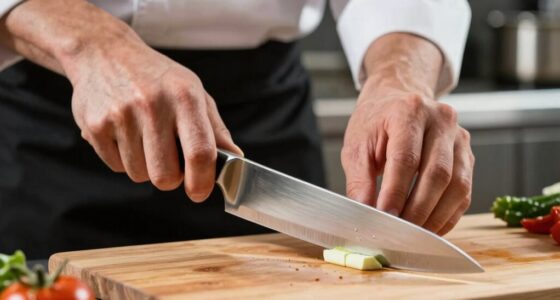
When your energy dips, your hand positioning might suffer. You might find yourself gripping the knife less securely or holding it at awkward angles. This can cause the blade to slip unexpectedly. Sharp blades are great for efficient cutting, but they demand precise control. If your grip loosens or your hand shifts because of fatigue, the risk of slipping increases dramatically. To counter this, always keep your fingers curled away from the blade, forming a claw with your fingertips. This hand positioning acts as a natural safeguard, guaranteeing your fingers stay out of harm’s way even when your concentration falters.
Your grip on the knife should be firm but relaxed, avoiding excessive force that can tire your hand faster. As fatigue sets in, your muscles might tense up or weaken, making it harder to control the knife smoothly. Regularly check your hand positioning during your prep session. If your grip feels loose or your fingers are creeping closer to the blade, pause and readjust. Maintaining proper hand placement isn’t just about technique; it’s an indispensable safety measure. When you keep your hand steady and your fingers properly tucked, even a moment of distraction won’t turn into an accident. Additionally, being mindful of your physical state can help you recognize when it’s time to pause or switch tasks before an accident occurs. Recognizing signs of muscle fatigue can further improve your safety.
Another key point is to be mindful of your overall posture and movement. When you’re tired, you tend to hunch or adopt awkward positions that compromise control. Sit or stand with a straight back, keep your workspace at a comfortable height, and take short breaks to stretch your hands and wrists. Fatigue can cause your focus to drift, making you less attentive to how you’re holding the knife or positioning your fingers. Staying conscious of your hand positioning and maintaining sharp blades can make a significant difference in averting injuries during long prep sessions. Additionally, understanding the importance of proper technique from reputable safety guidelines can reinforce good habits and reduce accident risks. Recognizing when your body signals fatigue and adjusting your approach accordingly is crucial for safe cooking. Incorporating regular safety checks into your routine helps reinforce alertness and good habits during extended periods of prep.
Ultimately, the combination of sharp blades and correct hand positioning is essential, but you must also pay attention to your body’s signals. Recognize when fatigue is impairing your technique and take action—pause, stretch, or switch tasks. By doing so, you protect yourself from unnecessary cuts and guarantee your time in the kitchen remains safe and efficient. Practicing awareness about personal limits is fundamental to maintaining safety during extended cooking sessions.
As an affiliate, we earn on qualifying purchases.
Frequently Asked Questions
How Can I Tell if I’m Too Fatigued to Use a Knife Safely?
You can tell you’re too fatigued to use a knife safely if your focus wanes, your hands tremble, or you notice your grip slipping. When you’re tired, practicing mindful cutting helps you stay aware of your technique. Consider switching to ergonomic tools to reduce strain, and always listen to your body—if fatigue clouds your judgment, it’s best to take a break to prevent accidents. Safety always comes first.
Are There Specific Fatigue Signs That Increase Injury Risk?
You’ll notice signs like decreased mental alertness, slower reaction times, and physical exhaustion. These symptoms double your injury risk by impairing focus, coordination, and decision-making. When your mind drifts or your hands tremble, your control over the knife diminishes. Recognizing these signs early helps you pause, rest, and prevent accidents. Staying attentive and aware of these fatigue signals keeps you safe during long prep sessions.
What Are Quick Ways to Regain Alertness During Long Prep Sessions?
To quickly regain alertness during long prep sessions, grab an energy drink to boost your energy levels and stay focused. Additionally, do breathing exercises—deep breaths help increase oxygen flow to your brain, improving concentration and reducing fatigue. Combining these strategies keeps you alert, sharpens your knife skills, and minimizes injury risk. Remember, staying proactive with simple tactics like energy drinks and breathing exercises can make a big difference in maintaining safety.
Does Fatigue Affect Different Types of Knives Differently?
Yes, fatigue affects different types of knives differently. When you’re tired, your knife grip may loosen, especially with delicate or precision knives, increasing the risk of slips. Fatigue can also impair your cutting technique, making you more prone to applying uneven pressure or losing control with tougher or more specialized knives. To stay safe, focus on maintaining proper grip and technique, even when fatigue sets in, adapting your approach as needed.
How Can I Prevent Fatigue From Impacting My Overall Kitchen Safety?
To prevent fatigue from impacting your kitchen safety, you need to listen to your body and take regular rest breaks. Use ergonomic tools that reduce strain and make cutting easier, helping you stay sharp and alert. Keep your workspace organized to avoid unnecessary movements. Remember, staying refreshed and comfortable keeps you from rushing, which is when accidents happen. Prioritize your well-being to guarantee safe, efficient prep sessions.
As an affiliate, we earn on qualifying purchases.
Conclusion
Remember, even when you’re feeling tired, prioritizing knife safety is key. Fatigue can dull your focus and increase the risk of accidents, but taking short breaks and staying alert keeps you safe. Some might think fatigue is just part of long prep sessions, but it’s a risk you don’t want to take. Stay sharp, stay safe—your fingers will thank you, and your kitchen will run smoothly.
As an affiliate, we earn on qualifying purchases.
As an affiliate, we earn on qualifying purchases.
Halloween Picks
halloween
As an affiliate, we earn on qualifying purchases.