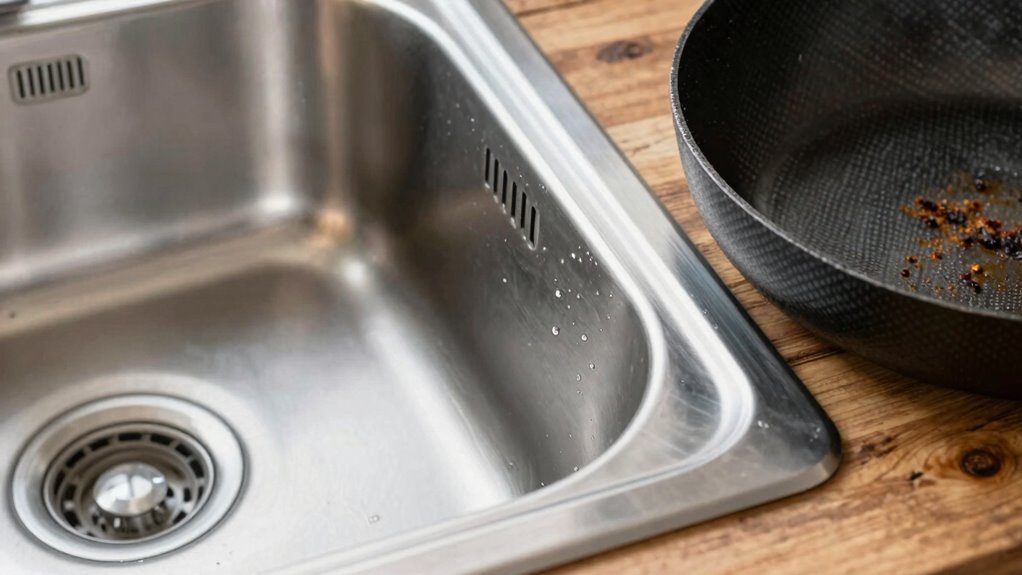

At home, you’ll notice that carbon steel heats up quickly and responds fast to temperature changes, making it ideal for precise cooking and quick tasks. Stainless steel, on the other hand, heats unevenly and responds more slowly, which can affect cooking consistency. Layered stainless steel with aluminum or copper cores can improve heat transfer. To understand these differences better and find the best fit for your needs, there’s more to explore.

Get kitchen gear delivered free — and shop member deals
- Fast, free delivery on millions of items
- Access to Prime Big Deal Days deals on October 6–7
- Prime Video, Amazon Music and more included
Key Takeaways
- Carbon steel heats up faster and responds quickly to temperature changes, ideal for quick-cooking tasks.
- Stainless steel heats unevenly, which can lead to inconsistent cooking results at home.
- Layered stainless steel with aluminum or copper cores improves heat distribution for better home cooking.
- Carbon steel requires more maintenance to prevent rust but offers superior heat transfer.
- Stainless steel is more corrosion-resistant and easier to clean, suitable for low-maintenance kitchen tools.
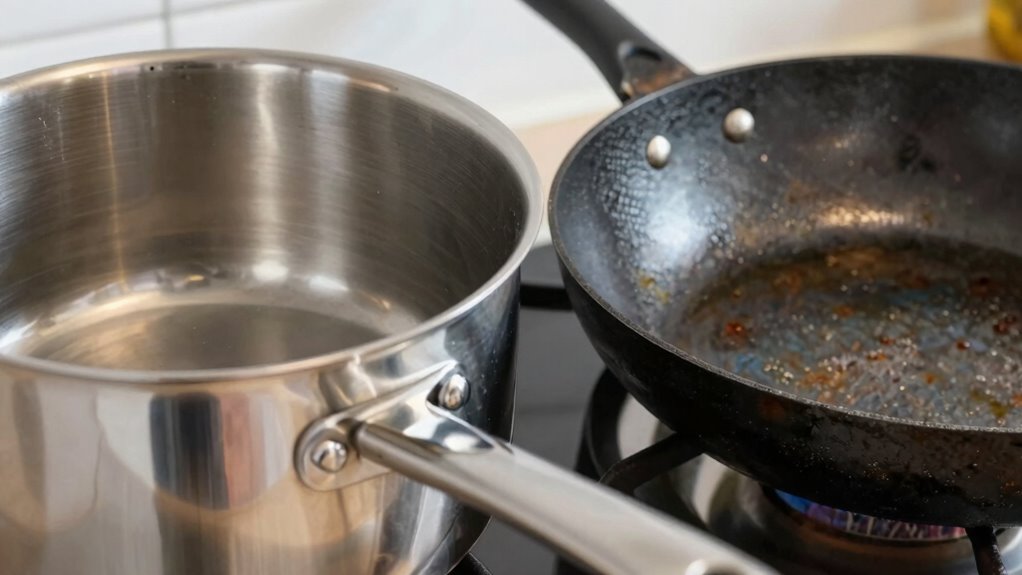
When it comes to heat conductivity, the difference between these steels becomes more apparent. Carbon steel typically conducts heat more efficiently than stainless steel. This makes it ideal for applications like cookware or tools where quick and even heat transfer is essential. You’ll notice that carbon steel pans heat up faster and respond more promptly to temperature changes. Stainless steel, however, is a poorer heat conductor. It tends to heat unevenly, which can be problematic for cooking or processes requiring precise temperature control. Some stainless steels are layered with aluminum or copper cores to improve heat conduction, but plain stainless steel still generally underperforms compared to carbon steel in this area. Additionally, understanding the heat transfer properties of each steel type can help you select the best material for your specific kitchen or workshop needs. Recognizing the thermal conductivity differences can also guide your choices for durable and efficient cookware or tools. Moreover, considering material composition can influence how each steel behaves under different conditions, enhancing your ability to choose the right steel for your needs. A better understanding of metal properties can also assist in maintaining and caring for your steel items to prolong their lifespan. For example, knowing how each type reacts to corrosion resistance can help you select the most suitable steel for various environments.
As an affiliate, we earn on qualifying purchases.
Frequently Asked Questions
How Do Stainless and Carbon Steels Affect Indoor Air Quality?
Stainless steel generally improves indoor air quality because it’s corrosion-resistant and doesn’t emit chemicals over time. It’s less likely to corrode or release harmful substances, maintaining a cleaner environment. Carbon steel, however, can corrode and may produce chemical emissions if it rusts or degrades. This corrosion can lead to particles in the air, negatively affecting your indoor air quality. Choosing stainless steel helps keep the air safer and healthier.
Are Stainless Steels More Eco-Friendly Than Carbon Steels at Home?
Stainless steels are unquestionably more eco-friendly than carbon steels at home. Their superior corrosion resistance means they last forever, reducing waste, while their lower need for frequent replacements saves resources. Plus, stainless steels offer better thermal conductivity, making energy use more efficient. This durability and efficiency mean you’re contributing less to pollution and landfill overflow, making stainless steel the clear, hero-worthy choice for an eco-conscious home.
Which Steel Type Is Easier to Repair or Modify in Household Projects?
You’ll find stainless steel easier to repair or modify at home because it generally offers better surface durability, which helps it withstand welding and drilling. Its corrosion resistance makes handling easier, and it’s more compatible with welding techniques, allowing you to make precise modifications. Carbon steel, while strong, can be tougher to work with due to its harder surface and less forgiving welding process, making stainless steel a more user-friendly choice for household projects.
Do Stainless and Carbon Steels Have Different Maintenance Costs?
Stainless steels generally have higher maintenance costs because of their superior corrosion resistance, which reduces the need for frequent repairs or treatments. In contrast, carbon steels are more prone to rust and corrosion, leading to increased upkeep over time. When considering cost comparison, stainless steels might cost more upfront but tend to save you money long-term due to less maintenance, while carbon steels may require more ongoing care.
Can Stainless or Carbon Steels Be Safely Used in Home Food Storage?
Yes, you can safely use both stainless and carbon steels for home food storage, but consider food safety and material compatibility. Stainless steel resists corrosion and is non-reactive, making it ideal for storing acidic foods. Carbon steel may react with certain foods and is prone to rust without proper coating. Always confirm containers are food-grade, clean thoroughly, and store foods appropriately to maintain safety and integrity.
stainless steel cookware with aluminum core
As an affiliate, we earn on qualifying purchases.
As an affiliate, we earn on qualifying purchases.
Conclusion
Think of stainless and carbon steels as two different kinds of friends in your kitchen. Stainless steel is like the steady companion, resisting stains and rust, perfect for everyday tasks. Carbon steel, on the other hand, is the passionate artist, needing more care but rewarding you with exceptional heat retention. Knowing their unique personalities helps you choose the right partner for your cooking adventures—each one ready to bring its own flavor to your home.
As an affiliate, we earn on qualifying purchases.
induction compatible stainless steel skillet
As an affiliate, we earn on qualifying purchases.
As an affiliate, we earn on qualifying purchases.
Fall Picks
fall essentials
As an affiliate, we earn on qualifying purchases.