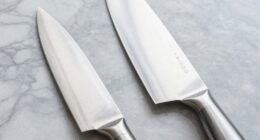
To prevent damage in shared kitchens, always handle knives with dry, secure grips and pass them with the handle first. Store knives properly in a knife block or magnetic strip to avoid dulling or accidents. Keep blades sharp and clean to maintain their longevity and safety. Return knives to their designated spots after use and avoid borrowing without permission. Following these simple habits will keep everyone safe and your knives in top shape—learn more tips below.
Key Takeaways
- Return knives to their designated storage after use to maintain organization and prevent accidents.
- Handle knives carefully and present the handle first when passing to others to ensure safety.
- Keep shared knife areas tidy and organized to reduce clutter and potential damage.
- Avoid borrowing or using someone else’s knife without permission to respect their tools and safety.
- Regularly sharpen and clean knives to ensure safe handling and prevent damage to blades.
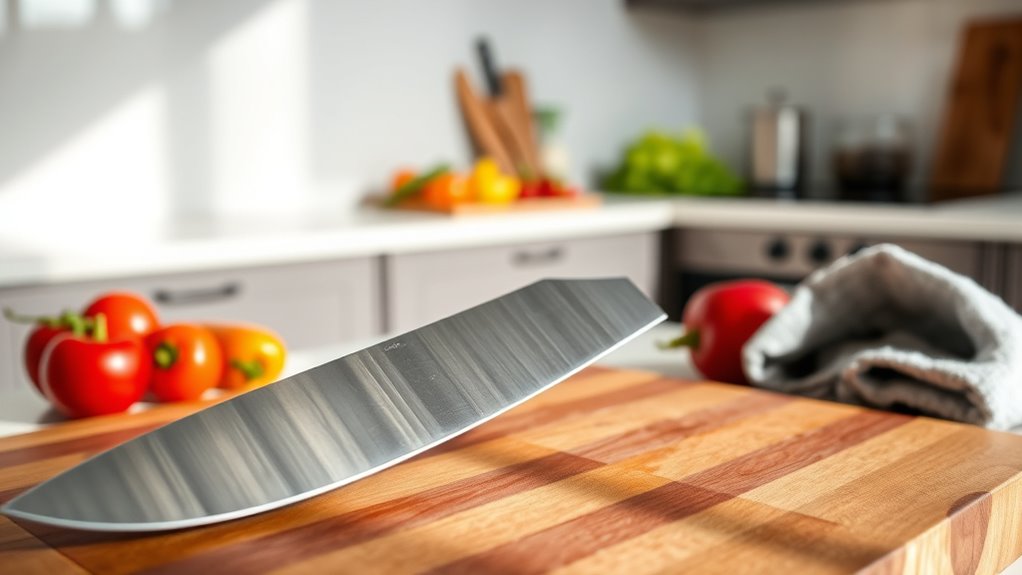
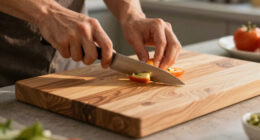
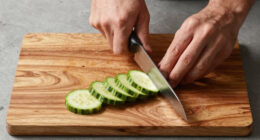
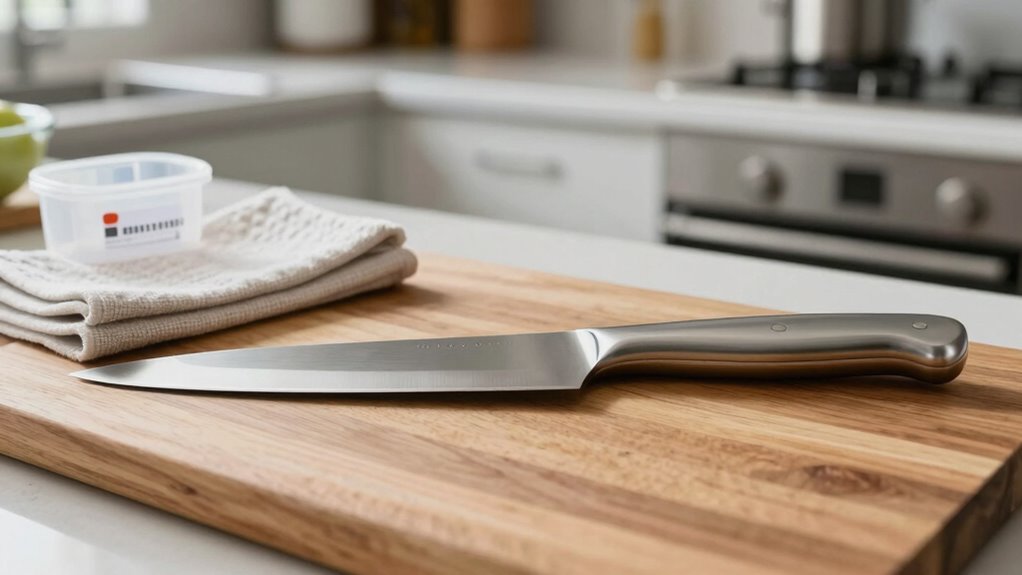
Sharing a kitchen means everyone needs to follow certain knife etiquette to keep the space safe and organized. One of the most significant aspects of this etiquette is maintaining proper knife safety. Knives are sharp tools that can cause injuries if not handled carefully, so always pay attention when using them. Before cutting, make sure your hands are dry and your grip is firm, reducing the risk of slipping. When passing a knife to someone else, do so with the handle facing them directly, avoiding the blade, which can be accidental or intentional. Never leave a knife embedded in a cutting board or sink where someone might accidentally cut themselves; instead, place it flat on a towel or in a designated knife holder. Keeping knives sharp is also a vital part of knife safety because dull blades require more force to cut, increasing the chance of slips and injuries. Regularly sharpen your knives and use appropriate honing tools to maintain their edge, guaranteeing safer handling for everyone.
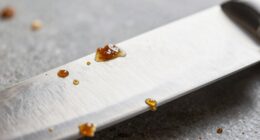
Another essential element in shared kitchens is knife storage. Proper storage prevents accidents and keeps your knives in good condition. Store knives in a knife block, a magnetic strip, or a sheath—never toss them loosely in a drawer. Loose knives in a drawer pose a risk of cuts when reaching in and can damage the blades. A magnetic strip mounted on the wall not only saves space but also keeps knives accessible yet secure. If you’re using a knife block, ensure it’s stable and clean, with blades facing down or away from the opening to prevent accidental cuts. Avoid storing knives with other utensils that could dull or damage the blades. Sharing a designated space for knives helps everyone know where to find and return them, reducing clutter and the likelihood of accidents. Respect each other’s tools by returning knives to their proper storage after use, and avoid borrowing or using someone else’s knife without permission. Proper knife storage also extends the life of your blades, maintaining their sharpness and preventing damage. When cleaning knives, wash them carefully by hand with warm, soapy water, and dry them thoroughly before storing. Never put knives in the dishwasher, as the high heat and abrasive detergents can harm the blade and handle. Additionally, proper maintenance of knives, including regular sharpening, is crucial to ensure safety and longevity.

KITCHENDAO XL Acacia Wood Universal Knife Block with Slots for Scissors and Sharpening Rod, Safe, Space Saver Knives Storage Stand Display without Knives, Unique Slot Design to Protect Blade
- Universal Compatibility: Stores all knife sizes and shapes
- Double-Deck Design: Securely holds knives on two levels
- Parallel Slots: Prevents blade contact and damage
As an affiliate, we earn on qualifying purchases.
As an affiliate, we earn on qualifying purchases.
Frequently Asked Questions
How Should I Store Knives to Prevent Damage?
To prevent damage, you should store your knives properly. Use a knife block, magnetic strip, or individual blade guards to keep blades separate and protected. Avoid tossing knives in drawers where they can bump into other utensils, causing dullness or chips. Proper knife storage guarantees safety and sharpness, extending their lifespan. Always clean and dry knives before storing to prevent rust and corrosion, making your knives last longer and perform better.
Is It Okay to Leave Knives in the Sink?
No, you shouldn’t leave knives in the sink. It jeopardizes knife safety and sink etiquette, risking accidents or damage to the blades. Always wash and dry knives promptly, then store them properly in a knife block or on a magnetic strip. This habit keeps everyone safe, prevents damage, and maintains a tidy shared kitchen. Remember, proper knife handling and storage show respect for shared spaces and ensure your knives stay sharp.
What’s the Best Way to Clean High-Quality Knives?
You might worry about damaging your high-quality knives, but gentle cleaning makes all the difference. Use warm water and mild dish soap, avoiding harsh abrasives. Rinse thoroughly and dry immediately with a soft towel to prevent rust. For ideal knife maintenance, hand wash rather than putting them in the dishwasher. These cleaning techniques keep your blades sharp and safe, ensuring they stay in top condition for years to come.
How Often Should I Sharpen Shared Kitchen Knives?
You should sharpen shared kitchen knives every 3 to 6 months to maintain ideal knife maintenance and guarantee safe, effective cutting. Regular sharpening prevents dullness, which can cause accidents or damage to the blades. Keep an eye on the knives’ performance and use a honing rod between sharpenings. Consistent sharpening frequency helps extend the life of the knives and keeps them in top condition for everyone’s use.
Are There Specific Knives That Require Special Handling?
Some knives do require special handling to guarantee safety and longevity. For example, paring knives and high-carbon blades need gentle handling and proper storage. Always follow specific handling techniques for delicate or expensive knives to prevent damage. Remember, a little care goes a long way—don’t bite off more than you can chew with the wrong approach. Prioritize knife safety by handling each type appropriately to keep everyone safe and your knives sharp.

Modern Innovations 16 Inch Stainless Steel Magnetic Knife Bar with Multi-Purpose Functionality as a Knife Holder, Knife Strip, Magnetic Tool Organizer, Art Supply Organizer & Home Organizer
- Magnetic Knife Bar Material: High-grade stainless steel with strong magnets
- Design & Finish: Elegant satin finish for modern decor
- Magnetic Strength: Fully magnetic surface securely holds knives
As an affiliate, we earn on qualifying purchases.
As an affiliate, we earn on qualifying purchases.
Conclusion
By practicing these simple knife habits, you turn a chaotic kitchen into a harmonious dance floor, where blades glide smoothly and damage stays at bay. Think of your utensils as delicate dancers—treat them with respect, and they’ll perform beautifully each time. When everyone follows these etiquette steps, the shared space feels like a well-tuned orchestra, where every note (or cut) hits perfectly. Keep the rhythm, and your knives will thank you with every chop.

Intelitopia Complete Knife Sharpening Stone Set – Dual Grit Whetstone 400/1000 3000/8000 Knife Sharpener with Leather Strop, Flattening Stone, Bamboo Base, 3 Non-slip Rubber Bases & Angle Guide
- Complete Knife Sharpening Kit: Includes all essential sharpening tools
- Dual Grit Whetstone: 400/1000 and 3000/8000 grit for versatile sharpening
- Durable Corundum Material: High-quality aluminum oxide for longevity
As an affiliate, we earn on qualifying purchases.
As an affiliate, we earn on qualifying purchases.

Astercook Knife Set, 13 Pieces Kitchen Knives Set with Healthy Anti-Rust Coating, Dishwasher Safe, Stainless Steel Chef Knife Sets with 6 Blade Guards, Fathers Day Gift for Men
- Complete Kitchen Knife Set: Includes 8 knives and shears
- Anti-Rust Coating: Protects blades from oxidation
- Dishwasher Safe: Easy to clean and maintain
As an affiliate, we earn on qualifying purchases.
As an affiliate, we earn on qualifying purchases.