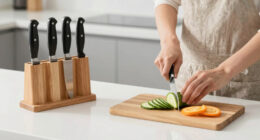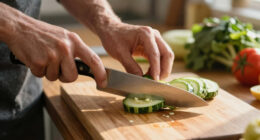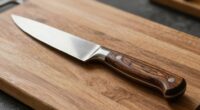
A squeaking knife usually means there’s increased friction between your blade and the cutting surface. This can happen if your knife is dull, the material of the board is rough or plastic, or you’re applying too much force. Technique matters too—using improper angles or cutting too aggressively can cause squeaks. Maintaining a sharp knife and using smooth, gentle motions can reduce noise. Want to discover more ways to quiet your cuts? Keep exploring for helpful tips.
Key Takeaways
- Squeaking indicates high friction due to dull blades or improper cutting technique.
- The type of cutting surface, like rough wood, can increase noise during slicing.
- Using a dull knife or applying excessive force causes more squeaks.
- Sharp, well-maintained blades glide smoothly, reducing noise and indicating proper maintenance.
- Correct cutting angles and gentle motions help minimize squeaking and improve efficiency.
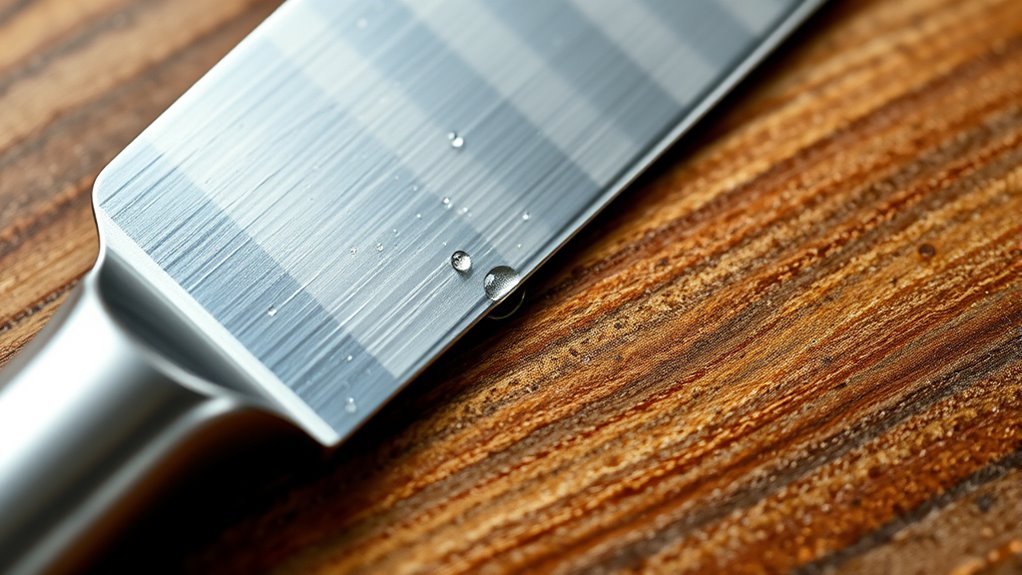
Have you ever noticed a sharp squeaking noise coming from your knife while you’re using or storing it? That high-pitched sound isn’t just an annoyance; it’s a signal that something might be off with your knife or how you’re using it. Often, this squeaking happens because of the interaction between the knife material and the cutting surface, combined with your cutting technique. Understanding these factors can help you troubleshoot and improve your kitchen experience.
The type of material your knife is made from plays a big role in whether it squeaks or not. For example, softer metals like certain stainless steels can sometimes produce more noise when they rub against cutting boards, especially if the blade isn’t sharp enough. Harder materials, such as high-carbon steel or ceramic blades, tend to glide more smoothly, reducing the chance of squeaking. The surface of the cutting board also matters—wood, plastic, and bamboo each interact differently with your knife material. Wooden boards, especially when seasoned or slightly rough, can cause more friction, resulting in squeaks, whereas smooth plastic boards might allow for quieter cuts.
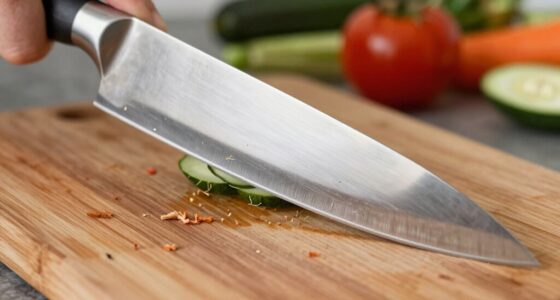
Your cutting technique is equally important. When you press down too hard or use a sawing motion, you increase the friction between the knife and the board. This added friction can cause a squeaking sound, especially if your knife isn’t sharp enough to cut cleanly through the food. A dull blade requires more force, which not only makes the noise more noticeable but also puts more strain on your knife and increases wear. Instead, focus on a proper slicing technique—using a gentle, consistent pressure and a smooth back-and-forth motion. This reduces unnecessary friction and minimizes noise, making your cutting more efficient and safer.
Another aspect to deliberate on is the angle at which you hold your knife. An improper angle can cause uneven contact with the board, leading to more friction and squeaking. Keeping your knife at a consistent angle—around 20 degrees for most kitchen knives—ensures a cleaner cut and less noise. Additionally, maintaining a sharp edge helps the knife glide effortlessly, decreasing the chances of squeaking altogether. Regular honing and occasional sharpening keep your knife performing at its best. Proper knife maintenance not only preserves the sharpness but also reduces unnecessary friction and noise during use.

imarku Japanese Chef Knife – Sharp Kitchen Knife 8 Inch Chef's Knives HC Steel Paring Knife, Unique Gifts for Men and Women, Gifts for Mom or Dad, Kitchen Gadgets with Gift Box, Mothers Day Gifts
High-Carbon Stainless Steel Blade: It is manufactured from high-quality stainless steel that maintains its functionality for a long…
As an affiliate, we earn on qualifying purchases.
As an affiliate, we earn on qualifying purchases.
Frequently Asked Questions
Can the Squeaking Damage My Knife or Cutting Board?
No, the squeaking won’t damage your knife or cutting board if you maintain good blade sharpness and use proper cutting techniques. A sharp knife glides smoothly and reduces unnecessary pressure, preventing scratches or gouges. Focus on controlled cuts and avoid forcing the blade through tough or frozen foods. With proper care, your knife and board stay in good shape, and the squeak simply signals you’re using the right technique.
Does the Type of Knife Affect the Squeaking Sound?
Oh, absolutely, your fancy ceramic knife is singing a squeaky tune, unlike your trusty steel one. The type of knife does matter because material compatibility influences squeaking—so, a softer blade on a hard board squeaks more. Plus, a dull knife will squeak less but requires more force. Keep your knives sharp and match their material with your board, and maybe, just maybe, silence that musical menace.
How Can I Reduce or Eliminate the Squeak?
You can reduce or eliminate the squeak by maintaining your knife and caring for your cutting board properly. Regularly sharpen your knife to guarantee smooth cuts, and clean it thoroughly after each use. Use a non-slip, well-maintained cutting board—preferably wooden or silicone—and avoid excessive moisture. Applying a small amount of mineral oil to your cutting board can also help diminish friction, minimizing noise and keeping your tools in top shape.
Is Squeaking Normal for All Cutting Boards?
Squeaking isn’t normal for all cutting boards; it often depends on your knife maintenance and cutting technique. When you press too hard or use a dull knife, it can cause squeaks. To reduce this, sharpen your knife regularly and use a gentle, controlled cutting motion. Proper technique minimizes vibrations and friction, making your cutting experience quieter. So, squeaks can be a sign to improve your skills and knife care.
Does the Material of the Board Influence Squeaking Frequency?
Yes, the material of your board influences squeak frequency. Harder surfaces like plastic or glass tend to squeak more because they create more friction when cutting. Softer materials like wood usually produce fewer squeaks, but they can still happen depending on the finish and grain. The material impact affects how much your knife squeaks, so choosing the right board can reduce noise and make your cutting experience more comfortable.

SNOWCLAD Stainless Steel Cutting Board,Double Sided Steel Bread Boards for kitchen,Stainless Steel/Wheat straw pp Large Board for meat,non toxic Chopping,16 * 11 Inch,Dishwasher Safe
【DESIGNED FOR YOUR KITCHEN】This large meat cutting boards for kitchen is made of stainless steel (for meat)and wheat…
As an affiliate, we earn on qualifying purchases.
As an affiliate, we earn on qualifying purchases.
Conclusion
Next time your knife squeaks on the board, remember it’s more than just noise—it’s a sign of your cutting surface and blade working together. Imagine the crisp snap of the blade slicing through fresh vegetables or tender meat, the tiny squeak echoing like a secret handshake between them. That sound is a reminder to keep your tools in harmony, ensuring every chop is smooth and efficient. Embrace the squeak; it’s your kitchen’s little symphony.

Intelitopia Complete Knife Sharpening Stone Set – Dual Grit Whetstone 400/1000 3000/8000 Knife Sharpener with Leather Strop, Flattening Stone, Bamboo Base, 3 Non-slip Rubber Bases & Angle Guide
【Complete Knife Sharpening Stone Kit】You don't need to be a Pro to sharpen your blades, all you need…
As an affiliate, we earn on qualifying purchases.
As an affiliate, we earn on qualifying purchases.

Cutluxe Honing Rod, Professional Knife Sharpener Rod – 10" Honing Steel – Ergonomic Handle Design, Grilling Gifts for Men – Artisan Series
KEEP YOUR KNIVES SHARP – The Cutluxe Artisan Series 10-Inch honing rod is used to hone and realign…
As an affiliate, we earn on qualifying purchases.
As an affiliate, we earn on qualifying purchases.