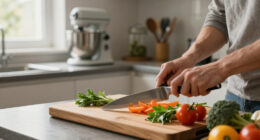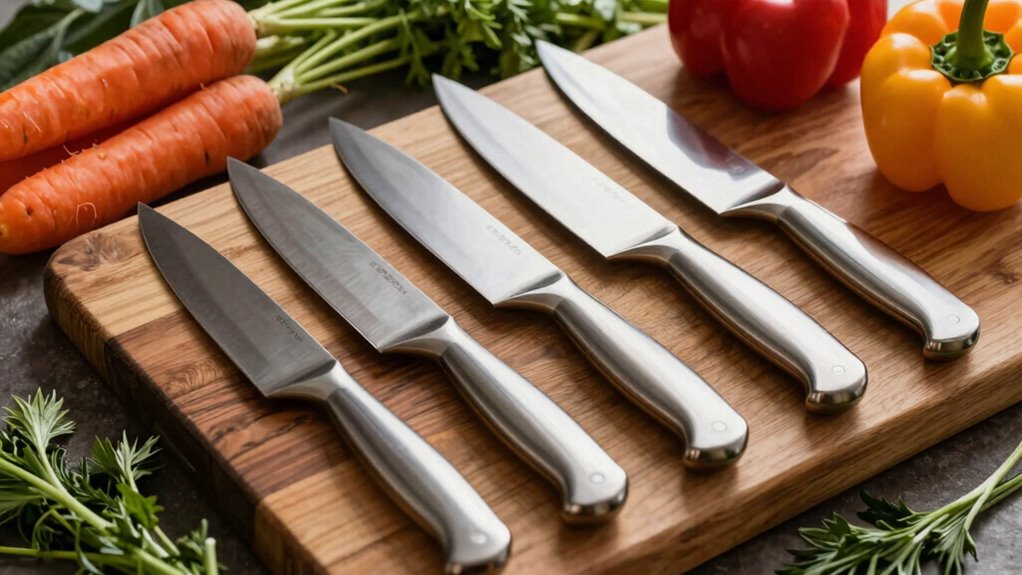

Understanding the roles of different knives helps you work faster and safer during batch cooking weekends. A chef’s knife is versatile for chopping large ingredients quickly, while paring knives handle precise tasks like peeling or mincing garlic. Serrated knives are perfect for slicing bread and soft foods without squashing them. Choosing the right knife for each task preserves blade sharpness and prevents accidents. Keep exploring to discover how proper knife care boosts your safety and efficiency even further.

Get kitchen gear delivered free — and shop member deals
- Fast, free delivery on millions of items
- Access to Prime Big Deal Days deals on October 6–7
- Prime Video, Amazon Music and more included
Key Takeaways
- Different knives are designed for specific tasks, such as chopping, slicing, or detailed work, streamlining batch meal prep.
- Use a chef’s knife for bulk chopping, dicing, and slicing large ingredients efficiently.
- Paring knives are ideal for precise tasks like peeling and mincing herbs during batch cooking.
- Serrated bread knives handle slicing bread and soft foods with tough exteriors safely.
- Selecting the right knife improves safety, maintains sharpness, and speeds up the batch cooking process.
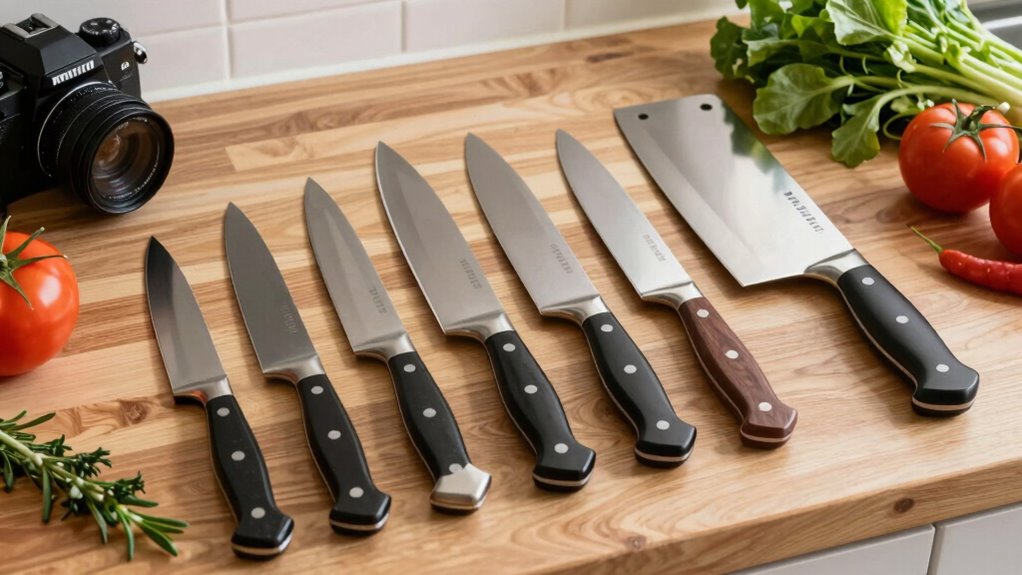
Batch cooking weekends can be more efficient and enjoyable when you understand the different roles your knives play. Knowing which knife to use for each task guarantees you work safely and effectively, making the entire process smoother. One of the key aspects of maintaining safety is practicing proper knife safety. Always handle your knives with care, keeping your fingers tucked and away from the blade’s edge. Use a stable cutting surface and avoid rushing through your prep work. When you’re chopping large quantities of vegetables or meat, a sharp knife is essential—not just for efficiency but also for safety. Dull knives require more pressure, increasing the risk of slips and accidents. Regularly sharpening your knives using appropriate knife sharpening techniques keeps blades in top condition. You might use a whetstone, honing steel, or an electric sharpener, depending on the type of knife and your comfort level. Properly sharpened knives make slicing easier, reducing fatigue and minimizing mishaps. Additionally, understanding the importance of knife maintenance helps prolong the lifespan of your blades and ensures consistent performance. Maintaining the sharpness of your knives through proper honing and sharpening is crucial for safety and efficiency. To further enhance your safety, it’s helpful to understand the different types of knives and their specific uses during meal prep. Recognizing the specific roles each knife plays allows you to select the right tool quickly and confidently. Each knife has a specific role during batch cooking. A chef’s knife, with its broad, sharp blade, is your go-to for chopping, slicing, and dicing a variety of ingredients. Its versatility makes it essential for preparing large batches of vegetables, herbs, and proteins. For tasks that require precision, such as mincing garlic or herbs, a paring knife is ideal. Its small size allows for controlled cuts, helping you avoid accidents and maintain consistent ingredient sizes. When it comes to cutting through tougher ingredients like squash or breaking down a chicken, a serrated bread knife or a heavy-duty utility knife can be your best ally. Serrated knives excel at slicing bread, tomatoes, or any soft foods with tough exteriors but tender insides, while utility knives handle a variety of mid-sized tasks. Properly selecting and maintaining each knife ensures they perform optimally and last longer. Using the correct knife for each task not only improves efficiency but also preserves your knives’ sharpness longer. After each session, clean and dry your knives carefully to prevent rust and damage. Store them properly, either in a knife block or on a magnetic strip, to avoid dulling the blades. Remember, taking a few moments to hone your skills in knife safety and sharpening techniques will pay off during your batch cooking weekends. These practices also help you develop a deeper understanding of knife handling techniques, which can significantly enhance your safety and efficiency. By understanding the roles your knives play and maintaining them well, you’ll streamline your process and reduce the risk of accidents, turning batch cooking into a true pleasure rather than a chore.
As an affiliate, we earn on qualifying purchases.
Frequently Asked Questions
What Is the Best Knife for Slicing Bread During Batch Cooking?
The best bread knives for slicing bread during batch cooking are serrated knives, specifically designed for bread slicing techniques. These knives have scalloped edges that glide smoothly through crusty or soft bread without crushing it. When choosing the best bread knives, look for a long, sharp blade to guarantee even slices. Your goal is to apply gentle sawing motions for clean, uniform cuts, making your batch-cooked bread perfect every time.
How Do I Sharpen Different Types of Kitchen Knives?
Think of your knives as loyal steeds that need regular care. To sharpen different types of kitchen knives, you’ll want to use specific sharpening techniques and tools: a whetstone for high-carbon blades, a ceramic rod for honing, and a guided sharpening system for precise edges. Proper knife maintenance keeps your blades sharp and safe, ensuring they cut effortlessly and last longer. Regular sharpening is key to keeping your culinary tools in top shape.
Can I Use the Same Knife for Both Meat and Vegetables?
You shouldn’t use the same knife for both meat and vegetables because it risks cross contamination. To keep your food safe, dedicate separate knives or thoroughly wash and sanitize your knife between tasks. Proper knife maintenance, including regular sharpening and cleaning, guarantees your blades stay sharp and hygienic. This practice not only prevents bacteria transfer but also helps your knives last longer, making cooking safer and more efficient.
What Safety Precautions Should I Follow When Using Sharp Knives?
When using sharp knives, always follow safety precautions like using proper cutting techniques—curl your fingers inward to avoid cuts. Keep your knives dry and handle them carefully. Store knives properly in a knife block or on a magnetic strip to prevent accidents. Always cut on a stable surface, and never rush. These steps help you stay safe and maintain your knives’ sharpness for efficient, safe meal prep.
How Often Should I Replace or Sharpen My Kitchen Knives?
You should sharpen your kitchen knives every 6 to 12 months, depending on how often you cook and the quality of the knives. Regular knife maintenance, including honing and proper storage, helps keep blades sharp longer. Use effective sharpening techniques like honing or using a whetstone to maintain edge integrity. If your knives become dull or chipped, it’s time to replace them for safety and efficiency in your cooking.
As an affiliate, we earn on qualifying purchases.
Conclusion
Mastering knife roles can truly elevate your batch cooking weekends, making prep faster and safer. When you choose the right knife for each task, you not only improve efficiency but also preserve your ingredients’ integrity. Are you ready to refine your skills and turn cooking into an art? With the right knives in hand, you’re well on your way to culinary confidence—so why not start today and see the difference it makes?
As an affiliate, we earn on qualifying purchases.
As an affiliate, we earn on qualifying purchases.
Fall Picks
fall essentials
As an affiliate, we earn on qualifying purchases.