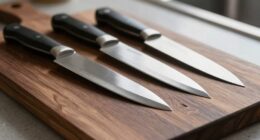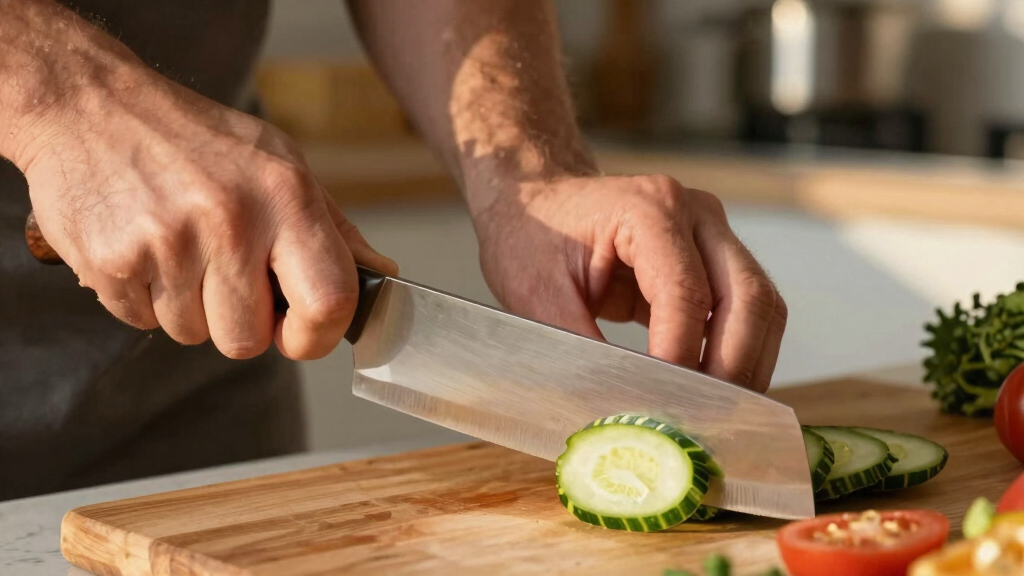
For those seeking the best nakiri knife with a tall blade, the goal is to find a tool that offers excellent control and visibility while maintaining sharpness and durability. The Shun Sora 6-Inch Hollow Ground Nakiri stands out for its lightweight design and precision, ideal for detailed vegetable work. The HexClad Nakiri offers a Damascus steel look with modern durability, perfect for stylish kitchens. The main tradeoffs include balancing blade height with weight, handle comfort, and overall craftsmanship. Keep reading for a detailed breakdown of each option to find the best fit for your kitchen needs.
Key Takeaways
- Blade height significantly influences control and visibility, with taller blades offering better leverage for chopping.
- The best picks balance blade height with weight, as overly tall or heavy blades can cause fatigue during extended use.
- Japanese-style knives tend to have a sharper edge and better edge retention but may require more careful maintenance.
- Materials like high-carbon stainless steel provide durability and ease of sharpening, ideal for daily use.
- Handle design and balance are critical for comfort, especially when working with taller blades that shift weight distribution.
| Cuisinart 7″ Nakiri Knife with Blade Guard, Stainless Steel Collection |  | Best Value for a Basic Tall Blade Nakiri | Brand: Cuisinart | Material: Stainless Steel | Blade Length: 7 inches | VIEW LATEST PRICE | See Our Full Breakdown |
| Shun Sora 6-Inch Hollow Ground Nakiri Knife |  | Best for Precision and Traditional Craftsmanship | Blade Length: 6 inches | Steel: VG10 steel with 420J stainless steel support | Edge Angle: 16 degrees | VIEW LATEST PRICE | See Our Full Breakdown |
| HexClad Nakiri Knife, 6.5-Inch Japanese Damascus Stainless Steel Blade with Pakkawood Handle |  | Best for Durability and Modern Design | Blade Length: 7 inches | Total Length: 12.3 inches | Blade Material: Japanese Damascus stainless steel | VIEW LATEST PRICE | See Our Full Breakdown |
| MOSFiATA 7” Nakiri Chef’s Knife with Finger Guard, German High Carbon Stainless Steel EN1.4116 Vegetable Knife, Multipurpose Kitchen Knife with Micarta Handle in Gift Box | 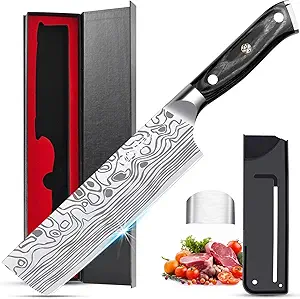 | Best for Versatile Use and Giftability | Blade Material: German High Carbon Stainless Steel EN1.4116 | Blade Length: 7 inches | Handle Material: Micarta | VIEW LATEST PRICE | See Our Full Breakdown |
| MITSUMOTO SAKARI Nakiri Chef Knife 7 inch – Hand Forged Japanese Kitchen Knife with Rosewood Handle |  | Best Hand Forged Traditional Japanese Nakiri | Blade Length: 7 inches | Material: 3-layer 9CR18MOV high carbon steel | Handle Material: Rosewood | VIEW LATEST PRICE | See Our Full Breakdown |
| Cuisinart 7″ Stainless Steel Nakiri Knife with Blade Guard, Graphix Collection |  | Best for Value and Convenience | Blade Length: 7 inches | Material: Stainless Steel | Collection: Graphix | VIEW LATEST PRICE | See Our Full Breakdown |
| HOSHANHO 7 Inch Nakiri Knife, Japanese High Carbon Stainless Steel Chef Knife with Pakkawood Handle |  | Best for Precision and Comfort | Blade Length: 7 inches | Material: Japanese 10Cr15CoMoV high carbon stainless steel | Blade Hardness: 60 HRC | VIEW LATEST PRICE | See Our Full Breakdown |
More Details on Our Top Picks
Cuisinart 7″ Nakiri Knife with Blade Guard, Stainless Steel Collection
This Cuisinart Nakiri stands out for its straightforward approach to vegetable prep, offering a durable stainless steel blade that handles slicing and dicing with ease. Compared to more traditional Japanese options like the Shun Sora, it’s less focused on craftsmanship but provides excellent durability at a lower price point. The inclusion of a blade guard enhances safety and storage convenience, though it lacks the ergonomic or aesthetic refinements seen in higher-end models. It’s ideal for home cooks who want a reliable, no-frills vegetable knife without the need for specialized handling or maintenance. The main tradeoff remains its limited versatility—it’s primarily designed for vegetables and doesn’t perform well on other tasks, unlike multi-purpose knives such as the MOSFiATA.
Pros:- High-quality stainless steel for durability
- Perfect size for vegetable prep
- Includes a blade guard for safe storage
Cons:- Limited to vegetable slicing, less versatile
- Lacks ergonomic features or aesthetic appeal
Best for: Budget-conscious home cooks who need a dependable vegetable knife for daily use.
Not ideal for: Professional chefs or enthusiasts seeking a handcrafted or multi-functional knife with a premium feel.
- Brand:Cuisinart
- Material:Stainless Steel
- Blade Length:7 inches
- Included Components:Knife, Blade Guard
- Item Type:Nakiri Knife
- UPC:086279240002
Bottom line: This knife makes the most sense for casual cooks prioritizing value and safety over craftsmanship or multi-tasking ability.
Shun Sora 6-Inch Hollow Ground Nakiri Knife
The Shun Sora Nakiri offers a handcrafted Japanese approach with a VG10 steel edge and hollow ground indentations that facilitate food release. It excels at precise, thin vegetable slices, outperforming many Western-style knives like the Cuisinart in sharpness and finesse. Its balanced handle and traditional design make it comfortable for extended use, though the premium price can be a barrier for some. Unlike the HexClad, which emphasizes durability and multi-layer steel, the Shun Sora prioritizes cutting precision and craftsmanship, requiring more careful maintenance. It’s best suited for cooks who value razor-sharp edges and authentic Japanese design but are willing to handle delicate care routines.
Pros:- Sharp, precise cutting performance
- Traditional Japanese craftsmanship
- Balanced, comfortable handle
Cons:- Limited to vegetable slicing
- High price point
- Requires careful maintenance to preserve sharpness
Best for: Cooks who want a handcrafted, precise vegetable knife and are comfortable with maintenance routines.
Not ideal for: Casual users or those seeking a more versatile or low-maintenance kitchen tool.
- Blade Length:6 inches
- Steel:VG10 steel with 420J stainless steel support
- Edge Angle:16 degrees
- Handle Material:PP/TPE polymer blend
- Construction:San Mai edge with hollow ground indentations
- Made in:Japan
Bottom line: This pick makes the most sense for enthusiasts who prioritize traditional craftsmanship and precision slicing over convenience.
HexClad Nakiri Knife, 6.5-Inch Japanese Damascus Stainless Steel Blade with Pakkawood Handle
The HexClad Nakiri stands out for its layered Damascus steel and ergonomic Pakkawood handle, delivering both a sharp, durable edge and a sophisticated look. Its 67 layers of steel provide excellent edge retention, making it a strong choice for those who want a knife that combines beauty with longevity. Compared to the MITSUMOTO SAKARI, which is hand-forged and more traditional, the HexClad’s layered construction offers a more contemporary, resilient profile but requires careful hand washing to prevent damage. Its design is well-suited for home chefs who want a reliable, visually striking vegetable knife that can withstand regular use with proper care. The main tradeoff is the need for regular honing and avoidance of dishwasher cleaning to maintain its layered Damascus finish.
Pros:- Sharp, long-lasting Damascus steel edge
- Ergonomic Pakkawood handle
- Layered steel construction for durability
Cons:- Hand wash only; not dishwasher safe
- Requires regular honing
- Warranty can be voided by improper use
Best for: Home cooks seeking a visually appealing, durable vegetable knife with a modern aesthetic.
Not ideal for: Professional chefs or those preferring traditional Japanese forging techniques or simpler maintenance routines.
- Blade Length:7 inches
- Total Length:12.3 inches
- Blade Material:Japanese Damascus stainless steel
- Handle Material:Pakkawood
- Layers of Damascus Steel:67
Bottom line: This knife is ideal for users who appreciate modern design and durability but are prepared for careful maintenance.
MOSFiATA 7” Nakiri Chef’s Knife with Finger Guard, German High Carbon Stainless Steel EN1.4116 Vegetable Knife, Multipurpose Kitchen Knife with Micarta Handle in Gift Box
The MOSFiATA Nakiri is a versatile 7-inch knife suited for a wide range of kitchen tasks beyond vegetables, thanks to its sturdy German high carbon stainless steel and robust Micarta handle. It offers a sharp, durable edge that handles slicing, dicing, and even bread or meats with reasonable effectiveness, unlike narrower, vegetable-only options like the Shun Sora. Its gift box and sheath make it appealing for gifting or storage, though it’s less refined for traditional Japanese precision work. The handle size may be too large for small hands, and it demands regular sharpening to maintain performance, unlike more delicate options like the HexClad. It balances multi-purpose functionality with affordability for the home cook who needs flexibility.
Pros:- Sharp, durable edge for various tasks
- Comfortable, sturdy Micarta handle
- Includes gift box and sheath for presentation
Cons:- Not made of Damascus steel
- Handle may be too large for small hands
- Requires careful sharpening to maintain edge
Best for: Home cooks wanting a multi-tasking vegetable and general-purpose knife with a gift presentation.
Not ideal for: Serious Japanese knife enthusiasts or professionals seeking handcrafted, traditional knives.
- Blade Material:German High Carbon Stainless Steel EN1.4116
- Blade Length:7 inches
- Handle Material:Micarta
- Handle Design:Triple rivet
- Edge Angle:14-16° per side
- Weight:8.8 oz
Bottom line: This knife suits those who want a flexible, reliable kitchen tool that can handle different foods and makes a good gift option.
MITSUMOTO SAKARI Nakiri Chef Knife 7 inch – Hand Forged Japanese Kitchen Knife with Rosewood Handle
The MITSUMOTO SAKARI Nakiri exemplifies traditional Japanese craftsmanship with its hand-forged construction from 3 layers of high carbon steel, offering exceptional sharpness and balance. Its rosewood handle provides a secure grip that reduces wrist tension during extended chopping sessions. Compared to the HexClad, which emphasizes durability through layered steel, this SAKARI knife offers a more authentic, handcrafted feel with a focus on edge precision. The main tradeoff is its need for diligent maintenance to prevent rust—something less of a concern with stainless steel options like the Cuisinart. It’s ideal for cooks who value traditional forging techniques and are comfortable with high-maintenance care routines.
Pros:- Handcrafted with traditional forging techniques
- Sharp, balanced, and precise for detailed work
- Ergonomic rosewood handle reduces wrist tension
Cons:- Requires careful maintenance to prevent rust
- Higher price point due to craftsmanship
- Handle may need treatment over time
Best for: Enthusiasts and professionals seeking a handcrafted, traditional Japanese knife with high-quality steel and ergonomic comfort.
Not ideal for: Casual cooks or those preferring low-maintenance, modern-style knives.
- Blade Length:7 inches
- Material:3-layer 9CR18MOV high carbon steel
- Handle Material:Rosewood
- Handle Design:Octagonal ergonomic grip
- Manufacturing Method:Hand forged
- Steel Treatment:Precision hardened and vacuum cooled with nitrogen
Bottom line: This knife is best suited for those who appreciate traditional craftsmanship and are willing to maintain it properly for long-term performance.
Cuisinart 7″ Stainless Steel Nakiri Knife with Blade Guard, Graphix Collection
This Cuisinart Nakiri stands out for its affordability and straightforward design, making it a solid choice for those who prioritize reliable performance without frills. Its sharp stainless steel blade offers precise cuts, comparable to more expensive Japanese models like the HOSHANHO, but lacks the ergonomic handle or specialized edge angles that enhance comfort and ease of use. The included blade guard adds a layer of safety, especially useful for storage in busy kitchens. However, its focus on vegetable prep means it’s less versatile for tasks involving meats or fruits, and the absence of detailed handle ergonomics may lead to fatigue during extended use. Compared to the HOSHANHO, it’s less refined but offers excellent value for those who want a no-nonsense tool for vegetable chopping.
Pros:- Sharp, precise cutting performance for vegetables
- Includes protective blade guard for safe storage
- Durable stainless steel construction
Cons:- Limited to vegetable preparation, less versatile for other tasks
- Handle design lacks ergonomic features for extended use
Best for: Budget-conscious home cooks who want a reliable, straightforward vegetable knife with safety features.
Not ideal for: Advanced chefs or users seeking a versatile or high-performance tool for multi-purpose cutting, as it’s limited mostly to vegetable prep.
- Blade Length:7 inches
- Material:Stainless Steel
- Collection:Graphix
- Blade Type:Nakiri
- Handle Material:Not specified
- Edge:Plain
- Construction:Stamped
Bottom line: This pick makes the most sense for budget-conscious users seeking reliable vegetable prep with added safety features.
HOSHANHO 7 Inch Nakiri Knife, Japanese High Carbon Stainless Steel Chef Knife with Pakkawood Handle
The HOSHANHO Nakiri elevates the standard with its hand-polished, ultra-sharp blade made from Japanese 10Cr15CoMoV high carbon stainless steel, ensuring excellent edge retention and effortless slicing. Its forged construction and 60 HRC hardness compare favorably with more expensive Japanese knives like the MITSUMOTO SAKARI, offering a balance between sharpness and durability. The ergonomic pakkawood handle provides a comfortable grip that reduces fatigue, making it better suited for extended prep sessions. Its stylish, scalloped design with a non-stick edge enhances performance, especially when cutting delicate vegetables and fruits. However, maintaining the sharpness requires more careful handling, and the handle may be less durable if exposed to excess moisture. Its 7-inch size is perfect for those who want a versatile, high-quality nakiri but might not suit users needing larger or more robust blades.
Pros:- Sharp, precise cutting edge for effortless slicing
- High-quality Japanese steel for durability and edge retention
- Ergonomic handle reduces fatigue during extended use
- Stylish design with non-stick scalloped side
Cons:- Requires careful handling to maintain sharpness
- Handle may be less durable if exposed to excessive moisture
- Limited to 7-inch size, which might not suit all users
Best for: Intermediate to advanced home cooks who want a precise, comfortable, and stylish vegetable knife for frequent use.
Not ideal for: Beginners or those with limited storage space, as it requires careful handling and is somewhat delicate in moisture-prone environments.
- Blade Length:7 inches
- Material:Japanese 10Cr15CoMoV high carbon stainless steel
- Blade Hardness:60 HRC
- Handle Material:Pakkawood
- Blade Edge:15-degree sharp edge
- Construction:Forged
Bottom line: This knife is ideal for cooks seeking a sharp, comfortable, and stylish nakiri for frequent vegetable prep with an emphasis on precision.

How We Picked
I evaluated each nakiri knife based on key criteria that matter most to users: blade height and shape, material quality, build craftsmanship, comfort of the handle, and overall value. I compared these factors across multiple products to identify which knives excel in performance while maintaining usability and durability. The ranking reflects a combination of cutting efficiency, ease of handling, and long-term maintenance, ensuring that each option serves a specific purpose — from everyday kitchen chores to premium craftsmanship. Products with a clear balance of these qualities earned higher positions, while tradeoffs like weight or price affected lower rankings.Factors to Consider When Choosing Best Nakiri Knife With Tall Blade
Choosing the best nakiri knife with a tall blade involves more than just blade height. It’s essential to consider how the knife feels in your hand, the type of steel used, and how it fits into your cooking routine. A taller blade can improve leverage but may also add weight, so balance is key. Understanding these factors can help you avoid common pitfalls like buying a knife that’s too heavy or not durable enough for regular use. Keep in mind that the right knife depends on your skill level, cutting style, and maintenance preferences.Blade Height and Shape
A taller blade provides more leverage and better visibility of your cutting line, especially useful for slicing vegetables with precision. However, excessively tall blades can be cumbersome and lead to fatigue, so look for a height that complements your strength and technique. The shape should also be considered; a slightly curved edge can facilitate rocking cuts, while a straight edge offers more control for downward chopping. Balance your needs for maneuverability and control when selecting blade height.
Material and Steel Quality
The steel used in nakiri knives impacts sharpness, edge retention, and ease of sharpening. High-carbon stainless steels such as VG10 or AUS-10 are popular for their durability and rust resistance. Cheaper steels might require more frequent honing and sharpening, which can be inconvenient for daily use. For tall blades, a sturdy steel helps maintain the shape and integrity of the edge over time. Consider how much maintenance you’re willing to perform to keep your knife performing at its best.
Handle Design and Comfort
A comfortable handle prevents fatigue during extended chopping sessions, especially with taller blades that might shift weight distribution. Pakkawood and rosewood handles offer warmth and grip, but may require more upkeep, while polymer or composite handles tend to be low-maintenance. The handle’s balance relative to the blade is also vital; a well-balanced knife feels lighter and more precise. Test for grip security and comfort, especially if you plan on using the knife frequently.
Weight and Balance
While a taller blade can improve leverage, it often adds weight, which can cause fatigue or reduce control. A lighter, well-balanced knife may be easier to handle for precise cuts, especially for users with less hand strength. Conversely, some chefs prefer a heavier knife for more forceful chopping. It’s important to find a balance that suits your style, ensuring the knife is neither too heavy nor too light for extended use without sacrificing cutting power or control.
Price and Value
Price ranges reflect differences in materials, craftsmanship, and brand reputation. Premium knives often feature hand-forged blades and intricate steel work, delivering superior performance but at a higher cost. More affordable options can still perform well for everyday tasks but might lack the same durability or precision. Consider how often you’ll use the knife and your willingness to invest in maintenance or upgrades when evaluating value. A well-chosen mid-range model can often meet most home cooks’ needs without overspending.
Frequently Asked Questions
Is a taller nakiri blade better for vegetable slicing?
Yes, a taller blade generally provides better leverage and visibility, making it easier to slice vegetables evenly and with control. It also helps in gathering and chopping larger quantities, reducing the need to reposition the hand frequently. However, the added height can sometimes make the knife feel less nimble if it’s too heavy or poorly balanced. Choosing a blade height that enhances your chopping style without causing fatigue is key.
Do taller blades require more maintenance?
Not necessarily, but taller blades can sometimes be more prone to bending or warping if made from lower-quality steels or if mishandled. High-quality steels used in premium nakiri knives tend to handle taller profiles well, maintaining edge integrity over time. Proper care, including hand washing and regular honing, helps preserve the shape and sharpness regardless of blade height. Overall, maintenance requirements are more about steel quality than blade height alone.
Are Japanese-style nakiri knives with tall blades suitable for beginners?
They can be, especially if the knife is well-balanced and comfortable to handle. Tall blades offer excellent control and visibility, which benefits those learning precise chopping techniques. However, beginners should look for models with ergonomic handles and manageable weight to prevent fatigue. Starting with an affordable yet quality nakiri can help build skills without the intimidation of premium price tags or overly complex designs.
Should I choose a stamped or forged nakiri with a tall blade?
Forged knives typically offer better durability, balance, and edge retention, often making them more suitable for taller blades that require structural integrity. Stamped blades are usually lighter and less expensive but may lack the strength needed for heavy-duty chopping or maintaining a tall profile over time. Your choice depends on your budget and how often you plan to use the knife — for daily, heavy use, a forged option is generally preferable.
How important is the steel type in choosing a nakiri with a tall blade?
The steel type directly affects sharpness, edge retention, and corrosion resistance. For tall blades, sturdy, high-carbon stainless steels such as VG10 or AUS-10 are good choices because they maintain their shape and edge longer, even with the increased blade height. Cheaper steels may dull faster or require more frequent sharpening, which can be frustrating for a tall blade that demands precision. Prioritizing steel quality ensures your knife remains effective and safe to use over time.
Conclusion
The Shun Sora 6-Inch Hollow Ground Nakiri makes the most sense for those seeking a lightweight, precise vegetable chopper suitable for everyday use. The HexClad Nakiri offers a modern, stylish option with durable Damascus steel for cooks who appreciate aesthetics combined with function. For budget-conscious buyers, the Cuisinart 7″ Stainless Steel Nakiri provides reliable performance without breaking the bank.
If you want the best for heavy-duty daily chopping, the MITSUMOTO SAKARI Nakiri stands out thanks to its hand-forged Japanese craftsmanship. Beginners should consider models with ergonomic handles and balanced weight, while experienced cooks may prefer premium forged knives with high-grade steel. Your choice ultimately depends on your skill level, frequency of use, and budget.