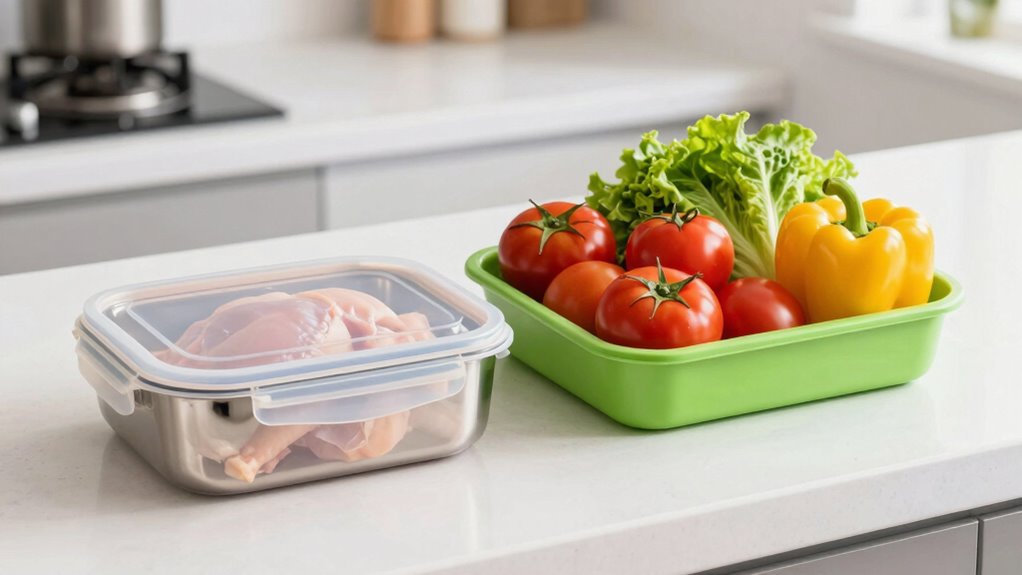
To use separate zones for raw protein and produce, start by designating specific areas in your fridge, such as the bottom shelf for raw meats and separate drawers or bins for produce. Always place raw meats in leak-proof containers to prevent juices from dripping onto other foods. When shopping, keep raw proteins in separate bags or sections in your cart. Maintaining these clear zones helps prevent cross-contamination; learn more about effective practices to keep your food safe.

Get kitchen gear delivered free — and shop member deals
- Fast, free delivery on millions of items
- Access to Prime Big Deal Days deals on October 6–7
- Prime Video, Amazon Music and more included
Key Takeaways
- Designate specific areas in your fridge for raw proteins and produce, ensuring they are physically separated.
- Use separate containers or bins within the fridge to keep raw meats and produce apart.
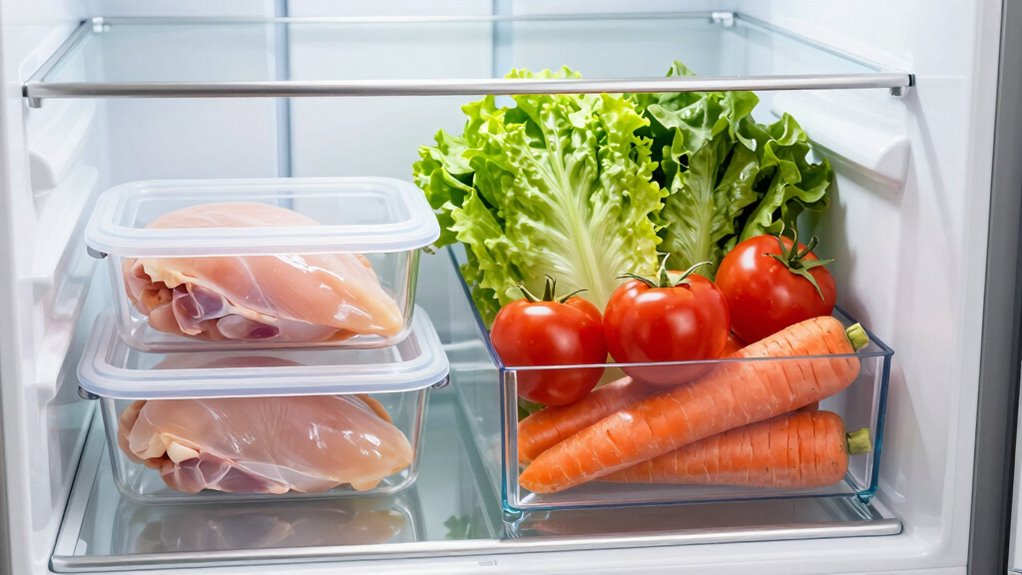
- Place raw meats on the lowest shelves in leak-proof containers to prevent drips onto produce.
- Keep produce in the crisper drawer or designated bins away from raw meat zones.
- During shopping and transport, use separate zones in carts and bags for raw proteins and produce to avoid cross-contamination.
To prevent cross-contamination and ensure food safety, it’s crucial to keep raw protein and produce in separate zones while shopping, storing, and preparing your food. When you organize your kitchen and shopping habits with this in mind, you reduce the risk of harmful bacteria transferring from raw meats to fruits and vegetables, which are often eaten raw. Proper separation is a key step in maintaining food safety and preventing foodborne illnesses.
While shopping, always place raw meats, poultry, and seafood in separate plastic bags or containers from produce. This prevents juices from raw proteins from dripping onto fresh fruits and vegetables in your cart or grocery bags. When loading your groceries into your car or carrying them home, keep these items separated to avoid accidental cross contamination during transport. Once home, designate specific areas in your fridge for raw proteins and produce. Store raw meats on the lowest shelves in leak-proof containers, away from ready-to-eat foods like salads or cut fruits. Keep produce in the crisper drawer or designated bins that are clearly separated from raw meats to prevent juices from coming into contact with edible items. Proper food storage practices further reduce the risk of bacteria transfer and help maintain the right food temperature for different food types. Additionally, understanding the importance of proper food handling can significantly reduce the risk of cross-contamination. Using temperature control during storage and preparation is essential for preventing bacterial growth and ensuring food safety.
Always keep raw meats separate from produce during shopping and storage to prevent cross contamination.
During food preparation, use separate cutting boards and utensils for raw protein and produce. If you only have one cutting board, thoroughly wash it with hot, soapy water between uses. This step is vital to eliminate bacteria that could be transferred from raw meats to produce. When handling raw protein, wear gloves if possible, and immediately wash your hands afterward. Always clean counters and any surfaces that come into contact with raw meats before preparing produce or other foods. This reduces the chance of cross contamination and keeps your kitchen safe. Additionally, be aware of food safety guidelines to stay informed about best practices.
Also, be mindful of the order in which you prepare foods. Start with washing and chopping produce first, then handle raw meats, and finally clean up thoroughly. This sequence minimizes the risk of bacteria spreading from raw protein to produce. When storing leftovers, keep raw meats separate from cooked foods, and label containers clearly. Proper storage and handling are essential to maintaining food safety and preventing cross contamination throughout the entire food prep process.
leak-proof meat storage containers
As an affiliate, we earn on qualifying purchases.
As an affiliate, we earn on qualifying purchases.
Frequently Asked Questions
How Often Should I Wash My Separate Zones?
You should wash your separate zones after every use, especially when switching between raw protein and produce. Maintain a cleaning schedule that includes thorough cleaning and sanitizing at least once a day, or more if needed. Make sure each zone is clearly labeled to prevent cross-contamination. Regularly inspecting and cleaning your zones keeps your food safe, fresh, and helps you stay organized and compliant with food safety standards.
Can I Use the Same Cutting Board for Both Zones?
Don’t put all your eggs in one basket—using the same cutting board for raw protein and produce isn’t advisable. Cross-contact prevention is essential for food safety practices, so always use separate cutting boards or thoroughly sanitize after cutting raw meat. This minimizes bacteria transfer and reduces the risk of foodborne illness. Remember, a clean workspace is key to safe food handling, so invest in dedicated boards for different food groups.
What Foods Are Safest to Store Together?
For food safety, you should store raw meats separately from produce, following proper storage guidelines. Keep raw proteins on the bottom shelf of your fridge to prevent drips and cross-contamination. Safer food combinations include cooked foods and ready-to-eat items, which don’t pose a risk of contamination. Always prioritize clean storage practices, use sealed containers, and follow recommended guidelines to guarantee your food stays safe and fresh.
How Do I Prevent Cross-Contamination in the Fridge?
Imagine you’re in a sci-fi kitchen where food safety rules keep everyone safe. To prevent cross-contamination, always store raw proteins on the bottom shelf, and keep produce above in separate zones. Use airtight containers and plastic wraps to contain juices. Regularly clean your fridge with disinfectant, and avoid overloading. Proper storage organization guarantees harmful bacteria don’t spread, keeping your food safe and fresh.
Are There Specific Storage Containers Recommended?
You should choose storage containers that are airtight, leak-proof, and made from food-grade materials for food separation techniques. Look for containers with tight seals to prevent cross-contamination, especially when storing raw proteins and produce. Clear containers help with visibility, and stacking options save space. Consider using color-coded containers or labels to easily identify different food zones, making your fridge organization effective and safe.
produce crisper drawer organizer
As an affiliate, we earn on qualifying purchases.
As an affiliate, we earn on qualifying purchases.
Conclusion
By keeping raw protein and produce in separate zones, you’re playing it safe and avoiding cross-contamination. Remember, a little caution goes a long way in the kitchen. When you’re diligent about these zones, you’re not just following rules—you’re protecting your health and that of your loved ones. It’s better to be safe than sorry, so take the extra step. With these simple tips, you’ll keep your food fresh and your kitchen a safe haven.
refrigerator food separation bins
As an affiliate, we earn on qualifying purchases.
As an affiliate, we earn on qualifying purchases.
grocery cart produce and meat bags
As an affiliate, we earn on qualifying purchases.
As an affiliate, we earn on qualifying purchases.
Fall Picks
fall essentials
As an affiliate, we earn on qualifying purchases.