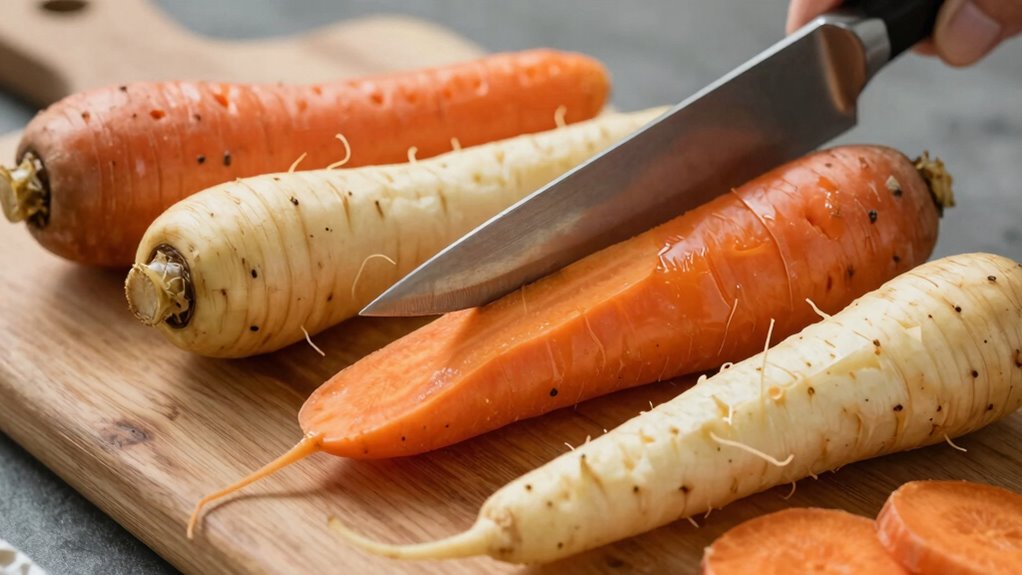

To cut root vegetables for better roasting, start by creating a stable, flat surface by trimming a small slice off one side. Use a sharp knife and proper technique, like a claw grip, to guarantee even, safe cuts. Slice the vegetables into uniform pieces, which helps them cook evenly and develop better flavor. Reposition the vegetables as needed instead of forcing cuts. For more tips to perfect your roasting prep, keep exploring these techniques further.

Get kitchen gear delivered free — and shop member deals
- Fast, free delivery on millions of items
- Access to Prime Big Deal Days deals on October 6–7
- Prime Video, Amazon Music and more included
Key Takeaways
- Create a flat, stable surface by trimming a small slice to prevent rolling during cutting.
- Peel root vegetables evenly using a sharp peeler to ensure uniform cooking and presentation.
- Cut vegetables into uniform pieces to promote even roasting and consistent texture.
- Use proper knife techniques, such as the claw grip, for safety and precise, clean cuts.
- Reposition and stabilize vegetables carefully to maintain control and achieve desired sizes.
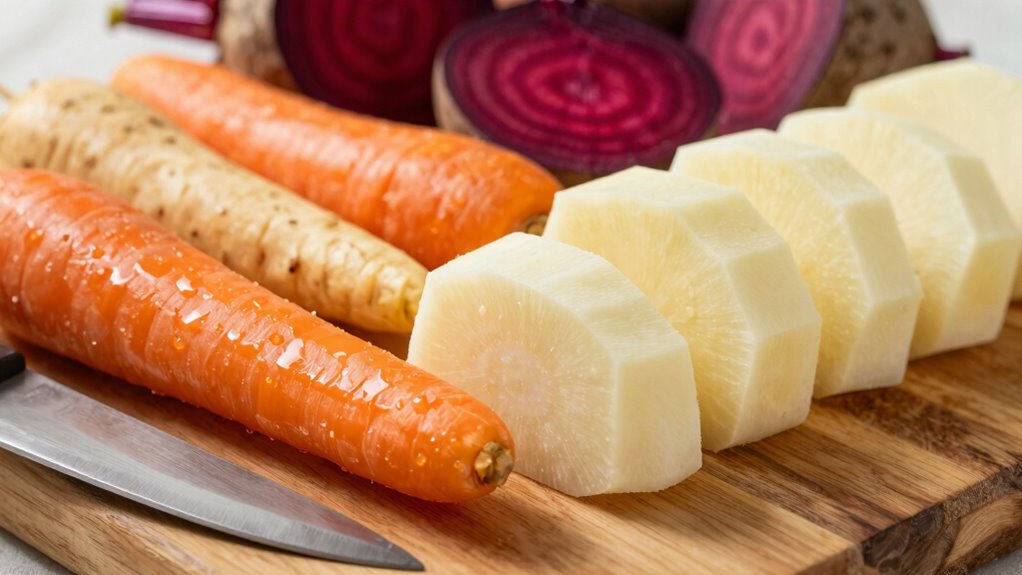
Root vegetables can seem tricky to cut, but with the right technique, you’ll do it quickly and safely. The key is mastering proper knife techniques and understanding how to handle vegetable peeling efficiently. When preparing carrots, potatoes, parsnips, or beets for roasting, your goal is to create uniform pieces that cook evenly. Start by choosing a sharp, sturdy chef’s knife—this is essential for precise cuts and safe handling. A dull blade increases the risk of slips and accidents, so always keep your knife well-maintained.
Before you begin cutting, take a moment to peel the root vegetables if needed. Vegetable peeling might seem simple, but doing it correctly saves time and helps achieve a cleaner cut. Use a vegetable peeler, applying even pressure and working from top to bottom or side to side, depending on the vegetable’s shape. For tougher skins like beets or sweet potatoes, a sharp peeler works best, ensuring you remove only the skin without wasting flesh. Proper peeling also means you’re less likely to encounter uneven surfaces that can complicate cutting. Developing proper knife techniques can significantly improve your safety and efficiency in the kitchen.
Once peeled, stabilize the vegetable on your cutting board by creating a flat surface. To do this, cut a small slice off one side, turning it into a stable base. This prevents the vegetable from rolling or slipping as you cut. When slicing, employ a rocking motion with your knife, keeping the tip in contact with the board while moving the blade up and down. This technique, combined with a firm grip on the handle, offers better control and reduces fatigue. If you need to cut the vegetable into uniform pieces for roasting, measure and mark lengths beforehand, then make consistent cuts to ensure even cooking. Using proper cutting techniques can also help in achieving more precise and professional-looking results.
For larger vegetables, consider cutting them into manageable sections first—halves or quarters—before slicing into smaller pieces. Always keep your fingers tucked under your hand, using your knuckles as a guide for the knife. This “claw grip” protects your fingertips from accidental cuts. When making julienne or dice cuts, work slowly at first to develop precision, then increase speed as you become more confident. Remember to lift and reposition the vegetable rather than forcing the knife through at awkward angles, which could compromise your safety and the quality of your cuts. Additionally, understanding how to handle knife techniques properly can greatly improve your efficiency and safety in the kitchen. Developing a steady hand and practicing good cutting posture can also make the process more comfortable and precise over time.
sharp chef's knife for root vegetables
As an affiliate, we earn on qualifying purchases.
As an affiliate, we earn on qualifying purchases.
Frequently Asked Questions
Can I Peel Root Vegetables Before Cutting?
Yes, you can peel root vegetables before cutting. Use peeling techniques like a vegetable peeler or a paring knife to remove the skin smoothly. Peeling tools make the process easier and safer, especially for tougher skins. Just hold the vegetable firmly, peel away from your body, and then cut it into your desired shapes. Peeling beforehand helps guarantee even roasting and a cleaner presentation.
What’s the Best Cutting Board Material for Root Vegetables?
For perfect prep, pick a plastic or wooden cutting board when working with root vegetables. Plastic boards are more hygienic and easier to sanitize, supporting safe kitchen safety. Wooden boards, while gentle on blades, need regular cleaning to prevent bacteria buildup. Use sharp knives and proper cutting techniques to prevent slips, and always stabilize your vegetables. This combination keeps your cutting consistent, safe, and satisfying!
How Do I Prevent Root Vegetables From Slipping While Cutting?
To prevent root vegetables from slipping while cutting, focus on knife safety and proper cutting techniques. Use a stable cutting board, and secure it with a damp cloth if necessary. Hold the vegetable firmly with your guiding hand, curling your fingers inward to avoid cuts. Keep your knife sharp for precise cuts, and use smooth, controlled motions. These steps help guarantee safe, efficient slicing and reduce accidents during your prep work.
Should I Cut Root Vegetables Into Uniform Sizes?
Yes, you should cut root vegetables into uniform sizes to guarantee even roasting and an appealing presentation style. Using consistent cutting techniques helps you achieve this, making the pieces cook at the same rate and look visually appealing. When you cut vegetables uniformly, they’ll roast evenly, preventing some pieces from overcooking while others remain underdone. This attention to detail enhances both the taste and presentation of your dish.
How Long Should I Roast Different Types of Root Vegetables?
Ever wonder how long to roast different root vegetables? Usually, carrots and parsnips take about 25-30 minutes, sweet potatoes need 30-35 minutes, and beets can go 35-40 minutes. Want perfectly roasted veggies? Toss them with your favorite seasoning options like herbs, spices, or olive oil, and serve them as a side or in salads. Check doneness with a fork—they should be tender and slightly caramelized.
vegetable peeler for root vegetables
As an affiliate, we earn on qualifying purchases.
As an affiliate, we earn on qualifying purchases.
Conclusion
Mastering the art of cutting root vegetables guarantees even cooking and perfect roasting results. For example, if you cut carrots into uniform pieces, they’ll cook at the same rate, preventing some from burning while others remain underdone. Practice makes perfect—try different cuts to see which yields the best texture and flavor. Once you get the hang of it, your roasted vegetables will always look professional and taste delicious, elevating your home-cooked meals effortlessly.
cutting board with stable surface
As an affiliate, we earn on qualifying purchases.
As an affiliate, we earn on qualifying purchases.
As an affiliate, we earn on qualifying purchases.
Fall Picks
fall essentials
As an affiliate, we earn on qualifying purchases.