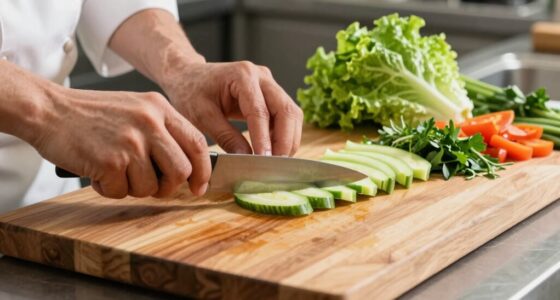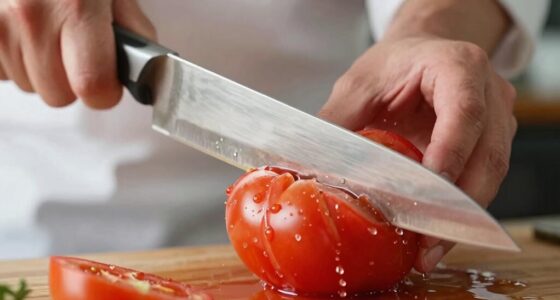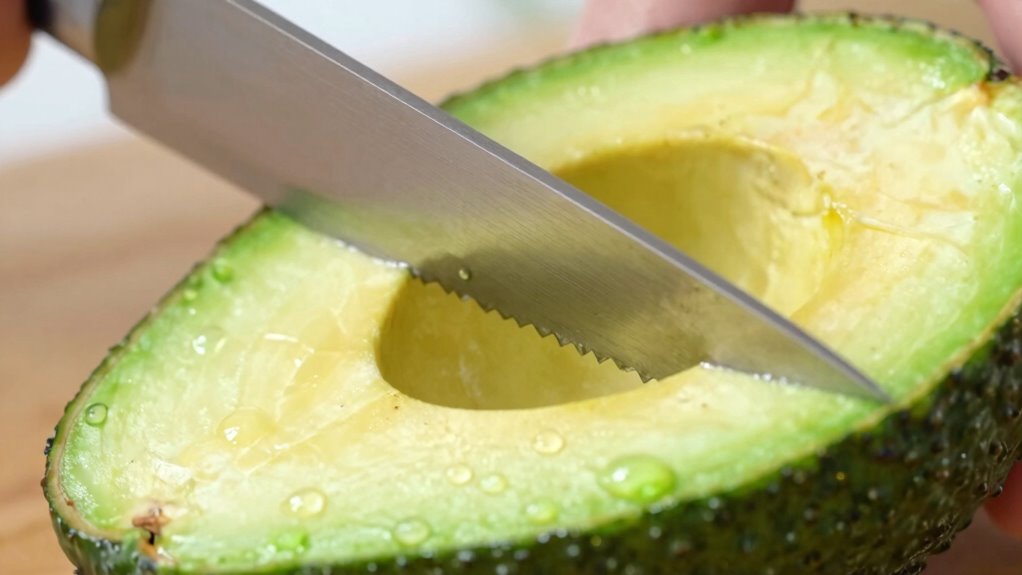
To slice soft foods without crushing them, use a sharp, appropriate knife like a serrated or fine chef’s knife, and keep it impeccably sharp. Apply gentle, steady pressure with a smooth, rocking or sawing motion, letting the knife do the work. Chill the food slightly beforehand to firm it up, and use a stable surface to prevent slipping. Mastering these techniques helps preserve delicate textures, and you’ll discover more tips to perfect your slicing skills if you keep going.
Key Takeaways
- Use a sharp, appropriate knife, such as a serrated or fine-bladed chef’s knife.
- Apply gentle, steady pressure with a smooth sawing or rocking motion.
- Chill soft foods slightly to firm their texture before slicing.
- Keep fingers curled inward and guide the knife safely through the food.
- Maintain consistent technique and patience for clean, delicate slices.
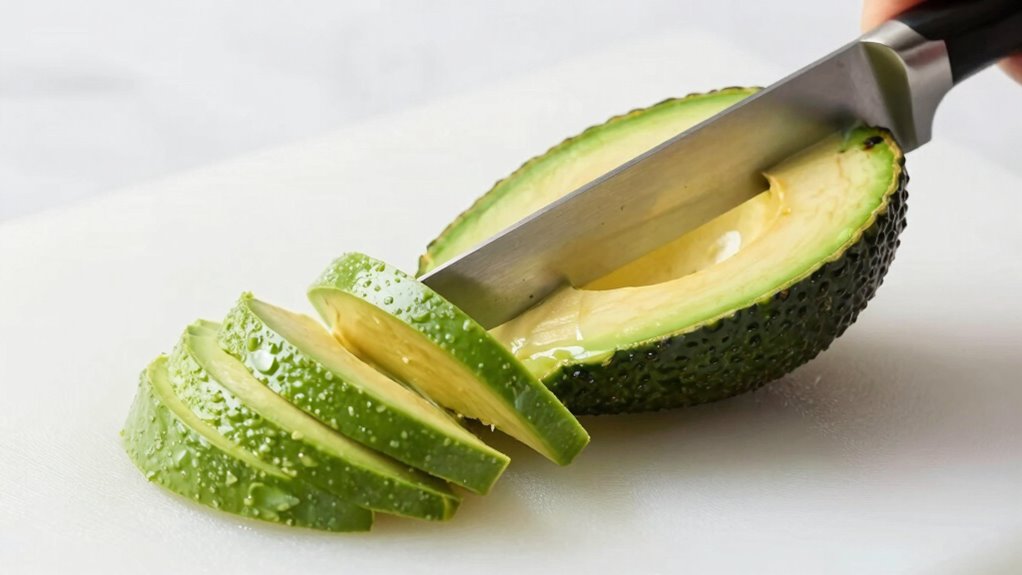
Slicing soft foods can be tricky because they tend to squish or tear rather than cut cleanly. The key to achieving smooth, even slices lies in choosing the right knife types and mastering proper cutting techniques. When working with soft foods, you want a knife that offers control and precision without exerting too much pressure, which can cause crushing. A serrated knife, such as a bread knife, is often ideal because its scalloped edge grips the surface of the food and slices through gently. Alternatively, a sharp chef’s knife with a thin, fine blade can also work well if you keep it impeccably sharp. The sharpness allows for cleaner cuts, reducing the force needed and minimizing distortion of the food.
Your cutting technique plays a crucial role in preventing crushing. Instead of pressing down hard, let the knife do the work. Use a gentle sawing or rocking motion, especially with serrated knives, to gradually cut through the soft texture. Keep your hand steady and apply even, light pressure, moving steadily through the food rather than forcing it down. Make sure to use a stable cutting surface, like a damp cloth or a non-slip mat underneath your cutting board, to prevent slipping and uneven pressure that might crush the item.
When slicing delicate items like ripe tomatoes or soft cheeses, start with a clean, sharp knife and use gentle, controlled strokes. For fruits and vegetables that are particularly soft, chill them slightly beforehand; cold produce tends to firm up a little, making slicing easier without damage. If you’re working with soft, sticky foods like bread or cake, consider using a serrated knife and a gentle back-and-forth motion rather than pressing straight down. Applying too much pressure can cause the food to squish or tear, so patience is key. Additionally, understanding food texture and how it affects cutting can help you adapt your technique for different soft items. Using the right cutting tools can also make a significant difference in achieving clean slices.
Proper technique involves positioning your hand correctly. Curl your fingers inward to keep your fingertips safe and avoid applying pressure directly on the knife. A sharpness of the knife plays a significant role in ensuring clean cuts and reducing crushing. Focus on guiding the knife smoothly through the soft food with controlled, steady movements. It’s also helpful to familiarize yourself with different food types, as each may require slight adjustments in technique for optimal results. Being mindful of the food’s moisture level can also help prevent slipping or tearing during slicing. With the right knife types and careful cutting techniques, you can slice soft foods cleanly, preserving their appearance and texture. Practice patience and maintain your knife’s sharpness, and you’ll find that even the most delicate foods become easier to handle without crushing.

Orblue Serrated Bread Knife with Upgraded Stainless Steel Razor Sharp Wavy Edge – Bread Cutter Ideal for Slicing Homemade Bagels, Cake (8-Inch Blade with 5-Inch Handle)
ULTRA-SHARP, CUTS EFFORTLESSLY: The Orblue Serrated Bread Knife blade has an ultra-sharp serrated edge that grips and effortlessly…
As an affiliate, we earn on qualifying purchases.
As an affiliate, we earn on qualifying purchases.
Frequently Asked Questions
Can I Use a Regular Knife for Slicing Soft Foods?
Yes, you can use a regular knife for slicing soft foods, but it’s not ideal. Make sure your knife is sharp and well-maintained, as dull blades crush foods instead of slicing cleanly. Also, use a stable cutting surface to prevent slipping and uneven cuts. Proper knife maintenance and a good cutting surface help you slice soft foods smoothly, avoiding crushing and ensuring clean, professional-looking results.
What Are the Best Tools for Slicing Very Soft Foods?
To slice very soft foods effectively, use a serrated or flexible blade knife. These tools help maintain food presentation while preventing crushing or tearing. Always prioritize knife safety by holding the knife properly and cutting on a stable surface. With the right tools and careful technique, you can achieve clean slices that enhance your dish’s appearance without compromising the food’s delicate texture.
How Do I Prevent Sticking When Slicing Soft Foods?
Think of slicing soft foods like gliding a boat smoothly through calm waters. To prevent sticking, keep your knife sharp and use gentle, steady strokes—this minimizes pressure and preserves the delicate food texture. Lightly oil or dampen the blade to reduce adhesion, and guarantee your knife safety by handling it carefully. This way, you’ll slice effortlessly, maintaining both the food’s integrity and your safety.
Is Freezing Soft Foods Before Slicing Helpful?
Freezing soft foods before slicing can be helpful, especially with delicate textures. The freezing benefits include firming up the food, making it easier to cut without crushing or tearing. For soft food textures like cheesecake or ripe fruit, freezing for about 30 minutes can provide a stable surface, allowing cleaner, more precise slices. Just avoid freezing too long, as overly frozen foods might become difficult to handle.
How Thick Should the Slices Be for Different Soft Foods?
Think of slicing soft foods like a gentle dance; the right thickness keeps the rhythm smooth. For delicate textures, aim for 1/4-inch slices to preserve nutritional value and create pleasing texture variation. Thinner slices, around 1/8-inch, are perfect for spreading or salads, while thicker cuts suit hearty servings. Adjust your slices based on the dish’s purpose, ensuring you don’t crush the food and maintain its integrity.
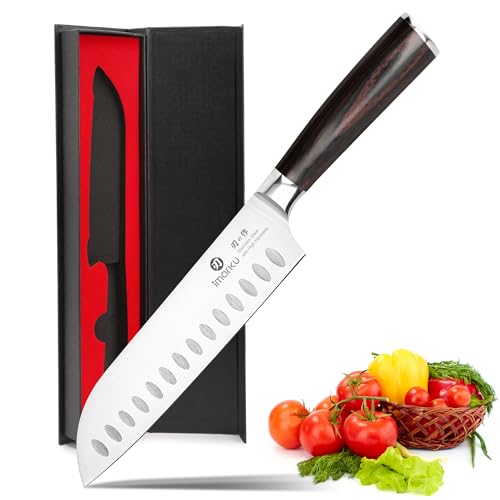
imarku Chef Knife 7 Inch Kitchen Knife Ultra Sharp Santoku Knife – High Carbon Japanese Chefs Knife, Kitchen Gadgets 2025, Apartment Essentials, Birthday Gifts for Him Her, Best Gifts for Women Men
Professional Santoku Knife: This imarku super sharp santoku knife is made of high carbon stainless steel that resists…
As an affiliate, we earn on qualifying purchases.
As an affiliate, we earn on qualifying purchases.
Conclusion
Mastering the art of slicing soft foods is like handling a delicate piece of art—you want to preserve its beauty without destroying its essence. With gentle hands and the right tools, you can turn a simple task into a graceful dance. Remember, the goal isn’t just to cut, but to do so with care and precision. Soon, you’ll be slicing soft foods effortlessly, turning your kitchen into a gallery of perfectly prepared bites.
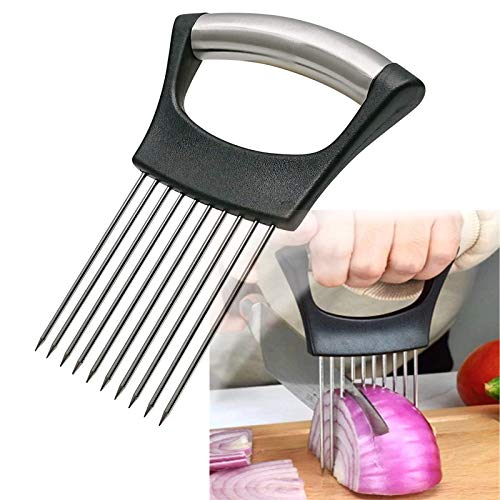
Stainless Steel Onion Holder for Slicing,Onion Slicer Holder,Onion Cutter for Slicing of Onions,Tomatoes,Avocados,Eggs and Other Vegetables,KItchen Utensils
Smart Design: Onion Holder Sharp stitches prevent slippage and cut evenly for greater safety and pin joints are…
As an affiliate, we earn on qualifying purchases.
As an affiliate, we earn on qualifying purchases.

Goodluck 5 Pieces Flexible Cutting Boards, BPA Free Plastic Cutting Boards for Kitchen, Non Slip Cutting Mat for Meat and Vegetables
Large Enough Size – The flexible cutting mats for cooking dimensions are 14.65*11.02 inches, which makes enough space…
As an affiliate, we earn on qualifying purchases.
As an affiliate, we earn on qualifying purchases.