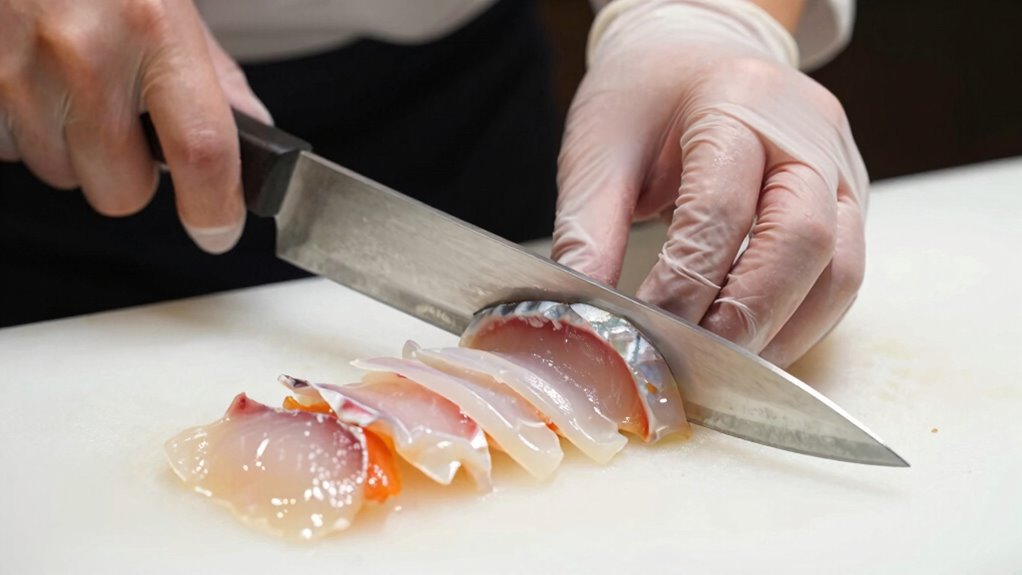

Choosing the right knife geometry is essential for slicing fish and seafood efficiently. A well-designed blade offers better control, precision, and cleaner cuts, reducing waste and effort. Factors like blade length, shape, tip, and flexibility directly impact how smoothly you follow contours and fillet with minimal tearing. Proper edge angles and durable materials guarantee longevity and consistent sharpness. If you want to master peak slicing techniques and understand how your knife can make all the difference, keep exploring.
Key Takeaways
- Proper knife geometry ensures clean, smooth cuts, reducing damage to delicate fish tissues.
- Blade shape and tip design enhance control for precise slicing around bones and contours.
- Correct edge angles and bevels improve slicing efficiency and minimize tearing or crushing of seafood.
- Well-designed geometry balances sharpness and durability, maintaining performance during repetitive cuts.
- Matching knife geometry to fish size and texture optimizes workflow, reduces waste, and improves overall filleting quality.

Brewin CHEFILOSOPHI Japanese Chef Knife Set 5 PCS with Elegant Red Pakkawood Handle Ergonomic Design,Professional Ultra Sharp Kitchen Knives for Cooking High Carbon Stainless Steel
DESIGN PHILOSOPHY - The Chefilosophi Series professional kitchen knife set from Brewin combines cutting edge kitchen technology with...
As an affiliate, we earn on qualifying purchases.
The Impact of Blade Length on Fish Filleting Techniques
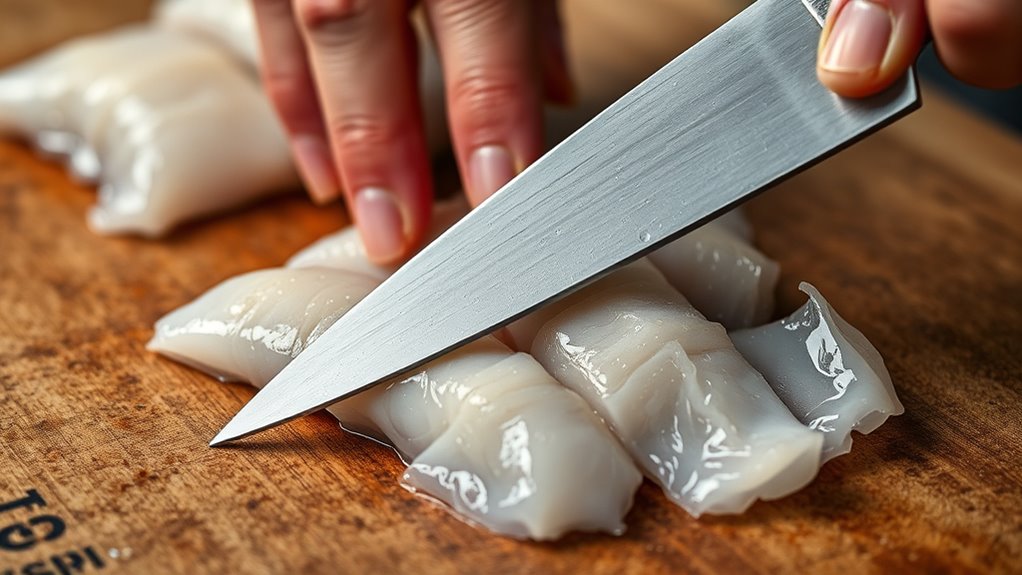
The length of your fillet knife substantially influences your fish filleting approach. A shorter blade, typically 4-5 inches, offers better control for small fish like trout or mackerel. It allows you to make precise cuts along delicate bones and navigate tight spaces. For medium-sized fish such as striped bass, an 7-8 inch blade strikes a balance between maneuverability and ease of handling, enabling smoother fillets with less effort. When working on large fish like tuna or halibut, a longer 9-11 inch blade becomes essential, providing the reach needed to fillet in fewer strokes. This length helps you maintain a consistent cut along the fish’s backbone and reduces fatigue during extended filleting sessions. Choosing the right blade length guarantees your technique is effective and efficient for each fish size. Additionally, understanding blade geometry can further optimize your filleting process by ensuring clean, precise cuts and reducing the risk of tearing the flesh. Proper knife sharpening techniques are also crucial to maintain optimal edge sharpness and cut quality. Incorporating ergonomic handle design into your knife selection can also improve comfort and reduce hand fatigue during extended use. Being aware of blade length and its effects can significantly enhance your overall filleting skill and results. Moreover, selecting the correct blade length based on fish size can streamline your workflow and improve safety during filleting.
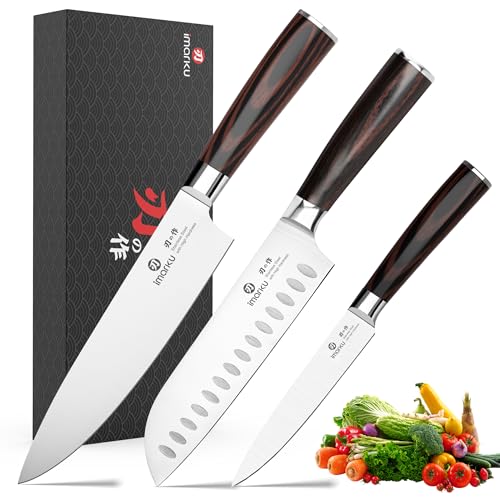
imarku 3 Pieces Knife Set, Japanese High Carbon Stainless Steel Chef Knife Set, Professional Chef Knives with Ergonomic Pakkawood Handle, Ultra Sharp Cooking Knives for Kitchen & Home Cooking
Razor Sharp with Durable Edges: Sharpness is the key word for chefs knives. The razor-sharp edge is engineered...
As an affiliate, we earn on qualifying purchases.
How Flexibility Enhances Precision in Fish Filleting
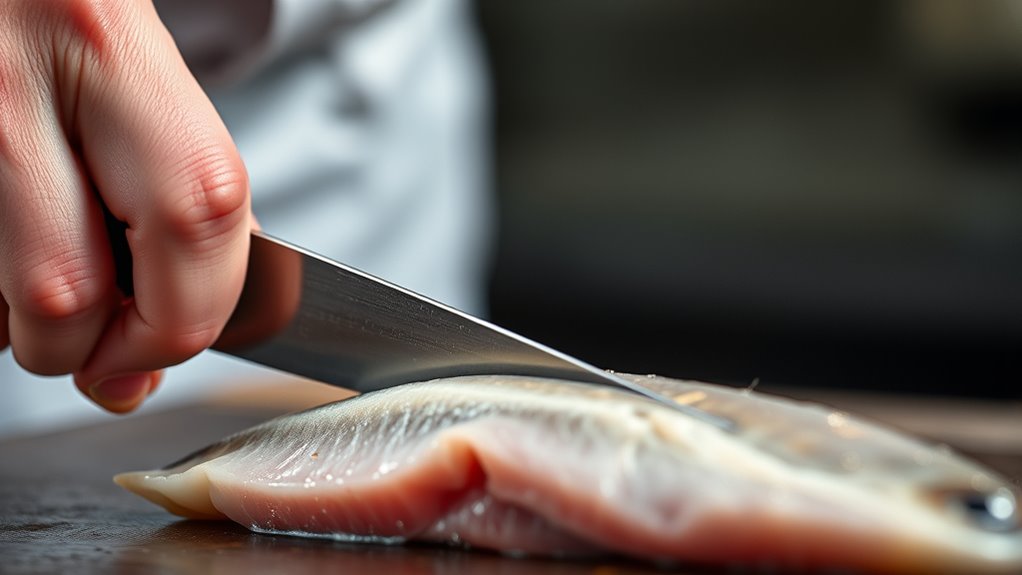
Flexibility in a fillet knife plays a crucial role in achieving precise cuts along fish bones and contours. When your blade can bend easily, you can follow the natural curves of the fish without exerting excessive pressure. This allows you to separate flesh from bones smoothly, reducing the risk of tearing or wasting meat. Thinner, flexible blades are ideal for small to medium fish, where delicate maneuvering is essential. As you work, the blade’s bend helps you glide around bones and tight spaces, maintaining control and accuracy. proper knife geometry significantly enhances your overall control and reduces fatigue during filleting. Additionally, a flexible blade adapts to the shape of the fish, making the process more intuitive and efficient. Employing the right blade flexibility ensures you achieve cleaner fillets with less effort and more precision. Using a blade with the appropriate material composition can also improve durability and performance during extended use. Ultimately, a flexible knife gives you better finesse, ensuring cleaner fillets with less effort and more precision. Vetted – Deals Buy

HexClad Essential Knife Set, 6-Piece, Japanese Damascus Stainless Steel Blades, Full Tang Construction, Pakkawood Handles
67 layers of Damascus steel for a harder, sharper blade that stays sharper longer. Full-tang construction for precision...
As an affiliate, we earn on qualifying purchases.
The Significance of Edge Angles and Bevels in Fish Preparation
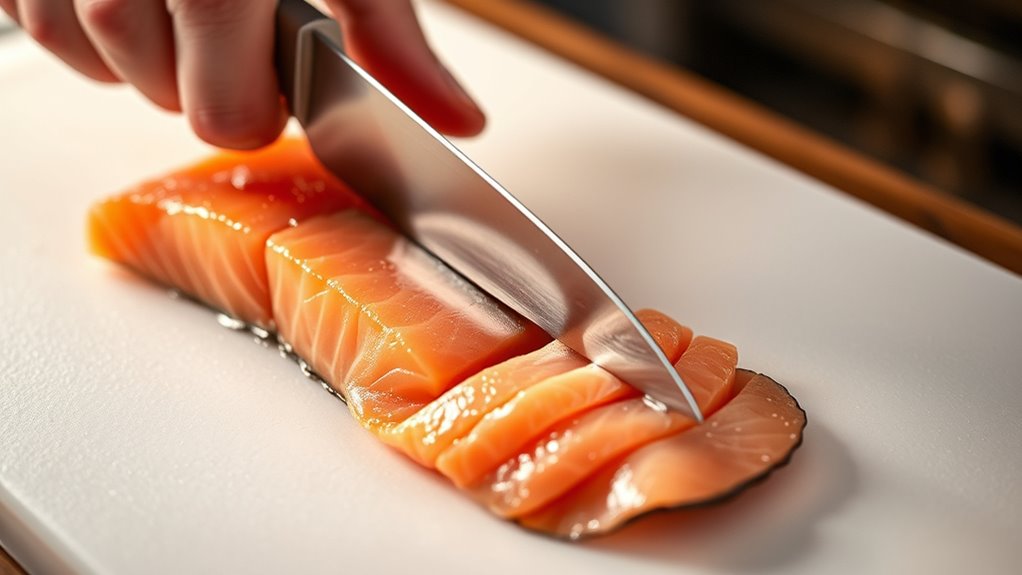
Choosing the right edge angle and bevel for your fillet knife is essential because these features directly influence cutting sharpness and durability. A sharper edge with a low angle, around 12-17 degrees, delivers cleaner, more precise cuts, making filleting smoother and faster. However, a very shallow angle can be fragile and prone to chipping, especially if you’re slicing tougher parts or bones. A wider bevel, like 26 degrees, strikes a balance between sharpness and durability, ideal for everyday use. The bevel’s shape also affects control; a longer bevel allows better maneuvering around ribs and bones. Properly selecting and maintaining the correct edge angle and bevel ensures your knife stays sharp longer, reduces fatigue, and improves overall fish preparation. Additionally, understanding edge geometry can help you choose tools that best suit your specific needs and extend their lifespan. Being aware of blade angles can also guide you in selecting the most appropriate knives for different types of seafood or fish, and understanding material composition can influence how well your knife retains its edge over time. Recognizing the significance of cutting technique can further enhance your efficiency and safety during fish preparation.

HOSHANHO Knife Set with Magnetic Knife Holder, 6 Pieces Japanese High Carbon Stainless Steel Kitchen Knife Sets, Ultra Sharp Professional Chef Knives Sets
【Professional Knife Set】The HOSHANHO 6 piece kitchen knife set includes all the knives you need for cooking: 8"...
As an affiliate, we earn on qualifying purchases.
Blade Shapes and Tips for Optimal Fish and Seafood Slicing
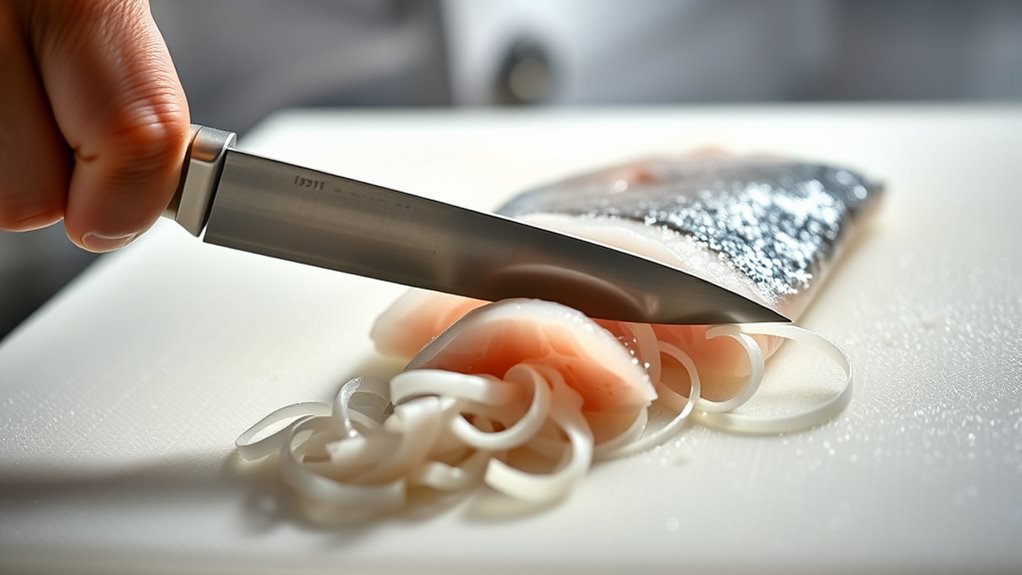
Choosing the right blade shape and tip can make a big difference in your slicing control and accuracy. Curved blades help you follow the fish’s contours smoothly, while pointed tips allow for precise puncturing and delicate cuts. By selecting the right combination, you’ll improve your efficiency and achieve cleaner, more consistent slices. Additionally, understanding the importance of knife ergonomics can enhance comfort and reduce fatigue during prolonged use. Proper blade maintenance also ensures your knife remains effective and safe, contributing to better slicing performance over time. Recognizing the significance of blade geometry helps you choose knives that perform better for your specific slicing needs. Moreover, selecting knives with appropriate handle design can significantly improve grip and control, especially during extended use. Incorporating connected fitness principles, such as using high-quality, well-maintained knives designed for specific tasks, can further optimize your seafood preparation.
Blade Curves for Control
Blade curves play a crucial role in providing control and precision when slicing fish and seafood. The shape of your blade influences how smoothly you maneuver through delicate flesh, especially near bones or skin. Curved blades allow you to follow the contours of the fish more naturally, giving you better leverage and minimizing tearing. Here’s a quick comparison:
| Shape | Control Focus |
|---|---|
| Trailing Point | Precise puncturing and detailed cuts |
| Curved Belly | Enhanced control for thicker fillets |
| Straight Edge | Easier to sharpen, less control |
Additionally, understanding blade geometry can help you choose the most suitable knife for different seafood preparations, ensuring optimal results. Proper knife maintenance also plays a vital role in maintaining the effectiveness of these blade shapes over time. Recognizing the importance of blade sharpness ensures that your knives perform at their best during delicate slicing tasks.
Tip Design for Precision
The tip design of a fillet knife considerably impacts your ability to make precise cuts and navigate delicate fish flesh. A pointed tip allows you to puncture and make detailed cuts, perfect for working around bones or creating intricate fillet shapes. Conversely, rounded tips are safer and better suited for lighter work, reducing the risk of accidental punctures. Trailing-point blades with upward-curving tips maximize slicing belly and provide control near the backbone. Curved blades help follow contours smoothly, while straight tips offer easier sharpening but less finesse. The choice of tip shape depends on your task—pointed tips excel in precision, whereas rounded tips prioritize safety. Selecting the right tip design guarantees cleaner cuts, reduces waste, and enhances your overall fish filleting technique. Additionally, understanding knife geometry can help you choose the most effective blade shape for different seafood types and cutting techniques. For example, blade profile influences how well a knife performs specific cuts, making it a crucial factor in your selection process. Proper blade maintenance also ensures the longevity and optimal performance of your fillet knife, especially when working with various fish species. Moreover, considering the tip strength is important for durability during demanding tasks, and using the correct cutting technique can further improve your results and reduce fatigue.
Material Choices and Construction for Durable, Sharp Knives
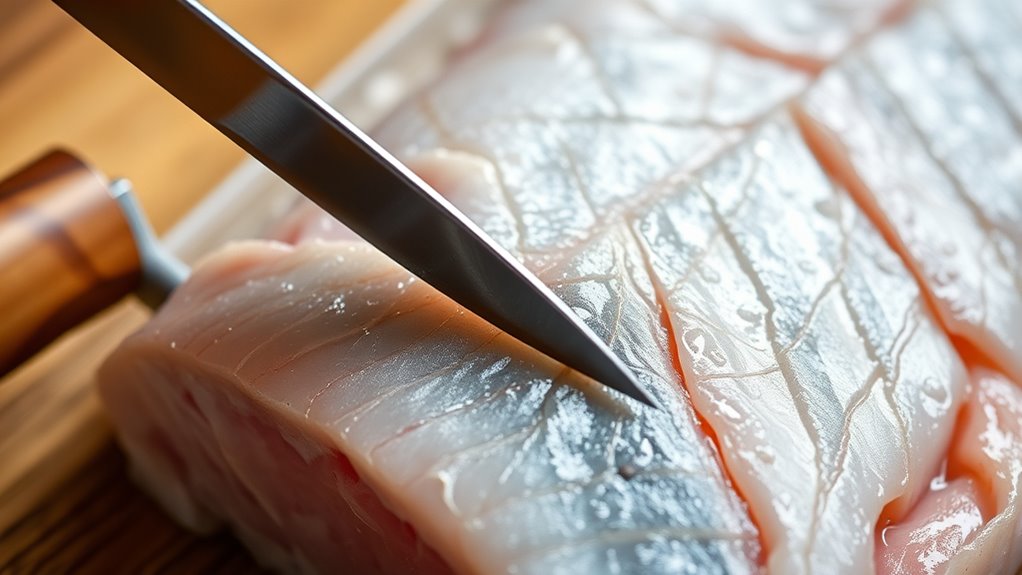
Choosing the right materials for your fish and seafood knives guarantees they stay sharp and resist corrosion over time. High-quality steel compositions and finishes make a big difference in durability and performance. By understanding manufacturing and finishing processes, you can select knives that will last and perform reliably in your kitchen.
Blade Steel Composition
High-quality fish fillet knives often feature blades made from high-carbon stainless steel, which combines corrosion resistance with excellent edge retention. This material allows you to maintain a sharp edge through frequent use, essential when slicing delicate fish. The high-carbon content enhances hardness, enabling the blade to stay sharp longer. Construction techniques, like forging or precise machining, improve overall durability and stability. Some blades also incorporate specific alloy elements, such as vanadium or molybdenum, to boost toughness and wear resistance. A well-made steel guarantees your knife can handle the rigors of filleting without chipping or dulling quickly. Proper heat treatment during manufacturing further optimizes hardness and flexibility, giving you a reliable tool that performs consistently from the first cut to the last.
Corrosion-Resistant Materials
To guarantee your fillet knife stays sharp and rust-free during frequent use, selecting blades made from corrosion-resistant materials is essential. High-quality stainless steel, especially high-carbon variants, offers excellent resistance against moisture and fish acids. These materials ensure durability, maintain sharpness longer, and reduce maintenance. Look for knives with coatings like titanium or ceramic, which further protect against corrosion and improve glide. Choosing the right material means fewer worries about rust, pitting, or weakening over time, giving you confidence with every cut. Additionally, corrosion resistance is a crucial factor in selecting a long-lasting seafood knife, especially when exposed to marine environments that accelerate wear.
Manufacturing and Finishing
Manufacturing and finishing techniques play a essential role in ensuring your fillet knife remains durable and sharp over time. High-quality steel selection is critical; high-carbon stainless steel offers excellent edge retention and corrosion resistance, making your knife reliable in seafood work. Precise forging and heat treatment processes strengthen the blade, balancing hardness with flexibility to prevent chipping or breaking. Finishing touches, like polishing and honing, create a smooth edge that slices cleanly through fish. Coatings, such as non-stick or friction-reducing layers, improve glide and reduce sticking. Proper construction, including a sturdy tang and balanced handle, enhances control and durability during use. When manufacturing and finishing are executed well, your knife stays sharper longer, resists corrosion, and handles the rigors of slicing seafood with precision.
Matching Knife Types to Fish Size and Filleting Needs
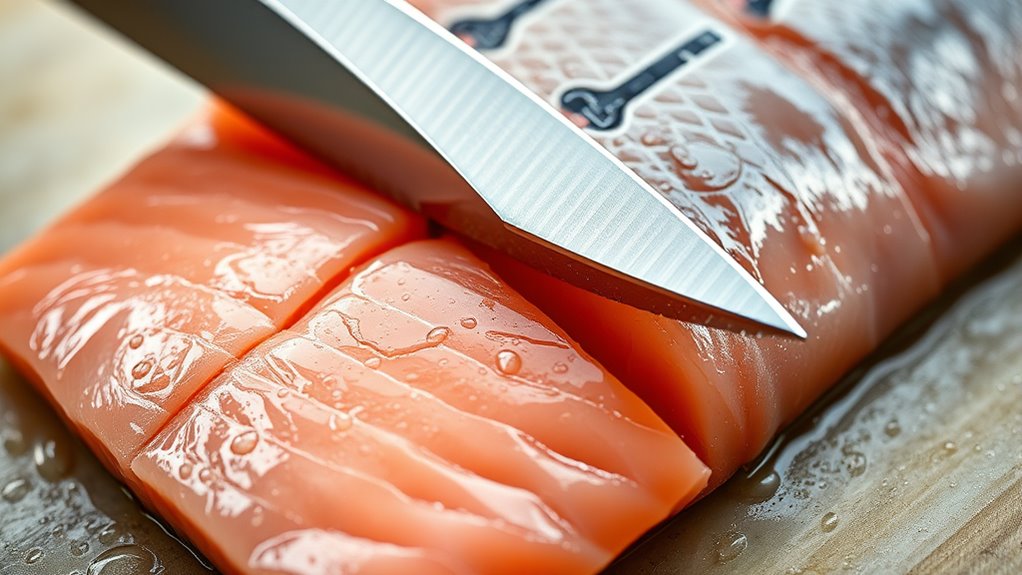
Choosing the right fillet knife depends on the size of the fish you’re preparing and the specific filleting task. For small fish like trout or mackerel, opt for a 4-5 inch flexible blade to easily follow curves and bones. Medium-sized fish such as striped bass benefit from a 7-8 inch blade, offering versatility and control. For larger species like tuna or halibut, a 9-11 inch stiff or semi-flexible blade makes it easier to handle thick flesh and big bones. Use longer blades for increased leverage on big fish, while shorter blades provide precision on delicate fillets. Remember, flexibility helps follow contours, and stiffness offers power for tougher skin or bones. Matching the knife to your fish size ensures cleaner cuts and reduces fatigue during filleting.
Frequently Asked Questions
How Does Blade Flexibility Affect Skinning and Filleting Small Fish?
Blade flexibility helps you easily follow the contours of small fish, making skinning and filleting smoother. A thin, flexible blade bends gently around bones and curves, allowing you to separate flesh from skin with precision. This control reduces waste and damage. For small fish, choose a flexible blade to maneuver around delicate bones and achieve clean, thin fillets, making your work more efficient and enjoyable.
What Is the Ideal Edge Angle for Slicing Delicate Seafood?
Think of your knife as a razor-thin sheet of ice sliding effortlessly over delicate seafood. The ideal edge angle for slicing delicate seafood is between 12-17 degrees. This ultra-sharp, shallow angle allows you to glide smoothly without tearing or crushing the flesh. Keep your knife at this gentle angle, and you’ll achieve perfect, clean slices that showcase the seafood’s natural beauty and texture.
Which Blade Tip Is Best for Detailed Fish Filleting Tasks?
You should choose a pointed tip for detailed fish filleting tasks. This tip allows you to puncture and precisely navigate tight or tricky spots, such as near bones or fins. The sharp, narrow point gives you control over delicate cuts, especially when working around the backbone or fins. It’s ideal for intricate work, ensuring you can separate flesh cleanly without damaging the fillet or losing valuable meat.
How Do Different Steel Materials Impact Knife Maintenance and Performance?
Imagine your knife’s steel as its silent partner in performance. High-carbon stainless steel offers excellent edge retention and resists corrosion, making maintenance simpler. While it needs regular honing, it’s forgiving with proper care. On the other hand, carbon steel sharpens easily but demands diligent cleaning to prevent rust. Your choice affects how often you sharpen, clean, and care for your knife, ultimately ensuring it stays sharp and reliable through countless filletings.
When Should I Choose a Breaking Knife Over a Fillet Knife?
You should choose a breaking knife over a fillet knife when you’re handling large, heavy fish like tuna or halibut. Breaking knives are thicker and sturdier, providing the strength needed to cut through tough bones and big flesh. Use them for breaking down large fish or when you need more leverage. Fillet knives are better for delicate, precise filleting of smaller fish, offering flexibility and finesse.
Conclusion
Choosing the right knife with proper geometry makes all the difference when slicing fish and seafood. It’s like finding the perfect fit—everything just clicks. When you match blade length, flexibility, and shape to your task, you’ll cut with ease and precision. Remember, a sharp knife isn’t just a tool; it’s your best friend in the kitchen. Get it right, and you’ll reap the rewards—don’t let it slip through your fingers!