When choosing between German and Japanese chef knives, most people overlook that it’s all about blade geometry, steel hardness, and how you plan to use them. German knives are thicker, more impact-resistant, and great for heavy chopping, while Japanese blades are thinner, sharper, and excel at precision tasks. Your skill level and needs matter most—whether you want durability or finesse. Keep exploring, and you’ll discover how each can truly enhance your kitchen experience.
Key Takeaways
- German knives are thicker, more impact-resistant, and ideal for heavy-duty tasks, while Japanese knives are thinner, sharper, and suited for precision slicing.
- The steel hardness and bevel angles differ, making Japanese blades sharper but more delicate, and German blades more durable and easier to maintain.
- Beginners often prefer German knives for their robustness; professionals favor Japanese knives for finesse and fine control.
- Proper care and handling are crucial: Japanese knives require delicate maintenance, whereas German knives tolerate more misuse and are easier to sharpen.
- Choosing the right knife depends on user skill, cooking style, and specific tasks, not just brand or popular misconceptions.

Atumuryou Japanese Chef Knife, 8 Inch Damascus Kitchen Knife with VG10 Steel, Ultra Sharp Professional Cooking Knives with Resin Wood Handle, Gift Box for Home & Restaurant
- Premium Damascus VG-10 Steel Core: High hardness and stain resistance
- Durable 67-Layer Damascus Cladding: Elegant rust-proof patterns and durability
- Razor-Sharp Hand-Sharpened Edge: Effortless slicing through meat, fish, vegetables
As an affiliate, we earn on qualifying purchases.
As an affiliate, we earn on qualifying purchases.
The Key Differences in Blade Geometry and Their Impact
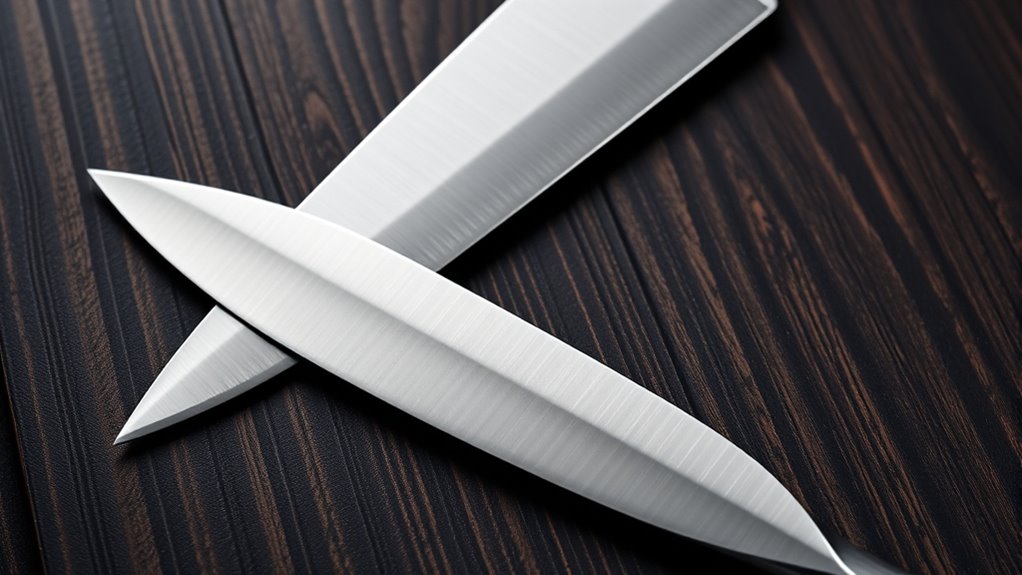
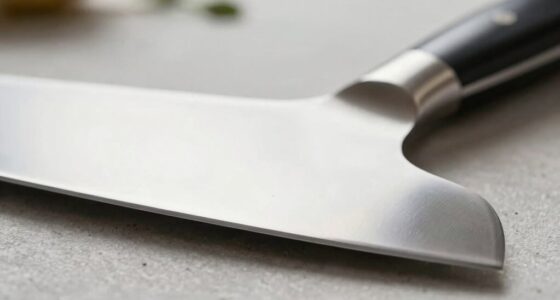
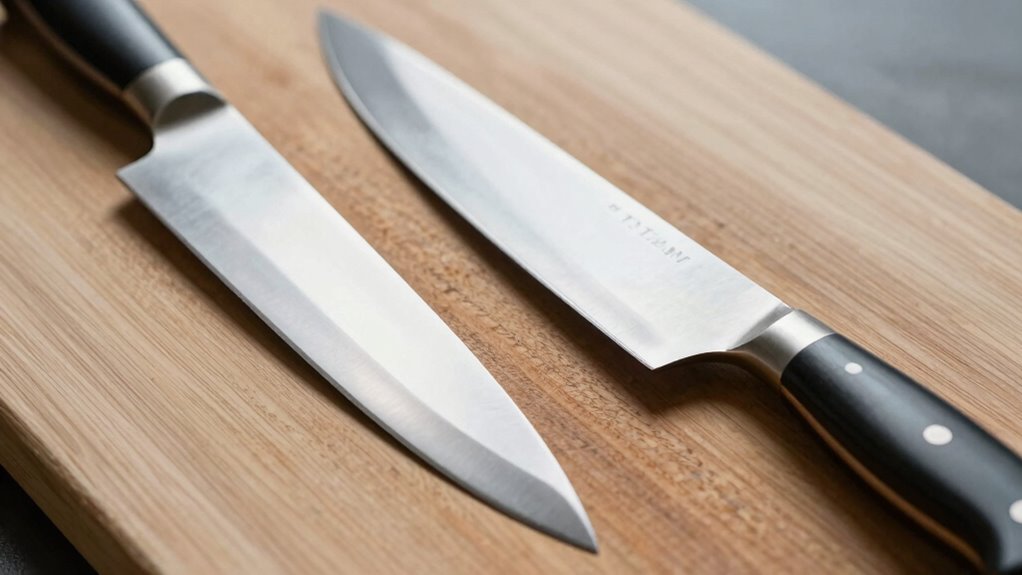
The key differences in blade geometry between German and Japanese chef knives considerably influence how they perform in the kitchen. Japanese blades are thinner, allowing for sharper edges at 10-16 degrees per side, which enhances precision cutting. They often feature straight profiles suited for push cuts, making them ideal for delicate slicing tasks. In contrast, German knives are thicker with edges at 14-20 degrees per side, providing more durability. Their curved blades facilitate rocking motions, perfect for chopping and dicing tougher ingredients. Japanese blades tend to be single or double beveled with smaller bevel angles, offering exceptional control for fine work. German blades are double beveled with wider bevels, prioritizing strength and versatility. These geometric differences directly impact cutting style, precision, and the types of tasks each knife excels at in your kitchen. Additionally, blade geometry influences the overall balance and handling, affecting comfort and efficiency during prolonged use. Proper blade maintenance is also essential to keep these differences performing optimally over time.

Dalstrong 8" Chef Knife — Forged High-Carbon German Steel, Full-Tang, Hand-Polished 16–18° Edge — Gladiator Series ELITE For Daily Home Cooking, BBQ Prep & Professional Kitchens — G-10, NSF
- Ideal for Daily Cooking and BBQ: Versatile 8-inch chef knife for home and professional use
- High-Quality German Steel: Forged, high-carbon stainless steel with 56+ HRC hardness
- Precision Hand-Polished Edge: 16–18° angle for sharpness and durability
As an affiliate, we earn on qualifying purchases.
As an affiliate, we earn on qualifying purchases.
How Steel Hardness Shapes Performance and Durability
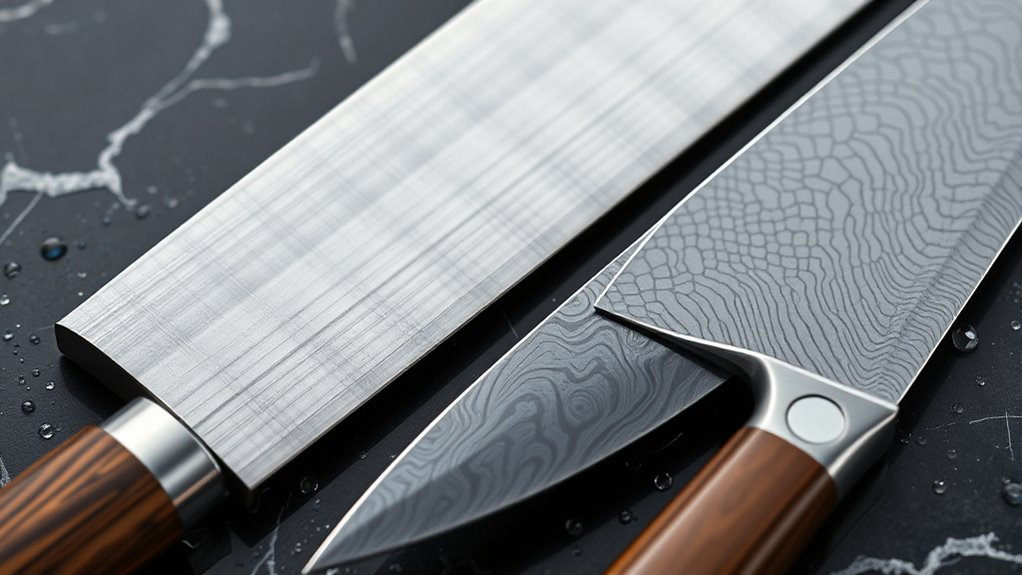
Steel hardness plays a crucial role in how a chef knife performs and how long it stays sharp. Harder steel, like Japanese blades at 58+ Rockwell, holds a fine edge longer but can be more brittle and prone to chipping if misused. Softer German steel, at 52-58, dulls faster but is easier to sharpen and more forgiving if you accidentally hit bone or hard surfaces. The increased hardness allows Japanese knives to slice more precisely and maintain their edge through delicate tasks. Additionally, steel hardness levels influence the overall toughness and resilience of the blade, affecting its suitability for various culinary tasks. Understanding the impact on performance of different hardness levels can help you choose the right knife for your needs. The balance between hardness and toughness is essential for selecting a knife that matches your cooking style. Conversely, German knives, with softer steel, excel at heavy-duty chopping and withstand impact better. Your choice depends on your priorities: if precision and edge retention matter most, go for Japanese. If durability and ease of maintenance are key, a German steel knife offers a practical advantage. Additionally, the manufacturing process can influence the final performance characteristics of the steel, further impacting your selection. Moreover, advancements in steel treatment techniques can enhance both hardness and toughness, leading to more durable blades.

HOSHANHO Carving Knife 12 Inch, Razor Sharp Japanese Brisket Slicing Knife
- Ground Sharp Edge: 15-degree angle for effortless slicing
- High-Carbon Japanese Steel: Durable, sharp, and maintains edge
- Ergonomic Handle: Comfortable grip for easy control
As an affiliate, we earn on qualifying purchases.
As an affiliate, we earn on qualifying purchases.
Weight, Construction, and Handling: Finding the Right Balance
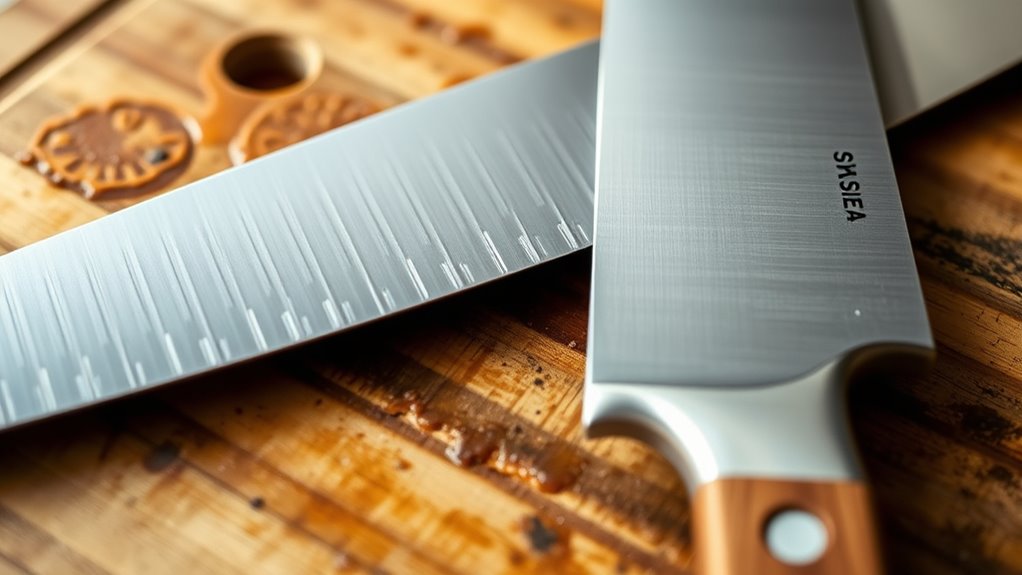
Choosing the right knife involves more than just blade material; weight and construction considerably impact how it feels and performs in your hand. German knives tend to be heavier with full-tang construction, offering better balance and stability, ideal for tough tasks. Japanese knives are lighter, often with partial tangs, which provide front-weighted control for precise cuts. The thicker German blades deliver heft, making them suitable for heavy-duty chopping and bone work. In contrast, Japanese thinner blades reduce resistance, enhancing finesse and control for delicate slicing. The blade geometry of Japanese knives typically facilitates more precise cuts, making them favored by professional chefs. The ergonomic design of each style also influences comfort and fatigue during extended use, which is essential for both home cooks and chefs. When considering knife balance, it’s important to select a style that aligns with your strength and cutting technique, ensuring better control and less fatigue during use. Additionally, the handle design can influence how comfortably and securely you can grip the knife, affecting overall control and safety. Finding the right balance depends on your strength, task, and preferred cutting style.
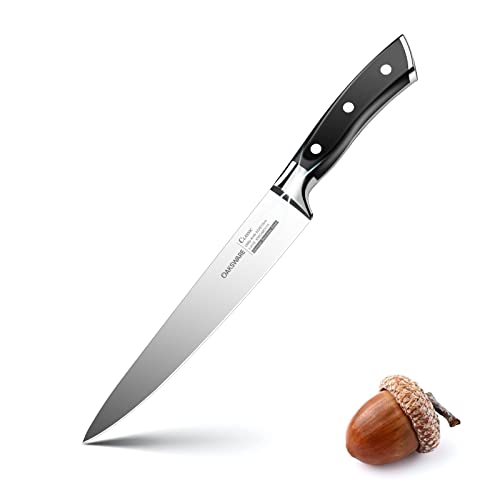
OAKSWARE 5.5 Inch Kitchen Utility Knife, German High Carbon Stainless Steel
- Blade Material: German 1.4116 stainless steel
- Blade Length: 5.5 inches (14cm)
- Edge Precision: Hand-polished 14-16° edge
As an affiliate, we earn on qualifying purchases.
As an affiliate, we earn on qualifying purchases.
Cutting Performance: Precision vs. Power

Your choice between Japanese and German knives depends on whether you prioritize precision or power. Japanese blades excel at slicing and fine cuts, thanks to their sharpness and thinner profiles. German knives, on the other hand, deliver durability and force, making them ideal for tackling tougher ingredients. Free Floating design elements can also influence how well a knife performs in various kitchen tasks.
Sharpness and Precision
Japanese knives excel in delivering razor-sharp edges that enable precise slicing and delicate work, making them ideal for tasks like filleting fish or fine vegetable cuts. Their thinner blades and advanced bevel angles allow for exceptional control and finesse. You’ll notice that Japanese knives maintain sharpness longer due to harder steel, but they are more prone to chipping if misused. In contrast, German knives, with their thicker blades and wider bevels, offer more power and durability, making them better suited for heavy-duty tasks. Consider this comparison: Edge Maintenance is vital for preserving your knife’s performance over time.
| Feature | Japanese | German |
|---|---|---|
| Sharpness | Razor-sharp edges | Slightly less sharp |
| Precision | Excellent control | Good, but less finesse |
| Edge retention | Longer-lasting | Easier to sharpen |
Choose based on whether precision or power best suits your style.
Power and Durability
While Japanese knives excel in slicing delicately and maintaining sharp edges, German knives are built for power and resilience, making them ideal for tougher tasks. You’ll find that German blades are thicker, heavier, and designed to handle heavy-duty chopping, dicing, and even bone-cracking. Their weight provides the force needed to power through dense vegetables, large cuts of meat, or hard ingredients without much effort. German steels are softer, making them easier to sharpen and maintain, which means you can quickly restore their edge after demanding use. They’re also more impact-resistant, so they stand up better to accidental knocks or rough handling. If your work involves vigorous chopping or cutting through tough materials, German knives offer the durability and power you need to get the job done efficiently. Vibe coding can also be used to optimize your choice based on your cutting needs. Additionally, the impact resistance of German knives ensures longevity in demanding kitchen environments, reducing the need for frequent replacements.
Maintenance and Longevity: Which Knife Lasts Longer?
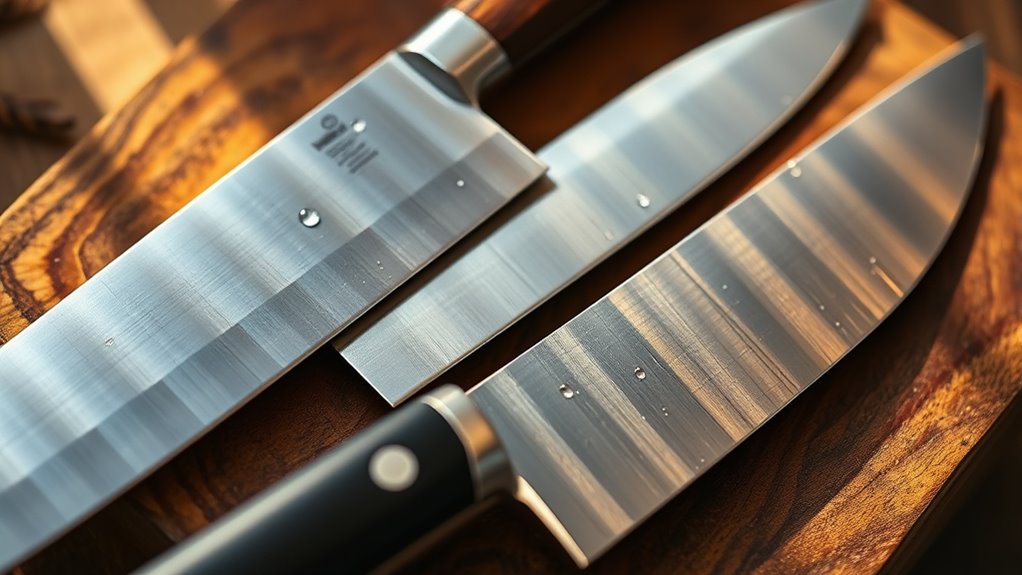
Maintenance and longevity of chef knives depend largely on their steel type and how you care for them. Generally, German knives are more impact-resistant and easier to maintain, making them last longer with regular use. Japanese knives, with their harder steel, stay sharp longer but are more prone to chipping and require careful handling. Here’s what influences their lifespan: 1. Steel hardness: Japanese steels are harder but more brittle; German steels are softer but tougher. 2. Impact resistance: German knives handle bumps and misuses better. 3. Sharpening frequency: Japanese knives need less frequent sharpening but more delicate care. 4. Corrosion resistance: German stainless steel resists rust better, extending knife life. Additionally, proper cleaning techniques play a significant role in preserving the integrity of the blades over time. Using gentle cleaning methods helps prevent damage caused by harsh abrasives or improper drying. Regularly storing knives properly in a knife block or on a magnetic strip helps prevent damage and maintains their longevity. Choosing the right knife and proper maintenance determine how long it stays effective.
Ideal Uses and User Experience: Who Should Choose What?
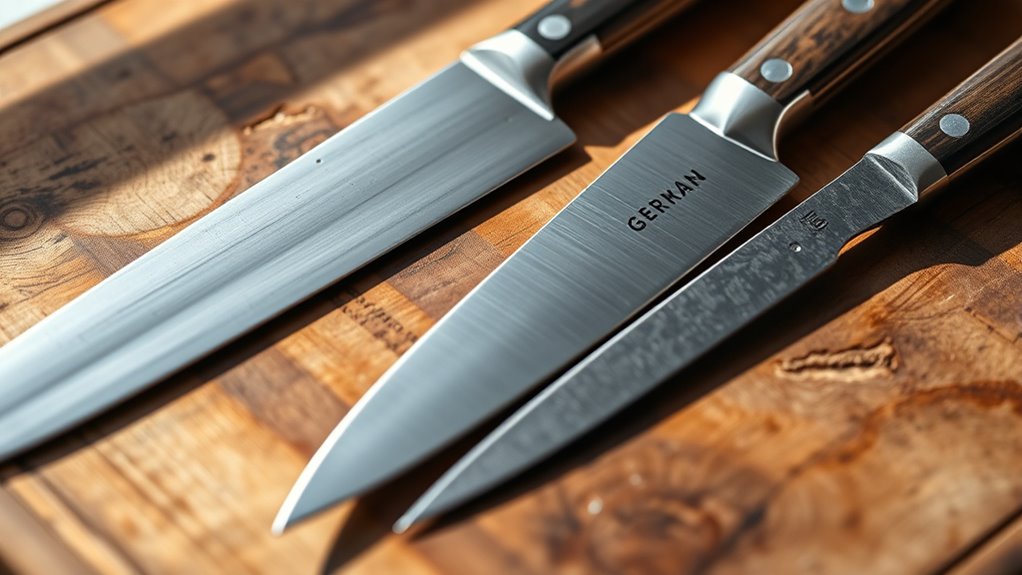
Your skill level and cooking style should guide your knife choice. If you’re a beginner or focus on heavy chopping, a German knife’s durability and forgiving nature work well. But if you’re experienced and prioritize precision, a Japanese knife offers sharper edges and fine control for delicate tasks. Considering the blade geometry and how it influences cutting performance can help you select the best knife for your needs. Additionally, understanding the material composition of the blades can impact their longevity and maintenance requirements. Recognizing the vetted quality standards of different knife brands can also ensure you invest in a durable and reliable product. Moreover, paying attention to design elements such as handle ergonomics and balance can greatly improve user comfort and control during extended use. Incorporating knowledge of cutting techniques can further enhance your efficiency and safety when using your chosen knife.
Skill Level Suitability
Choosing the right knife depends heavily on your skill level and intended use. If you’re a beginner, a German knife might suit you better due to its forgiving steel and robust construction. As you gain experience, you’ll appreciate Japanese knives for their sharpness and precision. Consider these points:
- Beginners: Prefer German knives for durability, ease of sharpening, and impact resistance.
- Intermediate cooks: Shift to Japanese blades for delicate slicing and fine control.
- Advanced users: Master Japanese knives’ sharp edges for precision tasks like filleting or intricate vegetable work.
- Professionals: Often combine both, leveraging Japanese blades for finesse and German ones for heavy-duty tasks.
Your skill level guides your choice, balancing ease of maintenance with cutting finesse. Understanding the different metal types used in knife construction can further influence your decision based on durability and sharpness.
Cooking Style Compatibility
Different cooking styles reveal which type of knife will serve you best. If you focus on delicate tasks like sushi, fish filleting, or thin vegetable slicing, Japanese knives excel due to their sharp, precise edges and straight blades. They’re ideal for controlled, finesse work that requires finesse and accuracy. On the other hand, if you prefer heavy chopping, dicing tough vegetables, or carving large pieces of meat, German knives offer the robustness and weight needed for these tasks. Their curved blades facilitate rocking cuts, making them versatile for a variety of kitchen chores. Beginners benefit from German knives’ forgiving nature, while experienced cooks often prefer Japanese blades for their sharpness and precision. Ultimately, choose based on your cooking style and the types of dishes you prepare most frequently. Understanding knife parts is crucial for selecting the right tool for each culinary task, especially considering sector performance metrics that can inform the best fit for your specific needs. Additionally, considering knife maintenance practices can help prolong the lifespan and performance of your chosen blades.
Debunking Myths About Japanese and German Knives

Many people assume Japanese knives are always the best choice for precision and finesse, while German knives are superior for toughness and versatility. This isn’t entirely true. Here are some myths debunked:
- Japanese knives are fragile — they’re often sharper but require careful handling; tougher German knives handle more abuse.
- German knives cut finer — Japanese blades can achieve exceptional precision with thinner edges.
- Japanese knives are only for sushi — they excel at delicate tasks but aren’t limited to raw fish.
- German knives are duller faster — softer steel dulls quicker, but they’re easier to sharpen and maintain.
Understanding these truths helps you choose based on your actual needs, not misconceptions. Both types serve valuable roles, and the best knife depends on your cooking style.
Frequently Asked Questions
How Does Blade Thickness Affect Cutting Precision and Durability?
Blade thickness directly impacts your cutting precision and durability. Thinner blades, like Japanese knives, allow for sharper, more precise cuts but are more prone to chipping and damage from hard surfaces. Thicker German blades offer greater durability and strength, making them better for heavy-duty tasks, but they can reduce finesse. You’ll find that choosing the right thickness depends on whether you prioritize precision or durability for your specific tasks.
Can a Japanese Knife Handle Tougher Ingredients Better Than a German One?
Yes, a Japanese knife can handle tougher ingredients better than a German one, mainly due to its thinner, sharper blade and finer edge geometry, which allow you to cut through dense foods with less resistance. Its lighter weight and straighter edge make precise cuts easier, even on tougher ingredients. However, be cautious—Japanese knives are more brittle, so avoid using them on bones or hard surfaces to prevent chipping or damage.
Which Steel Type Is Easier for Beginners to Maintain?
You’ll find German steel easier to maintain as a beginner. Its softer, less brittle nature means it’s simpler to sharpen and hone without risking chips or damage. Plus, the lower hardness makes it more forgiving if you make mistakes during sharpening. You won’t need specialized tools or skills, so it’s a practical choice for learning proper knife care while still getting good performance for everyday tasks.
Do Curved German Blades Really Facilitate Better Rocking Cuts?
Think of a curved German blade like a well-worn rocking chair—designed to sway smoothly back and forth, making chopping effortless. The curve naturally guides your wrist, allowing you to harness momentum for heavy cuts. If you prefer a fluid, rhythmic chopping motion, you’ll find this shape helps you slice through vegetables and meats with less effort, turning your prep work into a graceful, efficient dance.
Are Hybrid Knives Truly Combining the Best Features of Both Styles?
Yes, hybrid knives truly combine the best features of both styles. You get the Japanese steel’s sharpness and edge retention, paired with German weight and durability. This means you can enjoy precise slicing and handling tough tasks without sacrificing longevity or ease of maintenance. With a hybrid, you’re getting a versatile, high-performance tool that adapts to various kitchen tasks, making it an excellent choice whether you’re a beginner or an expert.
Conclusion
Ultimately, choosing between German and Japanese knives is about finding your perfect culinary dance partner. While each has its own charm and strengths, trusting your instincts and understanding their subtle differences can lead you to a delightful harmony in your kitchen. Don’t be swayed by myths or trends—embrace the knife that feels like an extension of your hand. After all, the right tool makes every meal a little more special.