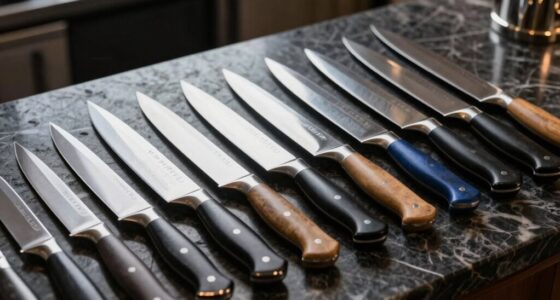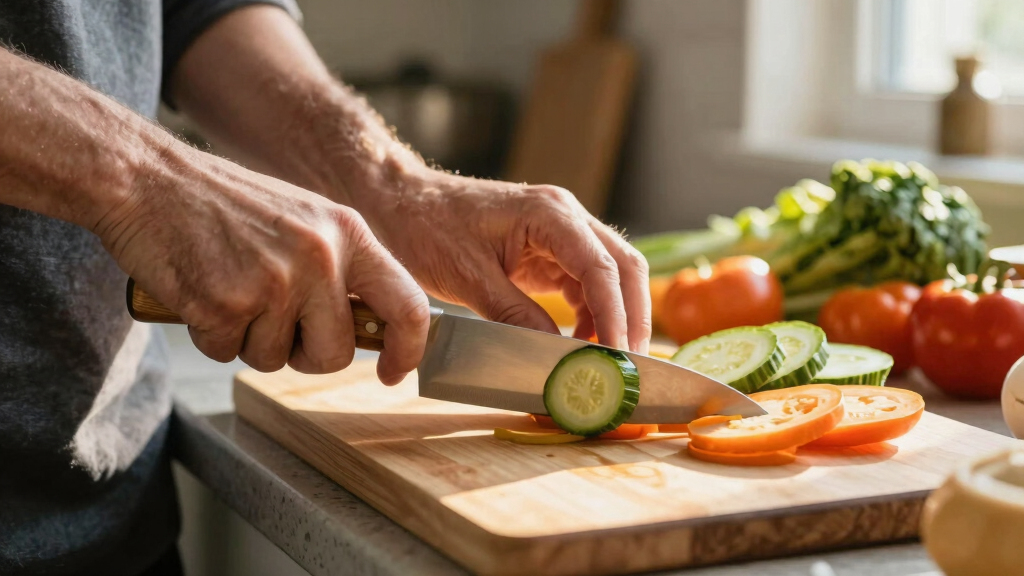

If you’re searching for the best nakiri knife for vegetables, you’re likely after a tool that offers precise, effortless cuts and comfortable handling. The Shun Classic 6.5-Inch Nakiri stands out as the overall top choice for its balanced design and razor-sharp edge. For those prioritizing affordability, the Mercer Culinary Genesis 7-Inch Nakiri delivers reliable performance at a lower price. Meanwhile, the Yoshihiro VG10 Damascus Nakiri appeals to enthusiasts seeking craftsmanship and premium steel. Every option involves tradeoffs: some focus on edge retention, others on comfort or price. Continue reading to see how these choices compare and find the best fit for your kitchen needs.
Key Takeaways
- The top picks balance edge sharpness, durability, and comfort, with no single knife excelling in all areas.
- Premium steels like VG10 and AUS-10V provide longer-lasting edges but come with higher price tags.
- Handle design and weight significantly influence ease of use, especially during extended prep sessions.
- For beginners, lighter and more forgiving knives can reduce fatigue, but may compromise some cutting finesse.
- Price ranges vary widely; investing in a higher-quality steel often pays off in performance and longevity.
| Shun Classic 6.5-Inch Nakiri Knife |  | Best Overall for Precision and Handcrafted Quality | Blade Length: 6.5 inches | Material: VG-MAX steel with Damascus cladding | Edge: 16-degree angle | VIEW LATEST PRICE | See Our Full Breakdown |
| Mercer Culinary Genesis 7-Inch Nakiri Vegetable Knife, Black |  | Best for Beginners and Versatile Use | Blade Length: 7 inches | Material: High-carbon German steel | Handle: Ergonomic, non-slip | VIEW LATEST PRICE | See Our Full Breakdown |
| Yoshihiro VG10 46-Layer Hammered Damascus Nakiri Japanese Vegetable Knife 6.5” (165mm) with Ambrosia Handle |  | Best for Aesthetic and Traditional Craftsmanship | Blade Material: VG10 Stainless Steel | Edge Angle: Double Edged | Grade: Damascus | VIEW LATEST PRICE | See Our Full Breakdown |
| Global 7″ Hollow Ground Vegetable Knife |  | Best for Multi-Purpose and Efficiency | Blade Length: 7 inches | Edge Type: Hollow ground/granton | Material: Unknown | VIEW LATEST PRICE | See Our Full Breakdown |
| Dalstrong Nakiri Vegetable Knife – 6 inch – Shogun Series Elite |  | Best for High-Performance and Durability | Blade Length: 6 inches | Blade Material: AUS-10V Japanese super steel | Hardness: 62+ Rockwell | VIEW LATEST PRICE | See Our Full Breakdown |
| Sunnecko 7” Nakiri Knife Razor Sharp 15° Edge – Vegetable & Meat Cleaver Kitchen Knife, High Carbon Stainless Steel, Ergonomic Handle, Sheath & Gift Box |  | Best Overall for Versatility and Precision | Blade Length: 7 inches | Material: High Carbon Stainless Steel | Edge Angle: 15° | VIEW LATEST PRICE | See Our Full Breakdown |
| Shun Sora 6-Inch Hollow Ground Nakiri Knife, Handcrafted Japanese Vegetable Knife with VG10 Steel Edge |  | Best for Precision and Traditional Craftsmanship | Blade Length: 6 inches | Steel Type: VG10 with 420J stainless steel support | Edge Angle: 16 degrees | VIEW LATEST PRICE | See Our Full Breakdown |
| Dalstrong Nakiri Asian Vegetable Knife – 7″ – Gladiator Series – Forged German High Carbon Steel – Black G10 Handle |  | Best for Heavy-Duty and Professional Use | Blade Length: 7 inches | Material: Forged German High Carbon Steel | Handle: Black G10, triple-riveted | VIEW LATEST PRICE | See Our Full Breakdown |
| HOSHANHO 7 Inch Nakiri Knife – Japanese High Carbon Steel Vegetable Cleaver with Rosewood Handle |  | Best for Traditional Aesthetics and Balance | Blade Length: 7 inches | Blade Material: 9-layer layered steel with super steel core | Blade Thickness: 2.5 mm | VIEW LATEST PRICE | See Our Full Breakdown |
| Mercer Culinary Asian Collection Nakiri Vegetable Knife |  | Best Overall for Precision and Craftsmanship | Blade Material: High-carbon German steel | Blade Type: Rectangular Nakiri | Handle Material: Wood | VIEW LATEST PRICE | See Our Full Breakdown |
| HOSHANHO 7 Inch Nakiri Knife, Japanese High Carbon Stainless Steel Chef Knife with Pakkawood Handle |  | Best for Versatility and Comfortable Handling | Blade Length: 7 inches | Material: Japanese 10Cr15CoMoV high carbon stainless steel | Blade Hardness: 60 HRC | VIEW LATEST PRICE | See Our Full Breakdown |
| imarku Nakiri Knife, 7 Inch High Carbon Stainless Steel Japanese Chef Knife with Ergonomic Handle |  | Best for Stylish, Precise Slicing with Anti-Stick Finish | Blade Length: 7 inches | Blade Material: High-carbon stainless steel | Edge Angle: 15° | VIEW LATEST PRICE | See Our Full Breakdown |
More Details on Our Top Picks
Shun Classic 6.5-Inch Nakiri Knife
The Shun Classic 6.5-inch Nakiri stands out for its exceptional sharpness, thanks to VG-MAX steel with Damascus cladding, which provides both edge retention and an elegant appearance. Its handcrafted Japanese design makes it ideal for users who value artistry and meticulous cutting, especially compared to simpler models like the Dalstrong Shogun Series, which emphasizes durability over traditional craftsmanship. The Pakkawood handle offers a comfortable, secure grip, but its premium price reflects the handcrafted nature, making it less accessible for budget-conscious buyers. While it excels at vegetable prep, its delicate blade requires careful handling and maintenance to avoid damage. This pick is perfect for serious home cooks and professionals who prioritize precision and traditional quality.
Pros:- Exceptional sharpness and edge retention
- Comfortable and secure Pakkawood handle
- Handcrafted Japanese quality and aesthetic appeal
Cons:- Premium price point limiting accessibility
- Requires careful handling and maintenance to preserve sharpness
Best for: Experienced home cooks and professional chefs seeking a handcrafted, high-performance vegetable knife
Not ideal for: Casual cooks or those on a tight budget who may find the price prohibitive and prefer a more durable, low-maintenance option
- Blade Length:6.5 inches
- Material:VG-MAX steel with Damascus cladding
- Edge:16-degree angle
- Handle:Pakkawood, D-shaped
Bottom line: This knife is ideal for users who want a traditional, handcrafted nakiri that delivers precision, despite its higher cost and delicate nature.
Mercer Culinary Genesis 7-Inch Nakiri Vegetable Knife, Black
The Mercer Genesis Nakiri offers a larger 7-inch blade made from high-carbon German steel, making it a versatile choice for both vegetable prep and light slicing tasks. Its ergonomic handle ensures comfort during extended use, which makes it particularly suitable for home cooks developing their skills or professionals needing reliable performance. Compared to the Dalstrong Nakiri, which emphasizes premium materials, the Mercer focuses on ease of use and affordability, though it does require careful hand washing and sharpening over time. Its slightly longer blade can handle larger vegetables more comfortably, but it isn’t as finely crafted or as visually striking as the Japanese-made options. This model makes the most sense for cooks who want a durable, easy-to-maintain knife without sacrificing performance.
Pros:- Sharp, durable blade with long-lasting edge
- Ergonomic handle for comfortable grip
- Versatile enough for chopping, slicing, and mincing
Cons:- Requires hand washing, not dishwasher safe
- May need periodic sharpening to maintain edge
Best for: Home cooks and culinary students seeking an ergonomic, reliable vegetable knife for everyday use
Not ideal for: Dishwasher users or those seeking a handcrafted or highly aesthetic knife, as it requires careful cleaning and maintenance
- Blade Length:7 inches
- Material:High-carbon German steel
- Handle:Ergonomic, non-slip
- Series:Genesis
Bottom line: This knife is perfect for those wanting a dependable, easy-to-handle nakiri for daily vegetable prep at an affordable price point.
Yoshihiro VG10 46-Layer Hammered Damascus Nakiri Japanese Vegetable Knife 6.5” (165mm) with Ambrosia Handle
The Yoshihiro VG10 Damascus Nakiri combines stunning visual appeal with high functionality, thanks to its VG10 core and 46 layers of hammered Damascus steel. It’s crafted for those who appreciate the artistry of Japanese blades and need precise vegetable chopping. Compared to the Dalstrong Nakiri, which emphasizes durability, this knife leans heavily into traditional aesthetics and meticulous craftsmanship, requiring careful sharpening and hand washing to preserve its beauty and performance. The octagonal handle feels natural in hand and adds to its authentic look, but it’s not the most forgiving for beginners or those seeking easy maintenance. This knife is best suited for collectors or serious enthusiasts valuing beauty and precision over low maintenance.
Pros:- Beautiful VG10 steel core with Damascus layers
- Ergonomic octagonal handle for comfortable grip
- Includes a wooden saya sheath for protection
Cons:- Requires careful sharpening and maintenance
- Hand wash only, not suited for rough use or frozen foods
Best for: Serious home chefs and collectors who value Japanese craftsmanship and aesthetic appeal
Not ideal for: Casual cooks or those who prefer low-maintenance, dishwasher-safe knives, due to its delicate, handcrafted nature
- Blade Material:VG10 Stainless Steel
- Edge Angle:Double Edged
- Grade:Damascus
- Handle Shape:Octagonal
- HRC:60
- Blade Length:6.5 inches (165mm)
Bottom line: This knife is ideal for enthusiasts who prioritize craftsmanship and visual beauty, accepting the need for careful handling and maintenance.
Global 7″ Hollow Ground Vegetable Knife
The Global 7-inch Hollow Ground Vegetable Knife offers a Japanese-style square-tip blade with scalloped edges designed to reduce food sticking, making it highly efficient for vegetable prep and even light meat slicing. Its hollow grind reduces friction, which helps when working with sticky ingredients, a feature not as prominent in traditional nakiri designs like the Shun Classic. However, the material details are less clear, and its slightly unconventional design may not appeal to those seeking a traditional Japanese aesthetic. Its versatility makes it suitable for users who want a single knife for multiple tasks, though it may require more frequent sharpening due to the hollow grind. This knife is best for users prioritizing versatility and efficiency over traditional craftsmanship.
Pros:- Reduces sticking with scalloped, hollow ground edges
- Sharp and precise for various ingredients
- Japanese-style blade with square tip for control
Cons:- Material details are limited, affecting long-term durability
- Hollow grind may require frequent sharpening
Best for: Cooks who need a multi-purpose knife that handles vegetables, meats, and larger ingredients with ease
Not ideal for: Purists or those seeking a traditional nakiri aesthetic, as its style and material details are less refined
- Blade Length:7 inches
- Edge Type:Hollow ground/granton
- Material:Unknown
Bottom line: This knife suits those who want a versatile, efficient vegetable knife that minimizes food sticking, even if it sacrifices some traditional qualities.
Dalstrong Nakiri Vegetable Knife – 6 inch – Shogun Series Elite
The Dalstrong Shogun Series Elite Nakiri features a 6-inch blade made from AUS-10V super steel with 66 layers of high-carbon stainless steel and a Damascus hammered finish. It offers exceptional sharpness, edge retention, and a robust build, making it a compelling choice for users who need durability and high performance. Compared with the Shun Classic, which emphasizes craftsmanship, the Dalstrong focuses more on steel quality and resilience, though it may not have the same handcrafted feel. The G-10 handle provides an excellent grip but can feel less refined in hand than traditional Pakkawood. Its slightly smaller size might be limiting for larger vegetables or tasks requiring more leverage. This pick is ideal for those who prioritize toughness and long-term performance in a nakiri.
Pros:- Extremely sharp and durable AUS-10V steel edge
- High-quality craftsmanship with Damascus finish
- Ergonomic G-10 handle for secure grip
Cons:- Premium price point
- 6-inch blade size may limit larger vegetable prep
Best for: Professional chefs and serious home cooks seeking a durable, high-performance vegetable knife
Not ideal for: Users who prefer traditional Japanese craftsmanship or larger vegetables, as the 6-inch size might be restrictive
- Blade Length:6 inches
- Blade Material:AUS-10V Japanese super steel
- Hardness:62+ Rockwell
- Steel Layers:66 layers
- Handle Material:G-10
- Finish:Damascus hammered
Bottom line: This knife is best suited for users demanding a tough, long-lasting vegetable knife with high-performance steel at a premium price point.
Sunnecko 7” Nakiri Knife Razor Sharp 15° Edge – Vegetable & Meat Cleaver Kitchen Knife, High Carbon Stainless Steel, Ergonomic Handle, Sheath & Gift Box
The Sunnecko 7-inch Nakiri stands out for its razor-sharp 15° edge, which allows effortless slicing through vegetables and meats alike. Its ergonomic handle minimizes fatigue during extended prep, making it a strong choice for home cooks who want reliability without sacrificing comfort. Compared to the Shun Sora 6-inch, this knife offers a slightly larger blade, giving more control for bigger vegetables, but it may require extra attention to prevent rust, unlike the more corrosion-resistant options. The included sheath and gift box make it an appealing gift, though the weight isn’t specified, which could be a concern for those seeking a lightweight tool. Overall, this knife offers a balanced blend of sharpness, comfort, and value for users who prioritize precision and durability.Pros:- Razor-sharp 15° edge for effortless slicing
- Ergonomic handle reduces hand fatigue
- Includes sheath and attractive gift box
Cons:- No specific weight information provided
- Blade may require careful maintenance to prevent rust
Best for: Home cooks and culinary enthusiasts seeking a versatile, razor-sharp nakiri for vegetables and meats.
Not ideal for: Those looking for a lightweight, low-maintenance knife or for heavy-duty professional kitchen work.
- Blade Length:7 inches
- Material:High Carbon Stainless Steel
- Edge Angle:15°
- Handle Material:Pakkawood
- Included Components:Sheath, Gift Box
- Weight:Not specified
Bottom line: This knife suits users who want a reliable, precise nakiri with comfort and presentation in mind.
Shun Sora 6-Inch Hollow Ground Nakiri Knife, Handcrafted Japanese Vegetable Knife with VG10 Steel Edge
The Shun Sora 6-inch Nakiri excels in providing razor-sharp, precise cuts thanks to its VG10 steel core and handcrafted Japanese design. Its hollow ground indentations help reduce sticking, which is a significant advantage when slicing sticky vegetables like zucchini or eggplant, setting it apart from the Dalstrong 7-inch, which has a more robust, forged feel. The smaller size makes it ideal for delicate, detailed work or for users with smaller hands, but it could be limiting for larger vegetables or heavier chopping tasks. The premium price reflects its handcrafted quality, though it demands careful maintenance to keep the edge pristine. For those valuing traditional craftsmanship and precise control, it’s a compelling choice.Pros:- Exceptional sharpness with a 16-degree edge
- Hollow ground reduces food sticking
- Handcrafted in Japan for authentic quality
Cons:- Premium price may be high for some
- Small 6-inch blade may be limiting for larger vegetables
- Requires careful maintenance to preserve edge
Best for: Home chefs who value handcrafted Japanese knives for detailed vegetable slicing and precise cuts.
Not ideal for: Users who need a larger, more versatile vegetable cleaver for heavy-duty tasks or larger produce.
- Blade Length:6 inches
- Steel Type:VG10 with 420J stainless steel support
- Edge Angle:16 degrees
- Handle Material:PP/TPE polymer blend
- Blade Construction:San Mai with hollow ground
- Made in:Japan
Bottom line: Ideal for enthusiasts seeking a finely crafted, precise vegetable knife, but less suited for heavy chopping or larger produce.
Dalstrong Nakiri Asian Vegetable Knife – 7″ – Gladiator Series – Forged German High Carbon Steel – Black G10 Handle
The Dalstrong 7-inch Nakiri offers a forged German high-carbon steel blade paired with a durable G10 handle, making it a solid choice for those who need a robust vegetable knife that can handle frequent chopping. Its heftier build provides excellent control for slicing through dense vegetables, but this weight might feel cumbersome for users accustomed to lighter, more agile knives like the HOSHANHO 7-inch. Compared to the Sunnecko, which emphasizes razor-sharpness and comfort, the Dalstrong leans toward durability and heavy-duty performance, which could be a tradeoff for those prioritizing finesse. It’s best suited for professional kitchens or serious home cooks willing to maintain a heavier tool.Pros:- Forged German high-carbon steel for durability
- Comfortable, non-slip G10 handle
- Razor-sharp edge for efficient chopping
Cons:- Heftier design may reduce maneuverability
- Requires regular honing to maintain sharpness
Best for: Professional chefs or serious home cooks needing a durable, heavy-duty nakiri for frequent vegetable prep.
Not ideal for: Users preferring a lightweight or more maneuverable knife for delicate slicing or extended use.
- Blade Length:7 inches
- Material:Forged German High Carbon Steel
- Handle:Black G10, triple-riveted
- Hardness:56+ Rockwell
- Certification:NSF Certified
Bottom line: This knife is suited for those needing a sturdy, professional-grade vegetable cleaver and willing to handle its weight.
HOSHANHO 7 Inch Nakiri Knife – Japanese High Carbon Steel Vegetable Cleaver with Rosewood Handle
The HOSHANHO 7-inch Nakiri emphasizes traditional Japanese craftsmanship with its layered steel construction and elegant rosewood handle. Its high carbon steel core ensures excellent edge retention, making it ideal for precise vegetable cuts. The octagonal handle offers a natural, comfortable grip, especially for those who appreciate classic design. Compared with the Sunnecko, which is more utilitarian, this knife leans into aesthetics and balance, though the handle may require some upkeep to prevent moisture damage. Its 12° double-bevel edge makes it suitable for detailed vegetable work but less ideal for heavy-duty chopping. It’s an excellent choice for home cooks who value style and balance alongside performance.Pros:- Sharp, precise edge for vegetable slicing
- High-quality layered steel for edge retention
- Ergonomic rosewood handle with aesthetic appeal
Cons:- Handle may need maintenance to prevent moisture damage
- Not suitable for heavy-duty chopping or large produce
Best for: Home chefs who appreciate traditional Japanese knives with beautiful design and balanced handling.
Not ideal for: Those needing a lightweight or highly low-maintenance knife for busy professional kitchens.
- Blade Length:7 inches
- Blade Material:9-layer layered steel with super steel core
- Blade Thickness:2.5 mm
- Edge:12° double-bevel
- Handle Material:Rosewood
- Finish:Stonewashed with hammered texture
Bottom line: This Nakiri suits traditionalists and style-conscious cooks seeking a balanced, sharp vegetable knife with elegant design.
Mercer Culinary Asian Collection Nakiri Vegetable Knife
This Nakiri stands out for its high-carbon German steel blade, offering exceptional sharpness and long-lasting durability that professionals and serious home cooks will appreciate. Compared with the HOSHANHO 7 Inch Nakiri, it provides a more traditional, handcrafted feel thanks to its wood handle, but this means it requires hand washing and maintenance. Its stone finish and taper-ground edge ensure precise, paper-thin slices, which makes it ideal for those prioritizing accuracy in vegetable prep. The tradeoff is that it’s less convenient for quick cleanup or heavy-duty use, given its hand wash only requirement. This is best suited for cooks who value fine craftsmanship and precision, willing to maintain their knife for optimal performance.
Pros:- High-quality German steel blade for sharpness and durability
- Traditional wood handle provides comfort and a classic feel
- Excellent for precise, paper-thin vegetable slices
Cons:- Requires hand washing and careful maintenance
- Handle may need periodic upkeep due to wood material
- Not dishwasher safe, which could be inconvenient
Best for: Professional chefs or home cooks who prioritize cutting precision and don’t mind hand washing and maintenance.
Not ideal for: Casual users seeking a low-maintenance, dishwasher-safe option for everyday vegetable prep.
- Blade Material:High-carbon German steel
- Blade Type:Rectangular Nakiri
- Handle Material:Wood
- Blade Finish:Stone finish
- Design:Taper ground, single edge
Bottom line: This knife is perfect for those who prioritize craftsmanship and precision over convenience.
HOSHANHO 7 Inch Nakiri Knife, Japanese High Carbon Stainless Steel Chef Knife with Pakkawood Handle
The HOSHANHO Nakiri pairs a high-quality 10Cr15CoMoV stainless steel blade with a Pakkawood handle, offering a combination of sharpness and ergonomic comfort. Its 60 HRC hardness allows effortless slicing, similar to the imarku Nakiri, but with a slightly more balanced design that reduces fatigue during extended use. While it’s versatile enough for vegetables, meat, and fruits, the handle’s maintenance needs—occasional oiling or care to preserve the wood—are a consideration. Compared with the Mercer Asian Collection, it’s easier to clean but might not hold an edge as long under heavy use. This pick makes sense for cooks who want a well-rounded, comfortable knife that handles multiple kitchen tasks.
Pros:- Ultra-sharp, honed blade for effortless slicing
- Ergonomic handle reduces fatigue during long prep sessions
- Versatile for vegetables, meat, and fruits
Cons:- Handle may require maintenance to keep its finish
- High carbon steel needs careful cleaning to prevent rust
- Somewhat higher price point for quality
Best for: Home cooks looking for a versatile, comfortable Nakiri that can handle vegetables and other ingredients with ease.
Not ideal for: Users preferring a traditional Japanese aesthetic or those who dislike maintaining wooden handles.
- Blade Length:7 inches
- Material:Japanese 10Cr15CoMoV high carbon stainless steel
- Blade Hardness:60 HRC
- Handle Material:Pakkawood
- Blade Edge:15-degree sharp edge
Bottom line: This knife is best for cooks seeking a comfortable, multi-purpose nakiri with sharp, precise blades.
imarku Nakiri Knife, 7 Inch High Carbon Stainless Steel Japanese Chef Knife with Ergonomic Handle
The imarku Nakiri offers a razor-sharp, 15° beveled blade with an anti-stick hammered finish, making vegetable slicing smoother and cleaner. Its ergonomic Pakkawood handle provides comfort and control, similar to the HOSHANHO, but with a slightly more polished aesthetic. The hammered finish helps reduce food sticking, which enhances efficiency, especially for repetitive cuts. However, this knife must be hand washed to preserve its finish and sharpness, a consideration for busy cooks. Compared to the Mercer Asian Collection, it’s more stylish and user-friendly but may require more care to maintain its condition. This makes sense for those who value style and anti-stick features for regular vegetable prep.
Pros:- Ultra-sharp 15° edge for precise cuts
- Anti-stick hammered finish reduces food adherence
- Ergonomic handle offers comfort and control
- Stylish, gift-ready packaging
Cons:- Hand wash only to prevent damage
- Requires careful handling to maintain sharpness
- Limited to slicing and chopping tasks
Best for: Home cooks who want a stylish, efficient knife for slicing vegetables and other ingredients, with emphasis on reducing food sticking.
Not ideal for: Users seeking a low-maintenance, dishwasher-safe knife or those who prefer traditional Japanese craftsmanship.
- Blade Length:7 inches
- Blade Material:High-carbon stainless steel
- Edge Angle:15°
- Handle Material:FSC-Certified Pakkawood
- Design Features:Hammered finish, hollow-edge, mirror-polished spine
Bottom line: This knife is ideal for style-conscious cooks who need a sharp, anti-stick vegetable knife for everyday use.

How We Picked
I evaluated each nakiri knife based on core criteria that matter most to vegetable prep—cutting performance, edge retention, handle ergonomics, build quality, and value. Knives were compared for their steel type, blade geometry, and craftsmanship to gauge durability and ease of use. I prioritized knives that deliver a clean, precise cut with minimal effort, which is essential for vegetable preparation. The ranking reflects a balance between performance, user comfort, and price, ensuring options for different skill levels and budgets.Factors to Consider When Choosing Best Nakiri Knife For Vegetables
Choosing the best nakiri knife for vegetables involves more than just blade length or steel type. It’s crucial to consider how the knife feels in your hand, the balance between blade and handle, and the type of steel used for edge retention. Understanding these factors helps you find a knife that improves your prep work and lasts over time.Blade Material and Steel Quality
Steel quality directly impacts the knife’s sharpness, corrosion resistance, and longevity. High-carbon steels like VG10 or AUS-10V stay sharp longer but may require more maintenance to prevent rust. Cheaper steels tend to dull quickly and need frequent sharpening, which can be frustrating for daily vegetable prep. Investing in quality steel often offers better performance and durability, especially if you prepare vegetables regularly.
Blade Geometry and Thickness
A nakiri’s thin, straight blade allows for precise, clean cuts through vegetables. Thinner blades reduce resistance and improve slicing ease, but can be more fragile. A slightly thicker blade offers more durability but might require more force for slicing. Look for blades with a flat, even profile to maximize control and minimize sticking or tearing of delicate produce.
Handle Ergonomics and Balance
An ergonomic handle reduces fatigue, especially during prolonged chopping sessions. Handles made from Pakkawood or G10 provide a firm grip, while lighter handles can improve maneuverability. The knife’s balance—where the weight feels centered—affects precision and comfort. Test for a comfortable grip and balanced feel, especially if you favor extended vegetable prep routines.
Price and Overall Value
Higher prices often reflect better steel, craftsmanship, and longevity, but not always. Determine your budget and consider whether investing in a premium knife aligns with your frequency of use. For occasional use, a more affordable option with decent steel might suffice, while daily prep benefits from higher-end steels and better ergonomics. A well-chosen nakiri balances cost with performance, saving money over time through durability.
Maintenance and Care
Proper maintenance extends a nakiri’s lifespan and keeps it performing at its best. Hand washing and drying immediately after use prevent rust and corrosion. Regular honing and occasional sharpening restore the edge. Some steels require more frequent attention, so consider your willingness to maintain the knife when choosing. A durable, easy-to-maintain blade is often better for busy kitchens.
Frequently Asked Questions
Is a higher-priced nakiri knife worth the investment?
In most cases, yes. Higher-priced nakiri knives typically feature premium steels like VG10 or AUS-10V that hold their edge longer and resist corrosion. They also often have better craftsmanship and ergonomic handles, making them more comfortable to use for extended periods. If vegetable prep is a daily task, investing in a quality knife can improve your experience and save money on frequent sharpening or replacements over time.
What blade length should I choose for vegetable prep?
A 6.5 to 7-inch blade is generally ideal for vegetable chopping, offering a good balance between control and cutting surface. Shorter blades can be more maneuverable for smaller hands or delicate work, while longer blades might handle larger vegetables more efficiently. Consider your typical prep tasks and hand size—matching the blade length to your needs ensures better control and less fatigue.
Are Damascus or hammered finishes just for looks?
Damascus and hammered finishes do more than enhance appearance—they can reduce food sticking and improve cutting control. These textures create small air pockets that help release chopped vegetables from the blade more easily. While they often come at a premium, many chefs appreciate these features for their functional benefits during vegetable prep, in addition to their aesthetic appeal.
How often should I sharpen my nakiri knife?
The frequency depends on usage, but a good rule is to sharpen every few months if used daily. High-quality steels like VG10 retain their edge longer, reducing sharpening needs. Keep an eye on performance—if the knife starts tearing vegetables or requires more force, it’s time to sharpen. Regular honing with a ceramic rod can also maintain the edge between sharpenings, ensuring consistent results.
Is a heavier nakiri better for vegetable prep?
Not necessarily. Heavier knives can provide more momentum for chopping, but they may cause fatigue during prolonged use, especially for smaller or less experienced users. Lighter knives offer greater control and reduce hand strain, making them suitable for detailed slicing or for those with smaller hands. The best choice depends on your comfort, strength, and the amount of vegetable prep you do regularly.
Conclusion
For most home cooks, the Shun Classic 6.5-Inch Nakiri offers a perfect balance of performance, comfort, and durability, making it the best overall pick. Those on a budget or just starting out might prefer the Mercer Culinary Genesis 7-Inch Nakiri for reliable value. If you’re a seasoned chef or collector seeking craftsmanship and premium steel, the Yoshihiro VG10 Damascus Nakiri stands out as the top premium option. Beginners or infrequent users should look for lighter, more forgiving knives, while professionals or heavy users benefit from investing in high-end steels and ergonomic designs. No matter your needs, choosing the right nakiri can greatly enhance your vegetable prep experience.