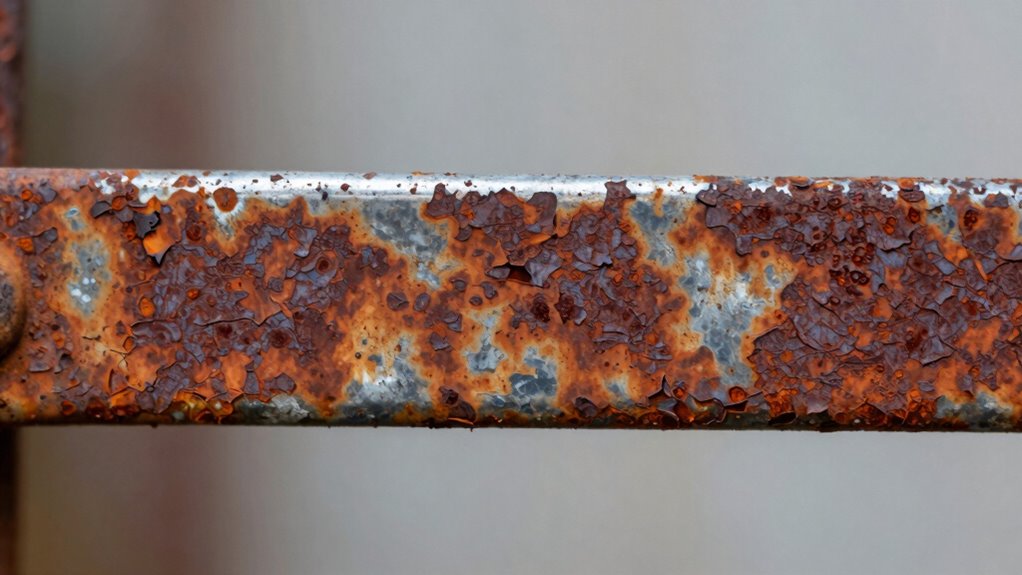

Rust in the handle area starts when moisture comes into contact with the metal, triggering the oxidation process that weakens it over time. Factors like humidity, spills, or condensation speed up rust formation, especially if the surface isn’t protected. To stop this, regularly wipe down handles, dry off any moisture, and apply protective coatings like oil or rust inhibitors. Keep your tools in dry, well-ventilated spaces to prevent future damage—discover more tips to extend their life.
Key Takeaways
- Rust starts when moisture reacts with metal handles, initiating corrosion and oxidation.
- Early signs include reddish-brown spots, discoloration, or rough texture on handles.
- Prevent rust by drying tools thoroughly and applying protective coatings like oil or rust inhibitors.
- Remove rust with gentle scrubbing and reapply protective layers immediately afterward.
- Store tools in dry, well-ventilated areas and inspect regularly to catch rust early.

Have you noticed rust forming around the handle area of your tools or appliances? That’s a common sign that moisture is slowly damaging the metal, and if left unchecked, it can weaken the integrity of your equipment. Rust begins through a process called corrosion, which happens when metal reacts with water and oxygen over time. To prevent this, you need to focus on corrosion prevention strategies and follow some simple maintenance tips to keep rust at bay.
First, understanding how rust develops helps you take proactive steps. When moisture sits on or around metal handles, it accelerates the oxidation process. Frequent exposure to humidity, spills, or even condensation can create the perfect environment for rust to start forming. The key is to eliminate or reduce these conditions as much as possible. After each use, wipe down your tools and appliances thoroughly, especially around the handle area. Drying out moisture prevents rust from taking hold and extends the lifespan of your items.
Applying protective coatings is another essential corrosion prevention measure. You can use rust-inhibiting sprays, paints, or even a thin layer of oil to create a barrier against moisture. These coatings don’t just make your tools look cleaner—they actively block the elements that cause rust. Make this part of your regular maintenance routine, especially if your tools are stored in humid environments or outdoor settings. Regularly inspecting handles for signs of rust or corrosion allows you to catch problems early, giving you the chance to treat the area before the damage spreads.
In addition to protective coatings, proper storage is vital. Keep your tools and appliances in dry, well-ventilated spaces. Hanging tools instead of stacking them can improve air circulation, helping moisture escape and preventing buildup. If you notice any early signs of rust, address them immediately. Light rust can often be removed with a gentle scrub using steel wool or a wire brush. After removing rust, reapply a protective layer of oil or paint to prevent further corrosion.
Maintaining your tools and appliances isn’t just about cleaning—it’s about establishing a routine that emphasizes corrosion prevention. Regularly check handles for rust, clean them properly, and store them in ideal conditions. Incorporate these maintenance tips into your overall care plan, and you’ll greatly reduce the chances of rust forming. The effort you put into preventive care now will save you time, money, and frustration in the long run, ensuring your tools stay functional and looking good for years to come. Additionally, using natural pools for backyard relaxation can minimize harsh chemical exposure that can also contribute to metal deterioration over time.

WD-40 Specialist Corrosion Inhibitor, Long-Lasting Anti-Rust Spray, 6.5 OZ
Coats metal parts to lubricate and protect against rust and corrosion by blocking out air and moisture. Protects…
As an affiliate, we earn on qualifying purchases.
As an affiliate, we earn on qualifying purchases.
Frequently Asked Questions
How Can I Prevent Rust From Forming in the Handle Area?
To prevent rust from forming in the handle area, regularly apply preventative coatings like paint or rust inhibitors. Keep up with handle maintenance by cleaning it thoroughly and drying it after exposure to moisture. Ensure that any scratches or chips are promptly repaired to maintain the protective layer. By staying consistent with these preventative measures, you’ll considerably reduce the chances of rust developing and extend the handle’s lifespan.
What Are the Best Tools to Remove Rust From Handles?
You should use a wire brush or steel wool to scrub off rust from handles effectively. For stubborn spots, apply a rust remover or vinegar. Once clean, consider applying rust-resistant coatings to prevent future rust. If the handle is severely corroded, explore handle replacement options for a long-term solution. These tools and treatments help maintain your handles and keep rust at bay.
Does Rust Affect the Handle’s Strength or Safety?
Yes, rust can weaken the handle’s strength and safety, especially if it penetrates the handle material. Over time, rust causes corrosion, compromising structural integrity and making handles more prone to breakage or failure. To prevent this, you should regularly apply rust prevention treatments and choose handles made from rust-resistant materials. Keeping handles dry and clean also helps maintain their strength and safety, reducing the risk of accidents.
How Long Does It Take for Rust to Cause Significant Damage?
Rust formation can cause significant damage in as little as a few months if left unchecked, depending on conditions like moisture and exposure. The corrosion timeline varies, but early rust weakens the handle’s integrity over time. You should inspect regularly and treat rust promptly to prevent long-term damage. Acting quickly halts the corrosion process, maintaining the handle’s strength and safety.
Are There Environmentally Friendly Rust Removal Options?
Yes, there are eco-friendly solutions for removing rust. You can use natural rust removers like vinegar, lemon juice, or baking soda, which are safe for the environment and effective. Simply soak the rusty area in vinegar or apply lemon juice, then scrub gently. These natural options avoid harsh chemicals, making them a great choice for eco-conscious cleaning and rust removal, ensuring safety for your surroundings.

Rust-Oleum Rust Dissolver Trigger Spray Gel | Heavy-Duty Corrosion Remover for Metal Tools, Cars, Bikes, Grills, Bolts, Firearms & More | 32 oz
TOUGHER THAN THE TOUGHEST RUST: Easy to use spray gel that clings to iron, steel and other metals…
As an affiliate, we earn on qualifying purchases.
As an affiliate, we earn on qualifying purchases.
Conclusion
So, next time you grab that tool or door handle, remember—rust begins quietly, often when you least expect it. A little moisture or a missed spot can set it in motion. But with regular care and a quick touch-up, you can stop rust before it takes hold. Funny how a tiny spot can lead to big trouble, isn’t it? Stay vigilant, and your handles will stay rust-free longer than you’d imagine.

Made Here Co. Multi-use Lubricating Penetrant Oil – High-Performance, Rust Prevention, Non-Toxic Formula, 4oz – Ideal for Home, Automotive, and Industrial Use
High-Performance Formula: Engineered for maximum efficiency, our Lubricating Penetrant Oil penetrates deeply to free stuck parts, lubricate, and…
As an affiliate, we earn on qualifying purchases.
As an affiliate, we earn on qualifying purchases.

Sheffield 12680 Marine Storage Box, Dry Box Made in USA, Waterproof Container for Boat and Dock Gear, Small Parts Organizer with Latch, Stackable
Built for Marine Use: Store and protect boat tools, dock gear, and small equipment with this dry box…
As an affiliate, we earn on qualifying purchases.
As an affiliate, we earn on qualifying purchases.