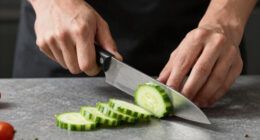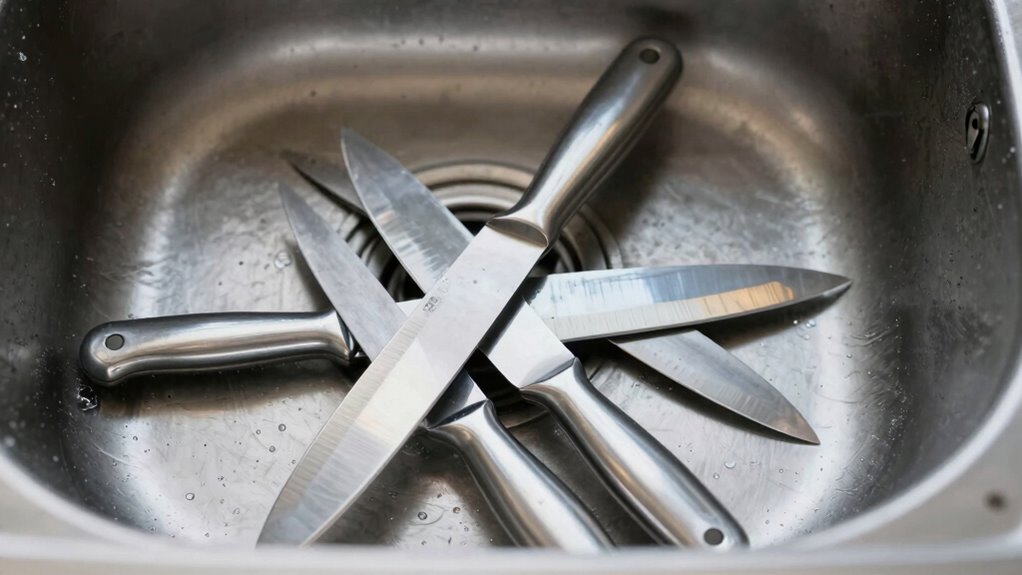
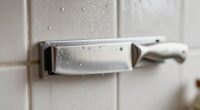
Storing knives loose in a sink is dangerous because it increases your risk of cuts, accidental injuries, and bacterial contamination. Sharp blades hidden among dishes can surprise you and cause serious harm, while moisture promotes rust and dulls the knives quickly. Plus, it creates a cluttered, unsafe environment that makes finding and handling knives more difficult. To keep your kitchen safer and cleaner, there are better storage solutions you should consider—learn more to protect yourself and your knives.
Key Takeaways
- Loose knives in the sink pose a risk of cuts and injuries to anyone reaching inside.
- They can become damaged or dulled from contact with other utensils or hard surfaces.
- Disorganized knives increase the chance of mishandling during cleaning or retrieval.
- Storing knives improperly can lead to bacterial growth and cross-contamination.
- Using designated storage solutions like knife blocks or magnetic strips keeps knives safe and organized.
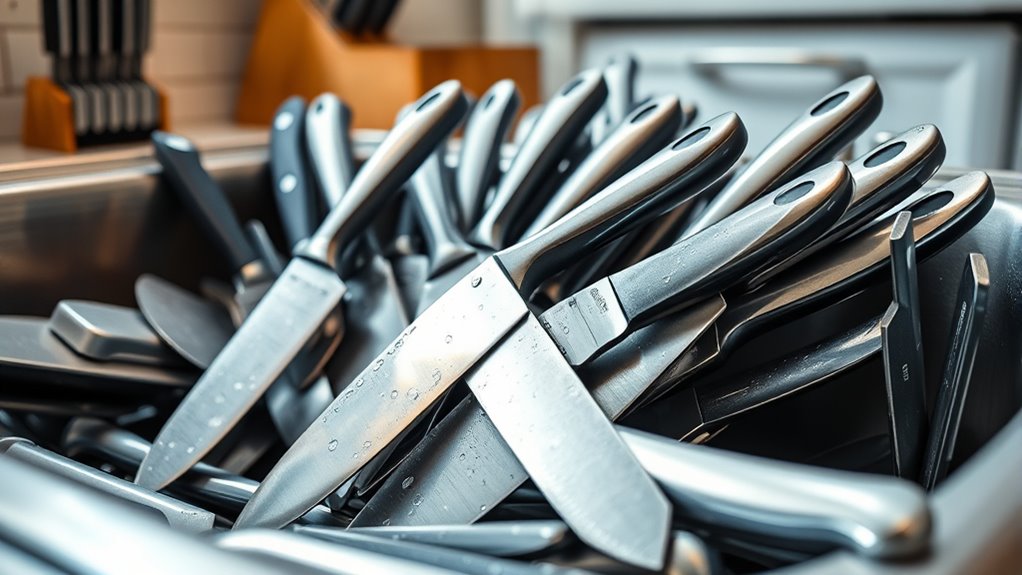
Storing knives in a sink might seem like a convenient solution, but it can pose serious safety risks and damage your utensils. When you toss knives loose into the sink, you’re creating a hazard not only for yourself but also for anyone else in your household. Sharp blades hidden among dishes or cleaning supplies can easily cause cuts if you reach into the sink carelessly. This practice also undermines proper knife safety, increasing the likelihood of accidents. Beyond safety concerns, storing knives loosely in the sink can lead to dull blades or nicks, as they come into contact with other utensils or hard surfaces during washing or storage. Frequent exposure to water and debris accelerates corrosion, shortening the lifespan of your knives.
Storing knives in the sink risks safety and damages your utensils.
Sink organization becomes chaotic when knives are scattered randomly. Instead of a neat, accessible arrangement, you end up with a cluttered mess that makes finding the right knife difficult and increases the risk of mishandling. If you’re trying to prepare a meal quickly, rummaging through a sink full of utensils can be frustrating and unsafe. Plus, a disorganized sink can harbor bacteria, especially if knives are left in standing water or mixed with food scraps. This creates a breeding ground for germs, compromising hygiene and potentially leading to cross-contamination. Proper sink organization is essential for maintaining a safe and hygienic kitchen environment.
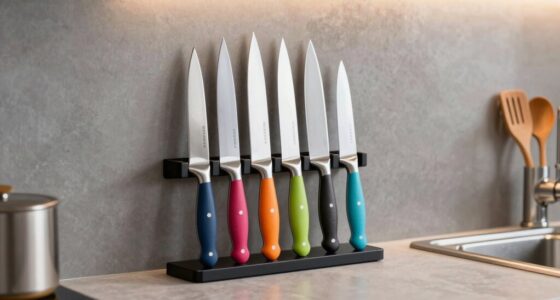
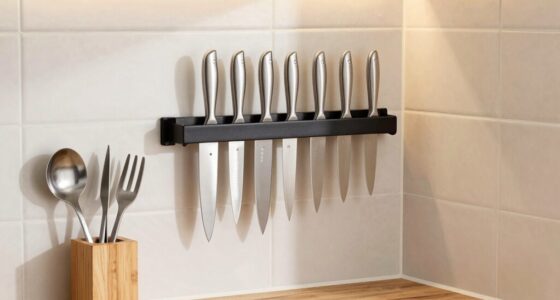
To improve knife safety and sink organization, you should avoid storing knives loose in the sink altogether. Instead, consider dedicated storage options like knife blocks, magnetic strips, or drawer inserts. These solutions keep your knives secure, easily accessible, and protected from unnecessary damage. If you prefer washing your knives immediately after use, dry and store them properly—either in a knife block or on a magnetic strip—rather than leaving them in the sink. This not only preserves the sharpness of your blades but also reduces clutter and safety hazards.
Implementing proper storage strategies ensures your knives stay sharp and safe to use. It also makes your kitchen look tidier and reduces the chance of accidents. Remember, good sink organization isn’t just about aesthetics; it’s about creating a safe environment that promotes proper knife safety practices. By taking a few extra moments to store your knives correctly, you protect yourself and prolong the life of your utensils. Disorganized sinks with loose knives are a recipe for disaster—choose safer, smarter storage options to keep your kitchen both functional and safe.

Knife Block Without Knives, Cookit Universal Round Knife Block Only, Detachable Knife Holder for Easy Cleaning, Space Saver Knife Storage Holder with Scissors Slot, Black
🔪【UNIVERSAL ROUND KNIFE BLOCK】- Cookit round knife block made of premium PP material, Secure slots hold space for…
As an affiliate, we earn on qualifying purchases.
As an affiliate, we earn on qualifying purchases.
Frequently Asked Questions
Can Storing Knives in a Sink Cause Damage to the Blades?
Storing knives in a sink can definitely cause damage to the blades, leading to blade corrosion over time. The constant exposure to moisture accelerates rust formation, and if the knives are loose, they can bump against other utensils, dulling or chipping the blades. Additionally, handles may suffer damage from moisture and impact, making your knives less safe and effective. Always store knives properly to protect both blades and handles.
Are There Specific Types of Knives Safer to Store in a Sink?
Some knives, like those with stainless steel blades or ceramic tips, are safer to store in a sink, especially if you have a sturdy, non-porous sink made of porcelain or composite material. Avoid storing high-carbon steel or fragile blades in sinks with sharp edges or abrasive surfaces, as they can get damaged. Always opt for a knife holder or magnetic strip to keep your knives safe and in good condition.
How Often Should I Replace My Knife Storage Methods?
You should review your knife storage methods at least once a year. Think of it like updating your safety compliance—regular maintenance keeps everything sharp and secure. I once ignored this, and a loose knife slipped, causing a near accident. Regularly inspecting and replacing your storage solutions guarantees safety and keeps your knives in top condition. Staying proactive prevents mishaps and aligns with best safety practices, making your kitchen a safer place.
What Are the Legal Safety Regulations Regarding Knife Storage?
You must follow local laws and regulations regarding knife safety and legal compliance, which often require storing knives securely to prevent accidents. This typically means using designated knife blocks, magnetic strips, or sheaths. By adhering to these rules, you reduce injury risks and ensure legal safety standards are maintained. Always check your jurisdiction’s specific requirements, as rules can vary, to keep yourself and others protected.
Does Storing Knives in a Sink Affect Their Sharpness Over Time?
Storing knives in a sink can cause blade dullness and rust formation over time. When blades are exposed to moisture, they lose their sharpness faster, making cutting less efficient. Rust can develop if water remains on the blade, damaging the metal. To prevent this, always dry knives thoroughly before storing them in a knife block or on a magnetic strip, keeping them sharp and rust-free for longer.

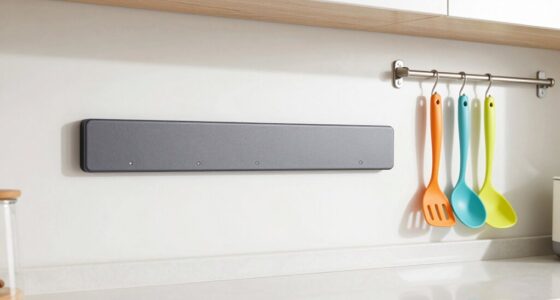
Modern Innovations 16 Inch Stainless Steel Magnetic Knife Bar with Multi-Purpose Functionality as a Knife Holder, Knife Strip, Magnetic Tool Organizer, Art Supply Organizer & Home Organizer
★Powerful Magnetic Knife Bar: This modern magnetic knife bar is made from strong magnets and covered in elegant,…
As an affiliate, we earn on qualifying purchases.
As an affiliate, we earn on qualifying purchases.
Conclusion
Storing knives loose in a sink might seem convenient, but it’s a recipe for accidents and damage. Instead, think of a knife block or magnetic strip—tools that protect both your fingers and blades. It’s like choosing safety over chaos, order over clutter. When you handle your knives with care, you’re not just preventing cuts; you’re respecting your tools and your own well-being. A simple switch makes all the difference, transforming danger into peace of mind.
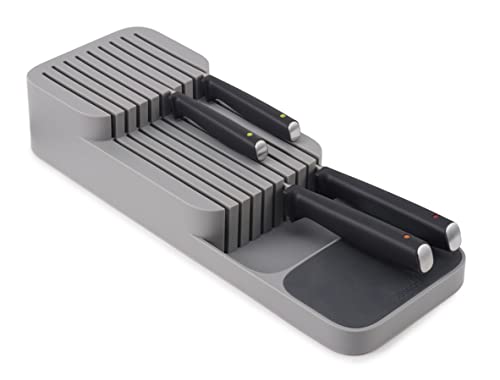
Joseph Joseph DrawerStore Knife Organizer, holds up to 9 knives, Kitchen Organization & Drawer Storage – Compact, Gray
Safe, organized storage for up to 9 knives. Non-slip feet.
As an affiliate, we earn on qualifying purchases.
As an affiliate, we earn on qualifying purchases.

Upgraded Lockable Large Bamboo Knife Storage Box with Magnetic Removable Knife Blocks for Easy, Quick and Safe Culinary Tools Storage, Keyless Kitchen Combination Lock Box, Great Kitchen Gifts
☘Upgraded Knife Lock Box–Keep your family safe with our newly upgraded keyless knife lock box, designed to prevent…
As an affiliate, we earn on qualifying purchases.
As an affiliate, we earn on qualifying purchases.