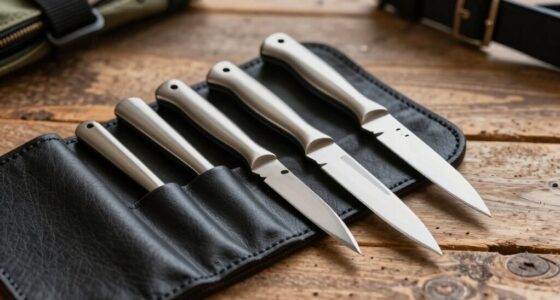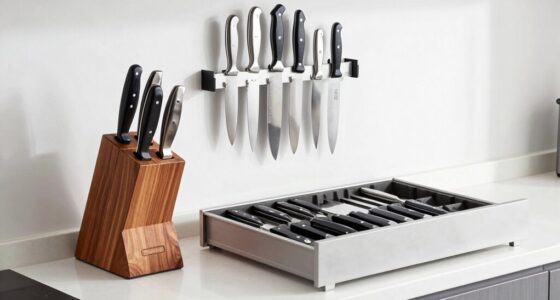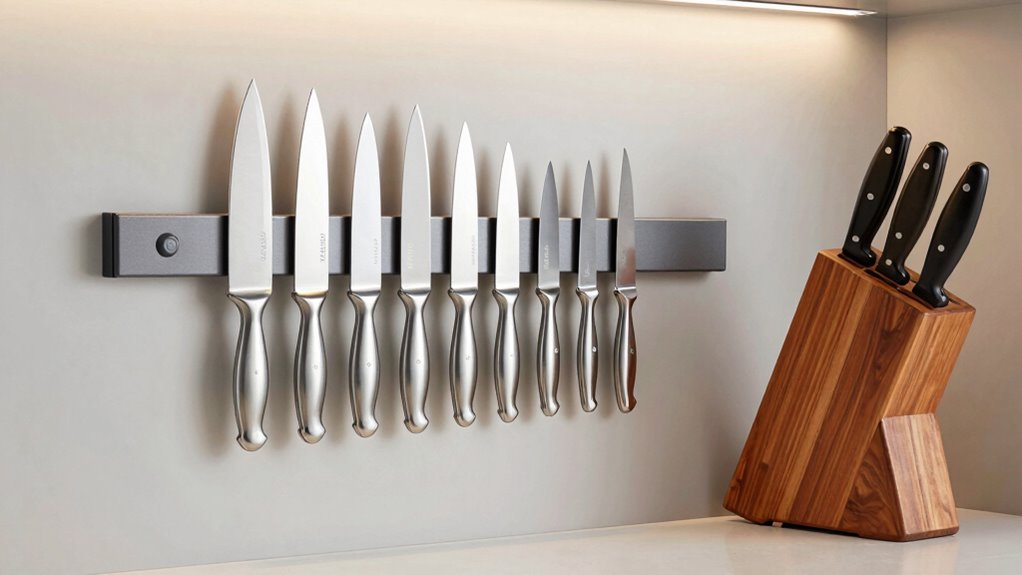
Choosing between magnetic strips and knife blocks depends on your space, safety, and knife care. Magnetic strips save counter space, protect blades from dulling, and make knives easy to access and organize visually, but might pose a slight risk if not installed properly. Knife blocks look elegant and protect blades but take up more space and can dull edges or trap grime. To find out which suits your needs best, explore more about their pros, cons, and edge safety tips.
Key Takeaways
- Magnetic strips save space, provide easy access, and reduce blade wear, but may pose a safety risk if magnets are too strong.
- Knife blocks protect blades and look traditional but can dull knives faster and harbor dirt or mold with improper maintenance.
- Magnetic strips are more hygienic and easier to clean, while wooden blocks require regular cleaning and sealing to prevent grime buildup.
- Accessing knives on magnetic strips is faster and safer, especially for quick meal prep, compared to rummaging through knife blocks.
- Magnetic strips are cost-effective, durable, and modern, whereas knife blocks often involve higher costs and potential long-term damage.
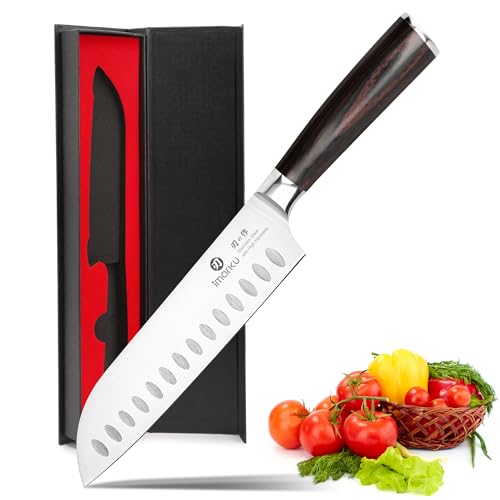
imarku Chef Knife 7 Inch Kitchen Knife Ultra Sharp Santoku Knife - High Carbon Japanese Chefs Knife, Kitchen Gadgets 2025, Apartment Essentials, Birthday Gifts for Him Her, Best Gifts for Women Men
Professional Santoku Knife: This imarku super sharp santoku knife is made of high carbon stainless steel that resists...
As an affiliate, we earn on qualifying purchases.
Space Efficiency and Kitchen Layout Considerations
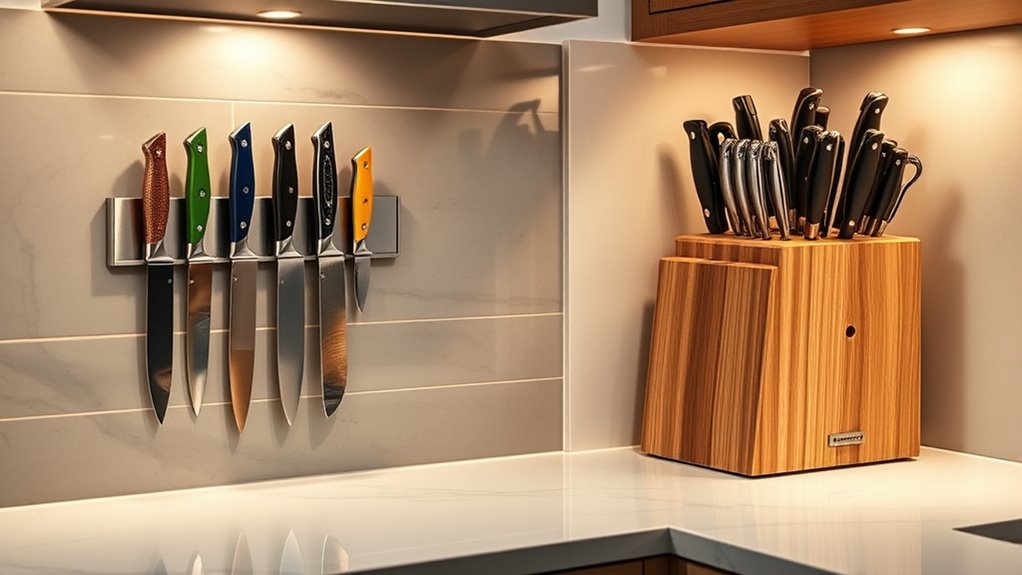
When optimizing your kitchen layout, choosing between magnetic strips and knife blocks depends heavily on space efficiency. Magnetic strips don’t take up counter space; you mount them on walls or cabinets, freeing up valuable surface area—perfect for small kitchens. Knife blocks, however, require 6 to 10 inches of counter width, which can create clutter, especially in compact spaces. Vertical knife blocks occupy a fixed footprint, but they still add to countertop congestion. If you’re tight on space, magnetic strips offer a sleek, unobtrusive solution that keeps your knives accessible without sacrificing workspace. Additionally, space-saving solutions like magnetic strips align with energy-efficient and sustainable kitchen designs, making them a smart choice for modern eco-conscious homes. With advances in kitchen organization, magnetic strips are increasingly popular for maintaining both safety and efficiency. Incorporating ergonomic design principles can further enhance your kitchen’s functionality and comfort. Exploring modular storage options can also help optimize overall kitchen layout and usability.

HOSHANHO Kitchen Knife in Japanese High Carbon Steel, Professional High-Class Chef's Knife 8 inch, Non-slip Ultra Sharp Cooking Knives with Ergonomic Handle
【High-End Japanese Steel Chef's Knife】 HOSHANHO chef's knife is made of Japanese high carbon steel 10Cr15CoMoV, 2x of...
As an affiliate, we earn on qualifying purchases.
Edge Preservation and Blade Wear Risks
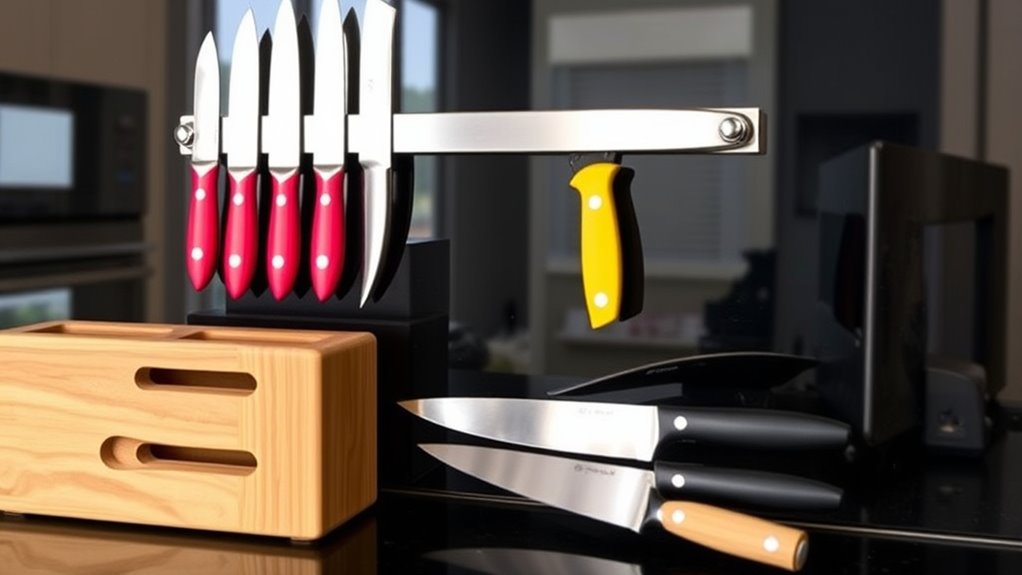
Magnetic strips tend to cause less blade wear because they minimize friction and contact with hard surfaces, helping your knives stay sharp longer—just handle them gently when placing or removing blades. Since there’s no rubbing against wood or plastic, the blades don’t dull as quickly from constant contact. However, if you slide a blade roughly or drop it onto the strip, chips or nicks can occur, risking damage to the edge. In contrast, knife blocks, especially those with hard or abrasive surfaces, can cause gradual edge dulling through repeated contact, especially if you don’t handle knives carefully. Soft or horizontal blocks reduce wear, but constant contact with hard surfaces can still dull blades over time. Proper handling and choosing the right storage option are key to preserving your knives’ sharpness and preventing unnecessary edge damage. Additionally, using appropriate storage methods can further extend the lifespan of your blades and maintain their cutting performance. Regularly inspecting and cleaning your storage solutions also reduces debris buildup, which can contribute to blade dulling and damage. To further protect your edges, consider blade maintenance practices that help keep your knives in optimal condition. Incorporating proper handling techniques can significantly minimize the risk of accidental edge damage during daily use, and understanding edge preservation principles can help you choose the best storage for your needs.

Japanese Chef Knife, 8 Inch Damascus Kitchen Knife with VG10 Steel, Handcrafted Sharp Knife with Ergonomic Handle, Cooking Knives for Home Chefs, Cooking Gifts for Men and Women
【Premium Damascus Chef Knife with VG-10 Steel Core】Our Japanese knives feature a VG-10 steel core (60 HRC) for...
As an affiliate, we earn on qualifying purchases.
Cleanliness and Maintenance Challenges
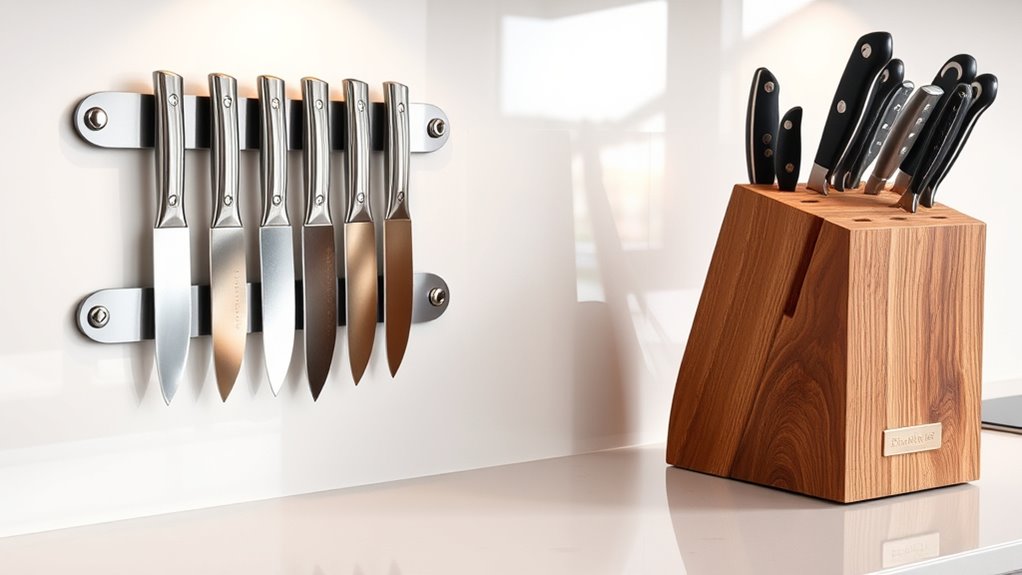
Magnetic strips make it easy to spot grime and wipe down blades, but they can also trap bacteria if not cleaned regularly. Knife blocks, especially wooden ones, can harbor mold and mold spores due to trapped moisture and crumbs, making sanitation more challenging. Regular maintenance is necessary for both, but neglecting cleaning can lead to unpleasant buildup and potential health risks. Additionally, understanding cleaning appliances can help you choose the best method to maintain your knife storage system effectively. Recognizing the importance of hygienic practices ensures that your kitchen remains safe and free from harmful contaminants. Incorporating sound healing science into your routine can promote overall well-being and reduce kitchen-related stress. Maintaining proper sanitation routines aligns with lifestyle for longevity, supporting overall health and wellness. Being aware of proper cleaning techniques can further enhance sanitation efforts and prolong the lifespan of your knife storage solutions.
Bacteria and Mold Buildup
Since knives are frequently used tools that can harbor bacteria and mold, the way you store them remarkably affects cleanliness. Magnetic strips keep blades exposed, making it easier to spot and wipe away grime regularly, reducing bacterial buildup. In contrast, knife blocks—especially wooden ones—trap moisture, crumbs, and food particles, creating a breeding ground for bacteria and mold if not cleaned properly. Wooden blocks absorb moisture and can develop mold or warping over time, requiring frequent cleaning and drying. Plastic or composite blocks may resist mold but can still harbor bacteria in scratches or crevices. Regular maintenance, like washing and drying, is essential regardless of the storage type, but magnetic strips generally pose fewer challenges since they’re easier to clean and less likely to trap dirt or mold. Additionally, choosing appropriate cleaning tools can make it easier to maintain hygiene and extend the lifespan of your knife storage. Proper cleaning and maintenance routines are crucial to prevent the growth of bacteria and mold regardless of the storage method. Implementing hygienic storage practices can further minimize health risks associated with contaminated knife storage. Regularly inspecting and replacing worn or damaged storage components can also help reduce bacterial and mold buildup. Incorporating effective drying techniques can further inhibit mold growth by preventing moisture accumulation on stored blades.
Difficult Cleaning Access
Cleaning and maintaining knife storage can be challenging, especially with traditional blocks that trap debris and moisture. Food particles and liquids can seep into the gaps between the blades and the block’s crevices, making it hard to fully clean. Wooden blocks, in particular, absorb moisture and can develop mold or warping if not regularly dried and sanitized. Some blocks have deep slots that are difficult to reach with brushes or sponges, leaving behind grime and bacteria. Even plastic or composite blocks can accumulate crumbs and sticky residue in their narrow compartments. This buildup not only hampers hygiene but also makes it harder to inspect your knives for damage or dirt. Proper cleaning techniques and materials are essential to maintain hygienic conditions, especially in areas prone to microbial growth. Using specialized cleaning tools like interdental brushes can help reach into tight spaces and ensure thorough sanitation. Additionally, choosing materials with antimicrobial properties can help reduce bacterial growth on knife storage units. Overall, traditional knife blocks demand more effort and careful cleaning to keep them sanitary. Additionally, improper cleaning can lead to hygiene issues, increasing the risk of bacterial growth on your knives and in the storage area. Poor maintenance practices can also cause tool damage over time, as residues may corrode or dull the blades.
Maintenance Frequency Needed
Traditional knife blocks require frequent maintenance to stay sanitary, as food particles, moisture, and debris easily get trapped in their narrow slots and crevices. You need to regularly remove knives and clean inside to prevent mold, bacteria, or odors. Wooden blocks, in particular, demand more care, needing occasional sanding or sealing to prevent warping and grime buildup. Plastic blocks can scratch and roughen with use, making cleaning harder over time. In contrast, magnetic strips are low-maintenance; simply wipe down with a damp cloth to remove dust and fingerprints, keeping blades visible and hygienic. Overall, knife blocks need more frequent attention and careful cleaning, while magnetic strips require minimal upkeep, making them more convenient for busy kitchens. Additionally, understanding the AI Ethicist Jobs and their role in shaping safe AI practices can help ensure that kitchen technology and safety standards evolve responsibly. Proper kitchen safety standards are essential to prevent accidents and maintain hygiene in the culinary environment. For example, selecting easy-to-clean materials can further simplify ongoing maintenance efforts. Well-designed kitchen ergonomics also contribute to safer and more efficient food preparation.

kanngou Japanese Chef Knife Kitchen Knife with 67 Layers Damascus Steel AUS-10 Core, Professional Damascus Knife with Full-Tang Ebony Wood Handle and Premium Gift Box (8.27 Inch Gyuto Chef Knife)
Japanese 67 Layers Damascus Steel: Every blade of this damascus chef knife is made of 67 layers damascus...
As an affiliate, we earn on qualifying purchases.
Accessibility and User Convenience
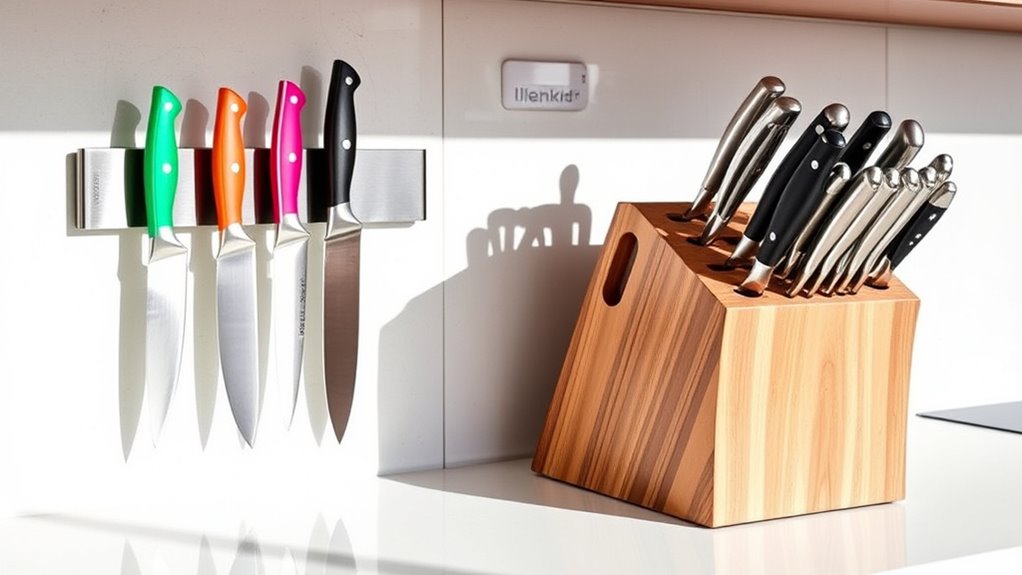
Magnetic strips let you quickly spot and grab the right knife, making cooking faster and more efficient. Knife blocks organize your blades for easy access, especially during busy mealtimes. Both options improve handling, but your choice depends on how you prefer to retrieve your tools effortlessly.
Quick Visual Selection
When it comes to quick visual selection, magnetic strips excel by allowing you to see all your knives at a glance and grab the right one instantly. You can quickly identify the blade you need without rummaging through a block. This setup enhances efficiency and keeps you focused during busy cooking sessions. To maximize this benefit:
- You get a clear view of all your knives, reducing search time.
- You can easily compare sizes and types before grabbing.
- Quick access minimizes the risk of accidents from fumbling.
- It’s simple to replace or rearrange knives for ideal organization.
This visual clarity makes magnetic strips a user-friendly choice, especially when speed and accessibility matter most. It’s a straightforward way to streamline your kitchen workflow without sacrificing safety or convenience.
Ease of Retrieval
Because they keep knives within easy reach and visible at a glance, magnetic strips make retrieval quick and effortless. You can simply grab the knife you need without rummaging through drawers or opening cabinets. The open display allows you to see all your knives at once, making selection faster, especially during busy cooking moments. Magnetic strips also provide a firm grip, so you don’t have to worry about knives slipping or falling when you pull them out. This setup is particularly convenient for frequent use, as you can swiftly access the right blade without disrupting your workflow. Overall, magnetic strips enhance user convenience by offering straightforward, rapid access while keeping your knives organized and on display.
Handling in Busy Kitchens
In busy kitchens, quick and reliable access to knives is essential for maintaining a smooth workflow. Magnetic strips excel here by offering:
- Immediate visual identification, so you grab the right knife without searching.
- Easy, one-handed retrieval, speeding up meal prep.
- Clear organization, reducing clutter and confusion.
- Minimal effort to replace knives, keeping your workflow uninterrupted.
Knife blocks, on the other hand, organize knives neatly but can slow you down with:
- Limited space, requiring more movement to find and remove knives.
- Risk of knocking over or bumping the block during hectic times.
- Difficulties in accessing specific knives quickly.
- Potential for finger accidents while retrieving or replacing blades.
Durability and Long-Term Use Factors
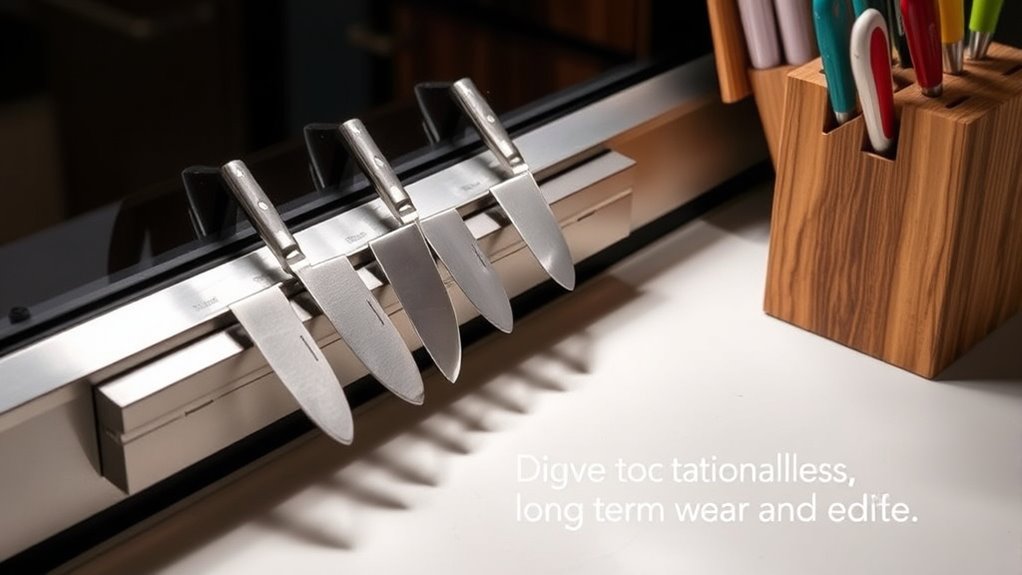
Durability and long-term use are essential factors to contemplate when choosing between magnetic strips and knife blocks. Magnetic strips made of stainless steel with strong neodymium magnets tend to resist breaking and maintain their hold over time. In contrast, wooden or plastic knife blocks may groove, splinter, warp, or crack after prolonged use. Here’s a quick comparison:
| Feature | Magnetic Strips | Knife Blocks |
|---|---|---|
| Material | Stainless steel, magnets | Wood, plastic, sometimes metal |
| Wear & Tear | Minimal, corrosion-resistant | Grooves, splinters, warping |
| Long-Term Strength | Maintains magnet strength over years | Risk of damage, moisture issues |
Choosing a resilient strip ensures your knives stay secure and safe for years.
Aesthetic Appeal and Safety Aspects
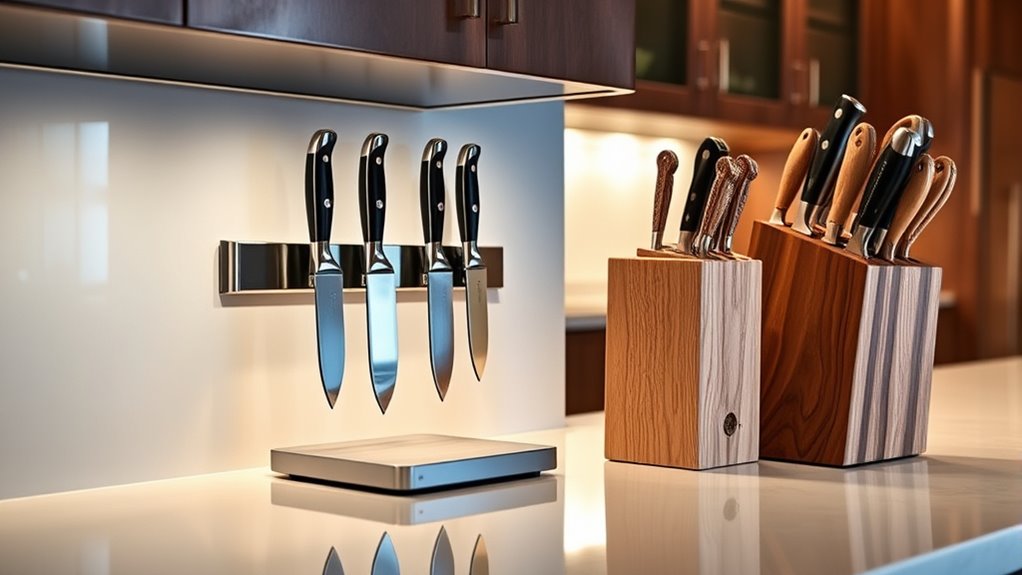
Aesthetic appeal and safety are key considerations when choosing between magnetic strips and knife blocks. Magnetic strips provide a sleek, minimalist wall display that can modernize your kitchen. In contrast, knife blocks add a traditional, elegant look, especially in wood or steel finishes. Consider these points:
- Magnetic strips keep knives visible, making selection quick and easy.
- Knife blocks can prevent accidental cuts by covering blades safely.
- Strips can fall if magnets are weak, risking damage or injury.
- Blocks protect blades from exposure, reducing chips and scratches.
While strips offer a clean, space-saving solution, they require secure mounting. Blocks add style but may harbor grime if not maintained. Your choice impacts both visual appeal and safety in your kitchen.
Cost-Effectiveness and Practicality

Magnetic strips often cost less upfront and require fewer materials, making them a budget-friendly choice for many households. They’re easy to install and don’t need extra space, which saves you money on counter or drawer modifications. Knife blocks can be pricey, especially high-quality wooden or magnetic models, and they take up counter space that could be used for other tasks. To compare, see the table below:
| Feature | Magnetic Strips | Knife Blocks |
|---|---|---|
| Cost | Lower initial cost | Higher initial investment |
| Space Usage | Wall-mounted, saves counter space | Takes up counter area |
| Maintenance | Easy to clean, minimal upkeep | Requires regular cleaning |
| Edge Safety | Less friction, preserves sharpness | Cushioning reduces wear |
Choose based on your budget and space needs.
Frequently Asked Questions
Which Option Is Safer for Children or Pets in the Kitchen?
You’re safer with magnetic strips because they keep knives mounted high on the wall, out of children and pets’ reach. They eliminate the risk of grabbing a sharp, loose knife. Knife blocks can be more dangerous if children or pets access the countertop, especially with exposed blades. To maximize safety, confirm the magnetic strip is securely mounted and out of easy reach, and always supervise kids in the kitchen.
How Do Magnetic Strips Affect Knife Storage in Humid Environments?
In humid environments, magnetic strips can be affected because moisture may cause rust or weaken the magnets over time. You should regularly dry the blades and the strip to prevent corrosion. Using a quality stainless steel strip with moisture-resistant coatings helps maintain its effectiveness. Avoid placing strips directly in damp areas, and consider adding silica gel packs nearby to absorb excess moisture, ensuring your knives stay safe and in good condition.
Can Magnetic Strips Hold Larger or Specialty Knives Securely?
Yes, magnetic strips can hold larger or specialty knives securely if you choose heavy-duty magnets designed for extra strength. Make certain the magnets are strong enough to support the weight without slipping. Proper mounting on sturdy wall surfaces also helps prevent accidents. Regularly check the magnets’ grip, and avoid overcrowding, so each knife stays firmly in place, keeping your collection safe and accessible.
Are There Environmental Impacts Between Choosing Wood Blocks or Magnetic Strips?
Switch to magnetic strips, and you’ll save more trees than you can imagine—really, it’s like halting deforestation in your kitchen! Wooden blocks require harvesting, processing, and disposal, which impacts ecosystems. Magnetic strips, on the other hand, reuse existing materials and produce less waste. By choosing strips, you’re making an eco-friendly statement, reducing your carbon footprint, and protecting the environment far better than wooden blocks ever could.
How Do Magnetic Strips Impact Kitchen Aesthetics With Modern Decor?
Magnetic strips enhance your modern kitchen’s aesthetics with a sleek, minimalist look. They create a clean, uncluttered wall display that complements contemporary decor styles. Their stainless steel finish adds a touch of industrial chic, while the open design showcases your knives as functional art. Plus, by freeing up counter space, they contribute to an airy, organized environment, making your kitchen feel more spacious and stylish.
Conclusion
Choosing between magnetic strips and knife blocks is like picking between a sleek dance partner and a sturdy workhorse. Magnetic strips glide seamlessly into your kitchen rhythm, saving space and adding modern flair, while knife blocks offer a cozy, traditional charm. Weigh the risks and rewards, and pick what fits your style and needs. Whichever you choose, make sure it’s a tool that keeps your culinary symphony safe, sharp, and beautifully orchestrated every time you cook.