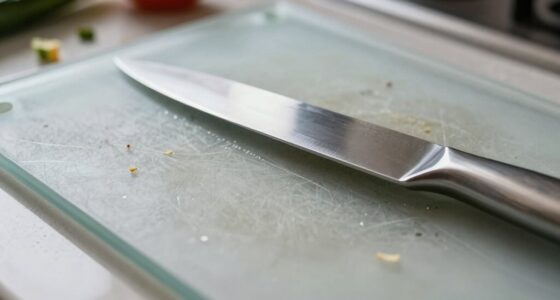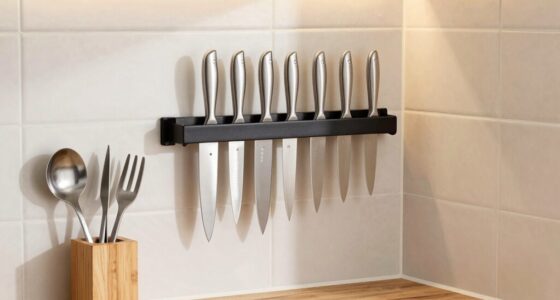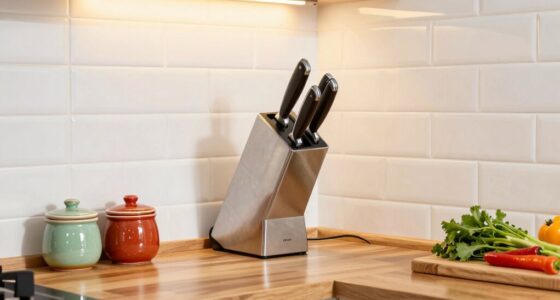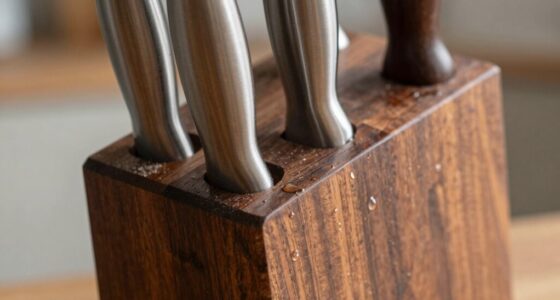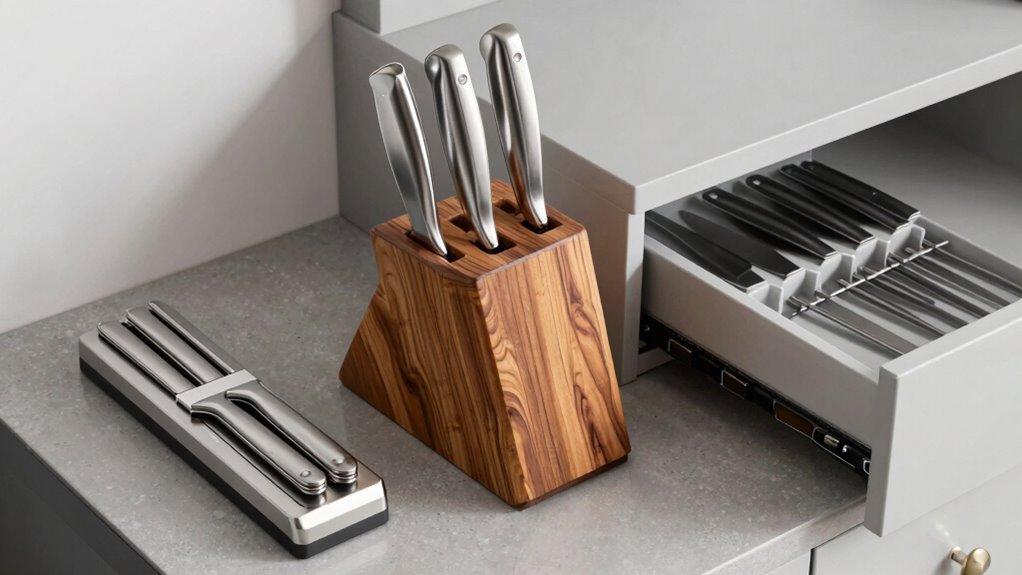

When choosing between a magnetic strip, knife block, or drawer for knife storage, consider how each protects your blades. Magnetic strips keep knives accessible yet gentle if properly chosen, but weak magnets may dull blades over time. Knife blocks offer safety and organization but can cause scratches or dull edges if slots aren’t smooth or properly maintained. Drawer storage provides protection from damage but needs inserts or padding to prevent edge nicks. To learn more about which option suits your needs best, keep exploring these tips.
Key Takeaways
- Magnetic strips hold knives securely, reducing handling damage, but may dull blades if not properly maintained.
- Knife blocks protect edges with smooth slots but can cause dulling or corrosion if moisture is trapped.
- Drawers with padded or lined inserts prevent blade contact, minimizing dulling and chipping for edge preservation.
- Magnetic strips offer quick access and space-saving benefits, while drawers provide concealed, organized storage.
- Proper storage choice depends on kitchen space, safety needs, and blade maintenance considerations to best protect edges.
The Benefits and Drawbacks of Magnetic Strips

Have you considered how magnetic strips can simplify your kitchen organization? Their magnetic strength keeps knives securely in place, reducing the risk of accidents. They’re easy to install, often attaching with screws or adhesive strips, so you can set them up quickly. Magnetic strips save space by freeing up drawer or counter area, making your kitchen more efficient. Plus, they allow easy access to your knives, saving time when cooking. Additionally, choosing the right knives storage method can help preserve blade sharpness and extend their lifespan. Proper knife maintenance is essential for ensuring blades stay sharp and safe to use over time. Despite these benefits, some drawbacks include the potential for magnets to dull blades over time, especially if they’re not strong enough. Additionally, magnetic strips may not hold very heavy or larger knives securely. Moreover, selecting a magnetic strip with appropriate strength and material can prevent potential damage to your blades while maintaining safety. To further protect your blades, using a magnetic strip with a soft backing can further prevent scratching and dulling of your knives.
Advantages and Disadvantages of Knife Blocks
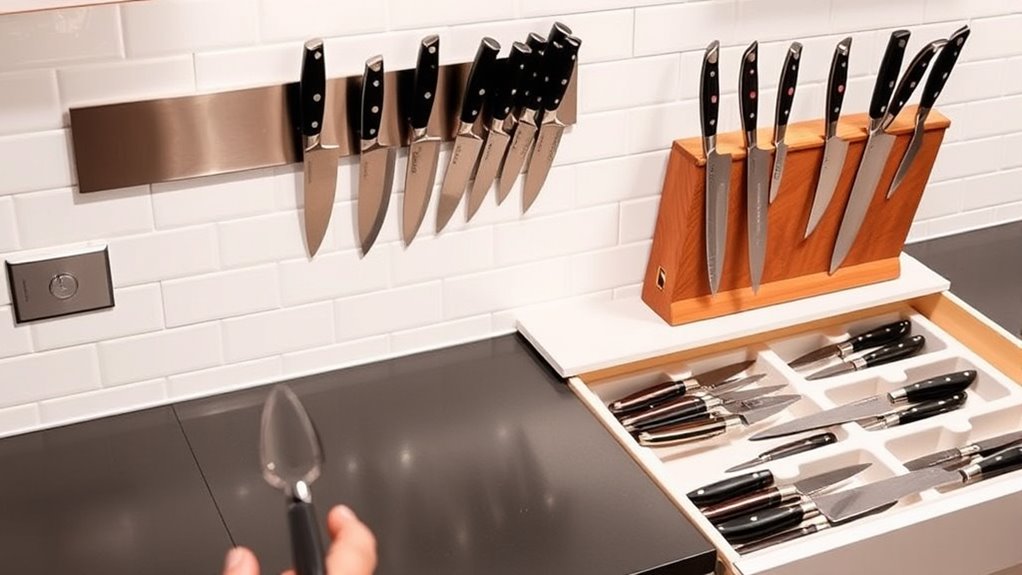
Knife blocks offer enhanced safety by keeping blades covered and organized, but they can also pose a risk of blade damage if not handled carefully. Their limited storage capacity means you might not fit all your knives in one place, requiring extra space or alternative solutions. Understanding these pros and cons helps you decide if a knife block suits your kitchen needs. Additionally, proper storage practices can extend the lifespan of your knives and ensure safety during use. Using a quality knife storage system can also help maintain the sharpness and integrity of your blades over time. Incorporating proper organization techniques can further optimize your kitchen space and protect your investment in quality cutlery. For example, selecting a knife organization method that accommodates your specific collection can enhance both safety and accessibility.
Enhanced Safety Features
While knife blocks are designed to keep blades organized, they also offer enhanced safety features that can prevent accidents in your kitchen. By securely holding knives upright, they reduce the risk of accidental cuts when reaching for a knife. This setup also improves child safety, as knives are stored out of children’s reach, minimizing the chance of curious little hands grabbing a sharp blade. Additionally, using a knife block helps reduce countertop clutter, creating a safer, more orderly workspace. Regularly cleaning and inspecting the block maintains its safety features. Moreover, market reputation plays a role in choosing a quality knife block, as trusted brands are more likely to provide durable and safe products. Proper storage practices further enhance safety by ensuring knives are kept securely and correctly after each use. Proper knife organization also contributes to safety by allowing quick and easy access, reducing the likelihood of accidents caused by searching or mishandling blades. An organized storage system can also facilitate edge protection, preventing unnecessary dulling or damage to the blades. Additionally, incorporating safety features like slots with anti-slip bases can further prevent slips and accidents during use. Overall, knife blocks provide a practical solution for safe storage, especially in busy kitchens where quick access and safety are priorities.
Risk of Blade Damage
Although knife blocks offer convenient storage, they can pose a risk of blade damage over time. Constant contact with the wooden slots can cause blades to dull or develop blade corrosion, especially if moisture gets trapped. Improper insertion or removal may also bend or chip delicate edges. Additionally, if you leave the knife block on your countertop, it can contribute to countertop clutter, making your workspace less organized and increasing the chance of accidental damage. Overfilled or poorly maintained blocks can lead to blades rubbing against each other, further risking edge dulling or chipping. To minimize these risks, guarantee blades are dry before storing and periodically clean the slots. Regular inspection and maintenance of your knife storage can help prevent issues and preserve blade quality. Proper storage techniques can help preserve your knives’ edges and extend their lifespan. Implementing knives maintenance habits, such as honing and proper cleaning, also plays a vital role in maintaining blade sharpness over time. Additionally, choosing a storage method that minimizes blade contact with abrasive surfaces can significantly improve edge preservation efforts. Remember that choosing the right storage method can also impact your knife edge preservation efforts.
Limited Storage Capacity
Despite their advantages, knife blocks often have limited storage capacity, which can pose challenges for busy kitchens. If you own many knives or specialty blades, a small block can lead to counter clutter and make organization difficult. You might find yourself constantly rearranging or stacking knives, reducing aesthetic appeal. Here’s a quick visualization:
| Knife Block Capacity | Typical Items Stored |
|---|---|
| Small | 4-6 basic knives |
| Medium | 8-10 assorted knives |
| Large | 12+ knives, specialty blades |
| Extra-Large | Multiple blocks, accessories |
This limited space can force you to choose which knives to keep out, impacting efficiency and aesthetics. If counter clutter is a concern, consider your storage needs carefully. Additionally, understanding device vulnerabilities can help in selecting safer kitchen storage solutions that prevent potential security issues. Proper knife storage also helps preserve the edges of your blades, preventing dullness and enhancing longevity. Furthermore, selecting a knife storage solution that accommodates future growth can save time and money in the long run. Proper storage not only maintains blade sharpness but also minimizes the risk of accidental cuts, thereby improving overall kitchen safety.
Protecting Edges: Drawer Storage Considerations

When storing knives in a drawer, protecting their edges is essential to maintain sharpness and prevent damage. Improper storage can lead to dull blades and messy countertops, impacting both aesthetics and cleaning ease. To safeguard your knives, consider these tips:
Protect knife edges by proper drawer storage—use inserts, keep blades separated, and maintain cleanliness for sharp, safe knives.
- Use dedicated knife trays or inserts to prevent blades from knocking against each other.
- Avoid tossing knives loosely, which can cause nicks and dull edges.
- Keep knives separated to reduce cleaning challenges caused by stuck-on debris.
- Opt for padded or silicone-lined drawers to cushion blades and minimize edge wear.
- Regularly clean the drawer interior to maintain countertop aesthetics and prevent grime buildup.
- Incorporate proper storage solutions to further prevent edge damage and protect knife edges, enhancing overall kitchen safety.
These considerations help keep your knives sharp, your kitchen tidy, and cleaning simple. Proper drawer storage is a key factor in protecting edges and maintaining overall kitchen efficiency.
Impact of Storage Methods on Knife Longevity and Sharpness
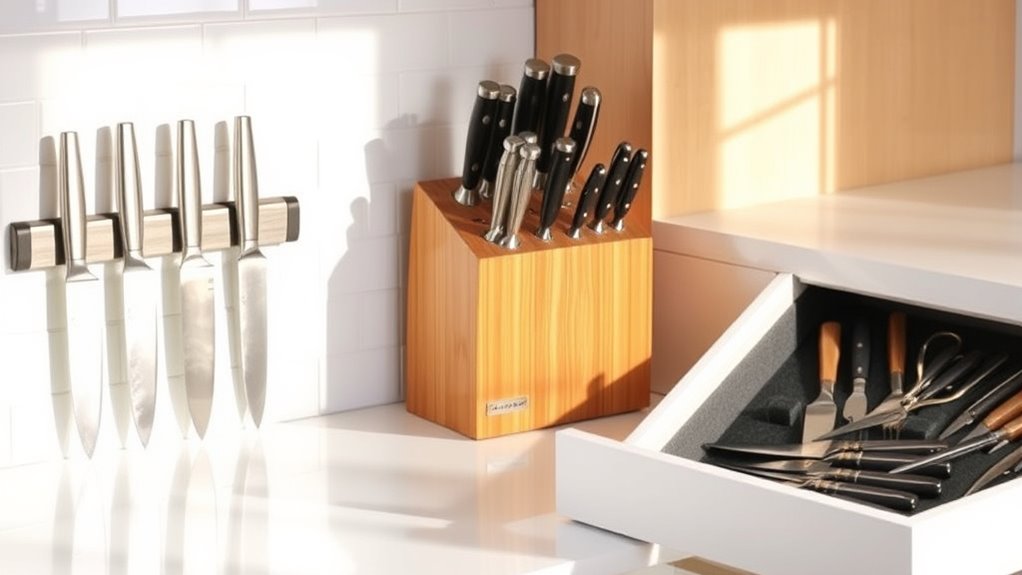
The way you store your knives directly influences their longevity and sharpness over time. If you choose storage options with material compatibility in mind, you prevent corrosion and damage, keeping blades in top condition. For example, magnetic strips made of stainless steel are gentle on blades, reducing dulling risks, while wood knife blocks with smooth slots support edges without scratching. Drawer storage, when lined with protective inserts, minimizes contact and friction, helping blades stay sharper longer. Aesthetic appeal also plays a role; a sleek magnetic strip or a well-designed knife block can complement your kitchen decor, encouraging proper storage habits. Ultimately, selecting a method that balances material compatibility and aesthetic appeal ensures your knives remain sharp, functional, and visually pleasing over time.
Safety and Accessibility in Different Storage Options
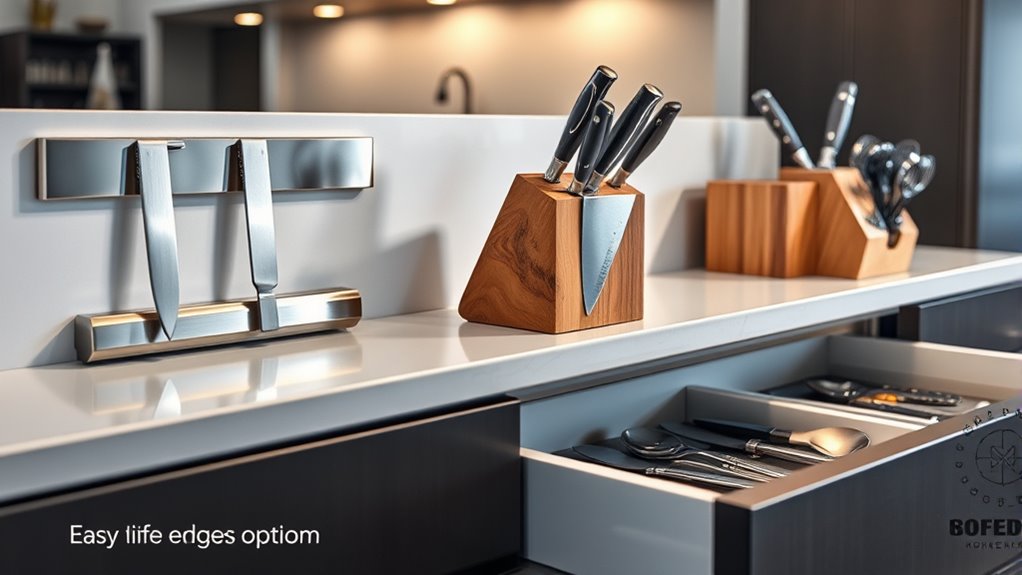
Choosing the right knife storage method can considerably impact safety and ease of access in your kitchen. Proper knife organization reduces accidents and makes prep work smoother. Magnetic strips keep knives visible and within reach, but require secure mounting to prevent falls. Knife blocks offer safe storage with minimal risk of injury, yet may limit space optimization. Drawers provide quick access and conceal knives, though they can be cluttered if not organized well.
- Magnetic strips keep knives accessible and visible
- Knife blocks prevent accidental cuts
- Drawers hide knives for a tidy look
- Secure mounting enhances safety
- Organized compartments improve space utilization
Making the Right Choice Based on Your Kitchen Needs
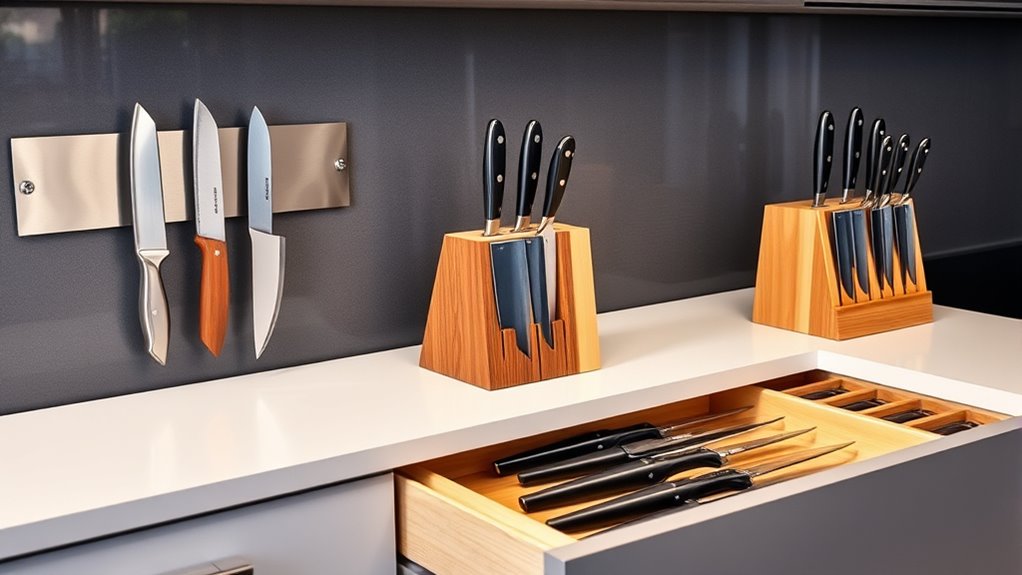
Evaluating your kitchen’s layout, storage space, and your daily cooking habits can help determine which knife storage option works best for you. If you have ample kitchen space and want a sleek look, a magnetic strip offers easy access and a modern aesthetic appeal. It keeps knives within reach without cluttering counters or drawers. Conversely, if you prefer a more organized, protected setup, a dedicated knife drawer ensures your blades stay sharp and edges are preserved. A knife block fits well in smaller kitchens, providing a classic look while saving space. Consider how often you cook and the level of safety you desire. By understanding your kitchen’s specific needs, you can select a storage solution that enhances functionality, maintains safety, and complements your aesthetic preferences.
Frequently Asked Questions
How Do Storage Options Affect the Maintenance Frequency of Knives?
Your storage choice directly impacts your knives’ blade longevity and cleaning frequency. Using a magnetic strip keeps blades exposed but minimizes contact, reducing dulling and making cleaning easier. A knife block offers protection but may require more frequent cleaning to remove debris. Storing knives in a drawer can cause dulling from friction, increasing cleaning needs. Choose a method that balances protection and ease of maintenance to keep your knives sharp and clean longer.
Are There Any Health Risks Associated With Magnetic Strips?
You might worry about health risks with magnetic strips, but the truth is, they’re generally safe. While some fear magnetic exposure, studies show it’s minimal and unlikely to influence food safety or health. Just guarantee your magnetic strip is well-made and clean, and avoid storing items with electronic components nearby. With proper care, magnetic strips offer a convenient, safe way to keep your knives accessible without risking health or safety.
Can Certain Storage Methods Cause Corrosion on Knife Blades?
Certain storage methods can cause blade corrosion if you’re not careful. Storing knives in a drawer exposes blades to moisture and other materials that may promote rust. Similarly, some storage materials, like certain woods or plastics, can trap moisture against the blade. To prevent blade corrosion, choose storage options that keep your knives dry and avoid materials that retain humidity, like poorly sealed knife blocks or damp environments.
How Does Storage Choice Impact Knife Handle Durability?
Your storage choice is like armor for your knife handles, directly impacting their durability. When you opt for a magnetic strip, handle wear is minimized because there’s no pressure on the handles, unlike drawers or knife blocks that can cause friction or stress. Proper storage reduces the risk of handle deterioration, ensuring your knives stay in top shape longer. So, pick wisely—your handles will thank you for it.
What Are the Cost Differences Among Magnetic Strips, Knife Blocks, and Drawers?
You’ll find that magnetic strips generally have the lowest price comparison, often costing between $10 and $30, and are easy to install with minimal costs. Knife blocks tend to be more expensive, typically $30 to $100, with higher installation costs if custom-designed. Drawers, requiring custom inserts and cabinetry, can be the priciest overall, with installation costs varying widely depending on your kitchen setup.
Conclusion
Choosing the right knife storage depends on your priorities. Magnetic strips are popular, with 65% of chefs preferring them for quick access and edge protection. They keep knives sharp longer and reduce clutter, but safety concerns exist if not installed properly. Knife blocks and drawers have their merits too. Consider your kitchen space and safety needs to find the best fit, ensuring your knives stay sharp and ready for every task.