Place your knife station near your main prep area for quick, safe access during cooking. Keep it close to cutting boards and utensils, but away from high-traffic zones to prevent accidents. Use magnetic strips or drawer dividers to organize knives safely and maximize space. Good lighting helps prevent mistakes and enhances visibility. By positioning your knife station thoughtfully, you’ll boost your efficiency and safety—if you keep exploring, you’ll learn even more tips.
Key Takeaways
- Position the knife station near the main prep area for quick access and minimal movement.
- Store knives in magnetic strips or dedicated drawers close to the cutting zone for safety and efficiency.
- Keep knives away from high-traffic pathways to prevent accidents and ensure a safe workspace.
- Use sturdy, slip-resistant surfaces like butcher block or granite for cutting boards, adjacent to the knife station.
- Maintain clear, organized storage and proper lighting to enhance safety, speed, and ease of access.

Magnetic Knife Holder for Wall, Knife Magnetic Strip Magnetic Knife Holder for Refrigerator Mount Knife Rack Kitchen Utensil Holder Metal Tool Holder Knife Block Kitchen Organizers Accessories 10 Inch
Heavy Duty and Solid magnetic knife holder: Our magnetic knife holder for refrigerator contains powerful magnets and has…
As an affiliate, we earn on qualifying purchases.
As an affiliate, we earn on qualifying purchases.
Assessing Your Kitchen Layout
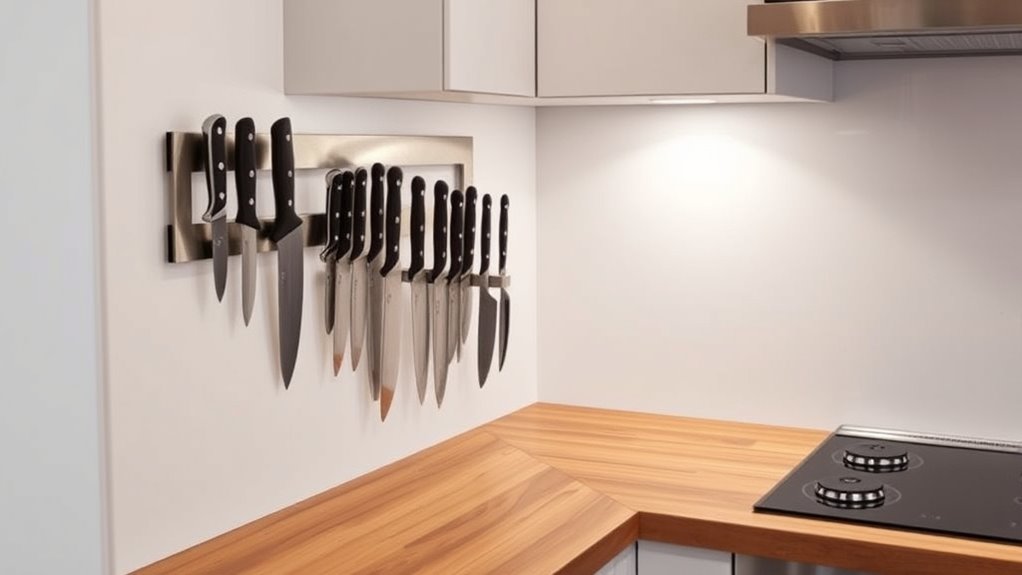
Before you start planning your small kitchen setup, it’s essential to assess your current layout. Take a close look at your countertop materials—whether they’re sleek granite, durable laminate, or butcher block—and consider how they influence your workspace. Think about the color coordination of your surfaces, cabinets, and backsplash; a harmonious palette can make your kitchen feel more open and inviting. Measure available space carefully, noting the placement of appliances, storage, and prep areas. Identifying awkward corners or tight spots helps you plan smarter solutions. By understanding your existing layout, you can optimize flow, choose complementary materials, and create a cohesive look that maximizes your limited space without sacrificing style or functionality. Additionally, considering kitchen ergonomic principles such as proper placement of the knife station can greatly enhance your safety and efficiency. Incorporating ergonomic kitchen design can further improve your workflow and reduce fatigue during meal prep. Remember that work triangle efficiency is key to creating a smooth and safe cooking environment, especially in small kitchens, and paying attention to smart appliance placement can streamline your cooking process and save valuable space.
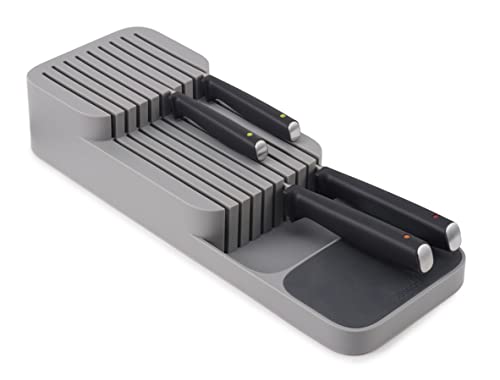
Joseph Joseph DrawerStore Knife Organizer, holds up to 9 knives, Kitchen Organization & Drawer Storage – Compact, Gray
Safe, organized storage for up to 9 knives. Non-slip feet.
As an affiliate, we earn on qualifying purchases.
As an affiliate, we earn on qualifying purchases.
Choosing a Central Location Near Prep Areas

Once you’ve evaluated your current layout and identified the key areas, focus on placing your main prep zone in a central spot. This ensures easy access to tools, minimizes movement, and keeps safety gloves within reach. Imagine the prep area as a 3×3 grid:
| Cutting | Mixing | |
|---|---|---|
| Storage | Sink | Stove |
| Utensils | Knife | Counter |
Position your knife station near the cutting zone, so your knife remains sharp and safe to handle. A central location reduces the risk of accidents, helps maintain knife sharpness, and keeps safety gloves handy for added protection. This setup boosts efficiency, allowing you to move quickly between prep tasks without unnecessary reaching or crossing paths. Proper kitchen layout can significantly improve safety and workflow during meal prep.

GORILLA GRIP BPA-Free Reversible Kitchen Cutting Board Set of 3, US Designed, Nonporous, Juice Grooves Catch Liquid, Slip Resistant Border, Dishwasher Safe, Durable Large Food Chopping Boards, Black
ULTRA DURABLE STRENGTH: 3rd Party Tested for durability, thick cutting boards have a nonporous surface that won’t splinter…
As an affiliate, we earn on qualifying purchases.
As an affiliate, we earn on qualifying purchases.
Ensuring Easy Access to Cutting Boards and Utensils
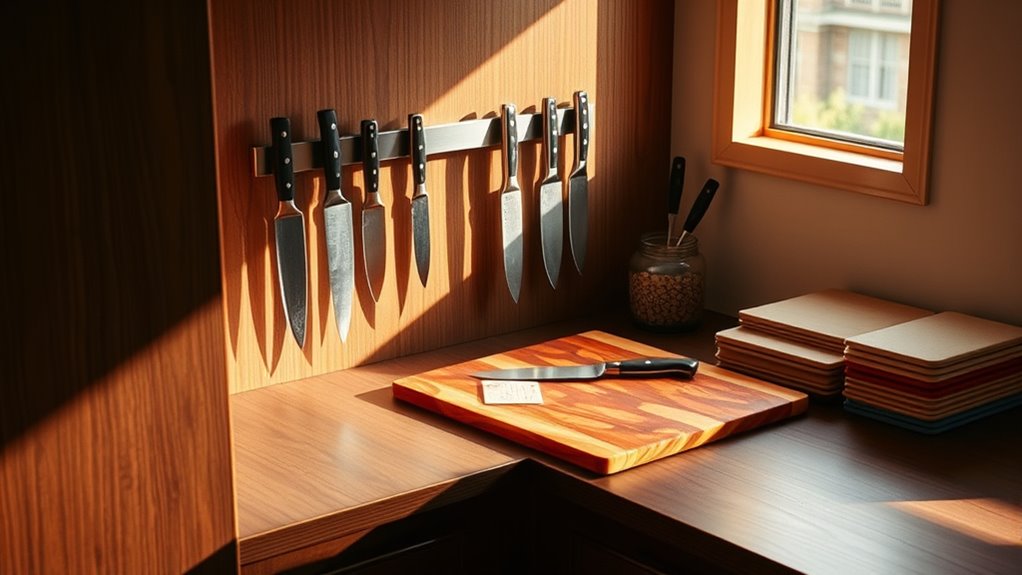
To keep your workflow smooth, place your cutting boards where you can grab them easily, like near your prep station. Make sure your utensils are stored in a convenient spot, so you don’t waste time searching. This setup helps you stay efficient and keeps your kitchen organized. Additionally, considering efficient storage solutions can further enhance your kitchen’s functionality, especially when incorporating innovative organization methods to maximize space and accessibility. Implementing smart storage technology can also help you manage your tools more effectively and maintain a clutter-free environment, ensuring your kitchen remains safe and ergonomically arranged.
Optimal Cutting Board Placement
Have you ever struggled to find your cutting board when you need it most? Proper placement is key to efficiency and safety. Keep your cutting board near your main prep area, ideally on a sturdy countertop made of materials like granite or butcher block, which resist slipping and are easy to clean. Placing it close to your knife station minimizes movement and streamlines prep work. Make sure your knife sharpening tools are nearby, so your blades stay sharp and safe to use. Avoid placing the board in cluttered or awkward spots that slow you down or cause accidents. A well-positioned cutting board reduces cross-contamination risks and makes quick work of meal prep, keeping your small kitchen organized and functional. For added safety and efficiency, consider proper workspace organization to keep everything within reach.
Convenient Utensil Storage
Keeping your utensils and cutting boards within easy reach can considerably streamline your cooking process. Use drawer organization to keep your utensil drawer tidy and accessible. Arrange frequently used utensils, like spatulas and tongs, in the front for quick grabbing, while less-used tools stay in the back. Consider a shallow, divided utensil drawer to prevent clutter and make it easier to find what you need. For cutting boards, designate a specific spot near your prep area, either on a countertop holder or a dedicated shelf, ensuring they’re always within arm’s reach. This setup minimizes unnecessary movement and saves time during meal prep. Efficient storage not only improves workflow but also enhances safety, keeping sharp knives and tools organized and out of the way.

Gritin 10.2inch Under Cabinet Lighting Rechargeable 2 Pack- 3 Color Temps&5 Level Brightness, Super Bright, 4 Modes, Motion Sensor, Long Lasting – Easy Installation Magnetic Under Closet Lights
Upgraded Premium Functionality: Built-in 84 super bright LEDs, the Gritin under cabinet light is crafted with aluminum alloy…
As an affiliate, we earn on qualifying purchases.
As an affiliate, we earn on qualifying purchases.
Prioritizing Safety With Away-From-High-Traffic Zones
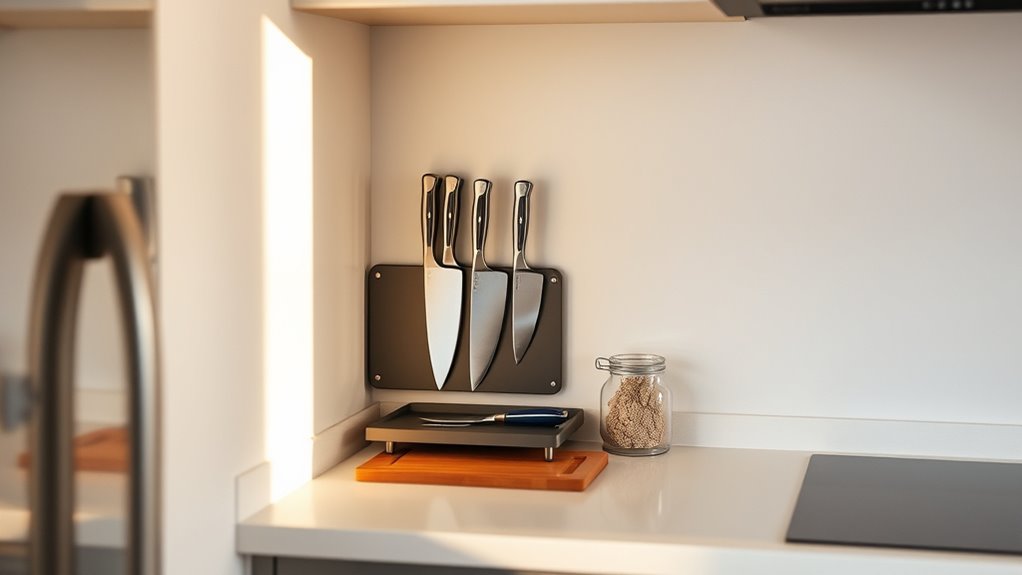
Placing key appliances and workspaces away from high-traffic areas can considerably reduce the risk of accidents in your small kitchen. This strategy helps improve traffic flow and ensures safer knife handling. When your knife station is tucked away from busy pathways, you’re less likely to bump into others or accidentally cut yourself. Keep these tips in mind: – Position your knife station near the prep area but out of main walkways. – Store sharp knives in a secure, dedicated drawer or block away from foot traffic. – Designate a clear, safe zone for chopping and slicing, away from where others frequently pass. Additionally, considering environmental considerations such as minimizing clutter and maintaining cleanliness can further enhance safety and efficiency in your kitchen. Incorporating landscaping principles, like decluttering countertops and organizing tools effectively, can create a more streamlined and safer workspace. Paying attention to ergonomic design can also help reduce fatigue and increase safety during food preparation.
Maximizing Counter Space and Minimizing Clutter
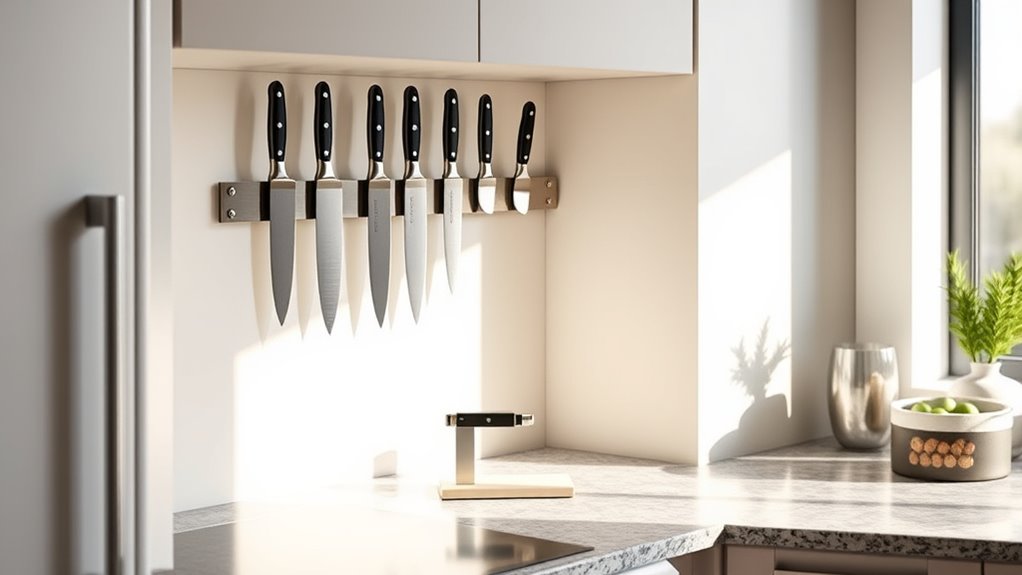
To make the most of your small kitchen, focus on creating clear work zones so you can cook efficiently without unnecessary obstacles. Use vertical storage solutions to free up counter space and keep essentials within easy reach. Keeping your counters tidy helps minimize clutter and makes your kitchen feel more open. Incorporating smart organization techniques can further optimize your space and improve workflow. Additionally, understanding visual cues can help you arrange items for quicker access and safer handling during meal prep. Applying space-efficient design principles can also enhance safety and efficiency in your kitchen environment, making your space more calm and organized. Embracing home organization strategies can help maintain a clutter-free environment, ensuring your small kitchen remains functional and inviting.
Clear Work Zones
Creating clear work zones is essential for maximizing your counter space and reducing clutter in your kitchen. When your work zone is organized, you’ll improve knife safety and work zone efficiency, making meal prep faster and safer. Keep your knife station separate from cluttered areas like the sink or trash, so you avoid accidents. Clear counters help you stay focused and prevent cross-contamination. Implementing effective organization strategies ensures your kitchen remains safe and efficient, especially in tight spaces. Additionally, understanding thermal behavior can help you design your setup to optimize heat flow and safety around your work area. Proper placement of your knife station also contributes to air purifier maintenance, ensuring your kitchen environment stays clean and healthy. A well-organized work zone makes cooking smoother, safer, and more enjoyable, especially in a small kitchen. Incorporating spatial awareness into your setup can further improve your workflow and safety.
Use Vertical Storage
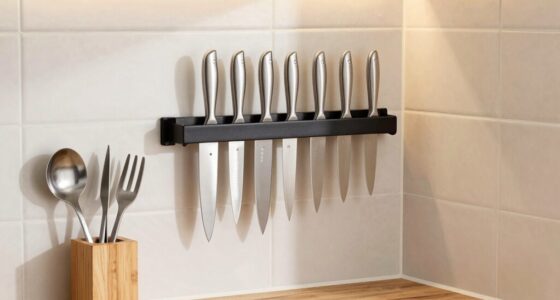
Maximizing your vertical space is a smart way to keep countertops clear and organized in a small kitchen. Vertical organization allows you to utilize wall-mounted racks, magnetic strips, or hanging baskets to store knives, utensils, and cookware. This approach boosts space efficiency by freeing up valuable counter area and reducing clutter. By placing frequently used tools within arm’s reach, you improve your workflow and safety. Consider installing a magnetic knife strip on the wall to keep knives accessible and secure, or use wall-mounted shelves for spices and small gadgets. Proper organization ensures quick access and minimizes the risk of accidents in a compact space. Incorporating ergonomic design principles can further optimize your setup for safety and comfort. Using wall-mounted storage solutions also helps in maintaining a clutter-free environment, making your small kitchen more functional.
Incorporating Proper Storage Solutions for Knives
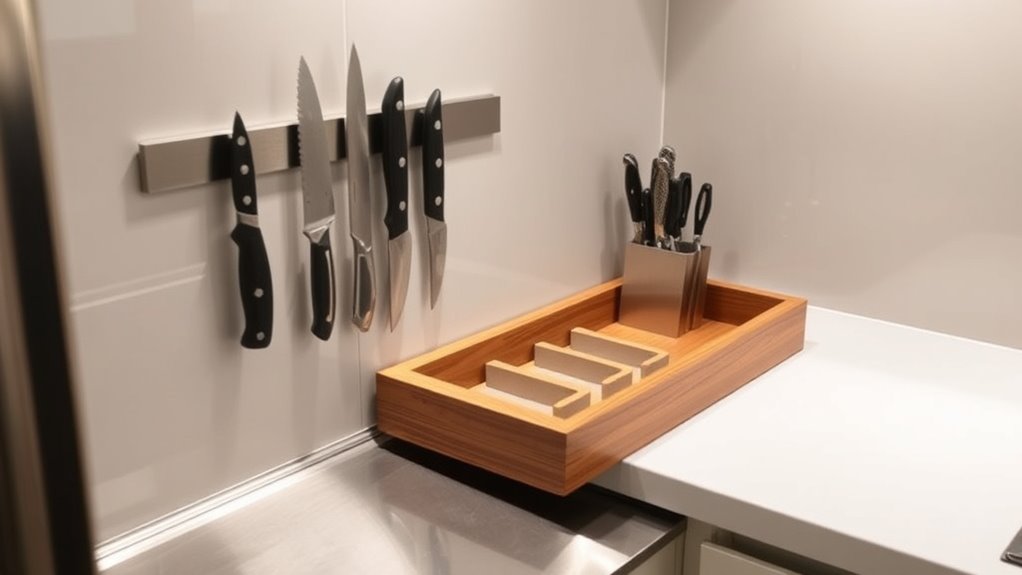
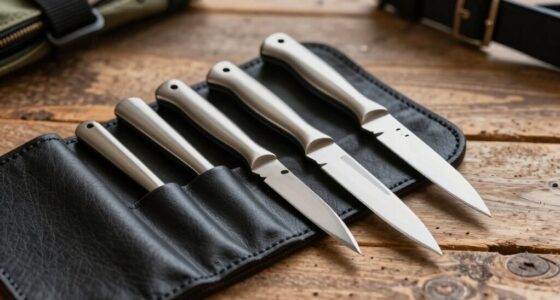
A well-organized knife storage solution is essential for maintaining safety, sharpness, and accessibility in your small kitchen. Proper storage prevents accidents and keeps your blades in top condition. Consider using knife sheathes to protect the edges when storing knives in drawers or for travel. Drawer dividers are also a great option; they keep knives separated and prevent them from shifting. Here are some effective storage ideas:
- Use knife sheathes inside drawers for added safety.
- Install drawer dividers to organize different types of knives.
- Keep frequently used knives in a designated, easy-to-reach spot near your prep area.
Utilizing Magnetic Strips or Knife Blocks Wisely
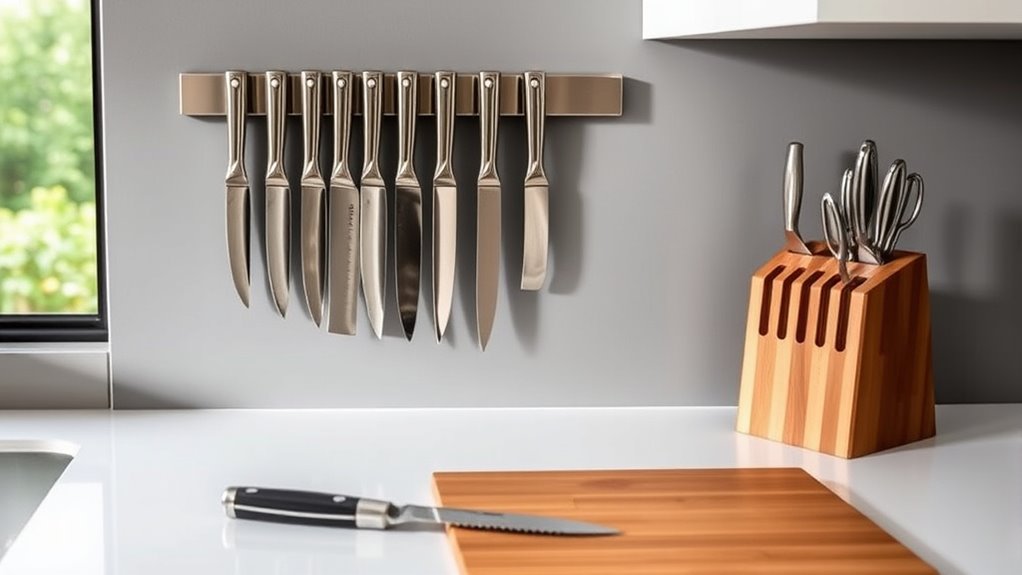
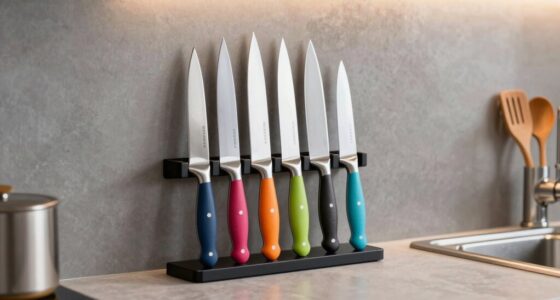
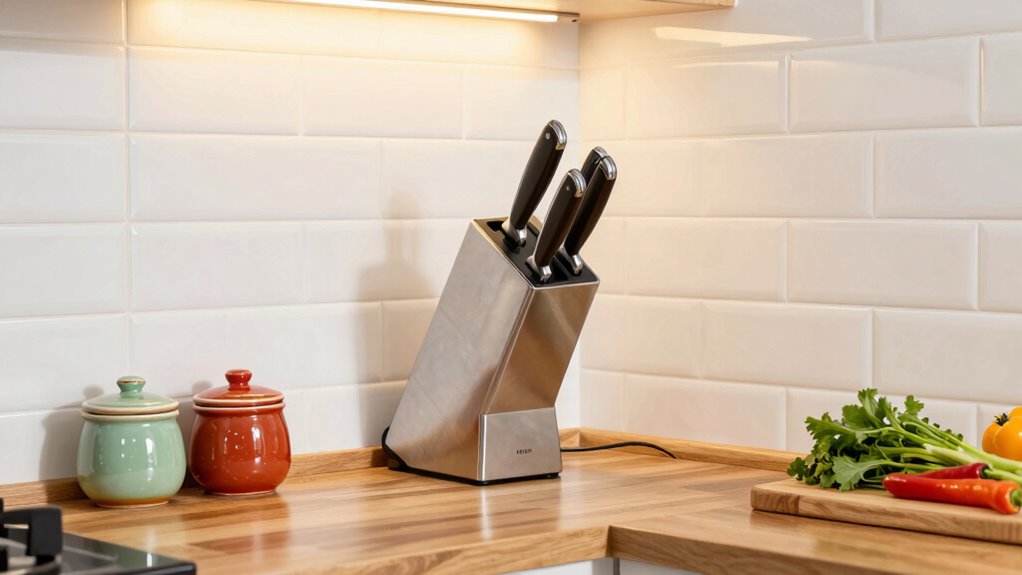
Magnetic strips and knife blocks offer convenient, space-saving options for keeping your knives within easy reach. When using magnetic strips, place them at a comfortable height to minimize reaching and guarantee safety. They allow quick access while keeping blades visible, which helps prevent accidents. Make sure the magnetic strip is securely mounted to avoid slipping. Knife blocks, on the other hand, provide a stable, organized storage solution. Position your knife block close to your prep area for efficiency, but away from where you might bump into it. Regularly clean both the magnetic strip and knife block to prevent buildup of dust and residue. Whichever option you choose, ensure your knives are stored properly to maintain sharpness and reduce the risk of injury. Proper placement maximizes safety and speeds up your workflow.
Considering Lighting and Visibility at the Station
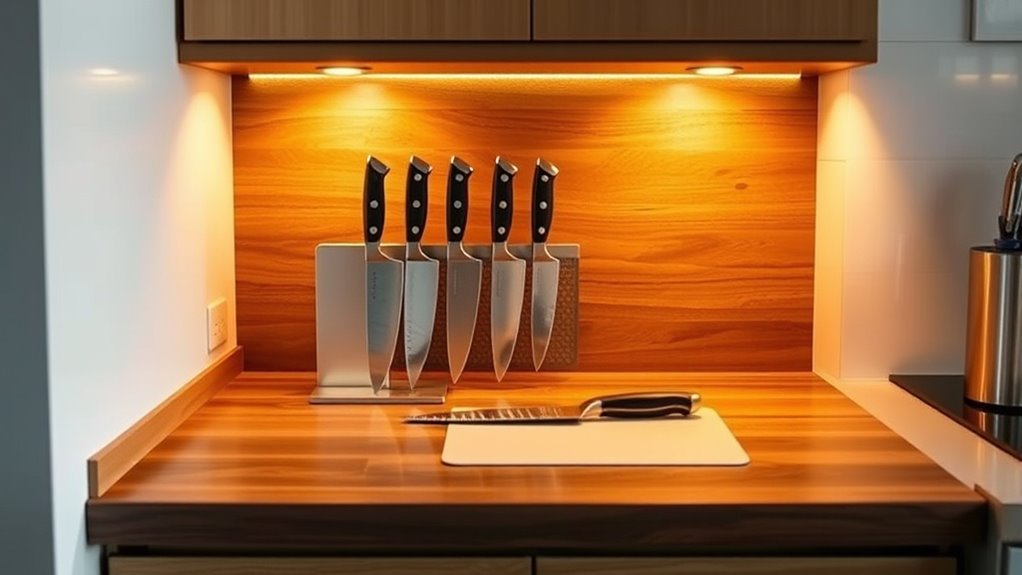
Have you ever struggled to see your ingredients clearly while cooking? Proper lighting at your knife station is essential for safety and efficiency. Consider using a combination of ambient illumination and task lighting to brighten the area without harsh shadows. Good ambient light creates an overall glow, making it easier to see your workspace. Meanwhile, focused task lighting directly over your cutting board offers clarity when chopping or slicing.
Some tips to improve visibility:
- Install adjustable LED lights that can be directed as needed
- Use under-cabinet lighting for focused illumination
- Keep light bulbs bright but flicker-free for consistent visibility
Balancing ambient illumination with task lighting ensures you work quickly and safely, reducing accidents and making prep smoother.
Planning for Future Kitchen Adjustments
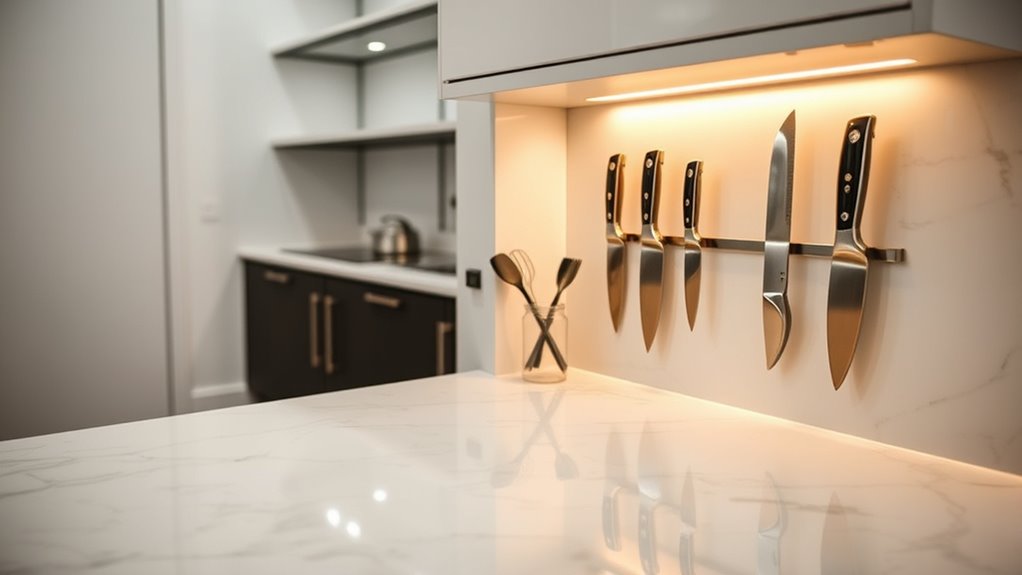
Planning for future kitchen adjustments makes certain your space remains functional and adaptable as your needs evolve. Regularly evaluate your knife station to ensure proper knife maintenance, which keeps blades sharp and safe. Consider how your workflow might change, and leave room for upgrades like additional storage or better lighting. To streamline these changes, plan a flexible layout that allows easy access for knife safety and maintenance tasks. Use the table below to visualize your options:
| Future Needs | Adjustments Needed | Benefits |
|---|---|---|
| Additional Storage | Install extra drawers | Easier knife access |
| Improved Lighting | Add task lighting | Better visibility, safety |
| Upgraded Knife Holders | Switch to magnetic strips | Safer, quicker access |
Frequently Asked Questions
What Are the Best Materials for Knife Storage Solutions?
You should choose materials like magnetic strips or wooden blocks for knife storage. Magnetic strips are great because they keep your knives easily accessible and safely off counters, preventing damage. Wooden blocks are durable, look stylish, and protect blades from dulling. Both options are excellent; just guarantee the material is sturdy and well-maintained. Avoid cheap plastic or metal cases, which can damage your knives or compromise safety.
How Do I Prevent Accidents When Placing Knives Near Children?
Think of childproofing your knife station like locking a treasure chest—secure and out of reach. To prevent accidents, use safe placement strategies like installing knife blocks high on the wall, locking drawers, or using magnetic strips behind cabinet doors. Keep knives out of children’s sight and reach, and always store them immediately after use. Regularly review your safety measures to guarantee your little explorers stay safe in the kitchen.
Can a Dedicated Knife Station Improve Overall Kitchen Efficiency?
A dedicated knife station can substantially improve your kitchen efficiency by enhancing knife organization and streamlining your workflow. When you keep knives in a designated spot, you minimize searching time and reduce accidents. This setup allows you to work faster and safer, especially in small kitchens where space is limited. By optimizing your workflow with a dedicated knife station, you’ll enjoy smoother meal prep and better overall kitchen performance.
What Are the Legal Regulations Regarding Knife Storage Safety?
You need to follow knife storage laws and safety regulations to avoid penalties and guarantee safety. These laws typically require knives to be stored securely, such as in locked drawers or knife blocks, preventing unauthorized access and accidents. Make sure your storage method complies with local regulations, and always use safety features like blade guards if required. Staying informed about these rules helps keep your kitchen safe and legally compliant.
How Often Should I Replace or Sharpen My Kitchen Knives?
You should sharpen your kitchen knives every 1 to 2 months, depending on how often you cook and your knife maintenance habits. Regular sharpening keeps blades sharp and safe, preventing slips. Also, replace your knives when they become chipped or lose their edge despite sharpening efforts. Proper maintenance extends their lifespan, ensuring you always have a reliable, safe tool at hand.
Conclusion
A well-placed knife station can boost your efficiency and safety. Did you know that kitchens with organized prep areas see a 30% reduction in accidents? By choosing a central, accessible spot away from high traffic and ensuring proper storage, you’ll work smarter and safer. Keep your knives within reach yet out of harm’s way, and plan ahead for future adjustments. A thoughtful setup makes all the difference between chaos and confidence in your kitchen.