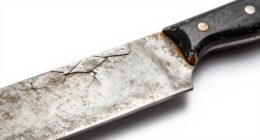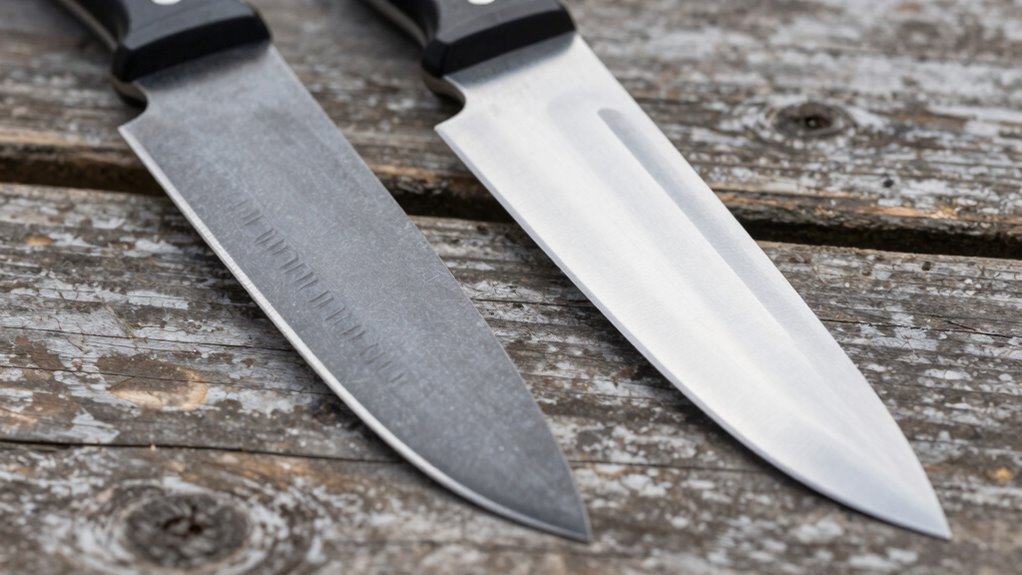
When a knife’s toughness is high, it can bend or flex without breaking, making it resistant to chipping. If hardness is high, the blade becomes sharper but more brittle, increasing the chance of chipping under impact. Balancing these properties is key; too much hardness and it may chip, too much toughness and it might not stay sharp. To understand how different steels behave and choose the best tool, keep exploring these material secrets.
Key Takeaways
- High hardness increases edge sharpness but reduces toughness, making knives more prone to chipping under impact.
- Greater toughness allows knives to bend without breaking, but often results in a less refined edge.
- Manufacturing processes and microstructure control influence the balance of hardness and toughness, affecting chip resistance.
- Brittle, hard knives are more likely to chip, while tougher, ductile knives tend to bend rather than break.
- Proper heat treatment and alloying optimize the toughness-hardness balance, minimizing chipping and enhancing durability.
imarku Chef Knife 7 Inch Kitchen Knife Ultra Sharp Santoku Knife - High Carbon Japanese Chefs Knife, Kitchen Gadgets 2025, Apartment Essentials, Birthday Gifts for Him Her, Best Gifts for Women Men
Professional Santoku Knife: This imarku super sharp santoku knife is made of high carbon stainless steel that resists...
As an affiliate, we earn on qualifying purchases.
Understanding Material Properties in Knives
Understanding the material properties of knives is essential because these characteristics directly influence their performance and durability. When you consider blade aesthetics, the choice of materials affects the knife’s appearance, with polished or textured finishes adding visual appeal. Additionally, manufacturing costs play a significant role; high-quality materials like premium steels increase expenses but often provide better performance. Cheaper alloys may reduce costs but can compromise toughness and durability. The balance between blade aesthetics and manufacturing costs determines the overall quality of the knife. By understanding these material properties, you can better assess which knives suit your needs, whether you prioritize style, longevity, or a combination of both. Recognizing the material composition of a blade helps in predicting its behavior under different conditions, ensuring you select the right tool for your specific requirements. Moreover, considering the toughness and hardness of materials can help you choose a knife that resists chipping or bending during use. A thorough knowledge of material properties also assists in proper maintenance and sharpening techniques, extending the lifespan of your knife. Gaining insights into material testing methods can further aid in evaluating the quality of different blades before purchase. Ultimately, knowing how materials influence performance helps you make smarter, more informed choices.
imarku Japanese Chef Knife - Sharp Kitchen Knife 8 Inch Chef's Knives HC Steel Paring Knife, Unique Gifts for Men and Women, Gifts for Mom or Dad, Kitchen Gadgets with Gift Box, Gyutou Knives
High-Carbon Stainless Steel Blade: It is manufactured from high-quality stainless steel that maintains its functionality for a long...
As an affiliate, we earn on qualifying purchases.
Defining Toughness and Hardness

Understanding what makes a material tough or hard starts with its composition and how it’s heat-treated. These factors influence how the material responds to stress and impacts its overall performance. Recognizing these differences helps you choose the right material for your specific needs. Moreover, the performance properties of a material are often optimized through precise heat treatment processes, which can alter its toughness and hardness to suit particular applications. Additionally, knowledge of material science principles enables manufacturers to develop alloys with tailored toughness and hardness profiles for diverse uses.
Material Composition Differences
Toughness and hardness differ markedly in how their material compositions influence their properties. Toughness depends on the steel’s ability to absorb energy without fracturing, often linked to its alloy content and microstructure. Hardness, meanwhile, relates to the steel’s resistance to deformation, which is affected by elements like carbon and the manufacturing processes used. These composition differences also impact blade aesthetics; tougher steels may show less shine but offer greater durability, while harder steels often have a sharper edge. Manufacturing processes, such as forging or heat treatment, further modify how these elements interact, shaping the final toughness or hardness of your knife. Understanding these material composition differences helps you choose a blade suited to your specific needs, whether bending or chipping is more likely.
Impact of Heat Treatment
Heat treatment plays a pivotal role in shaping a steel’s toughness and hardness by altering its internal microstructure. Through processes like quenching and tempering, you can optimize properties such as edge retention and corrosion resistance. Proper heat treatment increases hardness, improving cutting ability, but too much can reduce toughness, making the blade prone to chipping. Conversely, controlled heat treatment enhances toughness, allowing the blade to bend rather than break under stress. Achieving the right balance depends on precise temperature control and timing. This process influences how well the steel resists corrosion and maintains sharpness over time. Understanding how heat treatment manipulates these properties helps you select knives that won’t chip easily or bend when needed. Fine-tuning these factors maximizes performance and durability for your specific use, especially considering the microstructure of the steel.
Performance Under Stress
When a blade faces sudden impacts or sustained stress, its ability to withstand damage depends on its toughness and hardness. Toughness allows the blade to bend without breaking, making it ideal for tasks requiring resilience. Hardness, on the other hand, helps the edge resist wear and maintain sharpness over time. Both factors influence performance under stress, but they also affect blade aesthetics; a highly hardened blade may appear more refined, yet can be more brittle. Manufacturing costs play a role too—harder blades often require complex heat treatments, increasing production expenses. Balancing toughness and hardness ensures your knife performs reliably under pressure, preventing chipping or bending. Understanding these properties helps you choose a blade suited for demanding tasks without sacrificing durability or aesthetic appeal. For detailed information, visit ourmindandbody.com. Additionally, selecting the right type of body jewelry can influence how the material reacts to stress and environmental factors, similar to how blade properties interact during use. Recognizing the importance of material properties like toughness and hardness is essential for making informed choices in blade design and selection. Moreover, advancements in manufacturing techniques continue to optimize the balance between toughness and hardness for superior blade performance.

PAUDIN Chef Knife, 8 Inch High Carbon Stainless Steel Sharp Kitchen Knife with Ergonomic Handle, Gift Box for Family & Restaurant
Professional Chef's Knife: This PAUDIN kitchen knife is suitable for cutting bread, vegetables, fillets or meats etc, and...
As an affiliate, we earn on qualifying purchases.
The Science Behind Knife Chipping
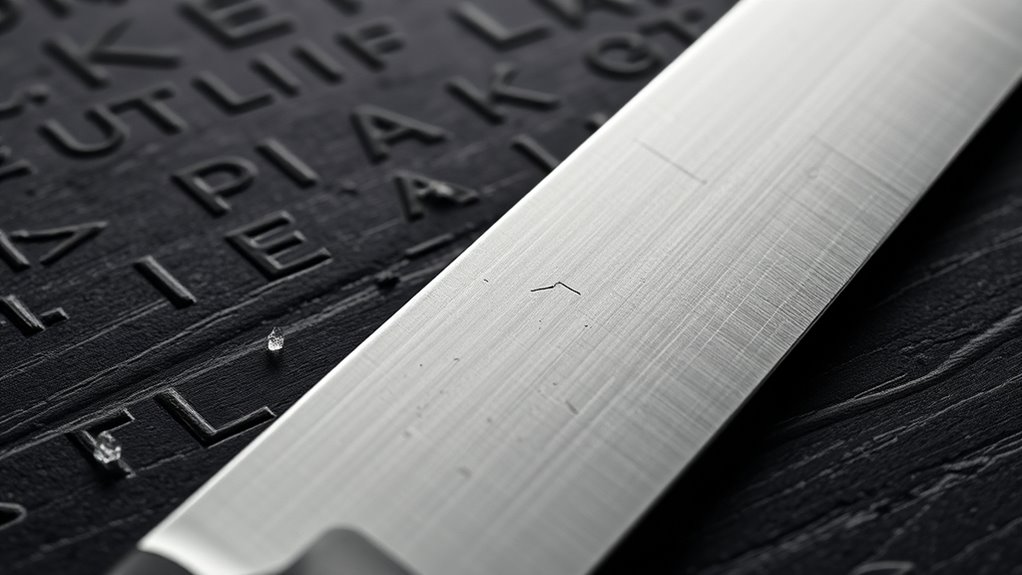
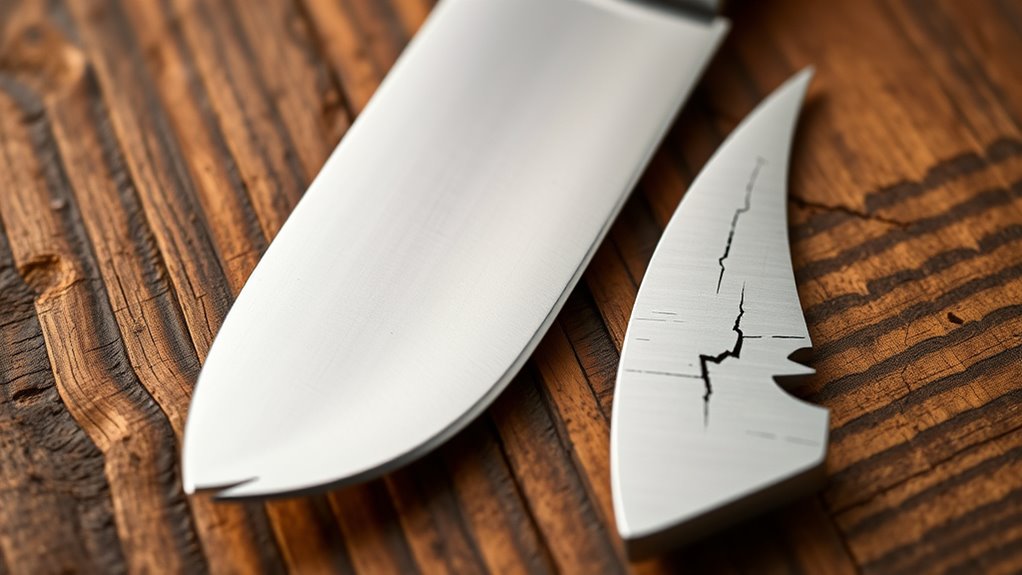
Understanding why knives chip requires examining the material’s microstructure and how it responds to impacts. Ceramic blades, for example, are hard but brittle, making them prone to chipping under sudden force or impact. The odor of ear wax, which is typically mild and earthy, can sometimes change due to infections or health issues, indicating a problem with ear health. Coating durability also plays a role; thin or poorly adhered coatings can crack or flake off, initiating chips. When you strike or twist the blade unexpectedly, microcracks form and propagate, especially in ceramics. The grain size and internal stresses within the material influence its susceptibility to chipping. Additionally, the presence of microstructural flaws and inclusions can serve as stress concentrators, increasing the likelihood of damage. Variations in manufacturing processes can introduce microcracks, which weaken the overall integrity of the blade. The manufacturing process itself can significantly impact the microstructure and defect distribution, affecting durability. Factors such as material composition and processing conditions directly contribute to the blade’s resilience and failure modes. To deepen your understanding, consider these factors:
- Microstructural flaws and inclusions
- Impact angle and force applied
- Presence of microcracks from manufacturing
- Coating adhesion and wear resistance

MOSFiATA 8" Super Sharp Professional Chef's Knife with Finger Guard and Knife Sharpener, German High Carbon Stainless Steel EN1.4116 with Micarta Handle and Gift Box
【High Carbon German Stainless Steel Laser-engraved Pattern(Not Damascus Pattern )】 MOSFiATA 8 inch pro chef's knife is made...
As an affiliate, we earn on qualifying purchases.
How Bending Relates to Toughness

When you consider impact resistance, bending shows how well a material can absorb shocks without breaking. Flexibility under stress indicates its ability to bend without cracking, which directly boosts toughness. Understanding how bending relates to these qualities helps you choose materials that can withstand real-world forces. Mastering Firewood emphasizes the importance of selecting durable and resilient tools to improve safety and efficiency in woodworking tasks. Additionally, recognizing the role of ethics in material selection can influence long-term performance and sustainability. Recognizing the mechanical properties of materials can further guide you toward making informed choices that balance toughness and hardness for specific applications. Moreover, understanding how material composition affects these properties can help you tailor your selections to meet specific needs and conditions. Exploring how physical properties influence a material’s response to stress can deepen your understanding of their performance in practical scenarios.
Impact Resistance Capabilities
Impact resistance is a key indicator of a material’s toughness, and bending plays a significant role in this property. When your knife withstands impacts, its ability to bend without breaking is essential. Blade coatings can enhance impact resistance by protecting the core material from chipping, while ergonomic design reduces stress points that cause fractures. Understanding how bending affects impact resistance helps you choose knives that won’t easily chip or break under pressure. Properly designed blades distribute force more evenly, improving durability. Additionally, materials with high toughness absorb shocks better, reducing the likelihood of damage. Incorporating these elements guarantees your knife maintains its integrity during heavy use, making bending a critical factor in impact resistance capabilities. impact resistance is also influenced by the overall design and material selection, which work together to improve shock absorption and resilience. Moreover, selecting materials with high toughness can significantly improve a knife’s ability to withstand impact forces without failure. A thorough understanding of material properties can further assist in selecting the right blade for demanding tasks.
Flexibility Under Stress
Flexibility under stress is a fundamental aspect of a material’s toughness because it determines how well a blade can bend without breaking. Blade flexibility allows it to absorb sudden impacts and torsional forces, enhancing its stress resilience. When your knife is flexible, it can bend to a certain degree without cracking or chipping, which is essential during heavy use. This flexibility indicates a high level of toughness, meaning the blade can withstand bending forces without failing. If your knife lacks this trait, it’s more prone to chipping or breaking under pressure. Understanding blade flexibility helps you choose knives suited for demanding tasks, ensuring they bend rather than break when stressed. In essence, a flexible blade offers better durability and longevity in real-world use.
Factors Influencing Hardness in Blade Steels

Several factors directly influence the hardness of blade steels, determining how well they resist deformation and wear. One key aspect is the microstructure evolution during heat treatment, which affects the distribution and size of carbides and martensite. The presence of specific alloying elements, like chromium, vanadium, and molybdenum, enhances hardness by forming stable carbides and refining microstructure. Additionally, the cooling rate during quenching impacts hardness; faster cooling results in a harder, more brittle structure. The initial composition of the steel also plays a role, with higher carbon content generally increasing hardness. Proper control of these factors guarantees the steel develops a microstructure optimized for hardness without sacrificing other properties. Understanding these influences helps you choose the right steel for your specific needs.
The Trade-Offs Between Toughness and Hardness

While high hardness in blade steels helps resist wear and deformation, it often comes at the expense of toughness. To optimize performance, you need to consider blade geometry, which influences how the metal handles stress. A harder steel with a thin edge may improve edge retention, keeping it sharper longer, but it becomes more brittle and prone to chipping or breaking under impact. Conversely, a tougher steel with a more robust blade geometry can bend rather than chip, but it might sacrifice some edge retention. Balancing these factors involves understanding your primary use — whether you need a durable edge or a resilient blade that absorbs shocks. Ultimately, increasing hardness often reduces toughness, and vice versa, so choose accordingly based on your cutting tasks.
Choosing the Right Knife for Your Needs
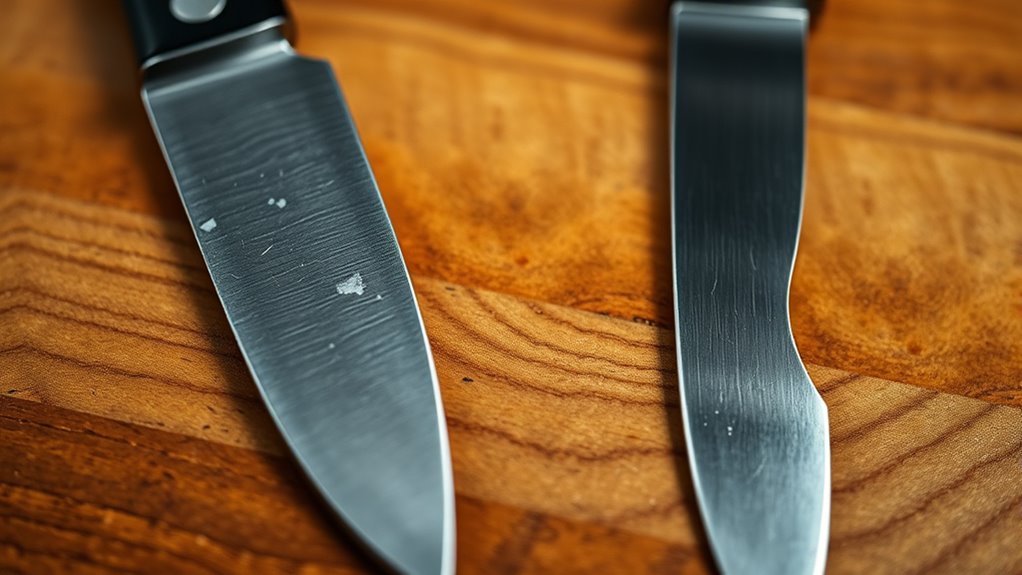
Choosing the right knife depends on understanding your specific cutting tasks and how you prioritize factors like edge retention, toughness, and overall durability. Your decision influences blade aesthetics, comfort, and performance. If you need precision and a sleek look, consider knives with polished blade aesthetics that appeal visually. For prolonged use, ergonomic design is vital to reduce fatigue and improve control. Think about whether you’ll be slicing delicate items or tougher materials, as this guides your choice between harder, more brittle blades or tougher, more flexible ones. Key considerations include:
- Blade aesthetics matching your style
- Ergonomic design for comfort during extended use
- Material toughness for durability under stress
- Edge retention suited to your cutting frequency
Matching these factors ensures you select a knife perfectly suited to your needs.
Tips for Maintaining Knife Performance
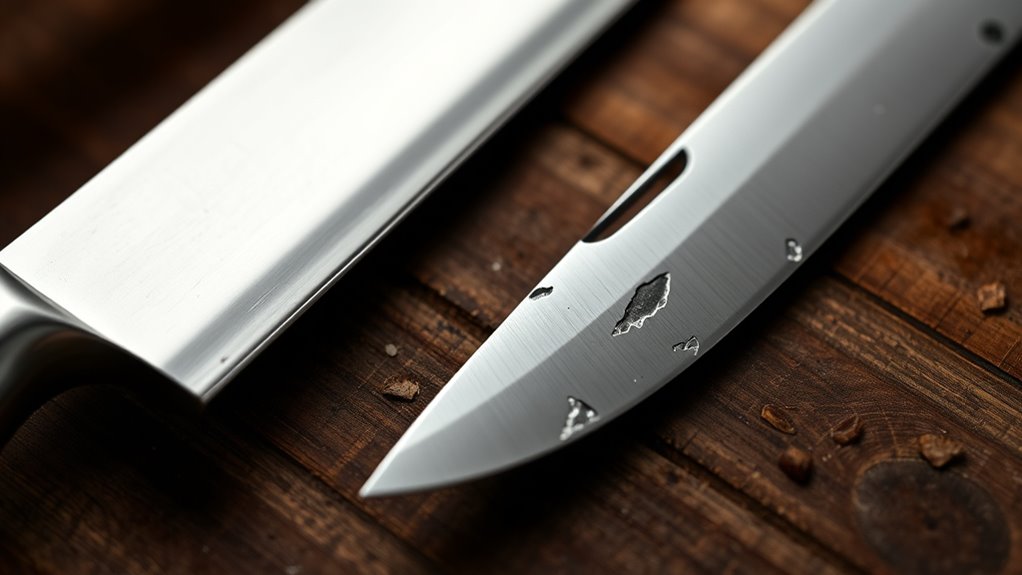
To keep your knife performing at its best, regular maintenance is essential. Start by keeping the blade clean and dry after each use to preserve its blade aesthetics. Proper sharpening and honing help maintain a sharp edge, making cutting easier and safer. Pay attention to the manufacturing processes behind your knife, as different techniques influence durability and performance. For example, high-quality steel with specific heat treatments resists chipping and bending better over time. Store your knife properly in a knife block or on a magnetic strip to prevent unnecessary damage. Avoid cutting on hard surfaces like glass or stone, which can compromise the blade. Regularly inspect your knife for signs of wear, and address issues promptly to ensure it stays functional and visually appealing.
Frequently Asked Questions
Can a Knife Be Both Extremely Tough and Hard?
Yes, you can have a knife that’s both extremely tough and hard. A well-designed blade balances toughness for flexibility and resistance to chipping, with hardness for excellent edge retention. You’ll notice that increased blade flexibility helps prevent chipping, while maintaining hardness assures the edge stays sharp longer. Finding this balance means your knife can handle tough tasks without bending or chipping, giving you reliable performance in the kitchen.
How Does Heat Treatment Affect Toughness and Hardness?
Heat treatment directly influences your knife’s toughness and hardness by altering its grain structure. When you heat the steel properly, it refines the grain, making the metal tougher and less prone to chipping. Overheating can make the grain structure coarse, reducing toughness. Conversely, controlled cooling hardens the steel. So, heat treatment allows you to balance toughness and hardness, ensuring your knife resists chipping while maintaining a sharp edge.
Are Softer Knives Less Prone to Chipping?
Ironically, softer knives are less prone to chipping because they offer more blade flexibility and better edge stability. While it might seem counterintuitive, a less brittle blade bends instead of cracking or chipping under pressure. This flexibility absorbs impacts, preventing damage. So, if you want a knife that resists chipping, opting for a softer steel with good toughness enhances durability and makes your kitchen life easier.
What Role Does Blade Geometry Play in Toughness?
Blade geometry plays a vital role in toughness by influencing how force distributes across the blade. A thicker blade enhances toughness, making it less likely to chip under impact, while a narrower edge angle reduces brittleness but may decrease durability. You should consider both blade thickness and edge angle when choosing a knife; a well-balanced geometry ensures your knife bends rather than chips during tough tasks, providing better resilience.
Can Coatings Improve Toughness or Hardness of Knives?
Coatings can improve surface enhancement and protect your knife, but they don’t substantially boost toughness or hardness directly. High-quality coatings, like DLC or ceramic, enhance coating durability and resist chipping or scratching, extending your blade’s lifespan. However, for genuine improvements in toughness or hardness, you need to focus on the underlying steel’s composition and heat treatment. Coatings are a helpful addition, but they’re not a substitute for proper blade material and design.
Conclusion
Understanding toughness and hardness helps you pick and care for your knives better. While a hard blade stays sharper longer, it’s more prone to chipping. Conversely, a tough blade bends rather than breaks but may dull faster. Balancing these qualities means choosing a knife suited to your tasks. Remember, a well-maintained knife combines the right material traits with proper care, ensuring you get the best performance—so don’t just focus on one property; consider both for a knife that truly works for you.