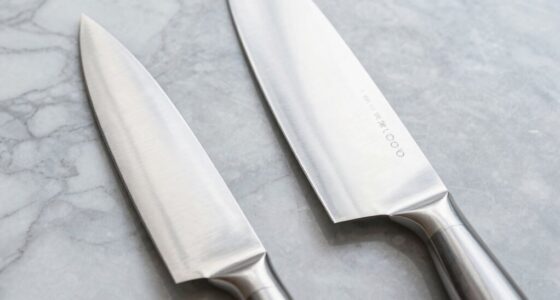
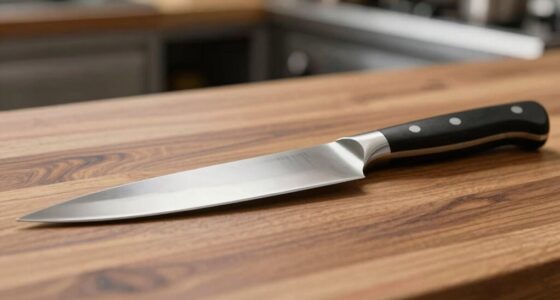
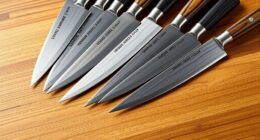
Thin geometry changes your cutting performance by reducing the contact area between the tool and workpiece, which lowers resistance and heat during cutting. This leads to cleaner, more precise cuts and less deformation of the material. However, it also makes your tool more vulnerable to damage and wear, especially with tougher materials. To get the best results, understanding these effects helps you balance the benefits with potential risks—keep exploring to learn how to optimize your tools effectively.

Get kitchen gear delivered free — and shop member deals
- Fast, free delivery on millions of items
- Access to Prime Big Deal Days deals on October 6–7
- Prime Video, Amazon Music and more included
Key Takeaways
- Thin geometry reduces contact area, decreasing cutting resistance and heat generation for cleaner, more precise cuts.
- It enhances initial cutting smoothness and detail, improving accuracy and reducing workpiece deformation.
- Increased sensitivity to material properties and stress concentrations raises risk of tool failure and wear.
- Thinner edges are more prone to wear mechanisms like abrasion and microchipping, requiring frequent maintenance.
- Proper cooling and optimized cutting parameters are essential to manage heat and tool longevity with thin geometries.
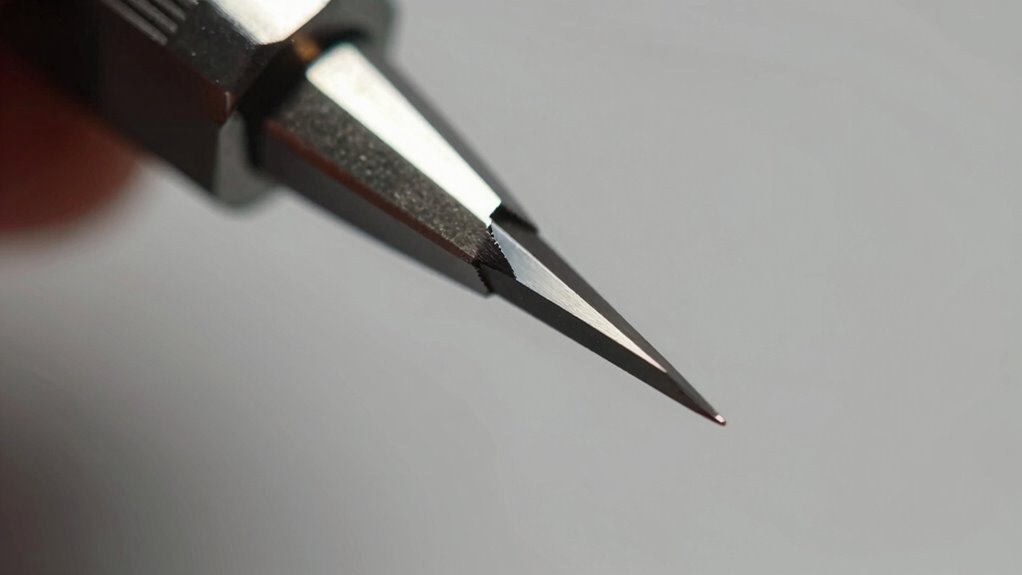
The geometry of a cutting tool directly influences its performance, determining how efficiently it slices through material. When the tool’s geometry is thin, it impacts the way the material deforms under cutting forces. A thinner cutting edge typically results in less contact area with the workpiece, which means the material experiences less resistance and deforms less during the cut. This reduced deformation can lead to cleaner, more precise cuts, especially in delicate or intricate work. However, this same thin geometry also makes the tool more sensitive to variations in the material’s properties, such as hardness or ductility. If the material is tougher or more ductile, the reduced contact area might cause increased stress concentrations, potentially leading to quicker tool wear or even chipping.
Material deformation plays a significant role here. When the cutting edge is thin, the way the material yields or flows around the tool changes. Less deformation means less heat generation, which can be beneficial because excessive heat accelerates tool wear. But, the trade-off is that a thin edge is more prone to damage if the cutting forces exceed the tool’s strength. You might notice that with very thin geometries, the tool can cut more smoothly at first, but it becomes more vulnerable to sudden failures, especially in harder materials. This vulnerability is often linked to the increased stress concentration on the edge, which accelerates tool wear and can shorten the lifespan of your cutter.
Tool wear is another vital aspect affected by thin geometries. As you use a tool with a very fine edge, it’s more prone to wear because there’s less material to absorb or distribute the forces during cutting. The wear mechanisms—like abrasion, adhesion, or even microchipping—accelerate when the edge is thin, especially in abrasive or high-force conditions. Over time, this can lead to a loss of sharpness, requiring more frequent sharpening or replacement. Proper coolant application, cutting speeds, and feed rates become even more essential with thin geometries, as they can help manage heat and reduce wear. Additionally, understanding the relationship between tool geometry and material properties can help tailor your cutting strategy for better results. Recognizing the material properties involved allows for more precise adjustments to cutting parameters, which can significantly influence tool longevity and overall efficiency.
In essence, choosing a thin cutting geometry offers the potential for finer, more precise cuts and reduced material deformation, but it demands careful consideration of tool strength and wear. When you understand how these factors interplay, you can tailor your cutting approach to maximize efficiency and tool longevity.
precision cutting tools with thin geometry
As an affiliate, we earn on qualifying purchases.
As an affiliate, we earn on qualifying purchases.
Frequently Asked Questions
How Does Thin Geometry Affect Tool Wear Over Time?
Thin geometry extends your tool life because it reduces contact area, which minimizes wear mechanisms like adhesion and abrasion. With less material contact, your cutting edges experience less heat and stress, slowing down deterioration. Over time, this means you’ll enjoy longer-lasting tools, fewer replacements, and more consistent performance. Just remember, maintaining precision and proper cutting parameters guarantees that the benefits of thin geometry continue to optimize your tool wear and longevity.
Can Thin Geometry Be Used With All Cutting Materials?
You can’t use thin geometry with all cutting materials, as material compatibility varies. Thin tools excel with softer, more ductile materials like aluminum and plastics, offering better precision and reduced cutting forces. However, they often lack the tool versatility needed for tougher, brittle materials like hardened steel or cast iron. So, always consider your material type and application needs before selecting a thin geometry tool, ensuring peak performance and durability.
What Are the Limitations of Thin Geometry in Heavy-Duty Applications?
In heavy-duty applications, thin geometry has limitations due to reduced material flexibility, making it less suitable for tough or thick materials. You might find that it can lead to increased tool wear or breakage under high stress. While it offers cost efficiency and precise cuts, you should evaluate the material’s robustness and the application’s demands to verify the thin geometry can withstand the workload without compromising performance.
How Does Temperature Impact Thin Geometry Cutting Tools?
Ever wondered how temperature affects your thin geometry cutting tools? As they heat up, thermal expansion can cause slight changes in dimensions, impacting precision. High temperatures hinder heat dissipation, leading to quicker tool wear and potential failure. To maintain ideal performance, you need effective cooling systems. Managing temperature ensures your thin tools retain their sharpness and accuracy, especially during demanding cuts, ultimately extending their lifespan and improving cut quality.
Are There Specific Coatings Recommended for Thin Geometry Tools?
You should consider coatings like TiAlN or AlTiN for thin geometry tools, as they boost coating durability and improve surface finish. These coatings resist high temperatures and wear, maintaining sharpness longer during cutting. Their enhanced durability guarantees your tools stay effective, while a smoother surface finish results in better quality cuts. Applying these coatings can extend tool life and optimize performance, making them ideal choices for precision thin geometry applications.
high-performance CNC cutting tools
As an affiliate, we earn on qualifying purchases.
As an affiliate, we earn on qualifying purchases.
Conclusion
So, next time you’re marveling at that impossibly thin geometry, just remember: it’s not magic, it’s science—plus a dash of “why not?” You’ll cut through material like a hot knife through butter, all thanks to those sleek lines. Who knew that making things thinner could make you a master of the craft? So go ahead, embrace the thin and let your tools do the heavy lifting—your projects will thank you (or at least, cut a little easier).
abrasion-resistant cutting blades
As an affiliate, we earn on qualifying purchases.
As an affiliate, we earn on qualifying purchases.
cooling systems for cutting tools
As an affiliate, we earn on qualifying purchases.
As an affiliate, we earn on qualifying purchases.
Fall Picks
fall essentials
As an affiliate, we earn on qualifying purchases.