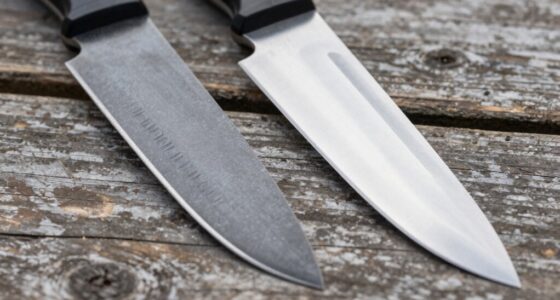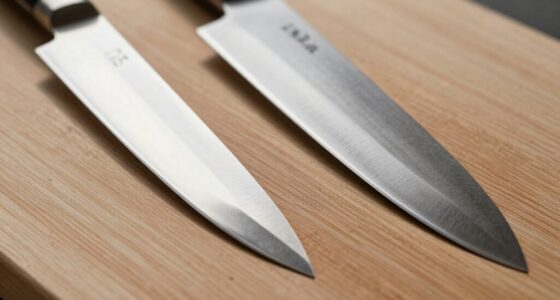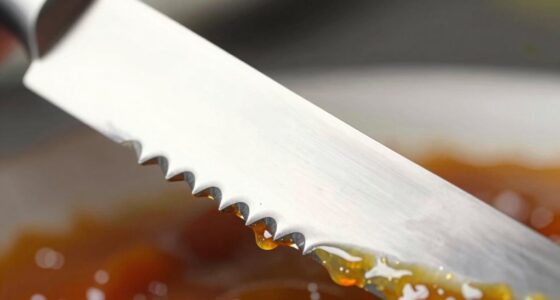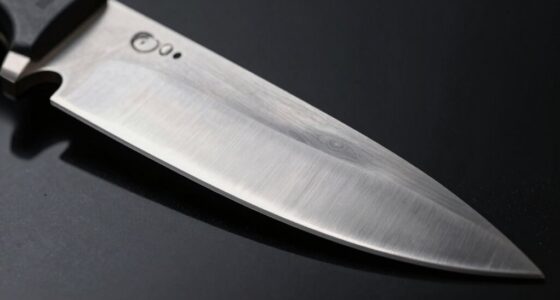
Choosing between serrated and straight edge knives depends on what you’re slicing. Use a serrated blade for cutting bread, tomatoes, or crusty foods, as it slices through tough surfaces without tearing soft interiors. Opt for a straight edge for precise, clean cuts on softer items like meats, vegetables, or for garnishing. Understanding which knife to use and how to maintain them helps improve your kitchen skills. If you want to master these choices, there’s more to discover ahead.
Key Takeaways
- Use serrated knives for cutting crusty bread, tomatoes, and soft fruits to prevent crushing and ensure effortless slicing.
- Opt for straight edge knives for precise, clean cuts on softer foods like meats, cheeses, and for garnishing.
- Choose serrated blades for durability on tough surfaces; select straight blades for detailed, controlled tasks requiring finesse.
- Maintain straight edge knives with regular honing and sharpening; serrated blades need specialized tools or professional servicing.
- Store knives properly to preserve sharpness and safety, regardless of blade type, and select based on primary kitchen tasks.
Differences Between Serrated and Straight Edge Blades

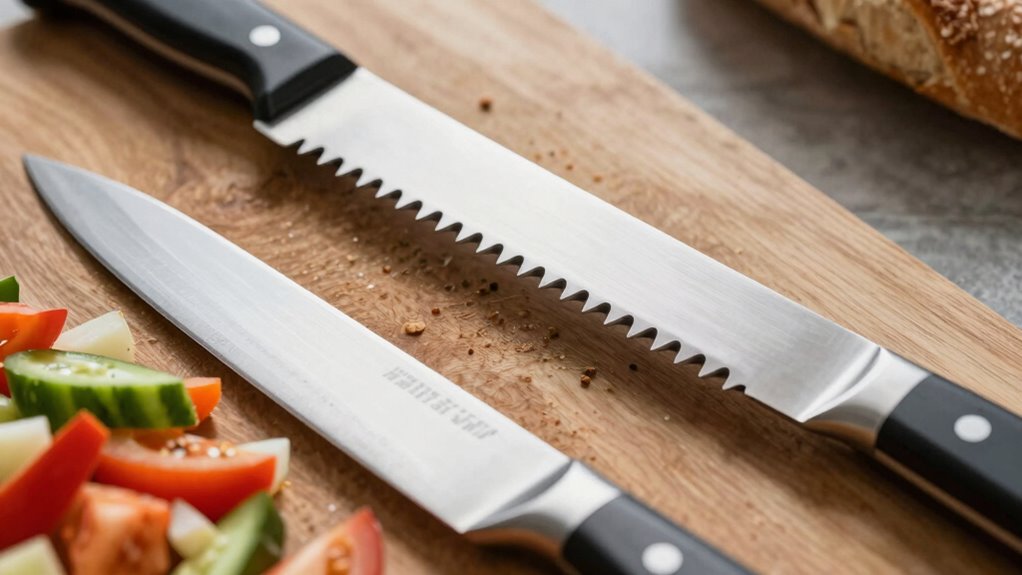
Serrated and straight edge blades serve different cutting purposes, and understanding their key differences can help you choose the right tool. Serrated blades excel at cutting through tough or crusty surfaces without crushing the soft interior, making them ideal for bread or tomatoes. Straight edge blades provide clean, precise cuts on softer foods like meat or vegetables. When considering knife maintenance, serrated knives tend to stay sharper longer but are trickier to sharpen, so proper care is essential. The ergonomic design of a knife influences comfort and control, especially during extended use. A well-designed handle reduces fatigue and improves accuracy. Knowing these differences ensures you’re selecting the appropriate blade for each task, maintaining your knives properly, and maximizing their performance in the kitchen. Additionally, understanding blade material can significantly impact durability and sharpening requirements, especially since different materials affect edge retention and ease of sharpening.
Best Uses for Serrated Knives in the Kitchen
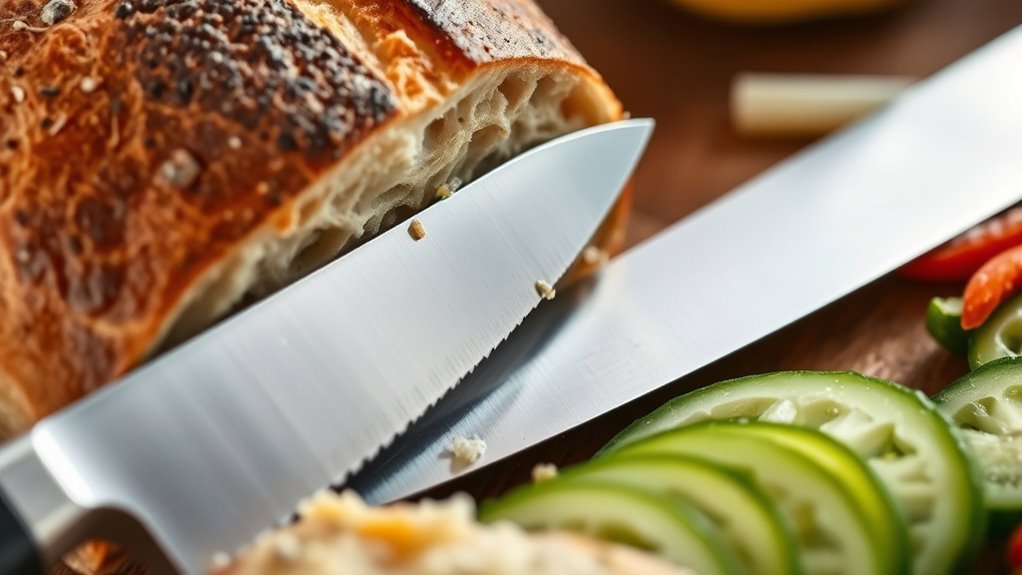
Serrated knives excel when cutting soft items, thanks to their sharp teeth that grip and slice effortlessly. They’re especially great for handling crusty breads without crushing the delicate interior. If you often work with baked goods or soft fruits, a serrated knife can make your tasks easier and neater.
Sharp Against Soft Items
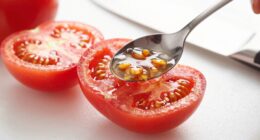
When cutting soft items like bread or tomatoes, a serrated knife excels because its jagged edge grips the surface and slices through with minimal pressure. Unlike dull blades, which can crush or squish soft foods, a sharp serrated knife maintains its edge and reduces tearing. This makes it ideal for delicate tasks where preserving the shape and texture matters. The serrated teeth grip the surface, preventing slips and ensuring clean cuts without applying excessive force. If your straight-edged knives struggle with soft foods, a serrated one can offer better control and efficiency. Keep your serrated knives sharp to maximize their advantage against soft items, making slicing smoother, safer, and more precise. Additionally, using a high-quality fabric like Suprem fabric can enhance the durability and performance of kitchen textiles, ensuring they stand up to frequent use and washing.
Ideal for Crusty Breads
If you’ve ever struggled to cut through a thick, crusty loaf without crushing the soft interior, you’ll appreciate how a serrated knife makes the task easier. Its saw-like edge glides through crusty bread effortlessly, providing clean, even slices without tearing. This makes serrated knives ideal for bread slicing, especially with crusty bread that has a tough exterior. Proper cookie management ensures that your kitchen tools function optimally and enhances your overall baking experience. Additionally, choosing the right knife edge can make a significant difference in your culinary efficiency and results. Understanding the material properties of different knife types can help you select the best tool for each task, ensuring you use the correct blade design for the job.
When to Choose a Straight Edge Knife for Precise Cuts
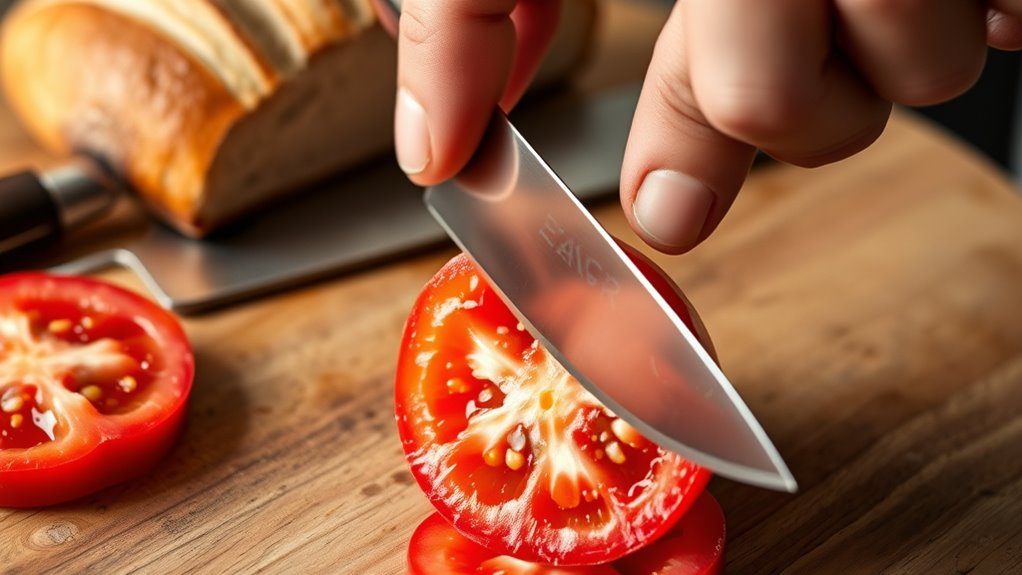
Choose a straight edge knife when you need precise, uniform slices or fine detail work. Its controlled cutting technique helps you make clean cuts every time. You’ll want this tool whenever accuracy is your top priority. Additionally, understanding safe installation practices ensures your knife setup is secure and effective for precise tasks.
Precise, Uniform Slices
A straight edge knife excels at delivering precise, uniform slices, making it the ideal choice when consistency is essential. When perfect cuts matter—whether for impressive food presentation or professional-looking dishes—a straight edge ensures that each slice is even and clean. Its sharp, smooth blade glides through ingredients with minimal effort, reducing tearing or crushing. This precision enhances the appearance of your dishes and highlights your knife aesthetics. Use a straight edge for slicing bread, vegetables, or deli meats where uniformity makes a difference. The consistent thickness improves cooking evenness and visual appeal.
- Achieves clean, even slices every time
- Enhances your food presentation
- Maintains the knife’s aesthetic appeal
- Ideal for tasks requiring precision and consistency
Fine Detail Work
When working on intricate or detailed cuts, a straight edge knife proves its superiority by providing unmatched control and precision. You can carve delicate fruit garnishes, thinly slice herbs, or create fine vegetable juliennes effortlessly. Its sharp, smooth blade ensures clean, exact cuts that enhance your kitchen aesthetics. To keep your knife performing at its best, proper knife storage is essential—consider a dedicated block or magnetic strip to prevent dulling. For example:
| Task | Knife Choice | Best Storage Tip |
|---|---|---|
| Precision garnishing | Straight edge | Magnetic strip |
| Thin slicing | Straight edge | Knife block |
| Detailed carving | Straight edge | Drawer organizer |
Using the right knife and proper storage optimizes detail work, elevating your culinary presentation. Additionally, understanding blade maintenance techniques can help prolong the sharpness and effectiveness of your knife over time. Proper sharpening and honing are crucial to maintain the cutting edge and ensure consistent performance.
Controlled Cutting Technique
Controlled cutting techniques demand the precision and stability that straight edge knives excel at providing. When you need uniform slices or delicate julienne strips, a straight edge knife offers the control necessary for accuracy. Proper knife storage keeps your blade sharp and ready, ensuring smooth cuts every time. Choosing the right cutting board also plays a essential role; a stable, non-slip surface prevents slipping and enhances safety. Additionally, maintaining your knives and practicing proper handling can significantly improve your cutting efficiency and safety knife maintenance. Remember:
- Store knives properly to preserve sharpness
- Use a cutting board that prevents slipping
- Apply consistent pressure for even slices
- Practice slow, deliberate cuts for precision
A well-maintained knife sharpening routine helps ensure your blades stay effective over time.
Maintenance and Sharpening Considerations

Maintaining and sharpening serrated and straight edge knives require different approaches to guarantee peak performance. For straight blades, regular honing and sharpening help preserve blade longevity and keep cuts precise. You may need to sharpen your straight knife every few months, depending on use, with a whetstone or sharpening steel. Serrated knives, however, need less frequent sharpening because their teeth stay sharp longer; when they do need attention, a specialized sharpening tool or professional service is best. Avoid using aggressive tools that could damage the serrations. Proper maintenance routines ensure both knife types retain their cutting efficiency and extend their lifespan. Regular care, tailored to each blade type, minimizes wear and keeps your knives performing at their best. Additionally, piercing care and hygiene practices can serve as a reminder to keep tools and equipment clean, reducing the risk of infection and ensuring longevity of your blades. Incorporating blade maintenance routines can further enhance the durability and performance of your knives over time. Paying attention to blade material and quality can also influence how often your knives require sharpening and their overall durability. Furthermore, using the right cleaning methods can prevent corrosion and material degradation, supporting your maintenance efforts.
Safety Tips for Handling Different Knife Types

Handling serrated and straight edge knives safely requires awareness of their unique designs and potential risks. Always cut away from your body and keep your fingers clear of the blade path. Proper knife storage is essential; store knives in a knife block or on a magnetic strip to prevent accidents. Pay attention to the ergonomic handle design—comfort and grip reduce slips and improve control. When using a knife, ensure your workspace is stable and free of clutter. Avoid leaving knives loose in drawers, as this increases the chance of injury. Keep blades sharp, as dull knives require more force and are more likely to slip. Regularly inspect your knives for damage to maintain safe handling.
Cost and Durability Factors
When choosing between serrated and straight edge knives, cost and durability are key factors to contemplate. Generally, straight blades tend to be more affordable initially and easier to sharpen, which can extend their lifespan with proper maintenance. Serrated knives, however, often have a higher upfront cost but may stay sharper longer when cutting through tough or crusty foods. Good knife storage is vital for both types to prevent damage and maintain sharpness, boosting their durability over time. Proper storage practices are essential to preserve the integrity of the blade and prevent corrosion. Additionally, the quality of the materials used in manufacturing can significantly influence the overall durability of the knife. Prioritizing knife safety, make certain your knives are stored securely to avoid accidents and keep them in prime condition. While straight knives might require more frequent sharpening, serrated blades tend to hold their edge longer, making them a durable choice depending on your kitchen needs and budget. Additionally, selecting a high-quality vetted vacuum can be an indicator of overall product durability and performance, emphasizing the importance of choosing well-made kitchen tools.
Tips for Selecting the Right Knife for Your Cooking Needs
Choosing the right knife depends on understanding your specific cooking needs and how you plan to use it. Consider the tasks you’ll perform most often and select a blade suited for those. Look for knives with good ergonomic design to reduce fatigue during extended use. Proper knife storage is also essential to protect your blades and keep them sharp longer. When choosing, keep these tips in mind:
Choose a knife suited to your tasks with ergonomic comfort and proper storage for longevity.
- Match the blade type to your main tasks—serrated for bread, straight for slicing.
- Prioritize ergonomic handles for comfort and control.
- Invest in quality storage options like knife blocks or sheaths to prevent damage.
- Consider the size and weight that feel most natural in your hand.
- Understanding blade maintenance can extend the lifespan of your knives and ensure optimal performance.
- Regularly honing and proper cleaning help maintain the cutting edge sharpness over time. Maintaining your knives properly also involves knowing about blade replacement costs, which can influence your overall kitchen tool investments.
- Being aware of battery replacement expenses and other hidden costs associated with certain types of equipment can influence your overall kitchen tool investments.
Frequently Asked Questions
Can Serrated Knives Cut Through Bone or Hard Materials?
No, serrated knives aren’t designed for bone cutting or hard materials. They excel at slicing through bread, soft fruits, and cooked meats because of their saw-like edges. For bone cutting or hard materials, you should use a sturdy, heavy-duty cleaver or a specialized bone saw. Using a serrated knife on bones can damage the blade and isn’t safe or effective, so stick to the right tools for tough tasks.
How Long Do Straight Edge Knives Typically Stay Sharp?
Sharpness stays steadfast for about 6 to 12 months, depending on your knife maintenance and sharpening techniques. You should regularly hone and periodically sharpen your straight edge knives to maintain their cutting comfort. Proper care minimizes dullness and prolongs performance, ensuring you can cut confidently through culinary creations. With consistent care, your straight edge knife stays sharper longer, offering precise, powerful performance whenever you need it in the kitchen.
Are There Specific Brands Known for Durable Serrated or Straight Edge Knives?
You’ll find that brands like Wüsthof, Global, and Shun are known for durable straight edge knives, thanks to their high-quality manufacturing materials and strong brand reputation. For serrated knives, brands like Victorinox and Dexter Russell excel, offering longevity and reliable performance. These brands use premium steels and craftsmanship, ensuring your knives stay sharp longer and withstand daily kitchen tasks, making them excellent choices for both professional and home chefs.
Can I Use a Serrated Knife on Delicate Items Like Tomatoes?
You can absolutely use a serrated knife for delicate items like tomatoes. Its slicing techniques involve gentle, sawing motions that prevent crushing soft produce. Just remember, proper knife maintenance keeps it sharp and effective. Imagine a quiet kitchen morning, where your serrated knife glides effortlessly through ripe tomatoes, preserving their shape and texture. This seamless experience highlights why serrated knives excel for delicate tasks, making your prep smoother and more precise.
Is It Better to Store All Knives Together or Separately?
You should store your knives separately to guarantee safety considerations and maintain their sharpness. Using a knife block, magnetic strip, or a dedicated drawer insert keeps blades protected and reduces the risk of accidental cuts. Storing all knives together loosely can lead to damage and potential injuries. Organizing your knife storage not only keeps your kitchen safe but also prolongs the life of your knives, making cooking more efficient and enjoyable.
Conclusion
Choosing between serrated and straight edge knives is like picking the right tool for a job—you wouldn’t chop wood with a spoon. By understanding their differences and best uses, you’ll become a more confident cook. Keep your knives sharp, handle them safely, and select the right one for each task. With the right knife in hand, your kitchen skills will slice through prep work as smoothly as butter.