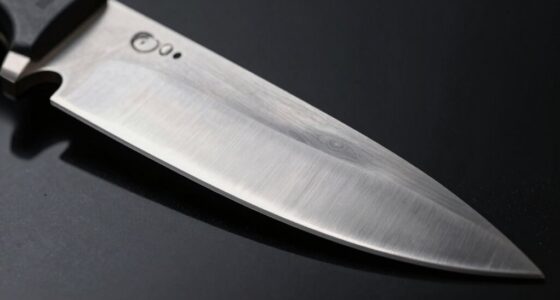
Damascus patterns originate from centuries-old forging techniques that create uniquely layered, flowing designs symbolizing strength and resilience. These intricate patterns aren’t just surface decorations but are made through layered steel forging, heat treatment, and pattern welding—techniques that make each piece one of a kind. Many mistakes misidentify superficial engravings as authentic Damascus. To truly understand what makes genuine Damascus special, explore the craftsmanship behind these striking designs and their cultural significance.
Key Takeaways
- Authentic Damascus patterns result from traditional forging techniques creating layered, wavy steel designs, not surface etching or printing.
- Recognizable Damascus features intricate, flowing patterns with layered, contrasting steel, reflecting craftsmanship and unique geometry.
- Modern imitations often mimic appearance but lack the true layered forging process that produces genuine Damascus.
- Surface aesthetics alone do not confirm authenticity; metallurgical composition and forging methods are key indicators.
- Damascus patterns hold cultural and historical significance, symbolizing strength, resilience, and traditional craftsmanship.
The Origins and History of Damascus Steel
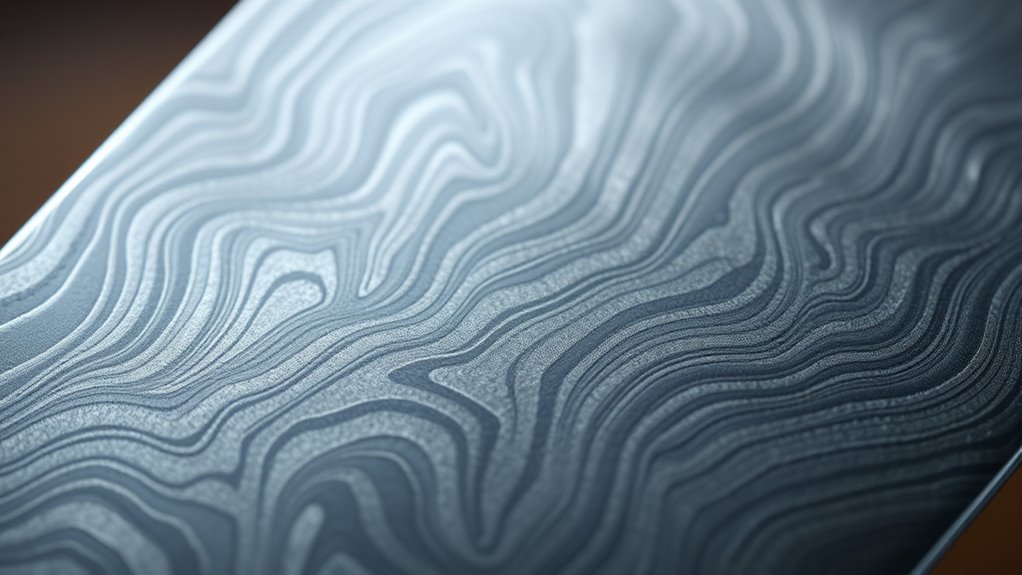
Damascus steel has a storied history that dates back centuries, enthralling sword makers and collectors with its legendary strength and distinctive patterns. Its historical significance lies in its reputation as a superior weapon, valued for both durability and beauty. Throughout history, Damascus steel has symbolized power and craftsmanship, representing cultural symbolism across Middle Eastern societies. The legendary blades were often associated with nobility and heroism, making them highly prized. The techniques used to create it were closely guarded secrets, adding to its mystique. Even today, its rich history influences modern design and craftsmanship. The unique pattern welding techniques used in its creation contributed to its renowned strength and distinctive visual appeal. Understanding its origins helps you appreciate the cultural importance of Damascus steel, not just as a material, but as a symbol of artistry, resilience, and historical legacy. Additionally, the forging process involved meticulous craftsmanship that has been passed down through generations, ensuring its enduring legacy. Contemporary metallurgists and artisans continue to study and emulate these traditional methods, often utilizing modern techniques to preserve its artistic and functional qualities.
How Damascus Patterns Are Created
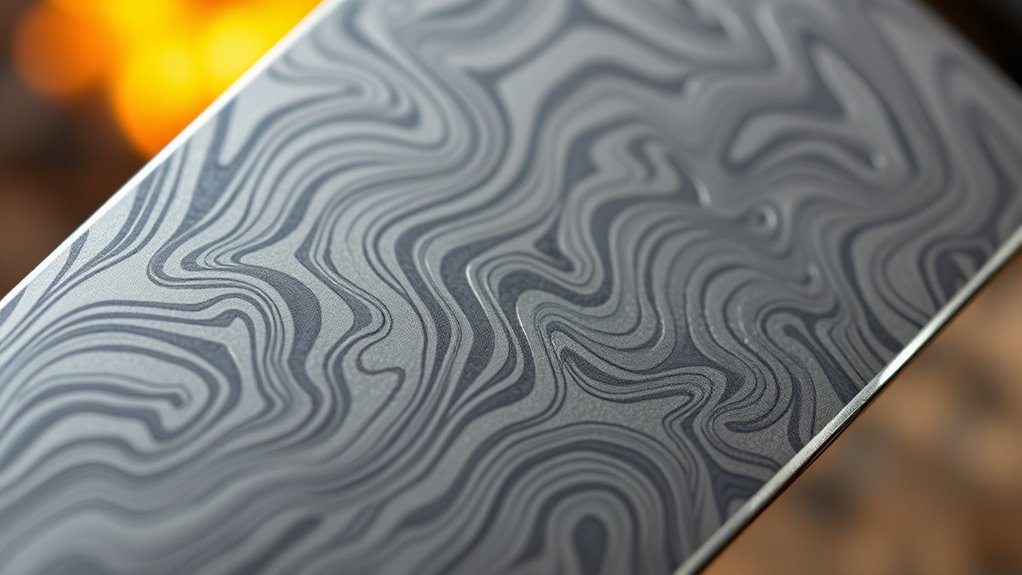
Creating the distinctive patterns seen on Damascus steel involves a meticulous process of layering and forging. You start by stacking different types of steel and iron, then repeatedly forge and fold the layers to create a complex composite. This process uses specific metallurgical techniques to manipulate the metals’ properties, resulting in unique, flowing artistic designs. As you work the material, the layered structure develops intricate patterns that reflect the skill and precision involved. The combination of heating, twisting, and welding produces the characteristic wavy or ladder-like motifs associated with Damascus steel. Each pattern is a testament to craftsmanship and technique, making every piece one-of-a-kind. This careful process blends science and artistry to produce the stunning visual effects that define authentic Damascus patterns. layering and forging are fundamental techniques that ensure the durability and beauty of the finished product, especially since metallurgical techniques influence both aesthetics and material strength. Understanding the metallurgical principles behind these techniques helps artisans optimize the process for better consistency and quality.
Distinguishing True Damascus From Imitations
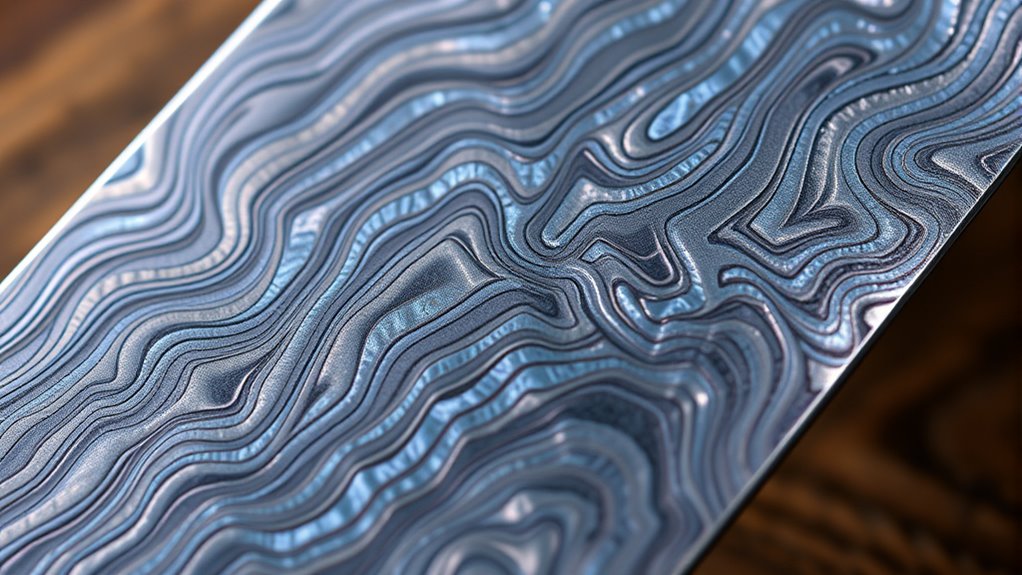
While many products claim to feature Damascus patterns, true Damascus steel can be distinguished through careful examination of its unique characteristics. Look for the intricate, flowing patterns that resemble natural wood grain or water ripples, which result from the forging process. Authentic Damascus often exhibits a layered, wavy appearance with sharp contrast between light and dark areas, reflecting its historical symbolism of strength and craftsmanship. Be cautious of imitations that use printed or etched designs, which lack the depth and texture of genuine layers. Recognizing these features helps you separate myth from reality, as some marketers perpetuate the myth that all patterned steel is authentic Damascus. True Damascus’s rich history and complex forging process set it apart from simpler, modern imitations.
Common Misconceptions About Damascus Steel
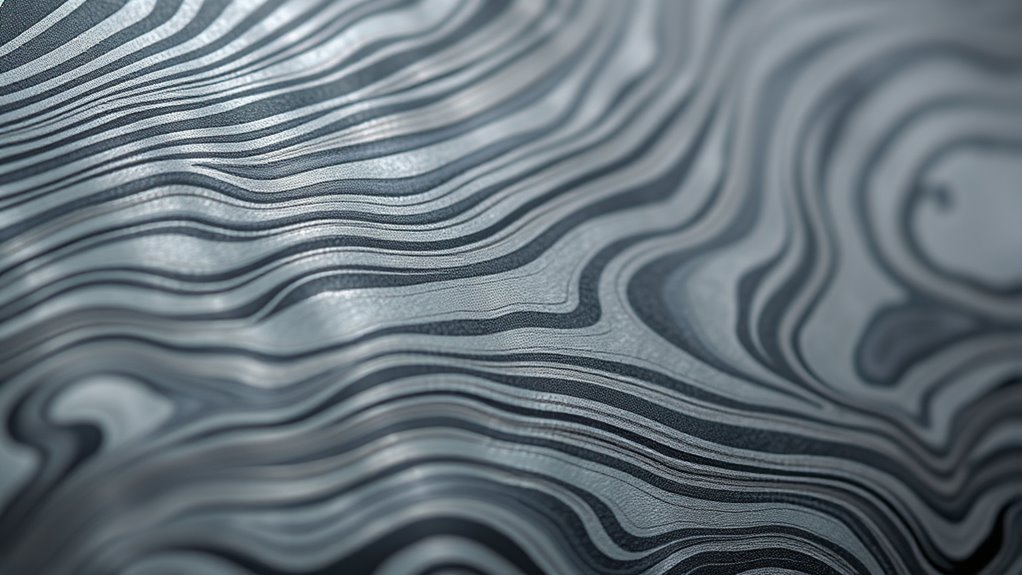
Many people believe that any patterned steel is authentic Damascus, but this isn’t true. Common misconceptions include assuming that decorative engravings or surface patterns alone define genuine Damascus. In reality, true Damascus results from specific forging techniques, not just surface aesthetics. The pattern alone doesn’t confirm quality or age; it’s the forging process that matters. Recognizing this helps you avoid falling for imitations that simply mimic surface appearances. Understanding these misconceptions ensures you appreciate Damascus for its craftsmanship rather than superficial features. Additionally, layered forging is fundamental to authentic Damascus steel, setting it apart from merely patterned metals. To truly identify authentic Damascus, one must understand the forging process behind its creation, which emphasizes skill and tradition over surface looks. The metallurgical composition also plays a critical role in authentic Damascus, as it influences durability and appearance. Learning about metallurgical techniques can further help distinguish genuine Damascus from counterfeit products.
The Role of Pattern Welding in Modern Damascus

Modern pattern welding combines innovative techniques with traditional steel layering methods to create striking Damascus designs. You can see how different steel types influence both the visual patterns and the strength of the blade. These methods allow artisans to craft knives with unique, intricate appearances and enhanced structural qualities. Additionally, understanding the cryptid mysteries behind some legendary creatures can deepen appreciation for the artistry involved in Damascus patterning. Proper piercing care and hygiene is essential for maintaining the durability and appearance of Damascus steel, just as it is crucial for body piercings.
Modern Pattern Techniques
Pattern welding plays a crucial role in modern Damascus by allowing artisans to create intricate and unique surface designs through layering and forging different steels. This technique reflects antique craftsmanship and preserves cultural symbolism, connecting past traditions with contemporary artistry. Modern pattern techniques utilize advanced tools, but still honor the heritage of Damascus steel.
| Technique | Effect |
|---|---|
| Acid Etching | Reveals detailed layers and patterns |
| Differential Heat Treatment | Enhances contrast and texture |
| Hand Forging | Adds originality and complexity |
| Pattern Stamping | Creates distinctive surface designs |
These methods enable you to craft blades that are both functional and visually engaging, blending historic significance with modern innovation.
Steel Layering Methods
Pattern welding serves as the backbone of contemporary Damascus steel, allowing artisans to combine different steels through precise layering and forging. This metallurgical process involves stacking various steel types, then repeatedly heating, hammering, and folding them to create complex layers. These layering methods enable skilled smiths to control the steel’s properties, such as hardness and flexibility, while also producing intricate decorative techniques. The pattern welding process results in unique, visually striking patterns that showcase the layered structure. By manipulating these layers during forging, artisans can craft distinctive designs that highlight both functionality and artistry. This approach has revitalized traditional craftsmanship, blending modern metallurgical insights with age-old decorative techniques to produce durable, beautiful Damascus steel pieces. Additionally, understanding the history of pinball machines demonstrates how technological advances have influenced design and craftsmanship across different fields.
Visual and Structural Effects
Pattern welding plays a crucial role in creating Damascus steel’s striking visual and structural effects, allowing you to produce intricate, eye-catching designs that serve both aesthetic and functional purposes. The process enhances features like:
- Color contrast: Different steel layers create vivid distinctions, highlighting the pattern’s depth and complexity.
- Pattern symmetry: Careful layering and folding produce balanced, harmonious designs that captivate the eye.
- Textural variation: The welded layers result in unique surface textures, adding tactile appeal.
- Structural strength: Beyond visuals, the pattern welding process improves the steel’s durability and flexibility.
- Historical significance: Understanding the origins of Damascus steel reveals its cultural and technological importance throughout history.
These effects combine to make Damascus steel not only beautiful but also highly functional, showcasing craftsmanship and technical mastery.
Characteristics That Define Authentic Damascus
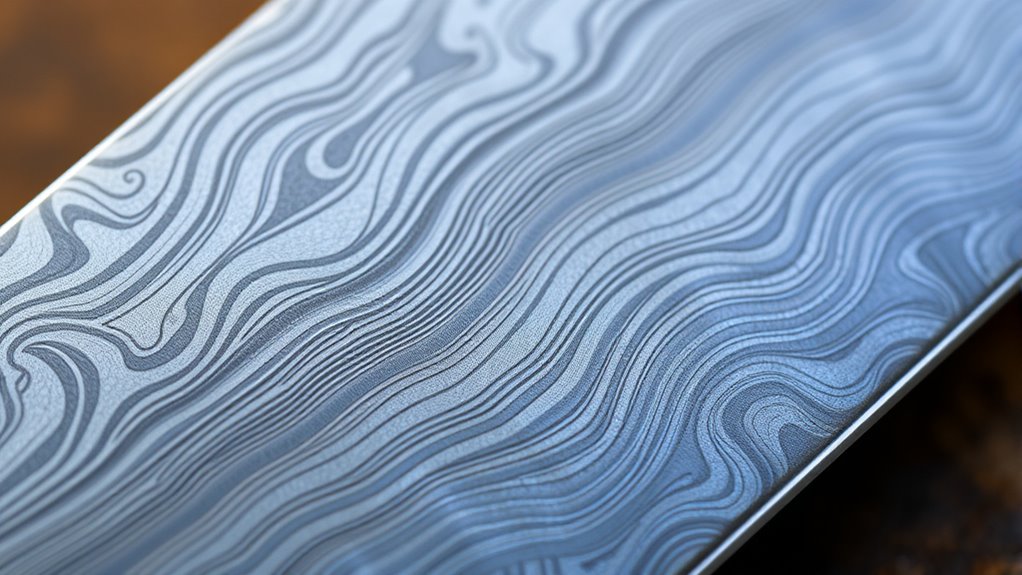
Authentic Damascus is instantly recognizable by its distinctive pattern swirls that seem to dance across the surface. These patterns are created through layered steel construction, which gives each piece its unique look. Understanding these core features helps you identify genuine Damascus from imitations.
Distinct Pattern Swirls
When examining Damascus blades, you’ll notice the distinctive swirl patterns that make each piece unique. These pattern swirls showcase *swirl symmetry*, where the designs often mirror or balance across the blade, creating a harmonious look. You’ll also observe *pattern diversity*, with each pattern varying in complexity, size, and flow. To identify authentic Damascus, look for:
- Intricate, flowing swirls that seem to move across the surface
- Consistent, yet varied, lines that display natural irregularities
- Clear contrast between light and dark areas within the pattern
- Swirls that appear organic, not overly uniform or machine-made
These features highlight the craftsmanship behind Damascus blades, emphasizing natural, artistic *pattern diversity* and *swirl symmetry* that define authenticity.
Layered Steel Construction
Layered steel construction is the hallmark of genuine Damascus blades, created by forging multiple layers of different steels together through repeated heating and folding. This process results in a distinctive, resilient structure that’s recognizable by its layered appearance. To achieve the right layers, you need to use specific alloy compositions suited for forging, often combining high-carbon steels with softer, more ductile steels. Proper quenching techniques are essential to lock in the layered pattern and maintain blade strength. Authentic Damascus blades typically undergo controlled heating and cooling cycles, ensuring the layers bond tightly without becoming brittle. These techniques help produce a blade with ideal flexibility, durability, and a unique pattern that’s impossible to replicate with mere surface etching or surface treatments. Additionally, understanding the market trends in Damascus steel can aid in selecting authentic pieces that hold their value over time. The forging process also influences the overall appearance and performance of the blade, making it a critical aspect of authentic Damascus craftsmanship. Recognizing the layering pattern is key to distinguishing genuine Damascus from imitations, as it reflects the precise forging techniques used. Moreover, mastering the forging techniques is essential for artisans to create consistent and high-quality Damascus blades.
The Significance of Pattern Variations and Their Meanings
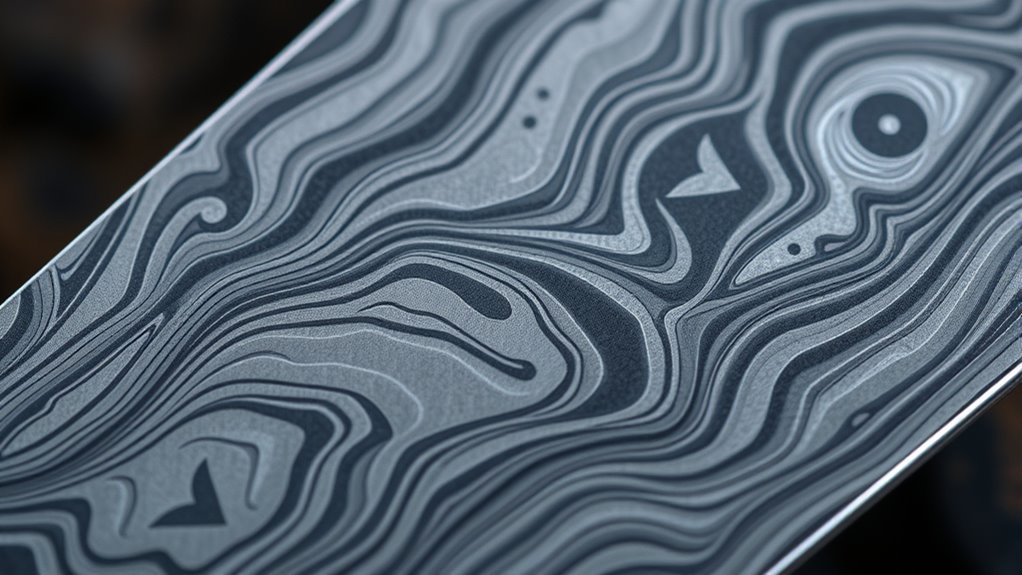
Patterns in Damascus art carry more than just decorative value; they encode specific meanings and cultural symbols. Recognizing these pattern variations helps you understand their deeper message. For example:
- Intricate floral motifs often symbolize growth and renewal.
- Geometric shapes reflect harmony and balance in cultural interpretations.
- Repetitive wave patterns may signify eternity or continuity.
- Bold, contrasting lines can represent strength or protection.
Caring for Damascus Patterned Items

Caring for Damascus patterned items requires gentle handling and proper maintenance to preserve their intricate designs. When it comes to jewelry care, avoid harsh chemicals or abrasive materials that can damage the unique patterns. Regularly clean your Damascus pieces with a soft cloth and mild soap, ensuring you dry them thoroughly. Proper storage solutions are essential; keep your Damascus items in soft pouches or padded jewelry boxes to prevent scratches and exposure to humidity. Avoid storing multiple pieces together to reduce friction that could mar the surface. Handling your Damascus items with care helps maintain their appearance and structural integrity over time. By following these simple tips, you ensure your Damascus patterned items remain stunning and well-preserved for years to come.
The Future of Damascus Steel and Its Revival

The future of Damascus steel looks promising as artisans and enthusiasts increasingly seek to revive this ancient technique. With a focus on sustainable production, modern smiths are exploring eco-friendly methods to recreate its distinctive patterns. This revival emphasizes its cultural significance, connecting us to historical craftsmanship. You can expect:
- Increased use of recycled materials to reduce environmental impact
- Innovations in forging techniques to enhance pattern complexity
- Educational programs promoting traditional skills and cultural understanding
- Collaborations between artisans and researchers to preserve authenticity
- Growing awareness of the espionage history behind Damascus steel, enriching its cultural narrative. Additionally, advancements in sustainable manufacturing methods are helping to minimize the ecological footprint of the forging process. The integration of modern technology into traditional methods is also opening new avenues for creating intricate patterns more efficiently. Emphasizing craftsmanship ensures that the skills and techniques are passed down to future generations. Efforts to modernize forging techniques are allowing artisans to produce more detailed and consistent patterns while maintaining the integrity of the material. These efforts aim to balance tradition with sustainability, ensuring Damascus steel’s legacy endures. As interest grows, you’ll see more handmade pieces that honor both the craftsmanship and cultural heritage behind this iconic material.
Frequently Asked Questions
Can Damascus Steel Be Made Artificially Without Traditional Methods?
Yes, you can create synthetic Damascus steel without traditional methods through pattern replication techniques. These methods involve layering and forging different steels or using advanced processes like pattern welding or etching to mimic the distinctive look of authentic Damascus. While it doesn’t precisely replicate the traditional forging process, synthetic Damascus offers a similar aesthetic and durability, making it a popular choice for those seeking the appearance without the complex, time-consuming traditional craftsmanship.
How Do Pattern Variations Affect the Durability of Damascus Steel?
Pattern variations in Damascus steel can influence durability by affecting microstructure consistency and pattern integrity. When patterns are well-maintained, the steel exhibits even grain distribution, enhancing toughness and resistance to cracking. However, significant pattern variations may lead to weak points, reducing overall strength. You should guarantee proper forging and heat treatment to preserve pattern integrity, which in turn helps maintain durability and performance in your Damascus steel.
Are All Patterned Steels Considered True Damascus?
Not all patterned steels qualify as true Damascus, as only those with consistent patterning and layered forging do. About 80% of steels labeled “Damascus” lack the authentic pattern consistency, affecting their aesthetic appeal and value. True Damascus requires specific forging techniques, ensuring both visual appeal and durability. If pattern consistency isn’t maintained, the steel might look like Damascus but won’t possess the same strength or authenticity.
What Are the Environmental Impacts of Producing Damascus Steel?
The environmental impact of producing Damascus steel varies depending on the methods used. Traditional forging can be energy-intensive, but adopting sustainable practices like recycling metals and optimizing energy use reduces harm. You can lessen your environmental footprint by choosing makers committed to eco-friendly processes, such as using renewable energy sources or sourcing recycled materials. By supporting sustainable practices, you help minimize pollution and conserve resources in Damascus steel production.
Is Damascus Steel Suitable for Culinary Use, Like Knives?
Like a vintage vinyl, Damascus steel offers timeless appeal, making it highly suitable for culinary knives. Its historical craftsmanship guarantees durability, and its distinctive visual appeal adds a touch of artistry to your kitchen. You’ll appreciate its layered strength and sharpness, perfect for precise cuts. Just make sure it’s properly cared for, and you’ll enjoy both beauty and functionality, transforming your cooking experience with a blade that’s as functional as it is striking.
Conclusion
If you appreciate the artistry behind Damascus steel, you’ll find that only about 10% of modern pieces truly match the historic quality. Knowing its origins and how to spot authentic patterns helps you make smarter choices. With proper care, your Damascus items can last generations, preserving centuries of craftsmanship. Embrace the history and craftsmanship behind each pattern—it’s more than just a look; it’s a legacy you carry forward.