Damascus kitchen knives are often marketed as handcrafted, ancient, and superior, but many of these claims can be misleading. While they do feature layered steel with beautiful patterns, much of the market offers mass-produced versions using modern automation. Their performance depends on craftsmanship and materials, not just appearance. If you want to understand what truly sets genuine Damascus knives apart—beyond the hype—you’ll find valuable insights as you explore further.
Key Takeaways
- Many Damascus knives are mass-produced with modern techniques, not handcrafted, despite marketing claims of traditional craftsmanship.
- The distinctive patterns result from layered forging and acid etching, which can be replicated in lower-cost manufacturing.
- Performance benefits like edge retention and toughness depend on steel quality and craftsmanship, not just visual appeal.
- Proper maintenance, including hand washing and oiling, is essential to preserve pattern and prevent rust or damage.
- Authentic Damascus knives involve complex layering and forging processes, but many marketed versions are simpler, machine-made imitations.
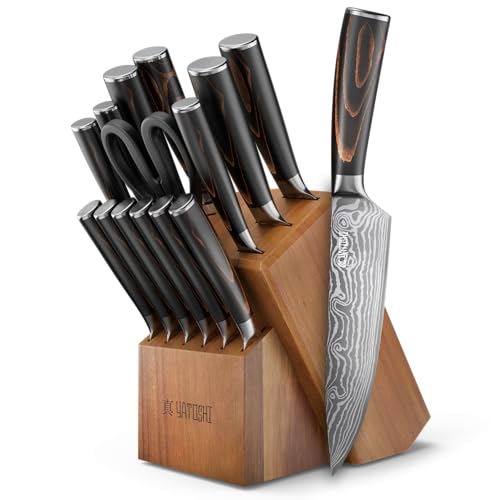
Yatoshi Professional Kitchen Knife Set, 15 Pieces, High Carbon Stainless Steel, Ergonomic Handle
High Carbon Blades: Made with premium 7Cr17 High Carbon Steel that provides a razor-sharp professional quality blade. The…
As an affiliate, we earn on qualifying purchases.
As an affiliate, we earn on qualifying purchases.
The Origins and Craftsmanship Behind Damascus Steel
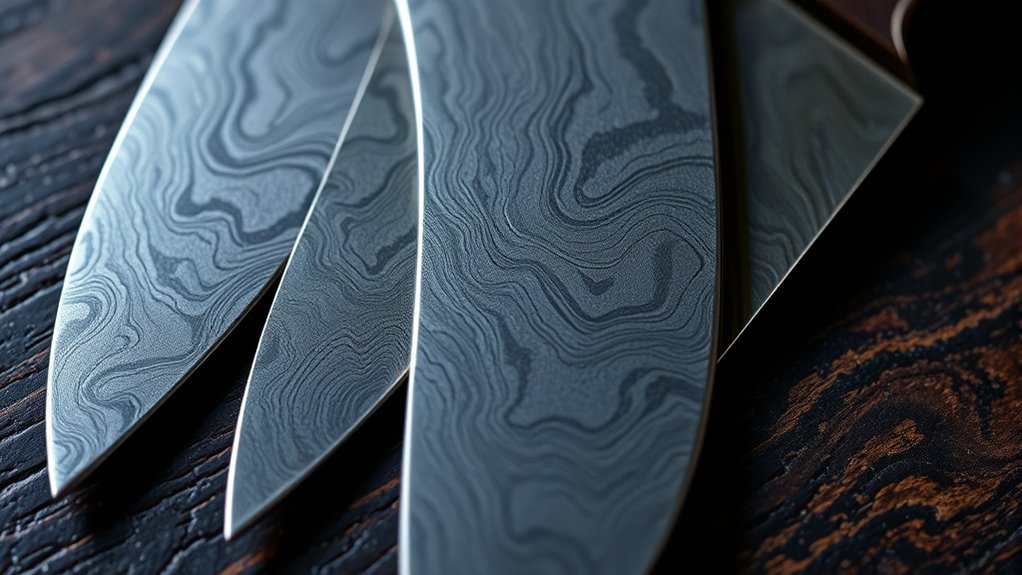
The origins of Damascus steel trace back to ancient Middle Eastern smiths who mastered the art of forging layered steels to create blades with exceptional strength and beauty. You’ll find that these craftsmen combined different steel types, stacking and forge-welding them at high temperatures around 1200°C. They heated the steel repeatedly to 1500-2000°F, then flattened, folded, and twisted the layers countless times, creating intricate, three-dimensional patterns. The process involved precise heating, hammering, and folding over hundreds of cycles, resulting in a unique layered structure. After shaping, the blades were etched in acid to reveal striking wavy or feathered patterns, highlighting the craftsmanship. This meticulous process produced blades renowned for their durability, sharpness, and distinctive aesthetic, laying the foundation for the legendary reputation of Damascus steel. Additionally, the layered structure not only enhanced the blade’s aesthetic appeal but also contributed significantly to its legendary strength and resilience.

PAUDIN Chef Knife, 8 Inch High Carbon Stainless Steel Sharp Kitchen Knife with Ergonomic Handle, Gift Box for Family & Restaurant
Professional Chef's Knife: This PAUDIN kitchen knife is suitable for cutting bread, vegetables, fillets or meats etc, and…
As an affiliate, we earn on qualifying purchases.
As an affiliate, we earn on qualifying purchases.
Deciphering the Pattern: What Makes These Knives Unique?
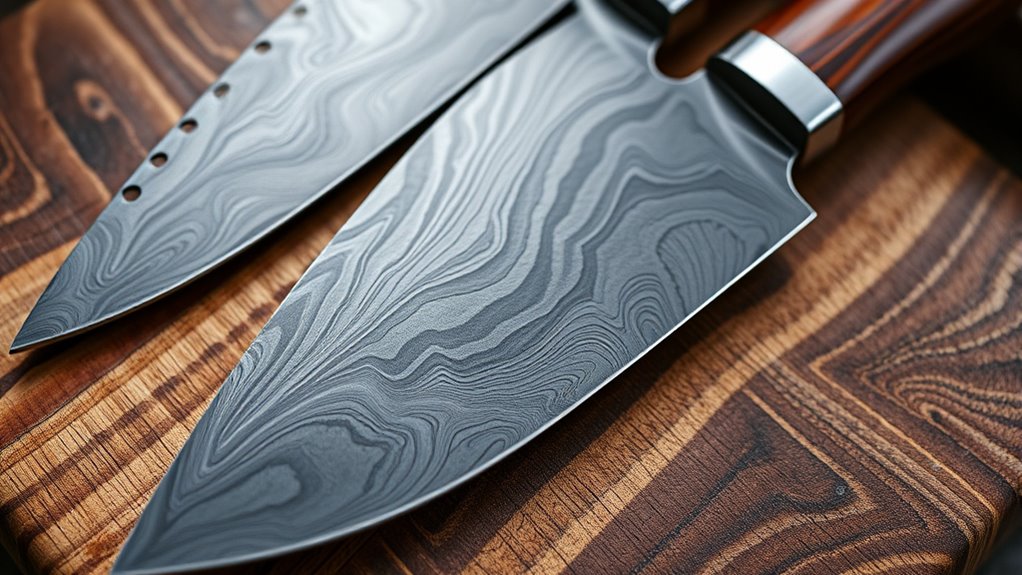
The unique patterns on Damascus knives come from how the steel layers are manipulated during manufacturing. By repeatedly folding, twisting, and forging the layered steels, artisans create intricate designs that are visible after etching. Understanding these pattern formation techniques reveals the artistry and complexity behind each blade’s distinctive appearance. The layering process is fundamental to achieving the varied and striking visual effects seen on these knives. Additionally, the support breakfast options available at some establishments highlight the importance of quality ingredients and presentation in crafting memorable morning meals. Recognizing the free floating nature of the layered steel structure helps explain the durability and aesthetic appeal of these blades. Moreover, mastering the creative storytelling behind the brand enhances consumer appreciation of craftsmanship and tradition in these knives.
Pattern Formation Techniques
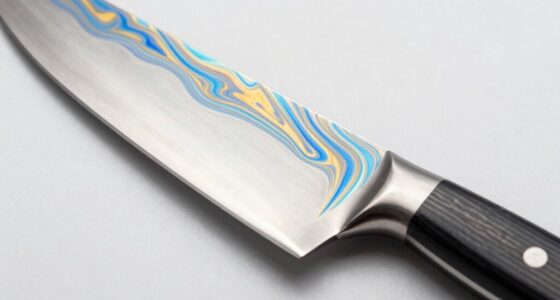
Pattern formation in Damascus knives results from a complex combination of layering, folding, and manipulating different types of steel. You start with stacked steel billets, which are forge-welded at high temperatures, then heated to 1500-2000°F. Repeated folding, twisting, and flattening create intricate layers, often hundreds of times. These processes produce unique 3D patterns, like waves or feathering, depending on how you manipulate the billet. After shaping, the blades undergo acid etching, which highlights the contrast between different steel layers by reacting differently with acids. The etched patterns reveal the distinctive visual effects, such as dark and light streaks. This meticulous process guarantees that each knife has a one-of-a-kind pattern, reflecting the artisan’s skill and the steel’s layered complexity. Understanding how pattern formation occurs can help you appreciate the craftsmanship behind each knife.
Steel Layer Interactions
Every layer of steel in a Damascus knife interacts uniquely during the etching process, creating the distinctive patterns that set these blades apart. Different steels react differently to acid, highlighting contrast between dark and light layers. High-carbon steels etch to reveal sharp, bright lines, emphasizing hardness, while softer steels develop darker, muted tones, adding depth. When layered, these steels form complex, intricate designs resembling wood grain or flowing waves. The interaction depends on each steel’s composition, thickness, and position within the billet. During etching, the acid dissolves the exposed steel surfaces unevenly, accentuating the layered structure. This interplay of materials produces the signature visual complexity, making each Damascus blade a unique mosaic of steel interactions, craftsmanship, and natural pattern formation. Steel Layer Interactions play a crucial role in determining the final appearance and performance of these knives. Additionally, understanding the composition of steels involved can help predict how patterns will develop during etching, allowing artisans to tailor designs more precisely. The layering process itself influences both the aesthetic and functional qualities of the finished blade, highlighting the importance of technique and material selection in Damascus steel creation.
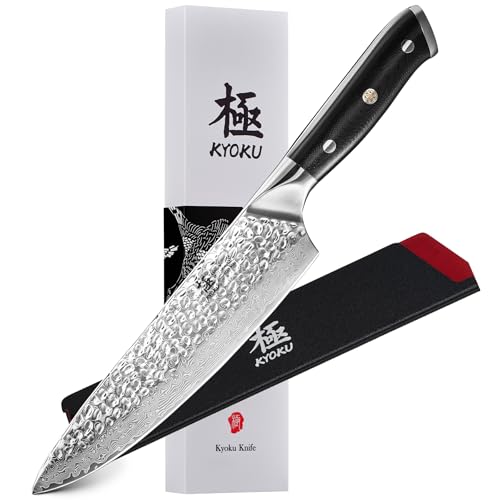
KYOKU Chef Knife – 8"- Shogun Series Japanese Style VG10 Steel Core Hammered Damascus Blade Kitchen Knife – with Sheath & Case
8" chef knife: This all-purpose knife is part of Kyoku, manufactured with modern technology and traditional craftsmanship; its…
As an affiliate, we earn on qualifying purchases.
As an affiliate, we earn on qualifying purchases.
The Truth About Performance: Are Damascus Knives Superior?

Damascus knives combine layers of steel to create both beauty and function, but do they actually perform better than traditional blades? The layered steel offers benefits like improved toughness and edge retention, yet some argue these advantages depend on specific manufacturing techniques. Ultimately, understanding how these layered steels compare to conventional knives helps you decide if Damascus truly delivers superior performance. Additionally, factors such as manufacturing quality and the specific steel types used can greatly influence the knife’s overall effectiveness and durability. Recognizing the layering process involved can also help consumers evaluate the true value of Damascus knives over time. Moreover, the steel composition plays a crucial role in determining how well a Damascus knife holds an edge and resists corrosion, further affecting its long-term performance.
Layered Steel Benefits
Layered steel in Damascus knives offers notable performance advantages, combining the best qualities of different steels into a single blade. This layering creates a composite structure, blending hardness with toughness, which benefits your cutting tasks. The layers also produce unique patterns that enhance visual appeal and can help identify quality craftsmanship. detecting passive voice can improve clarity and readability in your writing about these knives. Moreover, understanding the layered steel benefits can help buyers make informed decisions about their kitchen tools. Recognizing the manufacturing process behind Damascus knives further emphasizes the craftsmanship involved and can influence purchasing choices. Learning about precious metal investments can also provide insight into the value and durability of high-quality blades. Additionally, exploring metal composition can deepen your appreciation of the materials used in premium Damascus knives.
Performance vs. Traditional
While traditional single-steel blades excel in simplicity and ease of maintenance, Damascus knives are often praised for their superior performance. Their layered construction and complex forging processes aim to combine sharpness, toughness, and flexibility. The multiple steel types, with high-carbon layers for edge retention and softer steels for shock absorption, can create a more durable blade. Advanced heat treatments like quenching and tempering further enhance their hardness and resilience. However, performance differences aren’t always clear-cut. A well-made forged single-steel knife can match or exceed a Damascus blade’s sharpness and durability. Ultimately, the true performance depends on craftsmanship, materials, and how you use and maintain the knife. Damascus offers aesthetic appeal and some functional benefits, but it doesn’t automatically guarantee superior cutting power.

Astercook Knife Set, 13 Pieces Kitchen Knives Set with Healthy Anti-Rust Coating, Dishwasher Safe, Stainless Steel Chef Knife Sets with 6 Blade Guards, Perfect Holiday Gifts for Kitchen
Multipurpose Knife Set: This kitchen knives set includes 8" Chef Knife, 8" Slicing Knife, 7" Santoku Knife, 8"…
As an affiliate, we earn on qualifying purchases.
As an affiliate, we earn on qualifying purchases.
Marketing Hype vs. Reality: What Buyers Should Know
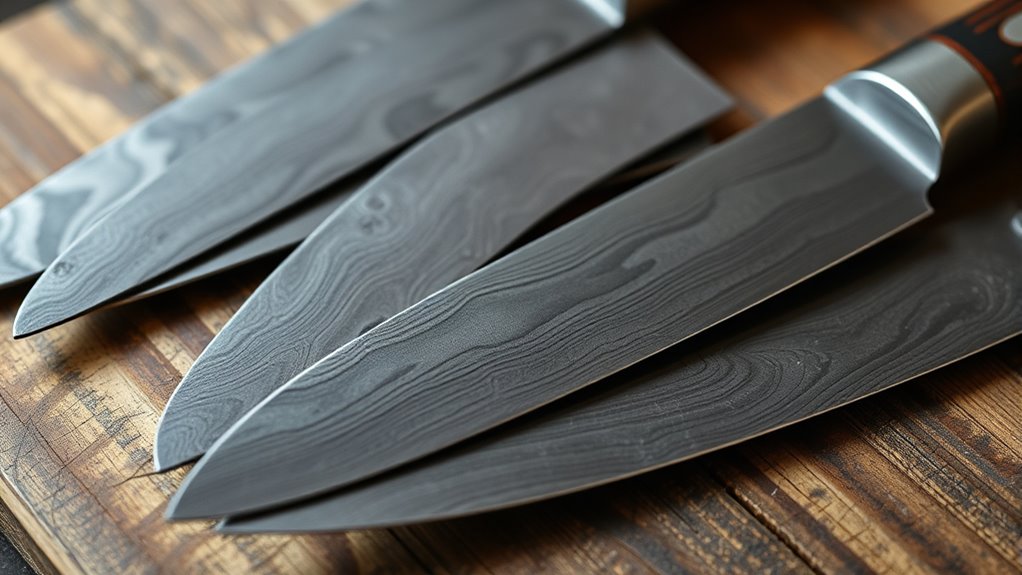
Many marketers hype Damascus knives as endlessly complex and handcrafted masterpieces, but the truth is that not all claims match the reality. While some knives do involve traditional techniques, many are mass-produced with modern methods that simplify the process. You should be aware that:
- Some brands use machine-forged layers, reducing the handcrafted aspect.
- Marketing often emphasizes “handmade” without clarifying automation involved.
- Pattern diversity may be limited, despite claims of unique designs.
- Advanced techniques like vacuum heat treatment are sometimes used to boost performance, not tradition.
- Price tags can be inflated by branding rather than craftsmanship quality.
- Understanding the manufacturing process behind Damascus knives can help distinguish genuine craftsmanship from marketing hype.
- Recognizing the layering process can reveal whether a Damascus knife is truly traditional or produced with modern automation.
- Being aware of production techniques reveals how much of the process is manual versus automated, helping you assess authenticity.
- Educating yourself on materials used can further clarify whether a knife is crafted with traditional or modern methods.
Knowing this helps you see past the hype, so you can make smarter choices based on actual quality and performance, not just marketing buzz.
Maintenance and Longevity of Damascus Kitchen Knives
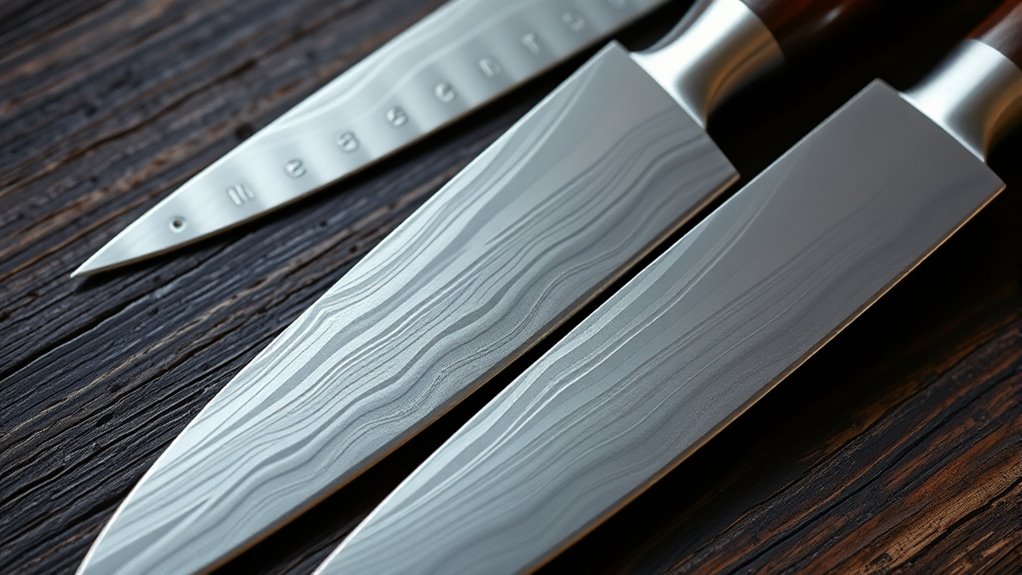
Understanding how to properly maintain your Damascus kitchen knife is key to preserving its impressive pattern and sharpness over time. Regular cleaning is essential—you should hand wash it immediately after use with warm water and mild soap, avoiding dishwasher exposure that can cause corrosion or pattern damage. Dry the blade thoroughly to prevent rust, especially since some layers contain high-carbon steel prone to oxidation. Sharpen your knife regularly using a whetstone or appropriate sharpening tool to keep the edge razor-sharp. Store it carefully, ideally in a wooden block or on a magnetic strip, to prevent nicks and dulling. Periodic oiling with food-grade mineral oil helps protect the steel layers from moisture and corrosion. Additionally, understanding the layered structure of Damascus steel can help you better appreciate its durability and unique aesthetic. Proper maintenance guarantees your Damascus knife remains a functional and beautiful kitchen tool for years. Regular inspection of the jewelry materials used in piercings and their properties can further ensure safe and effective care for your body modifications.
Choosing the Right Damascus Knife: Tips for Consumers
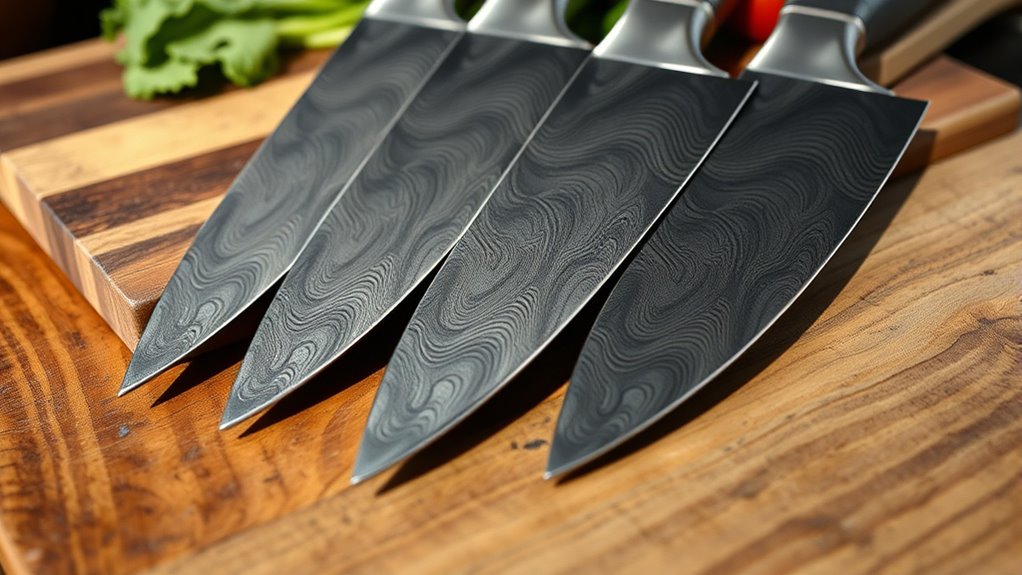
Choosing the right Damascus knife involves considering both your cooking needs and the knife’s craftsmanship. First, assess your skill level—beginner or professional—to select a blade with appropriate hardness and flexibility. Look for authentic layered patterns etched clearly, indicating proper forging. Consider weight and balance; a well-balanced knife reduces fatigue during extended use. Examine the steel type; high-carbon layers ensure sharpness, while softer steels add durability. Check the handle material for comfort and grip, especially if you’ll be using it daily. Ultimately, buy from reputable sources to avoid counterfeits.
Choose a Damascus knife with authentic layered patterns, balanced weight, quality steel, and a comfortable handle from reputable sources.
- Authentic layered pattern with visible contrast
- Proper weight and balance for your hand
- Steel composition suited for your tasks
- Comfortable, non-slip handle material
- Reputable seller or brand guarantee
Frequently Asked Questions
Can All Damascus Knives Be Considered Authentic or Handmade?
Not all Damascus knives are authentic or handmade. Some are mass-produced using modern techniques like vacuum heat treatment and powder metallurgy, which can be automated. Handmade knives involve traditional forging, folding, and patterning processes, making each piece unique. When buying, check if the knife’s craftsmanship, patterning, and finishing prove it’s handmade. Authenticity often means skilled artisanship, but many modern versions are factory-made with similar appearances.
Do Modern Damascus Steels Differ Significantly From Historical Methods?
Modern Damascus steels differ quite a bit from historical methods. You’ll notice that today’s techniques incorporate advanced technology like vacuum heat treatment, powder metallurgy, and precise kiln processes, which weren’t available before. While traditional forging, folding, and etching still create stunning patterns, modern methods often focus on enhancing performance, durability, and consistency. So, even though the aesthetic remains, the actual manufacturing process has evolved markedly, blending old craftsmanship with new science.
Are Pattern Variations Indicative of Quality or Craftsmanship?
Patterns on Damascus knives are like fingerprints—unique but not a mark of quality alone. You might think intricate designs mean better craftsmanship, but they often showcase aesthetic choices, not performance. While skilled artisans can produce beautiful, consistent patterns through precise folding and etching, the true quality lies in the steel’s composition, heat treatment, and overall construction. So, don’t judge a knife solely by its pattern; craftsmanship and material matter more.
How Does the Layering Process Affect Knife Durability?
The layering process greatly enhances your knife’s durability by combining different steels for toughness, edge retention, and shock resistance. Repeated folding and forge-welding create a strong, flexible structure that withstands impact and prevents chipping. This layered approach also distributes stress evenly, making your knife less prone to cracking or breaking over time. Overall, the meticulous layering process guarantees your Damascus knife remains resilient through daily use.
Is the Cost Justified by Performance or Branding?
You might find the cost justified if you appreciate craftsmanship and performance. The intricate layering process, involving hundreds of hours of forging, folding, and etching, creates a blade that’s both sharp and durable. While branding can boost prices, the unique patterns and improved edge retention come from this meticulous work. If you value artistry and functional quality, investing in a Damascus knife makes sense, turning a simple tool into a lifetime asset.
Conclusion
So, next time you’re dazzled by that shimmering Damascus knife, remember—it’s probably just pretty steel pretending to be a masterpiece. Don’t fall for marketing magic; your old trusty blade might cut just as well without the myth. Whether you’re wielding a true artisan piece or a shiny impostor, the real secret’s in your skill, not the pattern. Happy chopping, and may your knives be sharp—whether real or just really convincing.