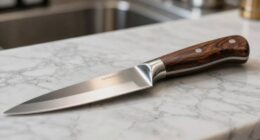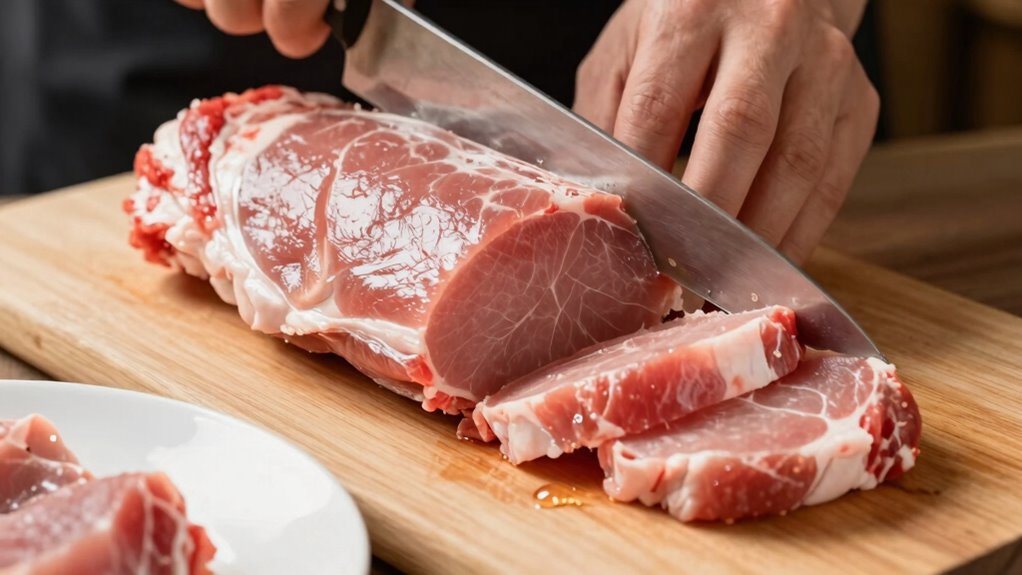
Start by ensuring your workspace is clean and your knife is sharp. Trim away the silver skin and excess fat, but avoid removing all the fat to keep flavor and moisture. When slicing, cut against the grain for tender, even pieces, whether you’re preparing roast, stir-fry, or sandwiches. For the best results, follow proper techniques and enjoy consistent, professional-looking slices—keep going to discover more tips that will elevate your pork tenderloin skills.
Key Takeaways
- Use a sharp knife to carefully remove silver skin and excess fat, focusing on connective tissue for better tenderness.
- Trim silver skin with steady, precise cuts, avoiding excessive meat loss while improving texture.
- Slice against the grain for tender, evenly cooked pieces suited for various recipes.
- For uniform cooking, cut the tenderloin into even portions or thin slices, depending on your dish.
- Wrap and store leftovers properly to preserve freshness and prevent freezer burn.

Trimming and slicing pork tenderloin is a simple process that guarantees you get the most flavor and tenderness from this lean cut. Before you start, make sure your workspace is clean and equipped with a sharp knife—this makes trimming easier and safer. A sharp knife allows you to make precise cuts, which is essential for removing any silver skin or excess fat without losing too much meat. When trimming, focus on removing the thin silver skin that can cause toughness and chewy bites. You don’t need to remove all fat, just the silvery connective tissue, which doesn’t melt during cooking. This step helps improve the texture and guarantees your pork cooks evenly, maintaining its moistness.
Once trimmed, you can decide how to slice your tenderloin based on your recipe or preference. For even cooking and presentation, slicing against the grain is key. This technique shortens the muscle fibers, resulting in tender, bite-sized pieces. For roasts, you might leave the tenderloin whole, but for stir-fries or sandwiches, sliced thinly. When slicing, keep your knife at a slight angle and make smooth, steady cuts. This not only enhances presentation but also helps your pork cook uniformly, preventing overcooking on the edges while the center remains underdone.
Cooking techniques play an essential role in how you prepare your sliced pork tenderloin. It can be roasted, grilled, sautéed, or cooked sous-vide. Each method benefits from evenly sliced portions to guarantee uniform heat transfer. Additionally, proper storage tips are crucial once you’ve trimmed and sliced your pork. Wrap leftovers tightly in plastic wrap or store in an airtight container to prevent drying out and to keep odors from other foods at bay. Refrigerate sliced pork within two hours of cooking, and use it within three to four days for maximum freshness. If you want to store it longer, freezing is a good option—just make sure to vacuum-seal or wrap it tightly to prevent freezer burn.

Brewin CHEFILOSOPHI Japanese Chef Knife Set 5 PCS with Elegant Red Pakkawood Handle Ergonomic Design,Professional Ultra Sharp Kitchen Knives for Cooking High Carbon Stainless Steel
DESIGN PHILOSOPHY - The Chefilosophi Series professional kitchen knife set from Brewin combines cutting edge kitchen technology with...
As an affiliate, we earn on qualifying purchases.
Frequently Asked Questions
Can I Freeze Trimmed Pork Tenderloin for Later Use?
Yes, you can freeze trimmed pork tenderloin for later use. To do this, use proper storage techniques by wrapping the meat tightly in plastic wrap or aluminum foil, then place it in an airtight container or freezer bag. This helps prevent freezer burn and preserves freshness. Remember to label your leftovers with the date, so you use them within 3 to 4 months for ideal quality.
What Utensils Are Best for Trimming and Slicing Pork Tenderloin?
You’ll want sharp utensils for trimming and slicing pork tenderloin. Use a paring knife for trimming excess fat and silver skin, and a serrated knife for slicing through the tenderloin gently. A carving fork stabilizes the meat while you cut, making it safer and easier. Always work on a sturdy cutting board to keep everything steady. These tools help you achieve clean, even slices like a pro.
How Do I Prevent the Pork From Drying Out During Slicing?
Irony alert: the secret to preventing your pork from drying out isn’t some fancy technique, it’s simple moisture retention. As you slice, use gentle, smooth slicing techniques, aiming for even cuts across the tenderloin. Rest the meat before slicing to keep juices in, and cut against the grain for tenderness. These tricks help keep your pork juicy, so it won’t turn dry even if you slice it thin.
Is It Necessary to Remove All Silver Skin Before Cooking?
You should remove most of the silver skin before cooking because it doesn’t break down and can make the meat tough. Silver skin removal helps make certain of better meat tenderness and even cooking. Use a sharp knife to carefully slide under the silver skin and lift it away, preventing it from curling or pulling on the meat. Doing this step makes your pork tenderloin more tender and easier to slice perfectly.
How Can I Tell if Pork Tenderloin Is Fully Cooked?
You can tell if pork tenderloin is fully cooked by checking its internal temperature and color. Use a meat thermometer to make sure it reaches 145°F (63°C), which guarantees safety and juiciness. The internal color should be slightly pink but not red. Once it hits the right temperature, remove it from heat and let it rest for a few minutes to allow juices to settle, ensuring a tender, perfectly cooked tenderloin.

PAUDIN Chef Knife, 8 Inch High Carbon Stainless Steel Sharp Kitchen Knife with Ergonomic Handle, Gift Box for Family & Restaurant
Professional Chef's Knife: This PAUDIN kitchen knife is suitable for cutting bread, vegetables, fillets or meats etc, and...
As an affiliate, we earn on qualifying purchases.
Conclusion
Now that you’ve learned how to trim and slice pork tenderloin like a pro, think of it as sculpting a masterpiece—you shape it just right so every bite is perfect. Remember, even seasoned chefs started as beginners. With practice, your skills will improve, and cooking will become more enjoyable. So, don’t be afraid to experiment and make mistakes. Every slice brings you closer to culinary confidence—your own personal masterpiece in the making.
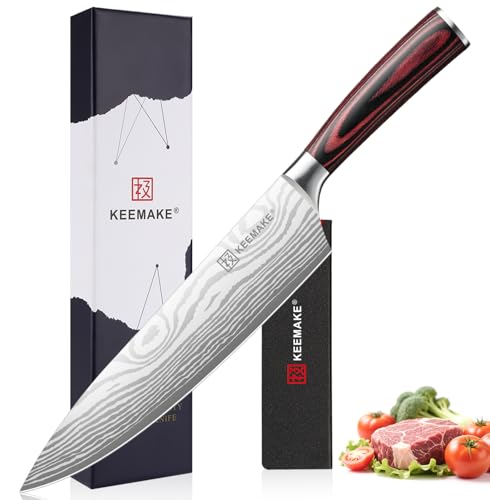
KEEMAKE Chef Knife 8 Inch - Ultra Sharp Kitchen Knife 1.4116 High Carbon Stainless Steel Blade, Ergonomic Handle, Professional Meat Knife for Home Cooking & Chefs, w/Sheath & Gift Box
Premium Material Chef Knife: Crafted from high-end 1.4116 high carbon stainless steel with 58±2 HRC hardness, this chefs...
As an affiliate, we earn on qualifying purchases.
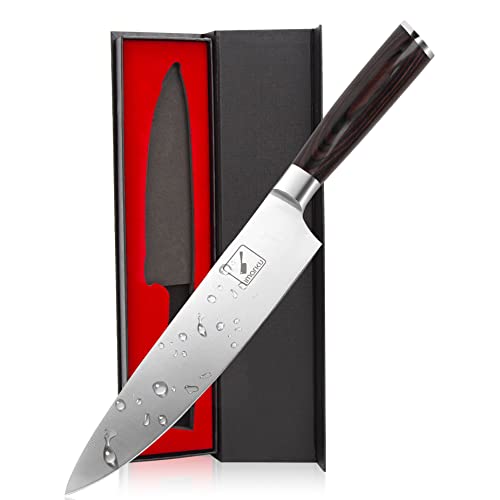
imarku Japanese Chef Knife - Sharp Kitchen Knife 8 Inch Chef's Knives HC Steel Paring Knife, Unique Gifts for Men and Women, Gifts for Mom or Dad, Kitchen Gadgets with Gift Box, Gyutou Knives
High-Carbon Stainless Steel Blade: It is manufactured from high-quality stainless steel that maintains its functionality for a long...
As an affiliate, we earn on qualifying purchases.