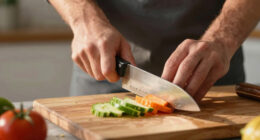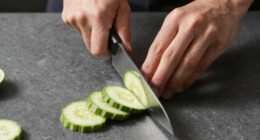
To trim fat and silver skin without wasting good meat, use a sharp, flexible knife and work slowly along the layer, keeping the blade just beneath the silver skin at a gentle angle. Pull the silver skin taut and peel it away with controlled strokes. For fat, cut smoothly and deliberately, leaving some for flavor unless your recipe says otherwise. Master these techniques, and you’ll maximize quality while minimizing waste—learn more as you practice.
Key Takeaways
- Use a sharp, flexible knife and gentle, precise strokes to peel silver skin without removing too much meat.
- Angle the blade slightly beneath the silver skin, working slowly along its length for controlled removal.
- Focus on thick or interfering fat, trimming carefully to preserve flavor while avoiding meat waste.
- Pull silver skin taut to create a smooth surface, making it easier to cut away cleanly.
- Maintain steady, deliberate motions and practice regularly to improve efficiency and minimize meat loss.
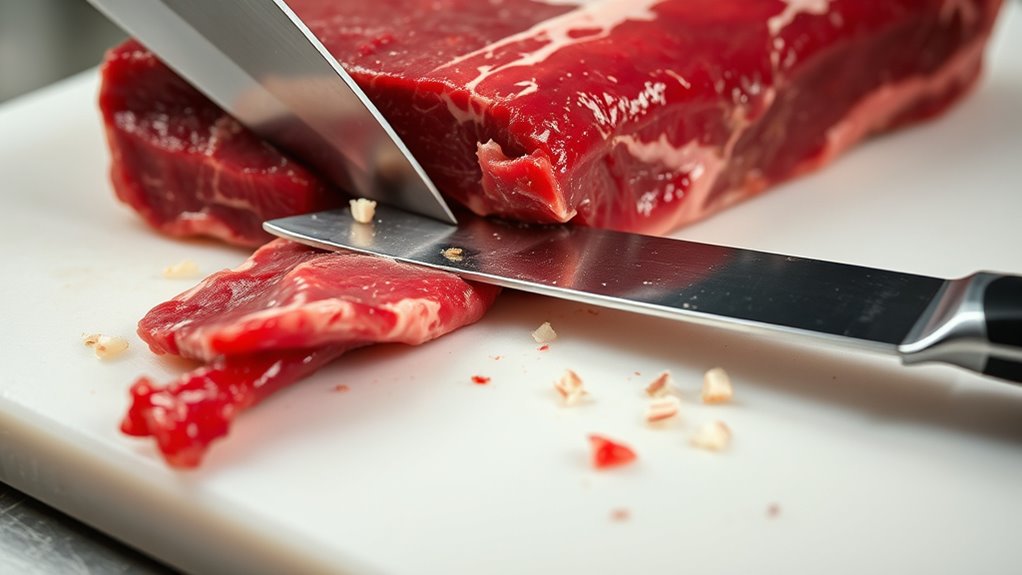
Trimming fat and silver skin from meat is an essential step to guarantee a more tender, flavorful dish. Proper meat preparation starts with understanding how to remove unwanted layers without sacrificing quality. The key lies in mastering effective knife techniques that allow you to work efficiently and precisely. When you approach meat trimming, your goal is to eliminate excess fat and silver skin while preserving as much of the good meat as possible. This not only improves the texture and taste but also ensures better cooking results.
Proper meat trimming enhances flavor, tenderness, and efficiency through precise knife techniques.
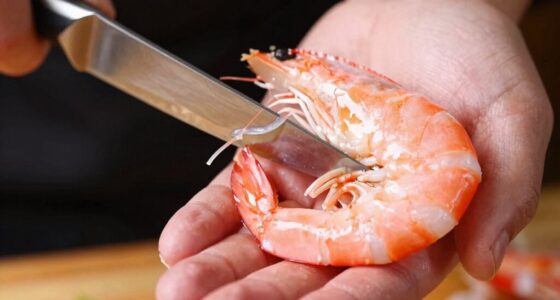
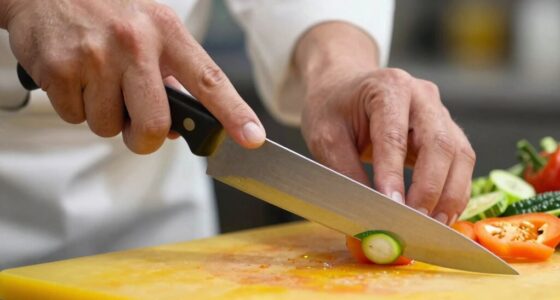
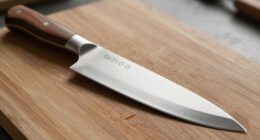
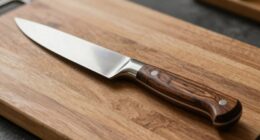
Begin by placing the meat on a clean cutting surface. Use a sharp, flexible boning or paring knife—these are ideal tools for detailed trimming because of their agility and control. Hold the knife at a slight angle, almost as if you’re slicing through butter, and keep your fingers curled away from the blade. This grip gives you greater control and helps prevent accidental cuts. As you start, identify the silver skin, which is the shiny, tough layer of connective tissue. It often lies just under the fat but can also run through leaner cuts. To remove it, slide the blade just beneath the silver skin, angling the knife slightly upward, and work slowly along the length of the layer. Use gentle, steady strokes to lift and peel it away, pulling the silver skin taut as you go. This technique minimizes waste and reduces the risk of removing too much meat.
When trimming fat, focus on the areas where it’s thickest or where it might interfere with cooking. Cut away excess fat with smooth, deliberate motions, avoiding tearing the meat. Remember, some fat can add flavor and moisture, so don’t remove it all unless your recipe calls for lean meat. Instead, aim for a balanced trim that enhances the dish without sacrificing juiciness. As you work, keep your knife sharp; dull blades require more force and can lead to uneven cuts or accidents. Regularly hone your knife to maintain a clean edge, especially when working on tough layers like silver skin.
Practicing proper meat preparation and honing your knife techniques will help you become more efficient at trimming. The more you do it, the better you’ll become at recognizing which parts to keep and which to discard. With patience and precision, you’ll ensure your meat is perfectly prepared, ready to cook to perfection. This skill not only elevates your dishes but also minimizes waste, making your kitchen work more sustainable and enjoyable.

HOSHANHO Fillet Knife 7 Inch, Super Sharp Boning Knife in High Carbon Stainless Steel, Professional Japanese Fish Knives for Meat Poultry Cutting
【Premium High Carbon Steel】This professional fish fillet knife is made from high-quality Japanese stainless steel 10Cr15CoMoV, which makes…
As an affiliate, we earn on qualifying purchases.
As an affiliate, we earn on qualifying purchases.
Frequently Asked Questions
Can I Reuse Trimmed Fat for Cooking or Flavoring?
Yes, you can reuse trimmed fat for cooking uses and flavor enhancement. Render it down to make flavorful fat, like schmaltz or tallow, which adds richness to dishes, sautés, or roasted vegetables. Just make certain the fat is clean and free of any impurities. Reusing trimmed fat not only minimizes waste but also boosts flavor, making your meals more savory and satisfying.
What Tools Are Best for Trimming Silver Skin Effectively?
You should use precision tools like a small, flexible boning knife or a sharp paring knife for trimming silver skin effectively. These knives allow you to make precise cuts and easily follow the contours of the meat. Keep your knives sharp; dull blades can slip and waste meat or cause injury. With sharp, precision tools, you’ll remove silver skin cleanly and efficiently, preserving as much good meat as possible.
How Do I Prevent Over-Trimming and Losing Good Meat?
You might worry about losing meat, but careful trimming with sharp tools and slow, deliberate techniques protect meat quality. Focus on removing only the silver skin and excess fat, staying close to the surface without cutting into the muscle. Use your knife’s tip for precision, and don’t rush—this way, you prevent over-trimming while maintaining the meat’s flavor and tenderness. Practice makes perfect, so take your time.
Is Trimming Necessary for All Cuts of Meat?
Trimming isn’t necessary for all cuts of meat, but it can markedly improve meat quality, especially for cuts with excess fat or silver skin. Use proper trimming techniques to remove unwanted fat without wasting the good meat. Focus on trimming only what’s necessary to enhance flavor and texture, preventing over-trimming. By understanding when and how to trim, you’ll ensure your meat remains flavorful and tender without sacrificing quality.
How Should I Store Trimmed Fat and Silver Skin?
You should store trimmed fat and silver skin in an airtight container or resealable bag to prevent spoilage and odors. For fat storage, keep it in the refrigerator for up to a month or freeze for longer preservation. Silver skin preservation isn’t necessary beyond refrigeration; just wrap it tightly. Proper storage maintains freshness and flavor, ensuring you get the most out of your trimmed meat and avoid waste.

Cuisinart CGK-300 2-in-1 Meat Trimmer and Silver Skin Lifter
SHARP TRIMMING BLADE: The sharp blade slices through fat easily. Comes with three replacement blades and a blade…
As an affiliate, we earn on qualifying purchases.
As an affiliate, we earn on qualifying purchases.
Conclusion
Now that you know how to neatly nip away fat and silver skin, you’ll never waste wonderful meat again. With a little patience and practice, you’ll perfect your technique, turning tough trims into tender treasures. Remember, trimming takes time, but the results are totally worth it. So, stay sharp, stay steady, and savor every succulent bite—because smart trimming makes for sensational steaks and superb roasts. Happy honing your honing skills!
VUCVOLH Meat Chopper, Heat Resistant Ground Beef Masher & Hamburger Smasher, Mix and Chop Kitchen Tool for Taco Meat & Potato Masher, Dishwasher Safe, Black
【Effortless Meat Chopping & Mashing】This essential manual chopper easily chops, crumbles, and breaks up ground beef, turkey, and…
As an affiliate, we earn on qualifying purchases.
As an affiliate, we earn on qualifying purchases.

Cutluxe Honing Rod, Professional Knife Sharpener Rod – 10" Honing Steel – Ergonomic Handle Design, Grilling Gifts for Men – Artisan Series
KEEP YOUR KNIVES SHARP – The Cutluxe Artisan Series 10-Inch honing rod is used to hone and realign…
As an affiliate, we earn on qualifying purchases.
As an affiliate, we earn on qualifying purchases.