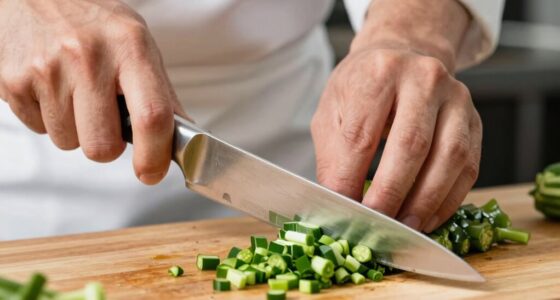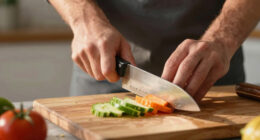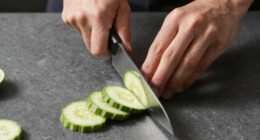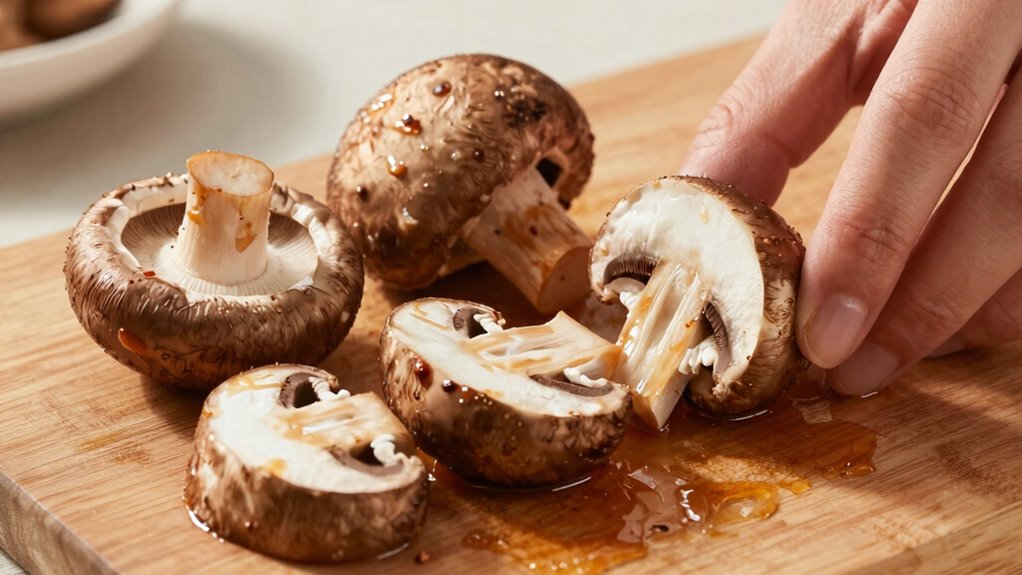
To maximize browning, slice your mushrooms uniformly to about 1/8 to 1/4 inch thickness, which guarantees even cooking and caramelization. Use a sharp knife to make clean cuts, avoiding crushing the tissue. Thinner slices brown faster and become crisp, while slightly thicker slices develop deeper flavor and tenderness. Choosing the right slice size based on your dish helps access their rich umami taste. Keep exploring for more tips on perfecting your mushroom slices!
Key Takeaways
- Use a sharp knife to ensure clean, even slices that promote uniform browning.
- Slice mushrooms to about 1/8 to 1/4 inch thickness for optimal caramelization and crispness.
- For smaller mushrooms, thin slices enhance quick browning; larger mushrooms may need slightly thicker cuts.
- Handle mushrooms gently and avoid rinsing under water to prevent excess moisture that hampers browning.
- Match slice size and shape to mushroom variety and cooking method to maximize flavor development.

Slicing mushrooms properly is key to achieving maximum browning and flavor development. When you cut mushrooms thoughtfully, you unlock their full potential, allowing their natural umami and earthy flavors to shine through. The way you slice mushrooms influences how they cook, so choosing the right technique can make a big difference in your dishes. Different mushroom varieties respond differently to slicing methods, so understanding these nuances helps optimize your cooking results.
First, consider the type of mushroom you’re working with. For example, cremini and button mushrooms are small and dense, making them ideal for thin, even slices that cook quickly and brown evenly. Portobellos, on the other hand, are larger and thicker, so slicing them into slightly thicker pieces prevents overcooking while still promoting good browning. Shiitake mushrooms have a firm texture and a more intense flavor, so slicing them into thicker strips can help preserve their texture and enhance their flavor during cooking. Recognizing these differences helps you decide whether to go for thin slices, thick slices, or even halves.
Next, pay attention to your cutting technique. Use a sharp knife to make clean, precise cuts—dull blades crush the mushroom tissue, releasing excess moisture and resulting in soggy, uneven browning. Before slicing, clean your mushrooms gently with a damp cloth or soft brush to remove dirt; avoid rinsing them under water, as mushrooms absorb moisture, which hampers browning. When slicing, hold the mushroom firmly with your non-dominant hand and use smooth, controlled movements to create uniform slices. Consistent thickness ensures even cooking and browning, especially important when working with different mushroom varieties that may cook at different rates.
To maximize browning, slice mushrooms to a thickness of about 1/8 to 1/4 inch. Thinner slices will brown faster and develop a crisp exterior, while thicker slices allow for more tenderness inside. If you’re aiming for a caramelized, deeply browned flavor, opt for slightly thicker slices to prevent burning and to allow caramelization to develop fully. Remember, the size and shape of your slices influence how they cook—smaller, thinner slices will crisp up quickly, making them perfect for toppings or stir-fries, whereas larger slices work well in sautés or stuffing. Adjust your slicing technique based on the desired texture and flavor intensity.

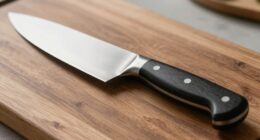
MOSFiATA 8" Super Sharp Professional Chef's Knife with Finger Guard and Knife Sharpener, German High Carbon Stainless Steel EN1.4116 with Micarta Handle and Gift Box
【High Carbon German Stainless Steel Laser-engraved Pattern(Not Damascus Pattern )】 MOSFiATA 8 inch pro chef's knife is made…
As an affiliate, we earn on qualifying purchases.
As an affiliate, we earn on qualifying purchases.
Frequently Asked Questions
Does Mushroom Size Affect Browning?
Yes, mushroom size does affect browning. When mushrooms are uniform in size and slice thickness, they cook more evenly, leading to better browning. Smaller slices or uniform sizes increase surface area, promoting caramelization and flavor development. If mushrooms are uneven, larger pieces might stay soggy or undercooked, while smaller ones could burn. So, for maximum browning, make sure your mushrooms are sliced uniformly with consistent thickness.
Can Slicing Technique Impact Texture?
Yes, your slicing technique can impact texture. Using consistent slicing thickness guarantees even cooking and a tender bite, while experimenting with cutting angles — like diagonal cuts — can create a more interesting mouthfeel. Thinner slices cook faster and become softer, whereas thicker slices retain more firmness. Pay attention to your slicing method, and you’ll control the mushroom’s final texture, enhancing your dish’s overall quality.
Should Mushrooms Be Dried Before Slicing?
No, you shouldn’t dry mushrooms before slicing unless you’re making dried mushrooms or aiming to eliminate excess moisture for specific recipes. For fresh mushrooms, moisture removal isn’t necessary and can be counterproductive. If they are damp, gently pat them dry with a paper towel to ensure they slice well and brown nicely during cooking. Proper moisture management helps you achieve better texture and flavor in your dishes.
Is It Better to Cut or Tear Mushrooms?
You should cut mushrooms rather than tear them, as cutting gives you better control over mushroom texture and guarantees consistent slices. Using a sharp knife allows for precise cutting, which promotes even browning and prevents damage to the cell walls. Tearing may cause uneven pieces and rougher edges, making it harder to achieve uniform cooking. So, for ideal results, opt for precise, clean cuts with a sharp knife.
How Does Cooking Temperature Influence Browning?
Cooking temperature is your secret weapon for browning mushrooms to perfection. Crank up the heat during sautéing or roasting, and watch the Maillard reaction work its magic, developing rich flavors and a tempting crust. Low and slow? That’s for folks who enjoy soggy mushrooms and bland flavor. So, turn up the heat, embrace those sizzling cooking methods, and let your mushrooms reach their full, flavorful potential. Bon appétit!

Suuker Onion Holder for Slicing, Stainless Steel Large Onion Cutter, Non-Slip Vegetable Chopper Tomato Slicer for Potato Lemon, Kitchen Slicing Guide & Meat Tenderizer Tool
Food-Grade Stainless Steel Construction: Made of premium food-grade stainless steel, fully compliant with food contact, BPA-free, sharp for…
As an affiliate, we earn on qualifying purchases.
As an affiliate, we earn on qualifying purchases.
Conclusion
By slicing mushrooms evenly and not too thick, you guarantee they brown beautifully, like a sunset spreading across the sky. Remember, thin slices cook faster and develop that rich, caramelized flavor you’re after. Don’t be afraid to experiment with different thicknesses to find what works best for your dishes. With these tips, your mushrooms will turn out perfectly browned every time, adding depth and flavor just like a well-crafted painting that captures every detail.

Calphalon® Premier Ceramic Nonstick 8" and 10" Frying Pan Set, Mushroom Grey
Cleans in Seconds with Quick Cleaning Technology: Nonstick surface keeps foods from sticking so you can spend more…
As an affiliate, we earn on qualifying purchases.
As an affiliate, we earn on qualifying purchases.

OXO Good Grips Vegetable Brush Black, 1 EA
Nylon bristles clean thoroughly
As an affiliate, we earn on qualifying purchases.
As an affiliate, we earn on qualifying purchases.