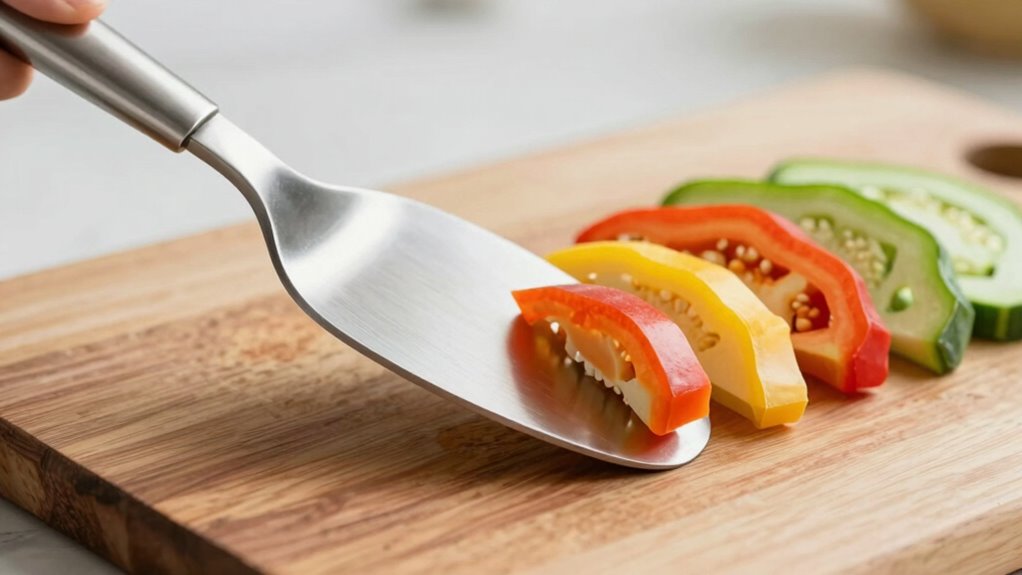
To scoop food off a board without damaging the edges, use controlled, gentle motions with the side of a flat spatula or knife rather than forceful scraping. Hold your tool at a slight angle and guide it under the food, lifting or pushing smoothly. Avoid dragging or pressing too hard near the edges. Using the right tools and techniques helps protect your board’s edges and prolong its life—keep going to discover more easy, safe methods.

Get kitchen gear delivered free with Prime
- Fast, free delivery on millions of items
- Prime Video, Amazon Music and more included
- Member-only deals all year
Key Takeaways
- Use the side of a sharp knife to gently gather and lift food instead of forceful scraping.
- Employ a wide, flat spatula designed for scooping to minimize edge contact.
- Slide the blade at a slight downward angle beneath the food to lift without damaging the edge.
- Opt for tools with smooth, rounded edges to reduce scraping against the board.
- Apply controlled, gentle motions to transfer food, avoiding excessive pressure on the board’s edges.
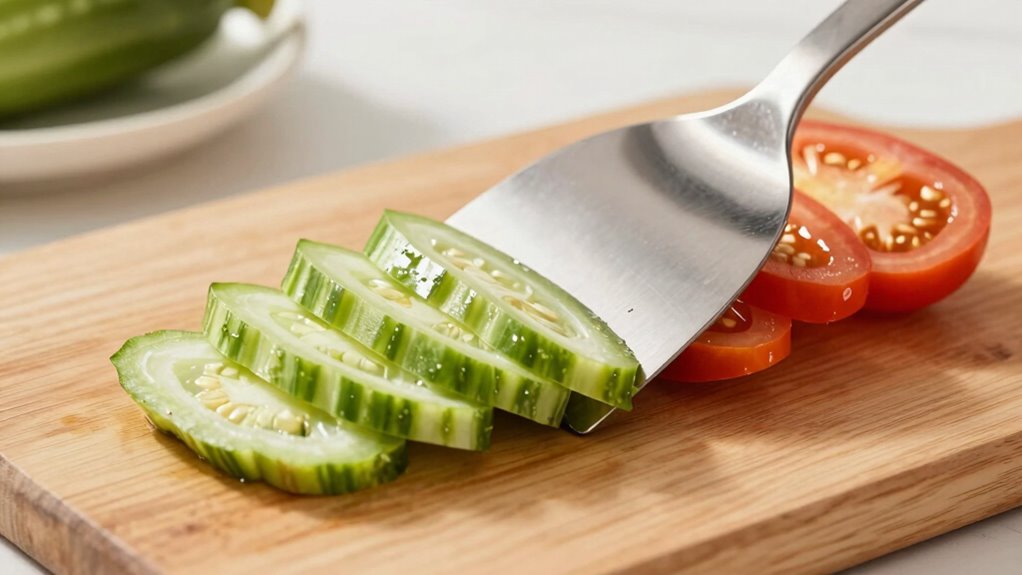
When you’re preparing a meal, the last thing you want is to damage your cutting board’s edge while scooping up food. A damaged edge not only looks unsightly but can also compromise the durability of your board over time. To prevent this, it’s essential to use proper techniques that protect both your cutting surface and your knives. Focusing on knife safety and effective cutting techniques helps you handle food efficiently without risking harm to your board’s edges or yourself.
Protect your cutting board’s edges with proper techniques for safer, longer-lasting food prep.
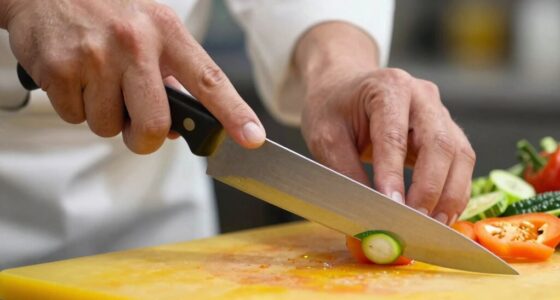
The key to avoiding damage starts with how you handle your knife. Keep your blades sharp—dull knives require more force, which increases the risk of slipping and damaging your board. When you cut, use controlled, deliberate motions rather than hacking away randomly. This not only preserves your cutting board’s edge but also makes your cuts cleaner and safer. Proper cutting techniques involve curling your fingers inward on the hand holding the food, so your knuckles guide the knife and keep your fingertips protected. This grip also gives you greater control, making scooping and transferring food more precise.
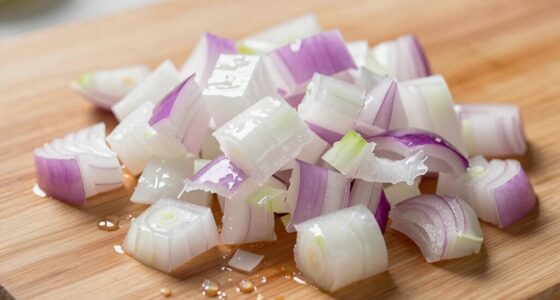
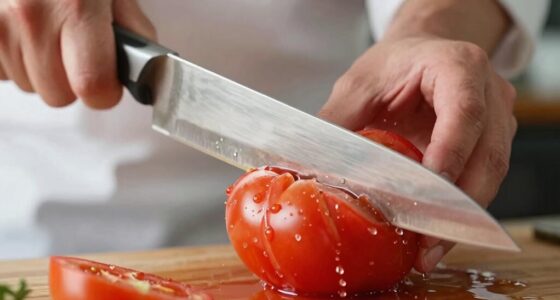
When it’s time to scoop food off the board, instead of dragging the food with the edge of a spatula or scraping forcefully, consider using your knife as a tool. Hold the knife flat against the food, with the blade angled slightly downward, and gently slide it underneath the ingredients. This method not only minimizes contact with the board’s edge but also allows you to lift or push food into a bowl or pan smoothly. If you’re scooping a pile of chopped vegetables or herbs, use the side of the blade to gather everything together, then lift it away carefully. This technique reduces stress on the board’s edges and prolongs its lifespan. Additionally, using appropriate tools can help you transfer food more efficiently and safely.
As an affiliate, we earn on qualifying purchases.
Frequently Asked Questions
Can I Use the Same Method on All Types of Cutting Boards?
You can’t use the same method on all cutting boards because different materials like bamboo, plastic, or wood require specific care. For alternative cutting board materials, avoid harsh tools that might scratch or damage the surface. Instead, use eco-friendly cleaning solutions to keep your boards in good shape. Gentle scooping techniques work best across materials, helping you preserve your boards’ edges without harming them, regardless of their type.
What Tools Are Best for Gentle Scooping?
A gentle hand is worth a gentle tool. For scoop material, use a flexible silicone spatula or a wide, flat plastic spatula—they’re gentle and won’t damage the edge. These tools allow you to scoop food off the board smoothly, preserving the edge’s integrity. Avoid metal spoons or sharp utensils, which can scratch or gouge the surface. Always choose tools designed for delicate handling to keep your board in top shape.
How Often Should I Clean My Scooping Tools?
You should clean your scooping tools after every use to maintain proper tool maintenance and guarantee food safety. Regular cleaning prevents bacteria buildup and keeps the tools in good condition. For best results, wash them with warm, soapy water and dry thoroughly. If you use them frequently or for different types of food, consider sanitizing them weekly or more often to keep everything hygienic and in top shape.
Does This Method Work for Hot or Greasy Foods?
Like a trusty knight’s shield, this method works well for hot foods and greasy foods too. You can scoop them without damaging the edge of your board, even when the foods are oily or steaming. Just use a gentle, steady motion, and the technique will protect your board’s edge while handling stubborn, greasy, or hot items efficiently. No need for special tools—your regular scoop will do the trick!
Are There Specific Materials to Avoid When Scooping?
You should avoid using materials like metal or abrasive scrapers, as they can damage your cutting board’s surface and compromise material safety. Opt for non-abrasive tools like silicone or plastic spatulas, which are gentle on the edges and effective for scraping. Focus on proper scraping techniques—angle the tool correctly and use gentle pressure—to prevent harm, especially when dealing with delicate or seasoned surfaces.
knife with rounded edges for food transfer
As an affiliate, we earn on qualifying purchases.
As an affiliate, we earn on qualifying purchases.
Conclusion
So, next time you’re scooping food off a board, don’t worry about damaging the edge. Just use a gentle, sliding motion with a flexible spatula or a wide scraper—it’s quick, easy, and safe for your board. Some might think it takes extra time, but once you get the hang of it, you’ll find it actually speeds things up. Protect your board’s edge and keep your workspace efficient—everyone wins!
protective cutting board edge guard
As an affiliate, we earn on qualifying purchases.
As an affiliate, we earn on qualifying purchases.
gourmet chef knife for gentle lifting
As an affiliate, we earn on qualifying purchases.
As an affiliate, we earn on qualifying purchases.
Fall Picks
fall essentials
As an affiliate, we earn on qualifying purchases.