To remove fish skin without losing meat, use a sharp, flexible fillet knife and start from the tail end. Keep the blade close to the skin and work slowly along the fillet, angling downward to protect the flesh. Gently lift and pull the skin as you cut, maintaining steady pressure to prevent tearing. Moistening the skin can improve grip, and patience is key. If you keep at it, you’ll master a cleaner, meat-preserving technique.
Key Takeaways
- Use a sharp, flexible knife and work slowly to maintain control and avoid tearing the meat.
- Keep the knife angled downward, close to the skin, to minimize meat loss during skin removal.
- Lightly moisten the skin if it’s slippery to improve grip and precision.
- Hold the fish firmly by the tail or fin to stabilize it while peeling the skin away smoothly.
- Work with gentle, consistent pressure and a sawing motion to separate skin from flesh cleanly.
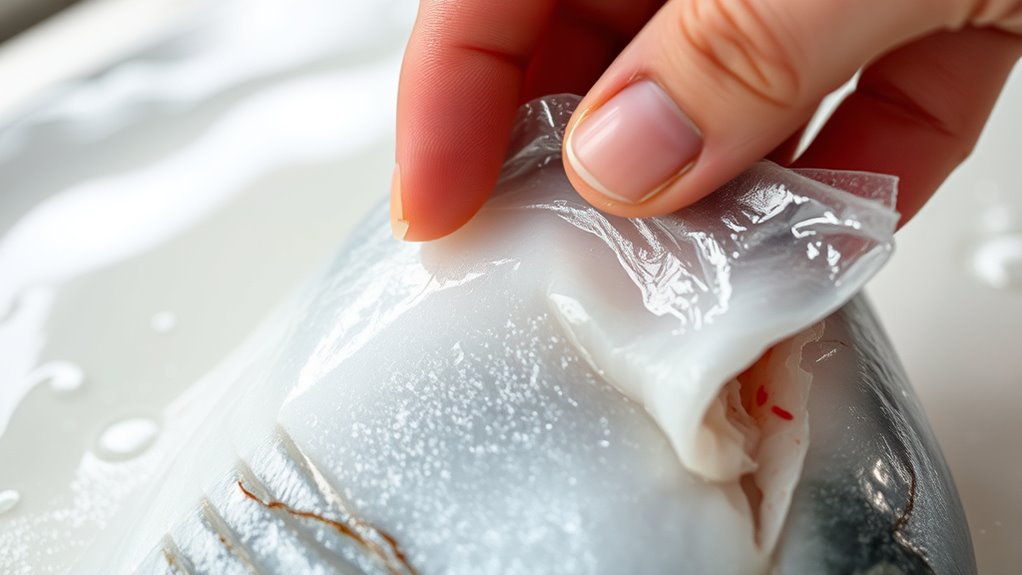
Removing fish skin without losing meat can be tricky, but with the right technique, it’s entirely doable. Fish skin is often overlooked, yet it offers valuable fish skin nutrition, including omega-3 fatty acids, collagen, and other beneficial nutrients. When preparing skinless fish recipes, preserving as much meat as possible is key to maintaining flavor, texture, and nutritional value. The goal is to peel away the skin smoothly without taking excessive flesh along with it.
Master the art of removing fish skin smoothly to preserve meat, nutrients, and flavor.
Start by ensuring your fish is properly prepared. Use a sharp, flexible fillet knife or a fish scaler to loosen the skin from the flesh. If your fish has been previously scaled, you’ll notice a slightly slippery, shiny surface. Lay the fish on a clean cutting board with the skin side down. Hold the tail or a fin for stability and gently insert the knife at the tail end, angling it slightly downward. Keep the blade between the skin and the flesh, and work slowly along the length of the fillet. Applying gentle, consistent pressure helps prevent tearing the meat.
As you slide the knife, use a sawing motion rather than pressing down hard. This minimizes the risk of removing meat along with the skin. If you’re dealing with a particularly slippery fish, moistening the skin lightly with a few drops of water can improve grip and control. Remember, patience is key; rushing can cause unnecessary loss of meat or damage to the fillet. Additionally, understanding the importance of proper fish handling can make a significant difference in the ease of skin removal.
Once the skin begins to lift, gently work the knife back and forth, pulling the skin away with your free hand if needed. Keep the knife angled slightly downward to stay close to the skin, rather than cutting into the flesh. This technique preserves the maximum amount of meat and ensures a clean, even removal. For those interested in making skinless fish recipes, this method helps retain the delicate texture and flavor of the meat, making your dishes more enjoyable.
After removing the skin, inspect the fillet for any leftover scales or uneven edges. Properly skinned fish not only looks better but also cooks more evenly and is more appealing in recipes like fish tacos, salads, or grilled dishes. By mastering this technique, you’ll maximize your fish’s nutritional benefits—especially those from fish skin nutrition—and create cleaner, more appetizing skinless fish dishes. With practice, removing fish skin without losing meat becomes second nature, allowing you to prepare healthier, more delicious meals every time.
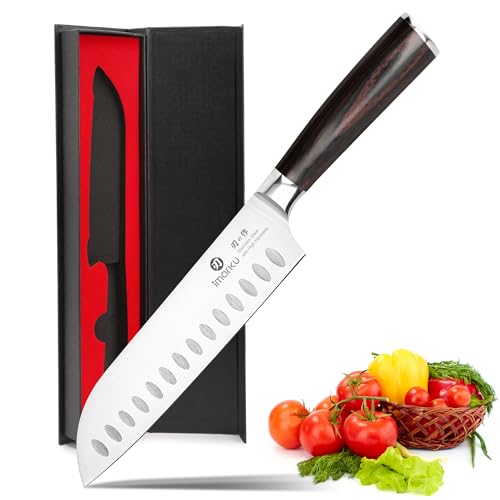
imarku Chef Knife 7 Inch Kitchen Knife Ultra Sharp Santoku Knife - High Carbon Japanese Chefs Knife, Kitchen Gadgets 2025, Apartment Essentials, Birthday Gifts for Him Her, Best Gifts for Women Men
Professional Santoku Knife: This imarku super sharp santoku knife is made of high carbon stainless steel that resists...
As an affiliate, we earn on qualifying purchases.
Frequently Asked Questions
Can I Remove Fish Skin Without Cooking the Fish First?
Yes, you can remove fish skin without cooking the fish first. Use fish skin removal techniques suitable for raw fish preparation, like sliding a sharp knife gently between the skin and flesh, holding the skin taut. Make sure your fish is fresh and properly handled to prevent tearing. Practicing these techniques helps you peel the skin cleanly, preserving the meat, and ensures a smooth process whether you’re preparing sashimi or other raw dishes.
What Tools Are Best for Removing Fish Skin Cleanly?
You should use a sharp, flexible fillet knife or fish scaler for clean skin removal. Start with fish scaling to remove loose scales, then use skin peeling techniques by holding the fish steady and sliding the knife between the skin and meat, angling it slightly downward. This method guarantees minimal meat loss and a smooth, clean removal. Be gentle, work slowly, and maintain steady pressure for best results.
Does Removing the Skin Affect the Fish’s Flavor?
Removing the skin can slightly impact the fish’s flavor, but it mainly depends on the fish and how you prepare it. Skin often adds a layer of richness and texture, so taking it off might make the fish taste milder or less savory. However, if you cook the fish with flavorful herbs and spices, the skin impact diminishes, allowing the natural fish flavor to shine through without the added texture.
How Do I Prevent the Fish From Sticking During Skin Removal?
To prevent sticking during fish prep, make certain the skin texture is dry and the surface is well-chilled. Use a sharp, flexible knife and gently slide it between the skin and meat, holding the fish steady with a paper towel. Applying a little oil or vinegar to the skin can also help release it smoothly. Practice patience and steady movements for clean removal without tearing the flesh.
Is It Safe to Remove Fish Skin With My Hands?
Did you know that handling fish skin directly can transfer bacteria? Yes, it’s safe to remove fish skin with your hands if you wash them thoroughly first. Fish skin benefits include added nutrients, but if you prefer alternatives, use a paper towel or a fish scaler. Just be gentle and precise to avoid tearing the meat, and always prioritize cleanliness to keep your fish safe to eat.
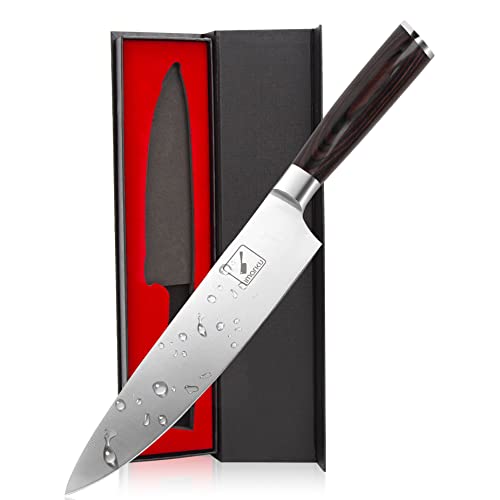
imarku Japanese Chef Knife - Sharp Kitchen Knife 8 Inch Chef's Knives HC Steel Paring Knife, Unique Gifts for Men and Women, Gifts for Mom or Dad, Kitchen Gadgets with Gift Box, Gyutou Knives
High-Carbon Stainless Steel Blade: It is manufactured from high-quality stainless steel that maintains its functionality for a long...
As an affiliate, we earn on qualifying purchases.
Conclusion
Now that you know how to remove fish skin without losing meat, you’re ready to master this skill. Think of it as peeling back a delicate layer—like unwrapping a gift—you get to enjoy the succulent meat beneath. With patience and gentle technique, you’ll keep every ounce of flavor intact. Remember, precision is your best friend here—so take your time, and let your confidence grow with each perfect fillet you prepare.

HOSHANHO Kitchen Knife in Japanese High Carbon Steel, Professional High-Class Chef's Knife 8 inch, Non-slip Ultra Sharp Cooking Knives with Ergonomic Handle
【High-End Japanese Steel Chef's Knife】 HOSHANHO chef's knife is made of Japanese high carbon steel 10Cr15CoMoV, 2x of...
As an affiliate, we earn on qualifying purchases.

Japanese Chef Knife, 8 Inch Damascus Kitchen Knife with VG10 Steel, Handcrafted Sharp Knife with Ergonomic Handle, Cooking Knives for Home Chefs, Cooking Gifts for Men and Women
【Premium Damascus Chef Knife with VG-10 Steel Core】Our Japanese knives feature a VG-10 steel core (60 HRC) for...
As an affiliate, we earn on qualifying purchases.