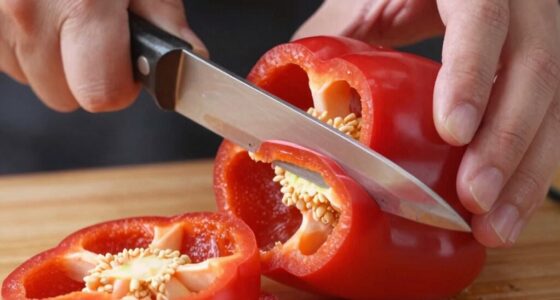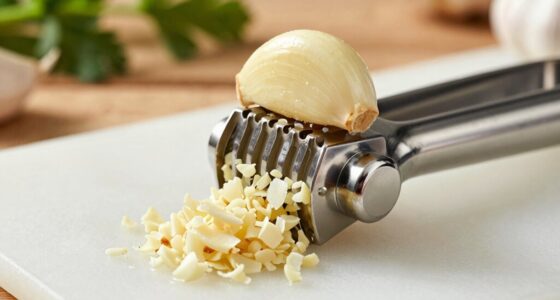
Mincing involves chopping ingredients into very fine, tiny pieces, perfect for sauces or flavoring. Chopping creates larger, irregular chunks, great for salads or stir-fries. Dicing cuts ingredients into uniform cubes, ideal for even cooking and presentation. The main differences lie in size and shape, affecting texture and flavor release. To master each technique and see how they enhance your dishes, keep exploring the details that follow.
Key Takeaways
- Minced ingredients are chopped very finely into tiny pieces, ideal for flavor blending in sauces and pastes.
- Chopped pieces are larger and irregular, suitable for salads, garnishes, and quick-cooking dishes.
- Diced items are uniform cubes that promote even cooking and appealing presentation.
- Technique differences involve using a rocking motion for chopping, a fine mincing technique, and precise cuts for dicing.
- Size and shape determine flavor release, texture, and visual appeal in various recipes.
What Does Mincing Mean and When to Use It
Have you ever wondered what mincing really means in cooking? Mincing involves chopping ingredients into very small, uniform pieces, perfect for blending flavors thoroughly. It’s especially useful when you want ingredients to disperse evenly, like garlic or herbs, ensuring a consistent taste. Proper ingredient storage is essential before mincing; keep ingredients fresh and dry to avoid contamination. Food safety is critical—use sharp knives and clean tools to prevent bacteria spread. Mincing is ideal when the recipe calls for a fine texture or when ingredients will be cooked quickly, releasing their flavors efficiently. Remember, the smaller the pieces, the faster they cook and release their essences, making mincing a crucial technique in many dishes. Controlling food safety practices can also influence how ingredients appear, especially in visually sensitive recipes. Additionally, understanding ingredient preparation methods helps prevent cross-contamination and ensures a healthier cooking process. Being aware of proper kitchen hygiene techniques further enhances safety and quality when mincing ingredients.
The Technique of Chopping and Its Common Applications
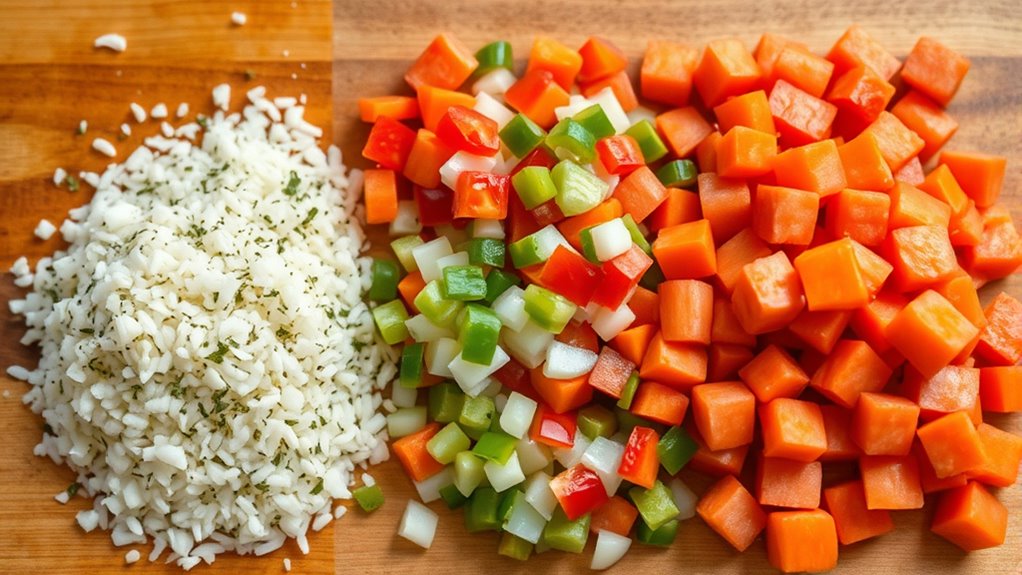
To chop effectively, you need to use the right technique, keeping your fingers tucked and the knife sharp. This method is commonly used for preparing vegetables, herbs, and soft fruits quickly and uniformly. Mastering proper chopping guarantees your dishes are cooked evenly and look appealing. Additionally, understanding auditory processing techniques can help you achieve clearer, more detailed photographs of the night sky. For example, knowing about net worth and other personal metrics can be essential when evaluating a celebrity’s financial success, as seen in the case of Kate From Breaking Amish. Recognizing the best-rated pinball machines of 2024 can also inspire enthusiasts to explore high-quality gaming experiences. Furthermore, adopting traditional craft techniques can enrich your appreciation of Italy’s artisanal craftsmanship and cultural heritage.
Proper Chopping Techniques
Mastering proper chopping techniques is essential for efficiency and safety in the kitchen. Always prioritize knife safety by keeping your fingers tucked and using a sharp knife, which requires less force. Selecting the right cutting board is equally important; a sturdy, non-slip surface prevents accidents and protects your knife. When chopping, use a smooth, rocking motion and keep your grip firm. Make sure your ingredients are stable before cutting to avoid slips. For a clearer understanding, consider this table:
| Technique Step | Focus Area | Common Application |
|---|---|---|
| Grip the knife | Knife safety | Vegetable chopping |
| Use a rocking motion | Cutting control | Dicing onions |
| Keep fingers tucked | Safety | Slicing herbs |
| Stabilize ingredients | Safety | Cutting carrots |
| Choose a cutting board | Safety & durability | All chopping tasks |
Common Culinary Uses
Chopping is a fundamental technique in the kitchen, and its versatility makes it applicable across a variety of culinary tasks. When you chop ingredients, you can enhance presentation plating and guarantee even cooking. Chopped vegetables work well in salads, providing a uniform look and texture. You can also use chopped herbs to boost flavor and aroma in dishes. For ingredient pairing, chopped items like garlic or onions integrate smoothly into sauces and sautés. Additionally, chopped ingredients are perfect for stuffing, garnishing, or creating layered dishes. Their small size allows for better control over flavor distribution and visual appeal. Mastering chopping helps you prepare ingredients efficiently and elevate your dishes’ overall presentation and taste. Proper technique in chopping ensures safety and consistency in your culinary preparations, especially when working with sharp knives and other tools. Developing a consistent chopping method can also improve efficiency, saving valuable time during meal prep. Proper technique and safety when chopping not only protects you from accidents but also contributes to a more professional and enjoyable cooking experience. Incorporating safe food handling practices is essential for maintaining hygiene and preventing cross-contamination during food prep.
Understanding Dicing and Its Impact on Cooking
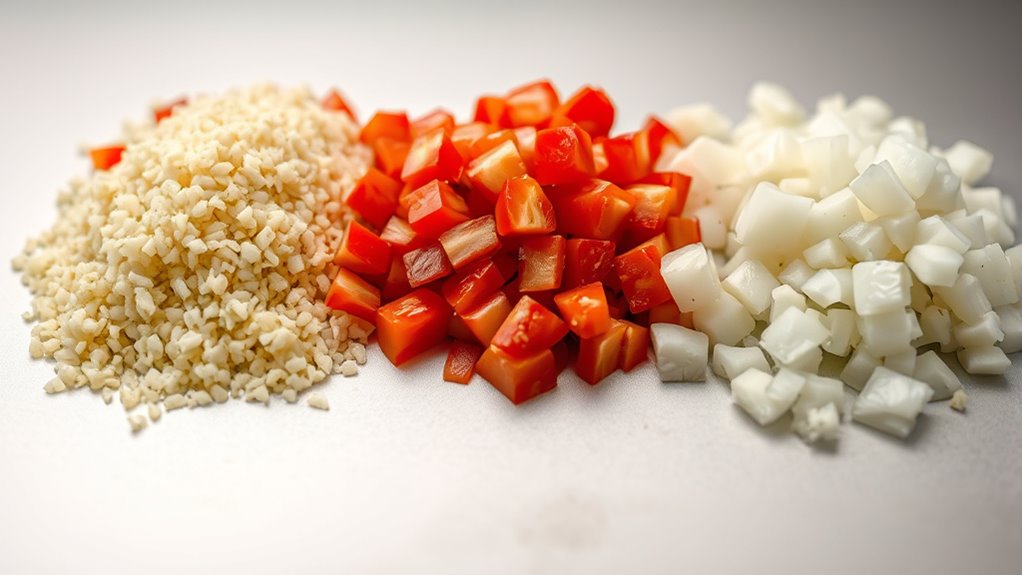
When you dice ingredients, you create pieces with a uniform surface, which helps them cook evenly. This consistency allows flavors to be absorbed more effectively, enhancing the overall taste. Understanding how dicing impacts cooking can help you achieve better texture and flavor in your dishes. Additionally, precise measurements and positioning demonstrate the importance of proper technique, similar to how proper dicing ensures even cooking. Developing culinary skills through techniques like dicing can contribute to cultivating joy and connection in your cooking experiences. Recognizing cultural beliefs surrounding astrology and beauty can also influence how we perceive attractiveness and personal traits, enriching our understanding of culinary presentation and aesthetic appeal.
Uniform Cooking Surface
Dicing creates uniform pieces that cook more evenly because each piece has a similar surface area exposed to heat. This helps guarantee a uniform cooking surface, allowing heat to distribute consistently across all pieces. When you dice, you minimize the risk of some parts being undercooked while others are overdone. This consistency improves the overall quality of your dish. Decoding modern slang can help you better understand how these culinary techniques are discussed and appreciated in internet culture.
Enhances Flavor Absorption
Because dicing creates smaller, more exposed surface areas, it allows flavors, marinades, and seasonings to penetrate ingredients more effectively. This is especially important in meat preparation, where evenly seasoned pieces ensure a richer taste throughout. Dicing also benefits fruit handling, as the increased surface area helps absorb flavors and juices more efficiently. When you dice ingredients, seasonings and marinades can reach deeper into each piece, boosting overall flavor. This technique encourages better flavor absorption, making dishes more flavorful and well-rounded. Additionally, using the right cutting technique can improve food presentation and make dishes more appealing. Whether preparing meat for a marinade or cutting fruit for a salad, dicing enhances how well ingredients soak up seasonings, ultimately resulting in tastier, more consistent dishes. Proper dicing can also influence cooking time, allowing ingredients to cook more evenly and quickly. Furthermore, understanding precise cutting techniques can help optimize your overall cooking efficiency and outcomes. The choice of cutting style can also impact texture and the mouthfeel of your dishes, providing a better dining experience.
Visual Differences Between Minced, Chopped, and Diced Ingredients
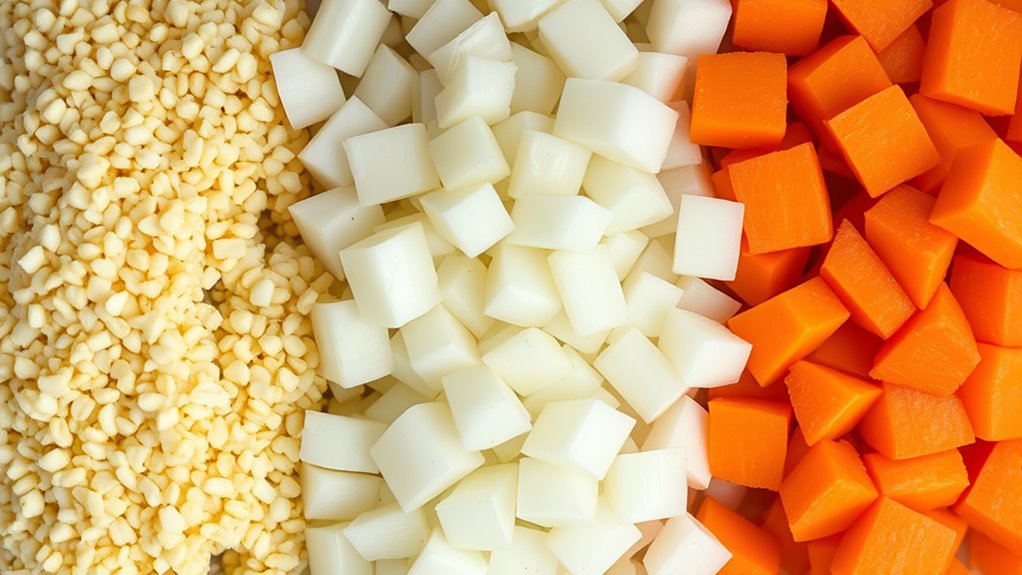
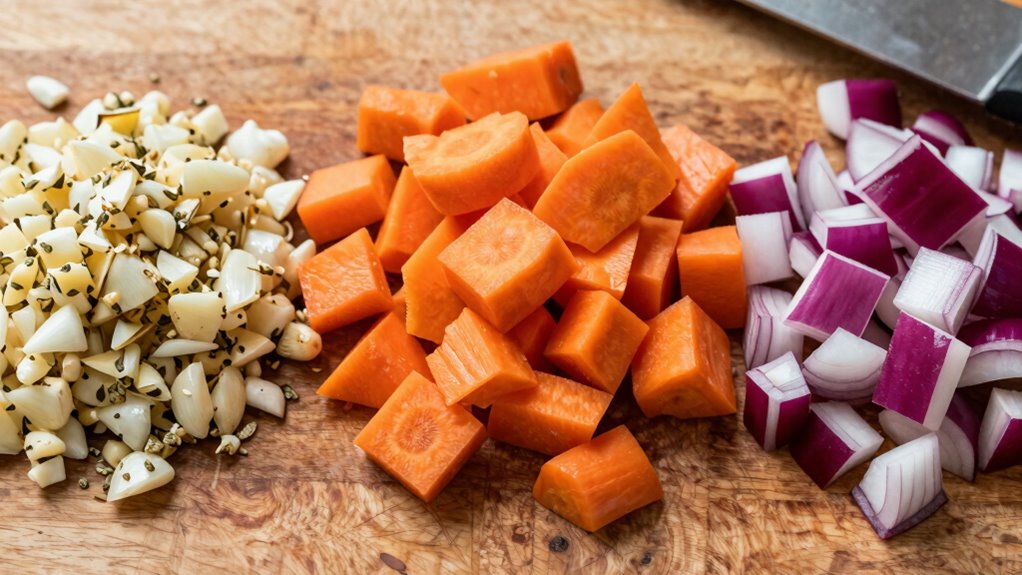
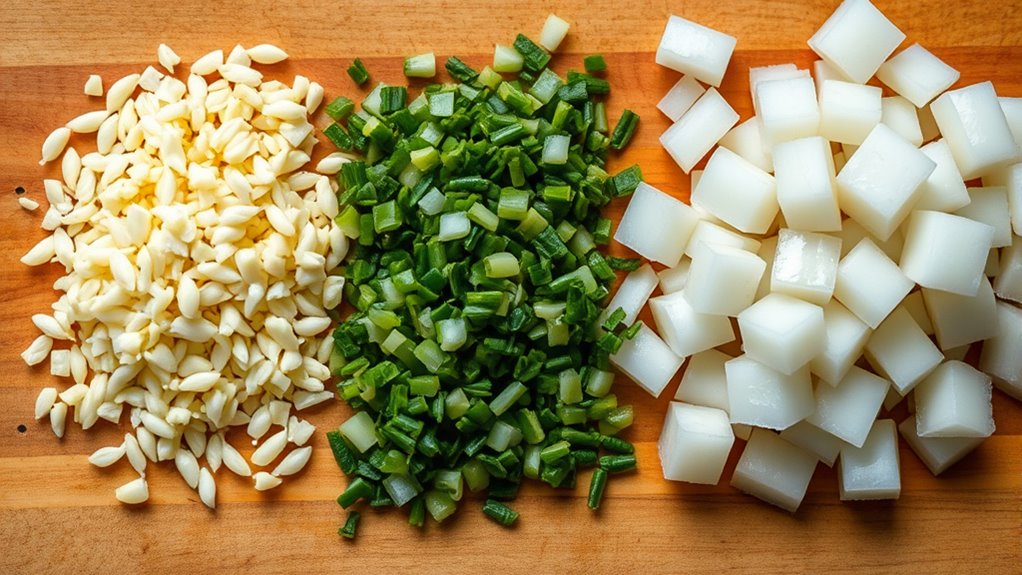
The visual differences between minced, chopped, and diced ingredients are quite distinct and can help you identify their preparation stages at a glance. When considering ingredient presentation, these sizes influence the dish’s appearance and texture. Minced ingredients are very fine, almost paste-like, with tiny pieces that blend seamlessly. Chopped ingredients are irregular but generally uniform in size, giving a more rustic look. Diced ingredients are uniformly cubed, with clean, sharp edges that add a neat touch to your dish. To achieve the best visual appeal, choose a cutting board suited to your task—larger for dicing, smaller for mincing. Keep your cuts consistent to ensure even cooking and attractive presentation. Recognizing these differences helps you prepare ingredients with confidence and precision. Proper technique in cutting can make a significant difference in achieving the desired texture and appearance. Additionally, maintaining sharp knives is essential for clean cuts and safety during preparation.
Tools Best Suited for Each Cutting Method
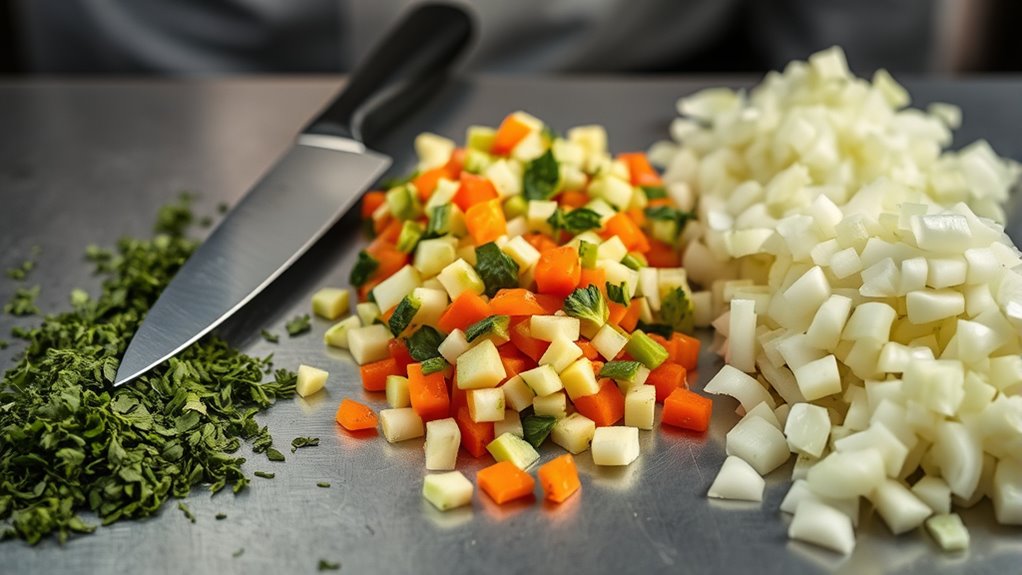
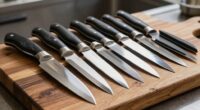
Choosing the right tools can make all the difference when preparing ingredients at different stages. For mincing, you’ll want a sharp chef’s knife or a mezzaluna, which allow for precise, fine cuts. Chopping requires a sturdy, versatile chef’s knife that offers control for various ingredients. Dicing benefits from a sharp, sturdy knife paired with a stable cutting board for uniform cubes. Using the proper kitchen tools guarantees safety precautions are met, reducing the risk of slips or injuries. Here’s a quick guide:
| Cutting Method | Recommended Tools |
|---|---|
| Mince | Chef’s knife, mezzaluna |
| Chop | Chef’s knife, utility knife |
| Dice | Chef’s knife, paring knife |
| Safety Tips | Keep knives sharp, use stable boards |
Choose the right tools to work efficiently and safely.
How Size and Shape Affect Flavor and Texture
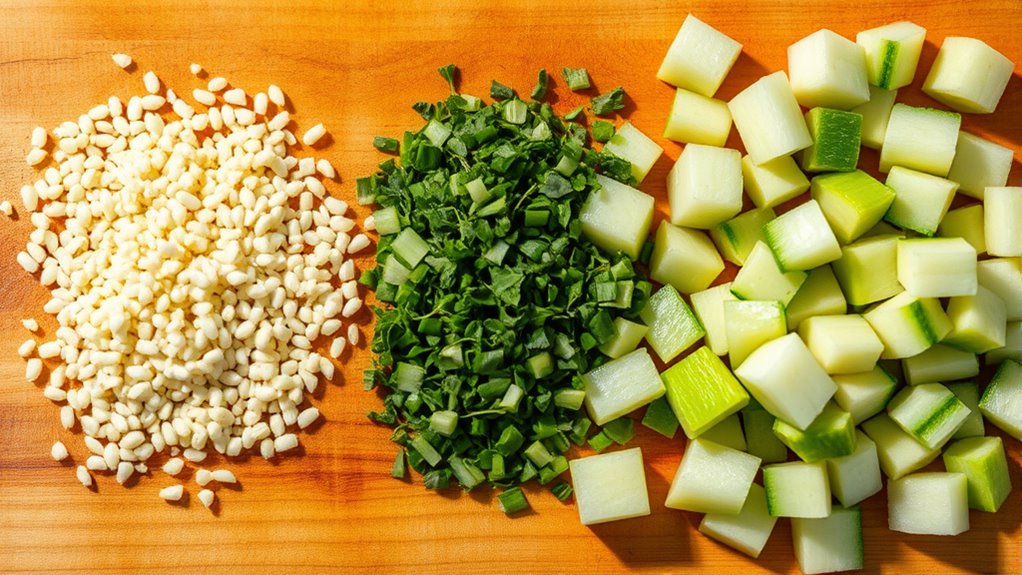
Size and shape play a crucial role in how ingredients release their flavors and achieve the desired texture. Smaller pieces, like minced garlic, intensify ingredient flavor quickly and evenly, ensuring a more robust taste. Larger cuts, such as diced vegetables, offer a different textural impact—crispier or softer—depending on cooking time. Consistent shapes help control the cooking process, affecting how flavors meld and textures develop. When you chop, you create more surface area, enhancing flavor release, but too small can lead to overcooking. Conversely, bigger pieces retain moisture and firmness, impacting mouthfeel.
- Minced ingredients boost flavor intensity but may lose texture fast
- Diced pieces balance flavor release with texture preservation
- Larger cuts slow flavor diffusion, maintaining firmness
- Shape controls the overall textural impact of your dish
Step-by-Step Guides to Properly Mince, Chop, and Dice

Mastering proper mincing, chopping, and dicing guarantees your ingredients cook evenly and develop the right flavors and textures. To start, confirm your knife skills are sharp and your cutting surface is stable to promote kitchen safety. When mincing, gather your ingredients into a pile, use a rocking motion, and repeatedly chop until finely minced. For chopping, make uniform cuts by slicing across the ingredient, then stacking and chopping to your desired size. Dicing involves cutting into even slices, stacking, then cutting into strips before turning and dicing into cubes. Always keep your fingers tucked in and use controlled motions to prevent accidents. Practicing these step-by-step techniques will improve your efficiency and safety in the kitchen, ensuring consistent results for every dish.
Recipes That Benefit From Each Cutting Style
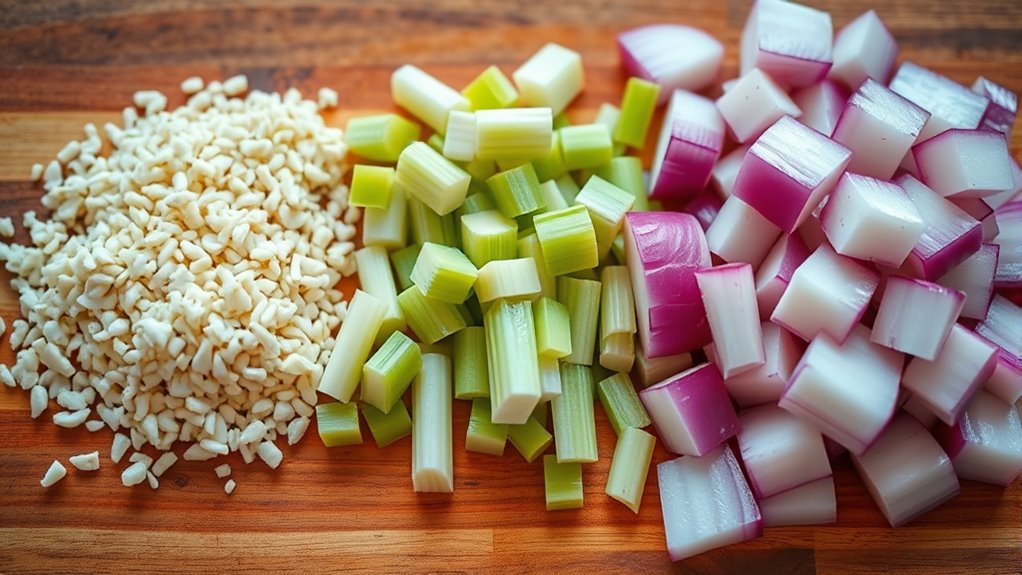
Different recipes call for varying cutting styles to bring out the best flavors and textures. Your knife skills and ingredient preparation influence how well each method works. Minced ingredients, like garlic or herbs, blend seamlessly into sauces, adding flavor without texture. Chopped vegetables work well in stews, salads, or stir-fries, providing a balance of bite and presentation. Diced items are perfect for soups, salsas, or garnishes, offering uniform pieces that cook evenly.
Different cutting styles enhance flavors and textures, from minced herbs to diced vegetables for uniform presentation.
- Minced garlic or onion enhances sauces without overpowering.
- Chopped carrots or peppers add texture and visual interest.
- Diced tomatoes or fruits create appealing, uniform bites.
- Finely chopped herbs elevate flavor and presentation.
Tips for Practicing and Perfecting Your Cutting Skills
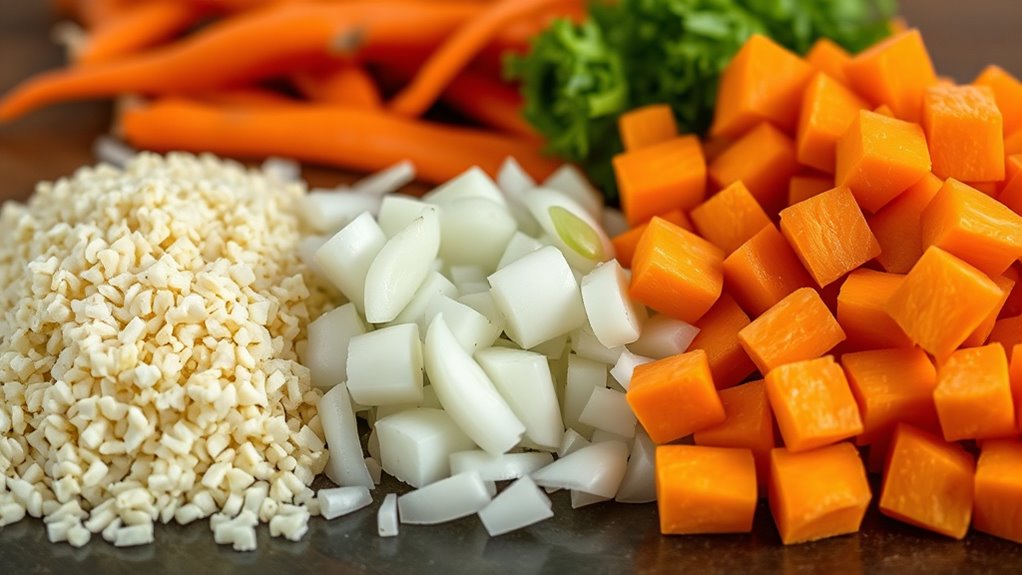
Practicing your cutting skills regularly is the best way to improve precision and confidence in the kitchen. Focus on knife safety by always using a sharp knife and proper grip, reducing the risk of slips. Start with simple ingredients like carrots or celery to hone your technique and ensure consistent ingredient preparation. Pay attention to your hand placement, keeping your fingers curled inward to protect them during cuts. Practice different cutting styles—mince, chop, and dice—slowly at first, then gradually increase speed as accuracy improves. Use a stable cutting board and maintain a steady motion. Consistent practice helps develop muscle memory, making your cuts more uniform and efficient. Over time, you’ll cut more confidently and safely, elevating your overall cooking skills.
Frequently Asked Questions
Can I Substitute Minced Ingredients for Diced in Recipes?
Yes, you can substitute minced ingredients for diced in recipes, but keep in mind that it may affect the culinary substitutions and flavor impact. Minced ingredients are finer, which can lead to a more uniform taste and quicker cooking. Diced pieces provide different textures and visual appeal. Adjust cooking times accordingly, as minced ingredients cook faster and distribute flavors more evenly, so your dish may turn out slightly different but still delicious.
How Does Cutting Technique Affect Cooking Time?
Your cutting technique directly impacts cooking time, as smaller pieces cook faster. When you mince or dice ingredients, they heat through more quickly, saving time. Always prioritize knife safety, using proper grip and technique to avoid accidents. This flexibility lets you adapt ingredients for different recipes, but remember, more uniform cuts ensure even cooking and consistent results. So, choose your cut size based on desired cooking speed and safety considerations.
Are There Safety Tips for Handling Sharp Knives?
You might worry about safety when handling sharp knives, but with proper precautions, you’ll stay safe. Always use safety equipment like cut-resistant gloves and keep knives sharp—dull blades are more dangerous. Maintain your knives regularly through proper knife maintenance, and cut on stable surfaces. Keep fingers tucked under your hand, and pay attention to your movements. These tips help prevent accidents and make knife handling safer and more enjoyable.
Does Ingredient Type Influence the Best Cutting Method?
Yes, ingredient type greatly influences your cutting method. For ingredients with firm texture, like carrots or potatoes, chopping or dicing works best to guarantee even cooking. For softer ingredients like herbs or garlic, mincing releases more flavor quickly, while chopping preserves texture. Choosing the right technique helps optimize flavor release and maintains ingredient integrity, making your dishes tastier and more appealing. Always adapt your cut to suit the ingredient’s texture for best results.
How Do I Choose the Right Knife for Each Technique?
You should choose a sharp, high-quality knife suited for each technique, like a paring knife for mincing or a chef’s knife for chopping and dicing. Proper knife maintenance keeps blades sharp, making cuts cleaner and safer. Also, select a stable cutting board—wood or plastic—to prevent slipping. Using the right knife and maintaining it well guarantees efficient, precise cutting whether you’re mincing, chopping, or dicing.
Conclusion
Think of mincing, chopping, and dicing as different brushes in your culinary toolbox. Each creates a unique flavor and texture, like colors blending on a palette. Mastering these techniques lets you craft dishes with precision and flair. With practice, you’ll navigate your kitchen like an artist, transforming simple ingredients into a masterpiece. So, grab your tools and start experimenting—your cooking skills will soon be painting delicious, beautifully crafted meals.