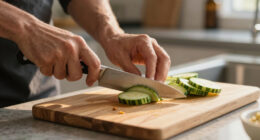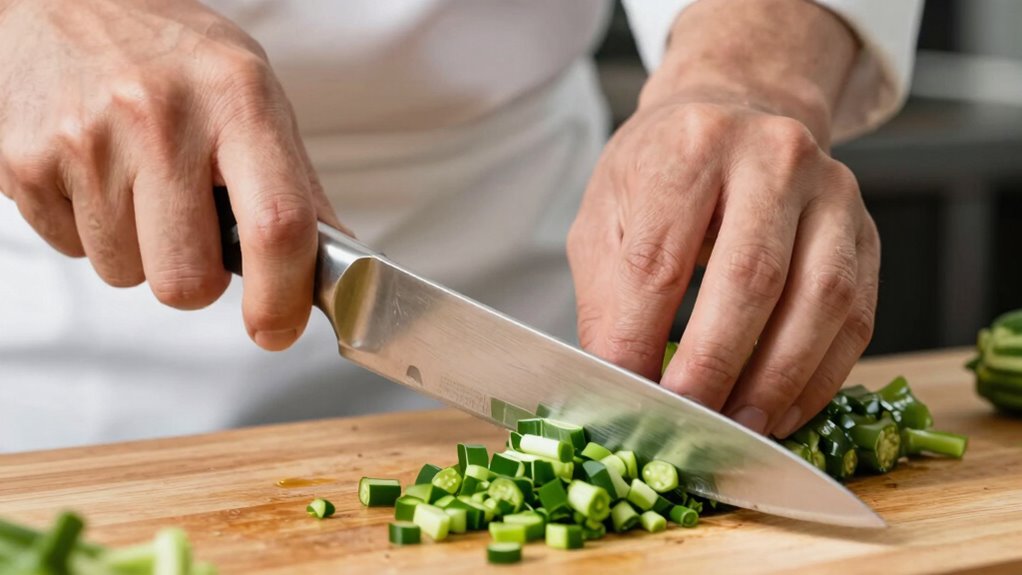
To keep your tip on the board while chopping, hold the handle firmly but relaxed, using your thumb and index finger near the blade for control. Maintain a stable stance with feet shoulder-width apart and evenly weighted. Use controlled wrist and forearm movements, making small, deliberate adjustments as needed. If your tip lifts, slightly shift your grip or apply gentle downward pressure with your thumb. mastering these tips helps improve safety and precision—keep going to discover even more control tricks.
Key Takeaways
- Maintain firm, relaxed grip near the handle’s end to enhance control and prevent the tip from lifting.
- Keep your body centered with feet shoulder-width apart for stability and better tip contact.
- Use controlled wrist and forearm movements for precise, deliberate chopping motions.
- Adjust grip slightly or shift weight if the tip starts to lift or slip during chopping.
- Focus on proper posture to ensure steady balance, supporting consistent tip contact on the board.
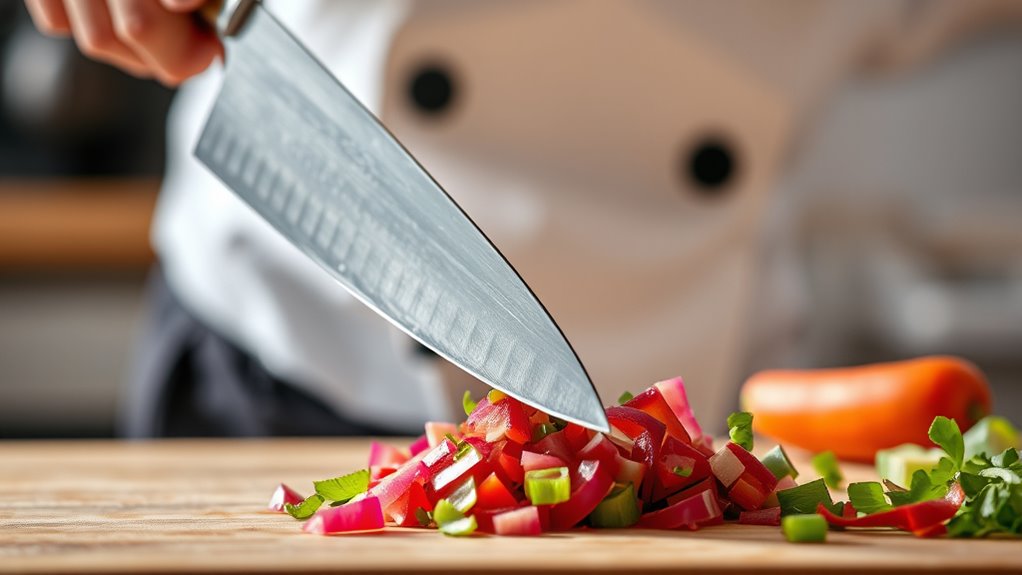
Keeping your tip on the board while chopping is essential for both safety and precision. When you focus on maintaining that connection between your knife’s tip and the cutting surface, you gain better control over your cuts, reducing the risk of slips or accidents. To do this effectively, you need to master balance techniques and make proper grip adjustments. These elements work together to give you stability and confidence, especially when working with delicate or precise cuts.
Start by paying attention to your stance. Keep your feet shoulder-width apart, with your weight evenly distributed. This stance provides a solid foundation, helping you stay balanced as you chop. When you’re upright and steady, it’s easier to control the knife’s movement, ensuring that your tip remains on the board. As you chop, imagine your body as an extension of the knife; your movements should be fluid and controlled. Maintaining good posture and a centered stance keeps your balance in check, preventing unnecessary wobbling or lurching that could lift the tip off the board.
Next, focus on grip adjustments. Your grip should be firm but relaxed, allowing for precision without causing fatigue. Hold the handle with your dominant hand, placing your thumb and index finger near the blade for better control. This “pinch grip” gives you more finesse and responsiveness, making it easier to keep the tip in contact with the cutting surface. As you chop, adjust your grip slightly if you notice the tip lifting or slipping. Sometimes, shifting your hand closer to the handle’s end or repositioning your fingers can offer better leverage and stability. Remember, a secure but relaxed grip helps you maintain control without tensing up, which can lead to fatigue or loss of precision. Incorporating proper technique can further improve your consistency and safety in chopping. Small, deliberate movements to keep the tip on the board are essential. Use your wrist and forearm rather than solely relying on your shoulder or elbow. This targeted movement allows for more precise adjustments, helping you keep that critical contact point on the cutting surface. When you feel the tip lifting, slow down your chopping motion and make a subtle grip adjustment. For example, applying a slight downward pressure with your thumb or shifting your grip slightly forward can help keep the tip engaged. Over time, these small adjustments become second nature, making your chopping more accurate and safer.

HOSHANHO Kitchen Knife in Japanese High Carbon Steel, Professional High-Class Chef's Knife 8 inch, Non-slip Ultra Sharp Cooking Knives with Ergonomic Handle
【High-End Japanese Steel Chef's Knife】 HOSHANHO chef's knife is made of Japanese high carbon steel 10Cr15CoMoV, 2x of...
As an affiliate, we earn on qualifying purchases.
Frequently Asked Questions
What Are Common Mistakes That Cause My Tip to Slip?
You often slip because your knife isn’t sharp enough, making cutting more difficult and increasing chances of slipping. Dull blades require more force, which can cause loss of control. Also, using an uneven or slippery cutting surface can lead to instability. Regular knife sharpening guarantees your blade stays effective, and choosing a sturdy, non-slip cutting surface gives you better control, preventing your tip from slipping during chopping.
How Does Knife Angle Affect Tip Control?
Sure, because holding a knife at a perfect angle is just like solving world peace, right? But seriously, your knife angle directly impacts tip control—an angle too steep makes the tip wobble, while a shallow angle helps keep it steady. Adjust your grip to maintain a consistent knife angle, and you’ll find your tip stays on the board, slicing smoothly instead of flopping around like a fish out of water.
Can Specific Grip Techniques Improve Tip Stability?
Yes, specific grip techniques can improve tip stability. You should use a firm, controlled knife grip, ensuring your fingers are properly positioned on the handle for balance. Keep your index finger extended along the spine of the blade for better control, while your other fingers grip the handle securely. This finger positioning helps stabilize your tip, giving you more precision and reducing slipping during chopping. Practice this grip to enhance your overall control.
What Types of Knives Are Best for Controlled Chopping?
Imagine slicing through vegetables smoothly, your knife feeling like an extension of your hand. For controlled chopping, opt for a well-balanced chef’s knife or a Santoku, which offer precision and stability. Keep your knives sharp through regular sharpening to prevent slips, and always prioritize cutting board safety. These knives allow you to maintain a steady tip, making your chopping safer, more efficient, and confident, whether you’re dicing or mincing.
How Can I Practice Tip Control Safely at Home?
To practice tip control safely at home, start with a duller knife to reduce injury risk, and always prioritize knife safety. Use a stable cutting board and keep your fingers tucked in with proper chopping techniques. Focus on controlled, deliberate motions to keep your tip on the board, gradually increasing speed as you gain confidence. Consistent practice helps improve precision and safety, making your chopping more effective and enjoyable.

imarku Chef Knife 7 Inch Kitchen Knife Ultra Sharp Santoku Knife - High Carbon Japanese Chefs Knife, Kitchen Gadgets 2025, Apartment Essentials, Birthday Gifts for Him Her, Best Gifts for Women Men
Professional Santoku Knife: This imarku super sharp santoku knife is made of high carbon stainless steel that resists...
As an affiliate, we earn on qualifying purchases.
Conclusion
Now that you know how to keep your tip on the board, you can chop with confidence. It’s a small detail that makes a big difference—much like the steady hand that guides a skilled artist or the quiet focus of a seasoned chef. Remember, control isn’t just about precision; it’s about trust in your technique. So, embrace the process, stay mindful, and let each chop bring you closer to mastery.
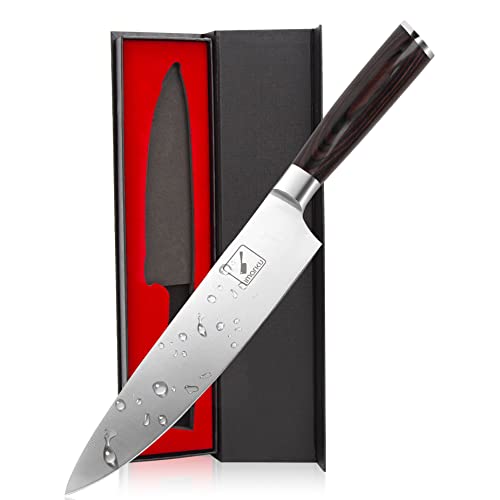
imarku Japanese Chef Knife - Sharp Kitchen Knife 8 Inch Chef's Knives HC Steel Paring Knife, Unique Gifts for Men and Women, Gifts for Mom or Dad, Kitchen Gadgets with Gift Box, Gyutou Knives
High-Carbon Stainless Steel Blade: It is manufactured from high-quality stainless steel that maintains its functionality for a long...
As an affiliate, we earn on qualifying purchases.

MOSFiATA 8" Super Sharp Professional Chef's Knife with Finger Guard and Knife Sharpener, German High Carbon Stainless Steel EN1.4116 with Micarta Handle and Gift Box
【High Carbon German Stainless Steel Laser-engraved Pattern(Not Damascus Pattern )】 MOSFiATA 8 inch pro chef's knife is made...
As an affiliate, we earn on qualifying purchases.