
To peel and slice a mango without a mess, start by washing the fruit and working over a plate or bowl to catch juice. Use a sharp knife to cut off the stem, then peel either before or after slicing, depending on your mango’s variety. Score the flesh in a grid pattern without cutting through the skin, and gently scoop out the cubes. Proper technique and tools make the process cleaner—learn more tips to master this juicy task efficiently.
Key Takeaways
- Work over a plate or bowl to catch juice and slices during peeling and slicing.
- Use a sharp knife and peel the mango carefully to minimize juice spillage.
- Hold the mango securely and cut along the natural contours to avoid puncturing the skin.
- Score the flesh in a grid pattern without cutting through the skin for easy cube removal.
- Clean knives and cutting surfaces immediately after use to prevent residue buildup and mess.
Peeling and slicing a mango can be messy if you’re not careful, but with the right techniques, you can keep your workspace clean and enjoy this delicious fruit without hassle. Mangoes are packed with mango nutrition benefits, including vitamins A and C, fiber, and antioxidants, making them a healthy snack choice. Plus, with so many mango varieties—such as Alphonso, Haden, Kent, and Tommy Atkins—you can select the perfect one for your taste preferences and ripeness level. Some varieties have softer flesh, while others are firmer, so understanding these differences helps you choose the best mango for slicing and peeling.
Choosing the right mango variety ensures easier peeling and slicing for a mess-free experience.
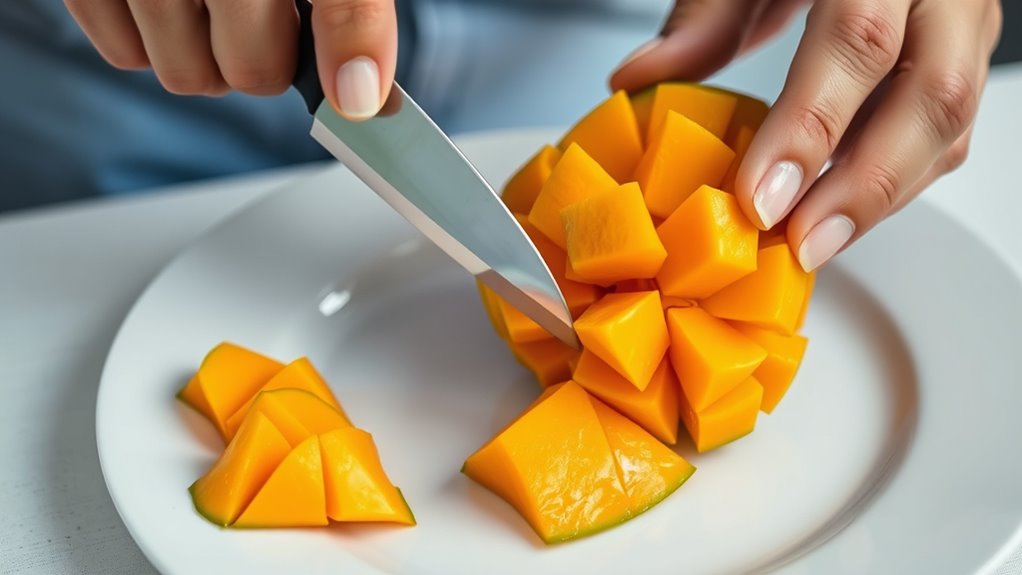
Before you start, wash the mango thoroughly to remove any dirt or residue. To avoid mess, lay down a paper towel or a cutting board with a groove to catch juice drips. Use a sharp knife to cut off the stem end, creating a stable base. Then, hold the mango upright and slice downward along the flat sides, following the natural shape of the fruit, which varies among mango varieties. Be gentle but precise, avoiding deep cuts that might puncture the skin or flesh. Once you have two large mango halves, score the flesh in a grid pattern without cutting through the skin. This makes it easier to scoop out the cubes with a spoon or peel the skin back for easy eating.
If you prefer to peel the mango before slicing, you can use a vegetable peeler or carefully run the knife just beneath the skin. For mess-free peeling, hold the mango over the sink or a bowl to catch the juice. Different mango varieties can influence how easily the skin peels away—some have thinner skins, making them simpler to peel, while others may require more effort. After peeling, lay the halves flat and cut along the seed with your knife, which runs lengthwise through the fruit. The seed’s size and shape, which differ among varieties, determine how much flesh you can extract from each half.
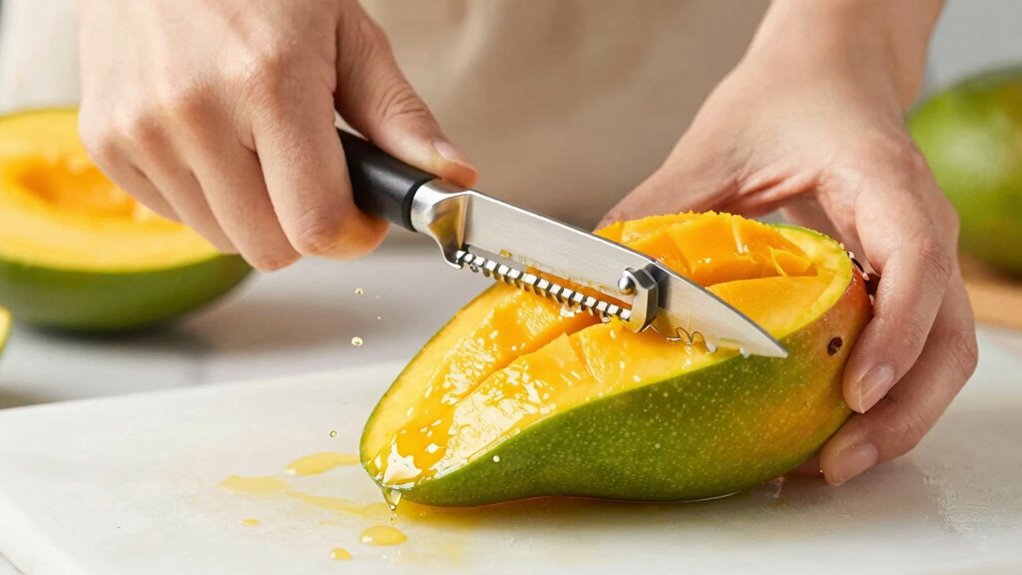
To keep your workspace tidy, work over a plate or bowl to catch slices and juice. Use a serrated spoon or butter knife to gently scoop out the cubes, minimizing mess and maximizing yield. When you’re finished, clean your knife and cutting board immediately to prevent sticky mango residue from hardening. Remember, knowing the characteristics of different mango varieties helps you decide the best approach—whether to peel first or slice directly around the seed. With these tips, you’ll enjoy perfectly sliced mangoes with minimal mess, making snack time or fruit salads easier and more enjoyable.

Zyliss 3-in-1 Mango Slicer, Peeler and Pit Remover Tool – Kitchen Mango Depitter & Peeler Gadget – Fruit Slicer with Micro-Serrated Stainless Steel Blader – Mango Corer for Easy Use
Fruit Slicer & Cutter Gadget: This Innovative kitchen tool peels, slices, and removes the pit of a mango…
As an affiliate, we earn on qualifying purchases.
As an affiliate, we earn on qualifying purchases.
Frequently Asked Questions
Can I Peel and Slice a Mango With a Spoon?
Yes, you can peel and slice a mango with a spoon. Use a mango peeler to remove the skin easily, then grab a spoon for spoon peeling around the mango’s flesh. This method minimizes mess and keeps your hands clean. Simply slide the spoon between the skin and flesh, gently scooping out the slices. It’s quick, clean, and perfect for enjoying fresh mango without fuss.
What’s the Best Way to Store Leftover Mango Slices?
To store leftover mango slices, you should place them in an airtight container to keep them fresh. Make sure to cover the slices tightly or use plastic wrap to prevent air exposure, which can cause spoilage. Keep the container in the refrigerator, ideally within 1-2 days for best mango storage and leftover preservation. This method maintains flavor and prevents the mango from drying out or absorbing other odors.
How Do I Prevent Mango Juice From Staining Clothes?
Sure, mango juice seems harmless until it stains your favorite shirt. To prevent mango juice from staining clothes, you should wear stain-resistant clothing or cover up with an apron. Applying a thin layer of clear lotion or petroleum jelly around your collar can also help. Remember, the key to mango juice prevention is acting quickly—use a cloth or napkin immediately if juice drips. Stay prepared, and enjoy your mangoes stain-free!
Are There Any Safety Tips for Handling a Sharp Knife?
To guarantee knife safety, always use a sharp knife, as dull blades require more force and can slip. Practice proper cutting techniques by curling your fingers inward and keeping your hand steady. Focus on your task, cut away from your body, and avoid rushing. Store knives securely, and never leave them in soapy water where you can’t see the blade. These steps help prevent accidents while handling sharp knives.
How Ripe Should a Mango Be Before Peeling and Slicing?
You should wait until the mango reaches peak ripeness before peeling and slicing. Look for a mango with gentle give when pressed, indicating ideal mango ripeness and peeling readiness. The skin may turn slightly color-rich or blush, but firmness is your best guide. Ripe mangoes peel easily and have a sweet aroma, making slicing safer and more enjoyable. Avoid underripe or overly soft fruit for the best results.
Zyliss 3-in-1 Mango Slicer, Peeler and Pit Remover Tool – Kitchen Mango Depitter & Peeler Gadget – Fruit Slicer with Micro-Serrated Stainless Steel Blader – Mango Corer for Easy Use
Fruit Slicer & Cutter Gadget: This Innovative kitchen tool peels, slices, and removes the pit of a mango…
As an affiliate, we earn on qualifying purchases.
As an affiliate, we earn on qualifying purchases.
Conclusion
Peeling and slicing a mango doesn’t have to be messy. Just follow these simple steps, and you’ll enjoy perfectly sliced fruit every time. Did you know that mangoes are the most popular fruit in over 40 countries? Mastering this skill means less waste and more delicious bites. So next time, confidently peel and slice your mango with ease, impressing friends and family alike. Happy snacking!
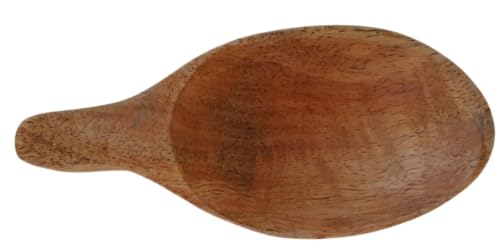
47th & Main Mango Wood Kitchen Scoop Spoon, 4.25 x 1.75-Inches, Natural
STURDY MANGO WOOD SCOOP is skillfully carved and has smooth edges
As an affiliate, we earn on qualifying purchases.
As an affiliate, we earn on qualifying purchases.

Keechee Bamboo Cutting Board, Durable Wood Cutting Boards for Kitchen with Deep Juice Grooves & Built-in Handles, Ideal Charcuterie & Chopping for Meat, Vegetables and Fruits Ideal Kitchen Gifts
BAMBOO CUTTING BOARD of 3 – Keechee bamboo cutting boards for kitchen include 3 practical sizes: 15×10 in,…
As an affiliate, we earn on qualifying purchases.
As an affiliate, we earn on qualifying purchases.