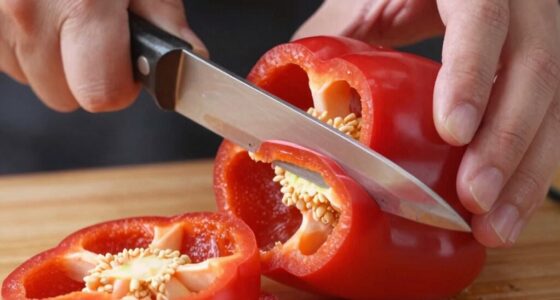
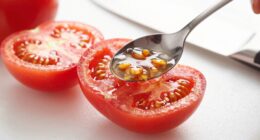
To cut bell peppers with almost zero waste, start by choosing a ripe, firm pepper and wash it thoroughly. Slice off the top and bottom, then cut down the sides to open it flat, removing the core and seeds gently with a spoon—reserving seeds for planting or snacks. Use every part of the flesh in salads, stir-fries, or snacks. Properly stored leftover pieces can be frozen or added to other dishes, helping you maximize your yield—keep going to discover more helpful tips.
Key Takeaways
- Cut peppers carefully to maximize flesh and minimize leftover scraps.
- Use a spoon to gently scoop out seeds, avoiding damage to the flesh.
- Utilize the entire pepper by slicing flesh for various dishes and saving seeds for planting or roasting.
- Store unused portions in airtight containers or freeze for later use, reducing waste.
- Compost or repurpose discarded seeds and damaged parts to support sustainability.

Cutting bell peppers efficiently can help you minimize waste and make the most of your produce. When you’re preparing peppers, it’s easy to overlook the potential uses of the bell pepper seeds and the importance of proper peppers storage. Instead of discarding the seeds immediately, consider that they can be used in various recipes, such as roasted seed snacks or ground into spice blends. To do this, gently scoop out the seeds with a spoon, being careful not to damage the flesh of the pepper. Once removed, you can rinse the seeds to remove any residual pulp, then dry them thoroughly if you plan to store or plant them later. This way, you avoid unnecessary waste and make the most of every part of the vegetable.
When it comes to peppers storage, proper handling guarantees your peppers stay fresh longer, reducing spoilage and waste. After cutting your bell peppers, transfer any unused portions into airtight containers or resealable bags. Removing excess air helps slow down oxidation and preserves the peppers’ crispness. For longer-term storage, consider freezing bell peppers—chopped or sliced—so you can use them later in cooked dishes without having to buy fresh peppers frequently. Label the containers with the date to keep track of freshness, and remember that freezing can slightly alter the texture but preserves the flavor well. If you prefer to keep peppers in the fridge, store them in the crisper drawer, ideally in a perforated plastic bag that allows airflow. Proper peppers storage not only extends shelf life but also minimizes the chances of rotting and waste.
Another tip to reduce waste is to plan your prep work carefully. When cutting bell peppers, try to use the entire pepper rather than discarding parts. For example, the flesh can be sliced for salads, stir-fries, or snacks, while the seeds can be saved or composted if you don’t want to use them. If you’re planting bell peppers, the seeds can be dried and saved for next season’s planting, giving you a sustainable way to grow your own produce. Always inspect your peppers before storing—discard any that are soft or have blemishes—to prevent spoilage spreading to the rest. Additionally, understanding how proper storage techniques can extend shelf life is essential for reducing waste and keeping produce fresh. By paying attention to how you handle and store bell peppers, you make sure nothing goes to waste, saving money and reducing your environmental impact. With a little planning and care, you can enjoy fresh, flavorful bell peppers while being mindful of every part of the vegetable.
Frequently Asked Questions
Can Bell Pepper Seeds Be Eaten Safely?
Yes, you can eat bell pepper seeds safely, and they actually contain some beneficial nutrients like fiber and antioxidants. If you’re interested in seed germination tips, you can try sprouting them for future plants. Keep in mind, though, that some people find the seeds slightly bitter, so you might prefer to remove them for a milder flavor. Including seeds in your diet can boost your bell pepper nutrition intake.
How Do I Store Leftover Bell Pepper Parts?
To store leftover bell pepper parts, you should place them in an airtight container or resealable bag to reduce food waste and keep them fresh. Make sure to remove any excess moisture to prevent spoilage. Store the container in the refrigerator’s crisper drawer, which promotes sustainable storage methods. Use the leftovers within 2-3 days to maximize freshness and minimize waste, ensuring you enjoy your peppers at their best.
Are There Eco-Friendly Tools for Cutting Peppers?
Yes, you can find eco-friendly tools like biodegradable knives and reusable cutting mats that make cutting peppers more sustainable. Biodegradable knives are often made from plant-based materials, reducing plastic waste, while reusable cutting mats help you avoid single-use plastics. These tools are durable, easy to clean, and promote zero waste cooking, making your kitchen greener. Investing in such eco-friendly tools supports environmentally conscious habits and keeps your kitchen sustainable.
How Do I Compost Bell Pepper Scraps Properly?
Did you know that over 30% of food waste ends up in landfills? To compost bell pepper scraps properly, use effective composting techniques like layering food scraps with dry materials and turning the pile regularly. This simple waste reduction method accelerates decomposition and enriches your soil. Keep scraps in a designated bin, avoid adding oily or animal products, and maintain moisture to turn waste into nutrient-rich compost effortlessly.
What Are Creative Uses for Bell Pepper Stems?
You can get creative with bell pepper stems by using them in recipes like flavorful vegetable broths or stocks. Add stems to soups or stews for an extra boost of flavor, or grind them up into pestos and salsas. Creative stem uses include pickling or drying them for spice blends. These ideas turn your bell pepper stems into tasty, waste-free ingredients, making your cooking more sustainable and flavorful.
Conclusion
Now that you know how to cut bell peppers with almost zero waste, you’re transforming a simple veggie into a mindful act. Imagine the vibrant pepper, once discarded seeds and stems, now a beautiful, usable dish. It’s like turning a discarded puzzle piece into a perfect picture. With each careful cut, you’re not just reducing waste—you’re creating something fresh and sustainable. Your kitchen becomes a canvas where waste is minimized, and flavor is maximized.