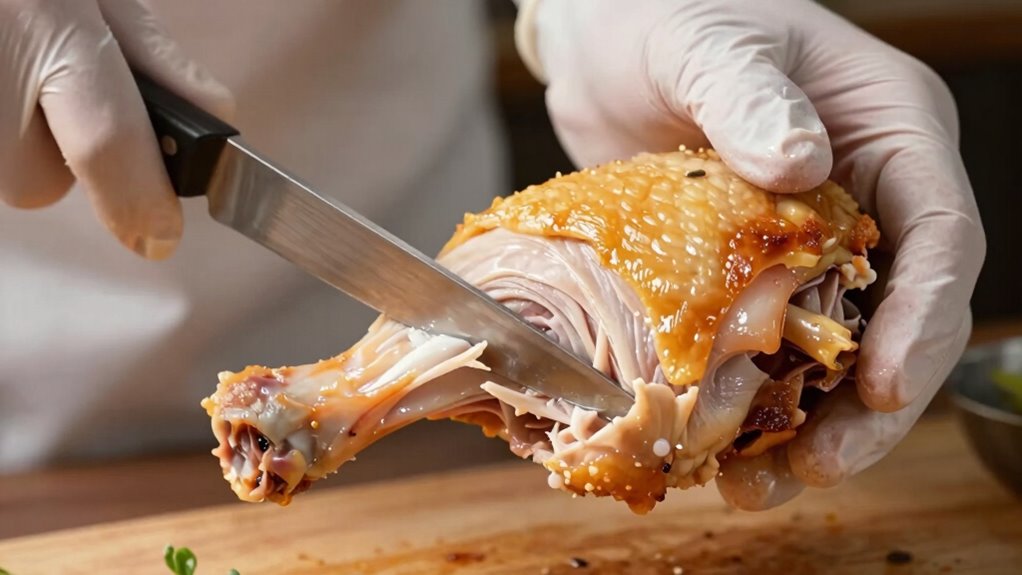

To debone a chicken thigh without shredding it, carefully insert a sharp knife along the natural seam of the meat, working slowly around the bone with gentle, controlled motions. Keep the knife close to the bone to avoid tearing the meat and remove it gradually, using patience with each step. Maintain a steady hand and keep everything dry to guarantee clean, smooth results. For more tips on perfecting this technique, continue exploring the process in detail.
Key Takeaways
- Use a sharp, flexible knife and follow the natural seam of the meat for precise cuts.
- Keep the blade close to the bone and work slowly to prevent shredding.
- Gently pry the bone away while maintaining the meat’s moisture and integrity.
- Work around cartilage carefully, removing small fragments with tweezers or the knife tip.
- Practice patience and slow movements to improve control and keep the meat intact.
Deboning a chicken thigh might seem challenging at first, but with the right technique, it becomes an easy task. When it comes to meat preparation, mastering this skill can elevate your cooking, making your dishes more flavorful and visually appealing. The key lies in understanding the proper cooking techniques and handling the meat carefully to avoid shredding.
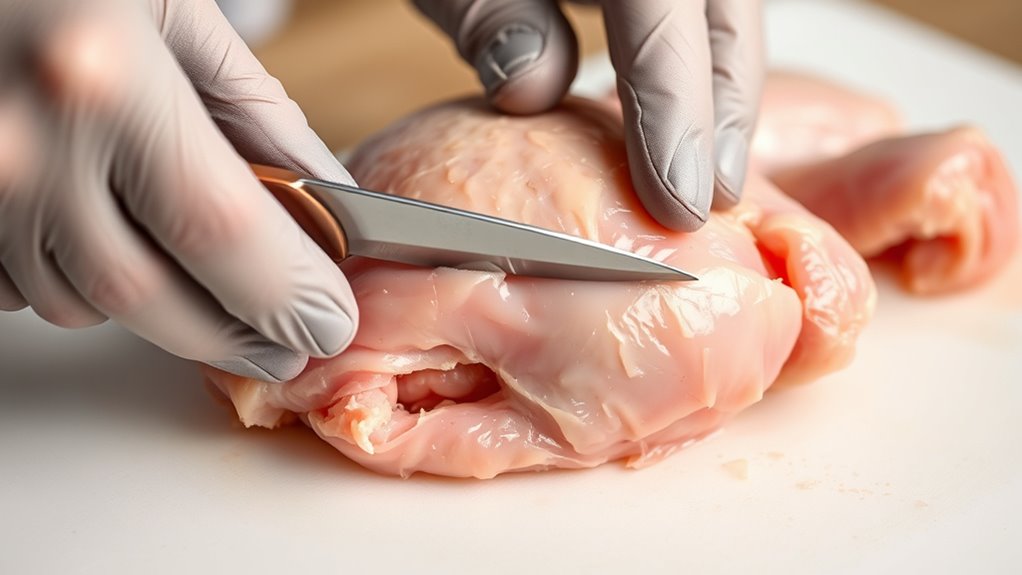
Start by placing the chicken thigh skin-side down on a clean cutting board. Use a sharp boning knife or a small, flexible knife designed for precise cuts. Your goal is to follow the natural seam of the meat, which often runs along the bone. Gently insert the tip of your knife into the joint where the thigh connects to the drumstick, and carefully work your way around the bone, keeping the blade close to the bone to minimize meat loss. Use slow, controlled motions rather than sawing back and forth, which can tear the meat and make the process messier.
Place the thigh skin-side down and carefully follow the bone’s natural seam.
As you work, take your time to feel for the bone’s contours. Applying gentle pressure with your fingers can help you locate the edges of the bone and guide your knife accordingly. Remember, patience is essential. When you reach the end of the bone, carefully pry it away from the surrounding meat, making sure to keep the meat intact. This approach ensures you don’t shred or tear the meat, maintaining a clean, smooth surface that’s perfect for stuffing, rolling, or simply cooking as-is.
Throughout the process, keep the meat moist by keeping your knife and hands dry, and work slowly to avoid accidental punctures or tears. If you encounter cartilage or tougher bits, gently work around them rather than forcing your knife through. Once the bone is fully detached, inspect the meat for any small bone fragments or cartilage, removing them with tweezers or the tip of your knife.
Practicing these techniques will improve your meat preparation skills, making deboning more efficient and less stressful over time. With experience, you’ll develop a steady hand and a better sense of how to maneuver around the bone without shredding the meat. Remember, the goal is to keep the chicken thigh intact and free of bone, so your final dish can be cooked evenly and presented beautifully. Developing an understanding of projector technology can help you optimize your setup for various viewing experiences. With patience and precision, you’ll find that deboning a chicken thigh can become a straightforward, rewarding part of your cooking routine.
Frequently Asked Questions
What’s the Best Tool for Deboning Chicken Thighs?
You should use a sharp, flexible boning knife for deboning chicken thighs. This kitchen tool allows precise boning techniques, making it easier to navigate around bones without shredding the meat. The thin, curved blade gives you control and accuracy, reducing the risk of tearing. Invest in a quality boning knife, and you’ll find deboning faster, cleaner, and more efficient, ensuring your chicken stays tender and intact.
How Long Does It Take to Debone a Thigh?
Deboning a thigh usually takes around 10 to 15 minutes, like gently untangling a delicate ribbon. You need to work carefully, respecting chicken safety and keeping the meat texture intact. Rushing can lead to shredded meat or accidental cuts. Stay patient, and you’ll master this skill swiftly. With practice, you’ll find your rhythm, turning raw chicken into perfectly deboned pieces ready for your favorite dishes.
Can I Debone Frozen Chicken Thighs?
You can debone frozen chicken thighs, but it’s best to thaw them first. Attempting to debone frozen chicken can be tricky and may cause shredding. To do so safely, place the thighs in the fridge for the thawing process, which usually takes 24 hours. Once thawed, you’ll find it easier to debone the chicken without shredding, ensuring cleaner, more precise results.
How Do I Prevent Tearing the Meat?
To prevent tearing the meat and maintain tenderness, use a sharp knife and work slowly, following the natural contours of the thigh. Keep your knife edge angled slightly downward, and make gentle, controlled cuts. Always prioritize knife safety by holding the meat firmly and avoiding excessive force. This careful approach helps you preserve meat tenderness while reducing the risk of shredding or tearing during deboning.
Is Deboning Necessary for All Recipes?
Deboning isn’t necessary for all recipes, but it can be a useful cooking technique for flavor enhancement and easier eating. If you’re making dishes like stir-fries, stuffed chicken, or roulades, removing the bone allows for better seasoning penetration and a more uniform texture. However, for roasting or grilling, keeping the bone intact can add flavor and juiciness. Consider your recipe’s goals to decide if deboning suits your cooking needs.
Conclusion
Deboning a chicken thigh may seem tricky at first, but with patience and the right technique, you’ll master it in no time. Trust that a steady hand and careful cuts prevent shredding, making your dish look professional and appetizing. Many believe that deboning ruins the meat’s texture, but in reality, it enhances tenderness and flavor. So, give it a try—you’ll enjoy your cooking even more knowing you’ve perfected this handy skill!