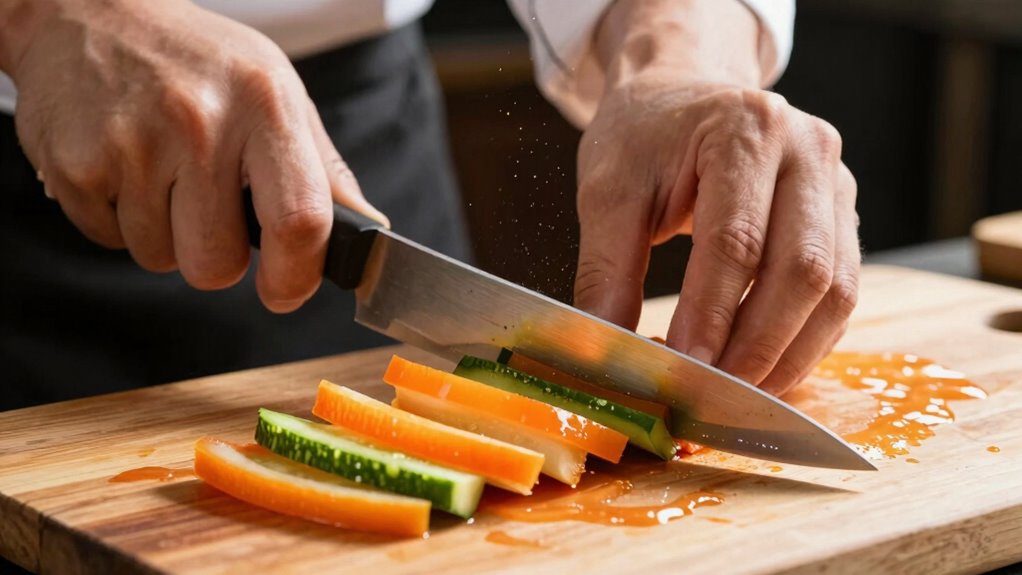
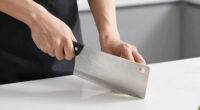
To cut faster without turning sloppy, focus on maintaining a balance between speed and control. Keep your footwork fluid and accurate, staying light on your feet and using natural pivots. Use a relaxed grip on the blade, moving it smoothly with small, controlled motions. Develop a steady rhythm and prioritize deliberate, precise cuts over rushing. With strong fundamentals, you’ll build confidence and safety while increasing your speed—stick with it to discover more tips for mastering this skill.
Key Takeaways
- Develop smooth, fluid footwork to maintain control and quick positioning without sacrificing accuracy.
- Relax your grip and use small, controlled blade movements to enhance precision at higher speeds.
- Find a steady rhythm that promotes consistent, continuous motion, avoiding rushed, jagged cuts.
- Keep knees slightly bent and stay light on your feet for efficient, balanced adjustments.
- Focus on deliberate, controlled techniques to build muscle memory, ensuring speed doesn’t compromise quality.

When you’re trying to cut faster, it’s easy to sacrifice precision and end up with sloppy results. Speed is important, but if your footwork technique and blade control aren’t sharp, your cuts will suffer. The key is to maintain a balance: push your speed without losing control or accuracy. To do this, you need to focus on your footwork technique first. Proper footwork allows you to position yourself efficiently, making quick adjustments without wasting energy. Instead of rushing into each cut, practice moving smoothly and confidently. Keep your knees slightly bent, stay light on your feet, and pivot naturally. This stability helps you stay balanced and in control, which is essential when increasing your speed. Your footwork should be fluid, enabling you to shift seamlessly from one cut to the next, rather than awkwardly hopping or overextending. The more you refine your footwork technique, the more precise your cuts become at higher speeds. Additionally, developing good blade control is vital for maintaining accuracy while increasing your pace. When you’re rushing, it’s tempting to grip the blade tightly or apply excessive force, but that only leads to sloppy cuts and potential safety issues. Instead, focus on a relaxed grip, allowing for better finesse. Keep your wrist steady and move the blade with small, controlled motions. Think of your blade as an extension of your arm, not a tool you’re forcing through the material. As you increase your speed, maintain a consistent pressure that’s enough to cut cleanly but not so much that it drags or deforms the material. Practicing deliberate, controlled cuts helps develop muscle memory, which translates into faster, more accurate movements over time. It’s also helpful to develop a rhythm—finding a steady pace that feels natural. Rushing too much can throw off your blade control, causing jagged edges or uneven cuts. Instead, aim for a smooth, continuous motion, adjusting your footwork to keep the blade aligned with your target. Think of your movements as dance steps: precision and timing matter more than raw speed. Developing strong fundamentals is essential for building consistency and confidence as you increase your speed. As you get comfortable with these techniques, your speed will naturally improve without sacrificing quality. Remember, sharp focus on your footwork technique and blade control creates a foundation that allows you to cut faster with confidence, ensuring your results are clean and precise every time. A good technique not only enhances safety but also improves overall efficiency, making each cut more effective and less tiring.

Fiskars 5" Non-Stick Micro-Tip Scissors for Sticky Materials, No. 5, White
- Brand: Fiskars
- Blade Length: 5 inches
- Blade Type: Micro-tip for precision
As an affiliate, we earn on qualifying purchases.
As an affiliate, we earn on qualifying purchases.
Frequently Asked Questions
What Tools Improve Cutting Speed Without Sacrificing Accuracy?
To improve cutting speed without sacrificing accuracy, use tools with good ergonomics that fit comfortably in your hand, reducing fatigue. Prioritize cutting tools designed with cutting ergonomics in mind, such as sharp blades and balanced handles, to maintain precision at higher speeds. Additionally, consider using powered tools where appropriate, as they enhance speed while still allowing control. Proper technique combined with ergonomic tools guarantees faster, cleaner cuts every time.
How Does Hand Positioning Affect Cutting Precision?
A steady hand is the key to precision—”a chain is only as strong as its weakest link.” You should focus on maintaining hand stability by adopting proper grip techniques, such as gripping the tool firmly yet comfortably. Keep your hands close to the cutting surface and use your whole arm for control, not just your wrist. This approach guarantees consistent cuts, improves accuracy, and helps you cut faster without sacrificing quality.
Can Practice Routines Enhance Cutting Speed Effectively?
Yes, practice routines can notably enhance your cutting speed effectively. By focusing on precision techniques and consistent practice strategies, you build muscle memory and improve control. Regularly timing your cuts and gradually increasing speed helps you maintain accuracy while becoming faster. Incorporate drills that emphasize smooth, deliberate movements, and you’ll notice improvements in both your speed and precision, making your cuts cleaner and more efficient over time.
What Common Mistakes Lead to Sloppy Cuts?
Think of your cut as a delicate dance—any misstep shows. Common mistakes include poor blade stability and improper cutting posture, which can turn sharp cuts sloppy. When your blade wobbles or your stance is off, precision suffers. To avoid this, focus on maintaining steady blade control and a balanced, correct posture. This keeps your cuts clean and consistent, transforming your technique from a stumble to a graceful performance.
How Do Different Materials Influence Cutting Technique?
Different materials influence your cutting technique markedly. For flexible materials, you should apply gentle, steady pressure to maintain control and avoid tearing. For tougher, rigid materials, increase your cutting speed slightly while ensuring a clean, consistent motion. Pay attention to the cutting texture—smooth surfaces require a different approach than textured ones. Adjust your grip and blade angle accordingly, ensuring precision and speed without sacrificing accuracy or causing sloppy cuts.

Fiskars Pro Folding Utility Knife, Dual-Lock, 4.5" Folded Size
- Retractable Folding Design: Safe storage and easy one-handed opening
- Long-Lasting CarbonMax Blade: Cuts 24X longer than standard blades
- Full-Body Metal Construction: Durable and impact-resistant
As an affiliate, we earn on qualifying purchases.
As an affiliate, we earn on qualifying purchases.
Conclusion
By focusing on controlled, deliberate cuts and maintaining your technique, you can increase speed without sacrificing precision. For instance, imagine a skilled chef who trains by gradually increasing their chopping pace while keeping their knife sharp and movements consistent. This approach helps develop muscle memory, ensuring you cut faster and cleaner over time. Remember, speed comes with control—practice patience, refine your technique, and you’ll see your cutting skills improve smoothly and safely.
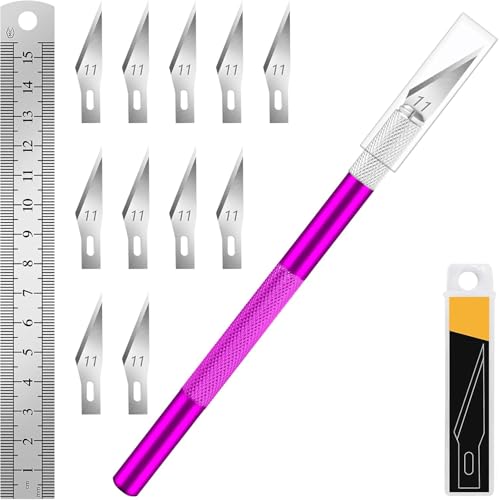
DIYSELF Craft Hobby Knife Set with 10 Extra #11 Blades, 6-Inch Metal Ruler
- Suitable for All Skill Levels: Perfect for beginners and professionals
- Versatile Material Compatibility: Cuts paper, vinyl, foam, and more
- Precision Razor-Sharp Blades: Ensures clean, detailed cuts
As an affiliate, we earn on qualifying purchases.
As an affiliate, we earn on qualifying purchases.

BoFuYuan Utility Scissors All Purpose heavy duty 8-Inch Yellow
- Versatile Cutting Capabilities: Cuts cardboard, fabric, wire, leather, and more
- Multiple Use Cases: Suitable for sewing, kitchen, gardening, and DIY
- Multifunctional Design: Includes wire cutting, stripping, and nutcracker features
As an affiliate, we earn on qualifying purchases.
As an affiliate, we earn on qualifying purchases.